Why Proper Egg Storage Matters: Freshness, Safety, and Flavor Preservation
Nutrition, perishability, and the hidden risks of neglect
Eggs are a dense source of high-quality protein, essential vitamins, and minerals, making them a kitchen staple across cultures. Their nutritious profile also means they attract microbes when left in suboptimal conditions, so temperature and handling critically shape their lifespan.
When storage goes wrong, the most concerning outcome is bacterial contamination, notably from Salmonella, which can multiply if eggs are kept too warm or moved through fluctuating temperatures. This is why a consistent cold chain is not just a convenience but a public health measure.
Another factor in egg longevity is the integrity of the eggshell and its natural protective coating, the bloom. the bloom seals microscopic pores and reduces air and bacterial ingress; commercial washing often removes it, changing storage needs.
Anecdotes from small-scale kitchens illustrate the stakes. Consider a neighborhood bistro that sourced eggs directly from a local farm: unwashed eggs arrived with bloom intact and lasted longer at room temperature during a weekend market; by contrast, store-bought washed eggs required strict refrigeration to remain safe for service.
Understanding these variables helps in choosing the right storage strategy. Storing eggs without regard to their processing status or ambient conditions can accelerate quality loss, leading to runnier whites, flattened yolks, and off-odors that affect both taste and the outcome of delicate recipes.
How storage choices influence culinary results
Freshness is not only about safety but also about texture and performance in recipes. For example, a fresh egg yields firmer whites and a more centered yolk, essential when poaching or whipping meringues.
Older eggs, while still usable for many dishes, behave differently: whites thin out and incorporate air differently, yet such eggs are often preferable for hard-boiling because they peel more easily.
Professional kitchens balance these traits by assigning eggs by age: freshest for presentation-sensitive dishes, older for baking and mass-cooking. This simple classification reduces waste and enhances consistency across menus.
Case study and recommendation
A hypothetical enterprise, Riverbend Bakery, adopted rotation practices in 2024 and documented fewer failed bakes and less waste within weeks. The bakery stored newest cartons behind older ones and labeled arrival dates, which improved batch predictability and cost control.
For home cooks and small businesses alike, the key takeaway is to treat eggs as time-sensitive ingredients. Consistent storage temperature, minimal handling, and respect for the bloom—when present—deliver safer, tastier outcomes.
Insight: Proper storage is the bridge between nutrition and safety; controlling temperature and handling preserves both quality and flavor. 🥚
How Long Do Eggs Last in the Refrigerator? Practical Storage Guide and Tests
Decoding dates, temperatures, and the original carton
In refrigerated conditions, eggs can remain suitable for consumption substantially longer than at room temperature. When held steadily at 40°F (4°C) or below, many eggs retain acceptable quality for up to 5 weeks from the pack date.
The carton often carries labels like “sell-by,” “best-by,” or a Julian pack date. These help with rotation but are not absolute safety cutoffs. A refrigerated egg kept correctly may be fine beyond those dates, while an egg stored poorly may spoil sooner.
Keeping eggs in their original carton prevents odor absorption and protects them from bumps. The carton also preserves orientation and labeling information that aids in stock rotation.
Placement inside the fridge and why the door is a poor choice
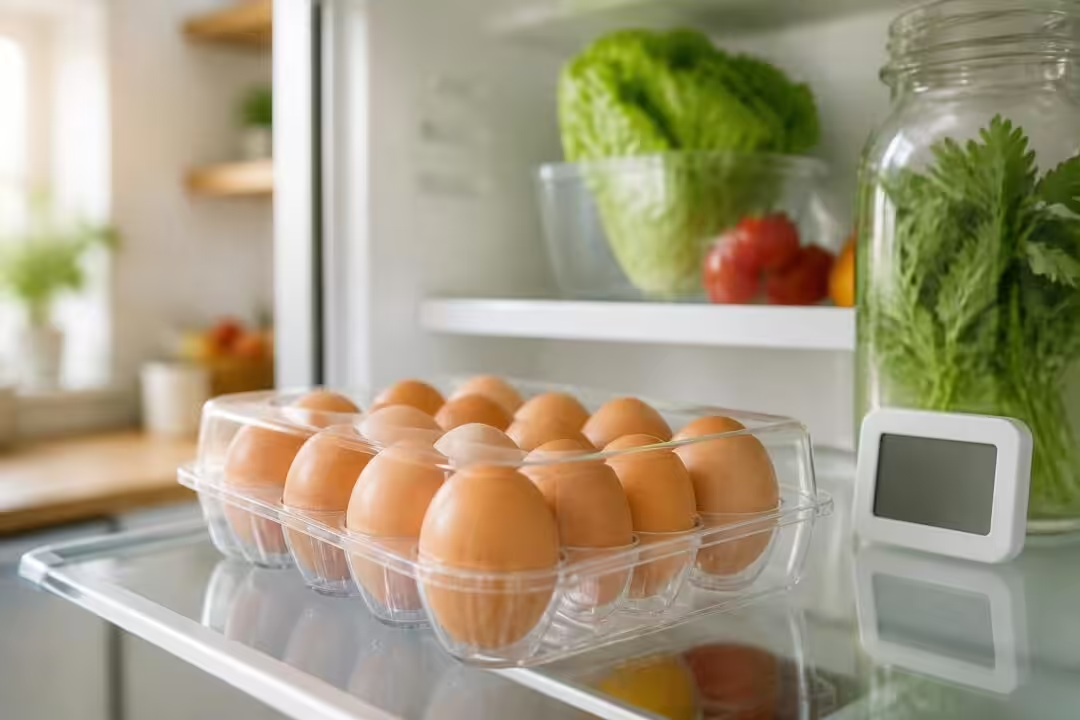
Location matters: the refrigerator door experiences frequent temperature swings when opened, accelerating quality loss. For longevity, store eggs on a stable shelf in the main compartment rather than the door.
Placing cartons toward the back of the fridge where temperature is most consistent is ideal. For commercial kitchens, a dedicated egg bin or a drawer kept at steady cold temperature mimics professional best practice and reduces risk.
Simple freshness checks: float test, sniff, and visual cues
Several home-friendly tests help determine egg quality. The float test uses a bowl of water: a sinking egg generally indicates freshness, whereas a rising egg suggests internal air accumulation and possible spoilage.
Smell is decisive: a rotten egg emits a distinct sulfurous odor when cracked. Visual inspection reveals opaque whites or discolored yolks that signal bacterial or chemical changes. These checks complement date labels to avoid unnecessary waste.
Embedding practical steps and a short checklist
Implement this quick routine when eggs are first brought home: note the pack date, place cartons away from direct light, and rotate stock so older cartons are used first. For purchased policy, buy only what will be consumed within planned timelines to reduce excess storage time.
For food services, traceability matters: logging pack dates and supplier batches helped a small catering firm track two suspect cartons in 2025 and prevented a broader incident. That example shows how minor recordkeeping yields major food safety benefits.
Insight: Refrigeration at a constant 40°F (4°C), carton storage, and simple home tests together provide a reliable shield against spoilage and help decide when eggs are fit to use. 🧊
How to Store Eggs for Long Term | 10 Methods Explained (2026) with Pros, Cons, and Steps
Overview of long-term strategies and when to choose each
long-term preservation transforms eggs from perishable staples into reliable emergency or bulk-use ingredients. Methods range from refrigeration extensions to traditional techniques like water glassing and modern solutions like vacuum sealing.
Choice depends on available equipment, intended use (raw vs cooked), and whether eggs are washed. For instant cooking access, freezing or vacuum-sealing is preferred; for pantry-style storage, mineral oil, lime water, or salting are viable.
Step-by-step explanations for top methods
Water glassing (sodium silicate) creates an impermeable seal around unwashed eggs, lending preservation for up to 6 months. The typical ratio is one part sodium silicate to nine parts water; fresh eggs are submerged and kept in a cool, dark location.
Mineral oil is simpler: coat unwashed eggs with food-grade mineral oil to mimic the bloom, then store in a cool spot. This method can preserve eggs for several months and works well for backyard producers.
Freezing requires cracking and slightly beating eggs before freezing in trays; labeled portions thaw quickly and remain usable for up to 1 year. Whole-shell freezing is not recommended due to shell expansion and cracking.
Dehydration transforms eggs into a dried powder suitable for long-term storage; when vacuum-packed and kept dry, dehydrated eggs can last a year or more and rehydrate for baking or scrambling.
Traditional techniques that still work
Lime water (calcium hydroxide) mirrors water glassing in sealing pores. Salt curing and packed-ash methods create preserved eggs with distinct flavors and months-long shelf life.
pickling and canning best suit cooked eggs; pickled eggs stored in acid brine remain edible for months refrigerated, while pressure-canning cooked egg preparations can extend pantry storage to about a year when done correctly.
Comparative table of methods
| Method 🍳 | Expected Shelf Life ⏳ | Best For ✅ | Requires Equipment 🧰 |
|---|---|---|---|
| Refrigeration 🧊 | 3–5 weeks 🕒 | Everyday use | Refrigerator |
| Water glass 💧 | Up to 6 months 📦 | Long-term unwashed eggs | Non-reactive container |
| Freezing ❄️ | Up to 1 year 🧾 | Baking & bulk cooking | Freezer, trays |
| Dehydration ☀️ | 1+ year 🔒 | Emergency & backpacking | Dehydrator or low oven |
| Mineral oil 🛢️ | Several months 📆 | Small-scale homesteads | Food-grade mineral oil |
Practical examples and caveats
Holloway Farms experimented with lime water in 2023 and documented sustained egg quality over six months when their storage room stayed consistently cool. Conversely, a community co-op that tried water glassing but used warm storage saw much shorter lifespans, underscoring temperature’s critical role.
For each method, attention to cleanliness and the egg’s initial freshness are decisive. Many long-term techniques work only with fresh, unwashed eggs; once the bloom is removed, methods like mineral oil or water glass become necessary to replace that barrier.
Insight: Matching preservation technique to the intended use and starting egg condition maximizes shelf life and culinary value — choose with purpose. 🧭
Handling and Storing Cooked Eggs: Safety, Peeling, and Culinary Uses
Rules for cooked egg storage and timelines
Cooked eggs must be treated differently from raw eggs: they are more perishable once peeled or cut. Hard-boiled eggs stored in the refrigerator remain safe for up to one week when kept in an airtight container.
Unpeeled hard-boiled eggs last longer in the fridge than peeled ones because the shell provides a barrier against contaminants. For best results, cool cooked eggs promptly, refrigerate within two hours, and label with the cooking date.
Peeling tips, peelability, and why age matters
Older eggs often peel more cleanly after boiling because their pH rises with time, reducing the bond between the white and the inner membrane. Bakers frequently reserve slightly older eggs for boiling when peel quality is a priority.
Technique matters: rapid cooling in an ice bath after boiling creates thermal shock and can help separate the membrane, improving peelability. This small step makes a significant difference when preparing large batches for events or pickling.
Pickling, canning cooked eggs, and flavor innovations
Pickled eggs offer both preservation and culinary creativity; vinegar-based brines infused with spices extend usability and add new textures and flavors. Properly pickled and refrigerated eggs are typically good for up to 3 months.
Pressure canning cooked egg mixtures—such as custards or egg-based spreads—requires strict adherence to processing times and salt recommendations; when done correctly, sealed jars store well for around a year, but opened jars must be refrigerated.
Recipe ideas and service-scale planning
For event caterers, pre-cooking and storing eggs reduces kitchen stress. Recipes like curried egg salad, niçoise-ready halves, or smoked-egg canapés benefit from predictable egg texture and timed refrigeration routines.
A chain of pop-up brunches in 2025 standardized an ice-bath protocol and used labeled bins to control turnover. The result: fewer customer complaints about texture and a reliable prep schedule that minimized daily waste.
Insight: Cooked eggs demand prompt cooling, proper labeling, and airtight storage; mastering these steps yields both safety and superior culinary results. 🔪
Practical Planning, Shopping, and Reducing Waste: Checklists, Timelines, and Smart Storage
Buying strategies and portion planning for households and businesses
Purchase quantity should align with planned consumption. Buying in bulk saves money but requires a preservation plan: if a family does not use a dozen eggs within a few weeks, consider freezing or dehydrating extras rather than letting them sit unused.
Labeling cartons with arrival dates and intended use categories—such as “poaching,” “baking,” or “hard-boil”—helps match egg age to recipe needs. This small organizational habit reduces trial-and-error cooking and minimizes waste.
Practical checklist for daily and monthly egg management
A compact checklist keeps operation consistent. The following list is designed for both home cooks and small-scale kitchens and uses emojis to aid quick scanning during busy shifts.
- 🗓️ Label cartons with pack/arrival date and intended use.
- 🥶 Store in the main fridge compartment, not the door.
- 🔁 Rotate stock using FIFO (first in, first out).
- 🧪 Perform a float or sniff test before use when dates are past.
- 📦 For bulk eggs, choose preservation (freeze/dehydrate) within 2–3 weeks.
- 📋 Keep a simple log for commercial batches and supplier info.
Technology and 2026 trends for smarter storage
By 2026, smart fridge sensors and inexpensive temperature loggers are common in even small food businesses. These devices alert to door openings and temperature rises, enabling proactive interventions that preserve egg quality.
Subscription services for bulk egg buyers offer staged deliveries and recommended preservation plans matched to household size. These systems reduce overbuying and align supply with actual use patterns.
A final note on sustainability and culture
Using preservation methods that suit local tastes fosters cultural continuity: salted eggs remain a pantry main in Southeast Asian homes, while vacuum-sealed egg portions appeal to busy bakers in urban markets. Respecting culinary preferences while reducing waste widens adoption of preservation techniques.
Insight: Smart purchasing, clear labeling, and embracing preservation aligned to needs cut waste and deliver fresher results — a small organizational shift yields lasting benefits. ♻️

Hi, I’m Landon Brooks. I am the editor-in-chief of Cook and Design, but for the first decade of my working life I was actually a product designer in New York.