| Sections 🧭 | Quick notes to remember 🥚 |
|---|---|
| Carton dates, packaging codes, and what they really mean |
|
| Before you crack: shell check, float test, candling |
|
| After you crack: appearance, texture, smell |
|
| Storage that actually keeps eggs fresher |
|
| Using up older eggs and freezing smart |
|
Eggs sit in that sweet spot of American home cooking: affordable, fast, and visually satisfying. A glossy yolk can make a simple bowl of rice look intentional, like it belongs in a calm Sunday-morning spread. But one rotten egg can turn that moment into a sharp, sulfuric warning. Over the years, the most reliable approach has proven simple: treat egg freshness like a design problem—check the label, inspect the shell, run a quick test, then decide with confidence. The goal is not paranoia. It’s keeping breakfast safe, protecting your baking projects, and wasting fewer groceries.
How to Determine if an Egg Has Gone Bad Using Carton Dates and Packaging Codes
Start where most people skip: the carton. In U.S. grocery stores, eggs usually carry multiple date markers. One is a “best by” date, often set about 30 days after packaging. Another can be a packing code (sometimes a three-digit Julian date) that points to when the eggs were placed in the carton. These details matter because eggs often remain usable for three to five weeks in a cold refrigerator, which means the “best by” date lands in the middle of the practical window, not at the edge.
That’s why the date works best as a context clue. If the carton has been kept consistently cold, eggs can be fine past the printed date. If the carton rode home in a hot car, then sat on the counter during a kitchen reorg, that same date becomes less comforting. Freshness is tied to time, yes, but also temperature and handling.
Reading the carton like a cook, not like a lawyer
For everyday cooking, the label is most useful for planning. If the “best by” date is near, that carton becomes the week’s priority for omelets, egg salad, or a sheet-pan breakfast bake. If the date is farther out, the eggs can be saved for moments when structure matters—meringue, chiffon-style cakes, or a tall soufflé. In testing batters, older eggs can whip well, but very fresh eggs can hold a tighter, more cohesive white, which changes foam stability. There’s no universal winner; there’s just the right match for the job.
A practical rule that keeps kitchens calm: if a carton is unmarked or the date is unreadable, treat it like a “use soon” item. Put a small piece of tape on the carton with the purchase week. That tiny habit prevents the classic fridge mystery: a lone egg rolling around like a marble with no backstory.
A small story that saves a big batch of batter
Consider a familiar scene: a Saturday baking plan, a new ceramic bowl from Etsy, and a cookie dough base that’s already creamed to the perfect pale beige. Eggs get cracked directly into the mixing bowl, one after another, because it feels efficient. Then the fourth egg hits: the smell rises, and the whole bowl is lost. That’s not drama; it’s a common home-kitchen heartbreak.
The fix is simple and controlled: crack each egg into a small bowl first. It’s a two-second pause that protects every other ingredient. When cooking is also visual, that little bowl becomes part of the mise en place—clean, intentional, and quietly professional. The section ahead moves from labels to the tests that work even when the carton doesn’t.
How to Tell If Eggs Are Bad Before Cracking: Shell Check, Float Test, and Candling
Before an egg ever meets a pan, it gives off clues. The shell is not a sealed container; it’s semi-porous, and that’s the entire reason the classic water test works. A quick inspection also catches the biggest risk factor: cracks. Even small damage can open a path for bacteria. When an egg has been compromised, it’s not a “use later” ingredient—it’s either cooked immediately or discarded.
There’s a calm order of operations that keeps this easy: check the shell, then do the float test if needed, then candle if something feels off. Each step has a purpose. None require special tools beyond a bowl, water, and a flashlight.
Shell inspection: the fastest safety win 🥚
Look for obvious breaks, crushed spots, or sticky patches that suggest leakage. If an egg is lightly cracked while being carried home and it’s discovered right away, cooking it immediately is usually the safest move. Think: scramble it for lunch, add it to fried rice, or bake it into a quick frittata. What should not happen is putting that cracked egg back into the fridge to “deal with later.” Time plus bacteria is not a bargain.
Hairline cracks are trickier. If the shell looks intact but feels “too thin” or there’s a faint line under the light, treat it as compromised. Most households would rather toss one egg than gamble with a whole brunch.
The egg float test: a clear yes/no with useful nuance 💧
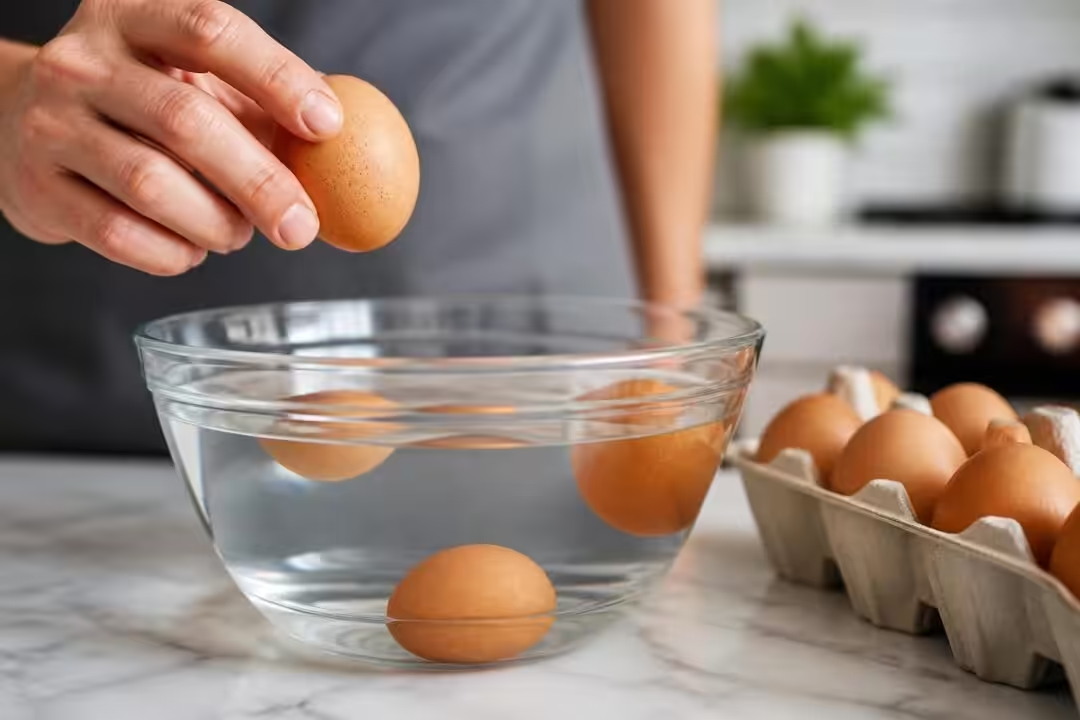
The float test is low-tech and still one of the most reliable at-home checks. Place an egg gently into a bowl or tall glass of cool water.
- 🥚 If it sinks and lies flat, it’s very fresh.
- 📐 If it sinks but tilts upward, it’s older but typically usable.
- 🧍 If it stands upright on the bottom, it’s near the end—use soon (hard-boiled is a great choice).
- 🚫 If it floats, discard it.
This works because an egg slowly loses moisture through the shell as it ages. As that moisture leaves, an air cell inside grows. More air means more buoyancy. Air itself isn’t “rot,” but it creates the conditions for decomposition and gas buildup. That’s the pathway to the smell everyone recognizes instantly.
Candling with a flashlight: the quiet pro trick 🔦
Candling is usually associated with checking developing chicks, but it’s also a smart kitchen test for cracks. Step into a dark room, hold a flashlight against the egg, and rotate it slowly. Light leaking through a line can reveal damage that’s nearly invisible in daylight. This is especially helpful when eggs have been jostled in a crowded fridge drawer or transported in a reusable bag without much padding.
Once the outside checks are done, the next layer is what happens after the shell opens: the look, the texture, and the smell. That’s where most cooks make the final call.
For a quick visual walkthrough of the float test and what “tilting” actually looks like in water, a short video demo can be helpful before trying it at the sink.
How to Know If an Egg Has Gone Bad After Cracking: Look, Texture, and the Smell Test
Cracking an egg is the moment of truth, and it should be treated like a controlled reveal. That’s why pastry kitchens crack eggs into a separate bowl. At home, the same approach saves money and stress. One questionable egg should not get the chance to contaminate pancake batter, custard base, or a bowl of perfectly grated Parmesan.
Once cracked, there are three signals to read: color, structure, and odor. Two are subtle. One is blunt.
What a good egg looks like in the bowl 🎨
A typical yolk ranges from yellow to deep orange, driven mostly by the hen’s diet. Color intensity is not a freshness meter. What matters is whether anything looks abnormal: pink, green, black, or any strange speckling that reads as “off.” When that happens, the safest choice is to discard.
The white can be clear or slightly cloudy. Cloudiness often shows up in fresher eggs and is not a red flag on its own. As eggs age, whites tend to spread more and look thinner. A very runny white can signal an older egg, though it can still be safe. That’s where smell becomes the deciding factor.
Structure and performance: why older eggs behave differently
Fresh eggs hold their shape. The white stays more compact, and the yolk sits taller. That’s why fresh eggs are prized for neat poaches and photo-ready fried eggs with tight edges. Older eggs flatten, which can be fine for scrambling, baking, or an egg wash, but less ideal when the plate needs crisp outlines.
In recipe testing, older eggs can actually be useful for hard-boiling because the shell often peels more easily. That’s a small design win for meal prep: cleaner whites, fewer cratered surfaces, better texture for egg salad.
The sniff test: the final gatekeeper 👃
If an egg smells like sulfur or anything sharply unpleasant, it’s done. No cooking trick “fixes” that. The odor comes from gases formed as the egg breaks down, and it’s the clearest signal to stop.
There’s also a workflow tip that keeps the whole kitchen from smelling bad for hours: crack questionable eggs near the trash can, and rinse the bowl quickly with hot water and soap. Ventilation helps, but speed helps more.
Food safety isn’t only about avoiding a ruined brunch. Spoiled eggs can lead to illness, from stomach upset to foodborne infections like salmonella. That risk rises with poor storage and warm temperatures. The next section moves into the habits that keep eggs stable and predictable in an American refrigerator.
If you prefer a visual explanation of what “watery whites” and “tall yolks” look like side by side, a quick video comparison can calibrate the eye.
Best Ways to Store Eggs So They Don’t Spoil: Fridge Placement, Odors, and Temperature Rules
Egg storage is where most waste happens quietly. The eggs are fine when purchased, then freshness erodes through small choices: the carton left on the counter while groceries get unpacked, the eggs moved into a cute door tray, the fridge packed with uncovered leftovers. Each choice nudges eggs toward off-flavors and shorter shelf life.
In the U.S., store-bought eggs are washed and must be refrigerated. That’s a different system than many other countries, and it changes the rules. Cold storage is not optional; it’s the baseline.
Where eggs should live in the fridge 🧊
The fridge door is convenient, and many refrigerators come with an egg holder there. It’s also the most temperature-variable spot because it warms slightly every time the door opens. For better stability, keep eggs in their original carton on a lower shelf or toward the back where it stays cold.
The carton is not just packaging; it’s protection. It buffers the eggs from sharp odors. Eggshells have tiny pores, and smells from onions, garlic-heavy leftovers, or strong cheeses can migrate. Keeping eggs in the carton also reduces moisture loss and limits the “fridge perfume” effect.
Time at room temperature: the two-hour rule ⏱️
Once eggs are refrigerated, don’t let them sit out long. A practical safety boundary used in many kitchens is two hours at room temperature. When it’s very hot—around 90°F or above—cut that to one hour. Warmth speeds bacterial growth, and eggs aren’t immune just because they look clean.
Need room-temperature eggs for baking? Skip the countertop wait. Place cold eggs in a bowl and cover with warm (not hot) water for 10–15 minutes. It takes the chill off quickly, which helps batters emulsify more smoothly and reduces the risk of butter seizing in certain recipes.
Washing eggs: when it helps and when it backfires 🚿
Grocery store eggs have already been cleaned and sanitized. Washing them again can do more harm than good by pushing bacteria through the shell’s pores or causing hairline cracks. For unwashed farm eggs, the approach changes: wash them right before use, not days in advance. That timing preserves the egg’s natural protective layer as long as possible.
Odor control: the overlooked freshness tool
If the fridge smells like takeout containers and old kimchi (a lovable scent, but not in everything), eggs can pick up that aroma. Store leftovers in airtight containers, seal strong condiments tightly, and keep eggs in the carton. Many households also keep a dedicated odor absorber in the fridge to reduce background smells. It’s not about perfection. It’s about preventing eggs from tasting like the wrong shelf neighbor.
Once storage is dialed in, the final piece is strategy: how to use older eggs before they cross the line, and how to freeze extras without ending up with icy, rubbery results.
How to Use Up Older Eggs Safely: Hard-Boiling, Baking Projects, and Freezing for Later
Older eggs that are still safe can be a gift. They may not make the prettiest sunny-side-up, but they can excel in the kinds of cooking that make weekdays run smoothly: hard-boiled eggs for salads, a breakfast casserole that reheats well, or meringues that turn a few leftovers into something architectural.
The key is acting early. When the float test shows an egg standing upright, that’s the kitchen saying “use me soon.” It’s not a crisis. It’s a schedule note.
High-impact ways to use many eggs quickly 🍳
When a carton is nearing its date, aim for recipes that use volume and hold well. A baked egg casserole can take 8–12 eggs, depending on the pan. Hard-boiled eggs can be turned into ramen toppers, Cobb salads, or simple soy-marinated snacks that feel considered next to rice.
- 🥚 Hard-boiled batch: ideal for upright-sinking eggs; they often peel cleaner
- 🧀 Three-cheese soufflé: a strong move when dinner needs drama without heaviness
- 🍞 French toast for a crowd: uses eggs fast, and stales bread gets a second life
- 🍫 Flourless chocolate cake: relies on whipped eggs for structure
- ☁️ Meringues: a tidy way to use extra whites; crisp texture rewards patience
These are not “use it up” recipes that taste like compromise. They’re recipes that suit eggs at different stages, the way a designer chooses paper stock depending on the print job.
Freezing eggs: what works, what doesn’t ❄️
Freezing is a strong option when time runs short. Eggs can be frozen raw or cooked. For raw eggs, either separate whites and yolks, or whisk whole eggs until blended, then freeze in measured portions. Silicone muffin trays work well for portioning; once frozen, the pucks can be transferred to a freezer bag with the date labeled.
Cooked eggs can be frozen too, and scrambled eggs tend to hold texture better than many other styles. Cool them quickly, portion them, then freeze. For quality, frozen eggs can last up to a year, but in practice the best results come from using raw frozen eggs within about four months and cooked frozen eggs within about six months. That timeline keeps flavors cleaner and texture less watery.
A simple “don’t ruin the recipe” workflow for baking 🥣
When baking, crack eggs one at a time into a small bowl, then add them to the main mixture. It’s the easiest way to avoid throwing away a whole batch of cookie dough or custard base. Keep a second small bowl for shells so the counter stays neat. That visual order matters, especially when cooking “with the eyes” is part of the joy.
By the time eggs are stored correctly, checked intelligently, and used with intention, the odds of meeting a rotten one drop sharply. The best kitchens aren’t defined by expensive tools. They’re defined by small, repeatable checks that keep the food safe and the cook relaxed.

Hi, I’m Landon Brooks. I am the editor-in-chief of Cook and Design, but for the first decade of my working life I was actually a product designer in New York.