| Sections / Key notes 🧭 | What to remember ✅ |
|---|---|
| Farm Fresh kickoff at Boulevard Mall 🥕 | Drive-thru distribution, Saturday morning, designed for quick access. |
| How Three Square is scaling rescued produce 📈 | Aims to grow rescued food from 20M to 40M pounds through stronger sourcing and handling. |
| Designing a distribution that works 🚗 | Multiple sites across Southern Nevada, smoother logistics, longer shelf life for fruits and vegetables. |
| Cooking value: turning a box into meals 🍋 | Simple prep methods can stretch produce into weeknight soups, salads, stir-fries, and snacks. |
| How to find help or volunteer 🤝 | Use threesquare.org or call 702-765-4030 for nearby sites. |
Las Vegas has always lived with extremes: heat that wilts basil in minutes, growth that outpaces infrastructure, and a hospitality economy that can swing fast. Against that backdrop, a fresh-produce drive matters because it treats food assistance as more than shelf-stable survival. It treats it as dinner—color, texture, and nourishment—handled with the same care a home cook gives to a cutting board and a sharp knife. Three Square Food Bank’s new Farm Fresh initiative signals a practical shift: more fruits and vegetables, handled better, moved faster, and distributed in ways that fit how people actually live and commute in Southern Nevada. 🥬
Las Vegas Food Bank Farm Fresh Produce Drive: what’s happening at Boulevard Mall
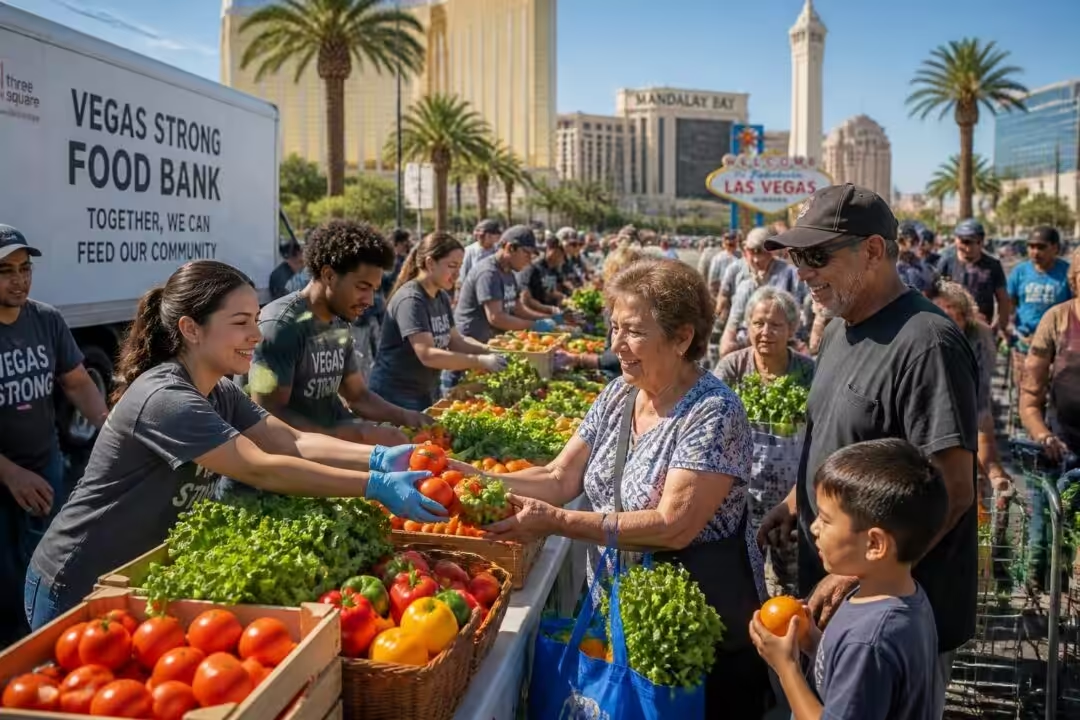
The kickoff for Three Square’s Farm Fresh program is set as a large-scale, drive-through distribution at Boulevard Mall, scheduled for a Saturday morning window—7:00 to 10:30 a.m.—timed to beat the worst of the desert heat and match family schedules. The point is not spectacle. The point is a clean, repeatable system: cars move through, volunteers load boxes, and households leave with real produce that can become lunch the same day.
A drive-through format may look simple from the street, but it’s a design problem in the best sense. Traffic flow has to stay calm. Loading has to be fast. Boxes need to be packed with care so peaches don’t bruise under onions, and leafy greens don’t cook in the sun while a line idles. When the details are right, the experience feels dignified—less like “waiting” and more like “picking up.” That emotional difference can affect whether people come back the next week.
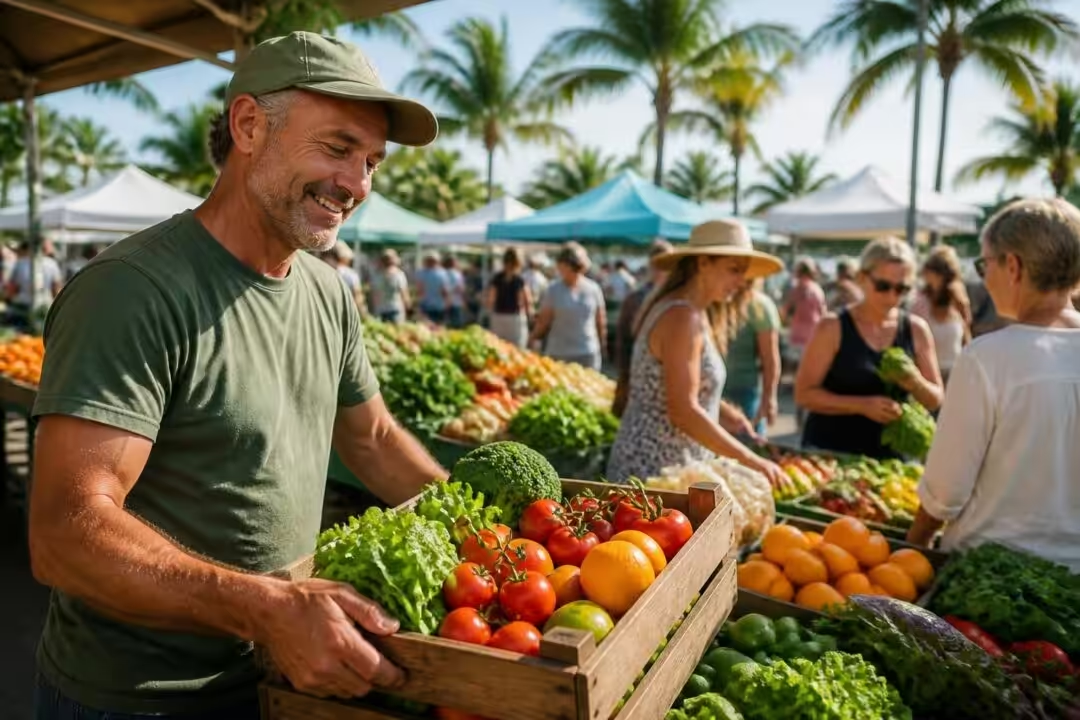
Three Square has framed Farm Fresh around free, farm-fresh fruits and vegetables for community members who need help. The phrase “farm-fresh” can sound like marketing, so it helps to translate it into reality: produce that still has snap, fragrance, and structure. Tomatoes that smell like tomatoes. Apples that hold crunch. Greens that still look alive when rinsed.
To make the morning work for as many households as possible, attendees should treat it like any other time-sensitive pickup: arrive with a clear trunk, keep a cooler if available, and plan a first meal that uses the most fragile items right away. Who wants to open a box at noon and realize the herbs have already faded?
What “drive-through distribution” looks like when it’s done with intention 🚗
A well-run distribution protects people’s time and privacy. Lines are clearly marked. Volunteers communicate with short, respectful cues. The loading process avoids rummaging or public scrutiny. That’s not just operational polish; it’s a choice that reduces stress for families who may already be balancing rent, utilities, medical bills, and childcare.
It also protects the food. Shorter loading time means produce spends fewer minutes in direct sun. Clear packing standards reduce bruising. In a place where summer heat can punish a cucumber in the backseat, these are not minor details.
Expect this kickoff to function as a template. If the morning runs smoothly, it becomes easier to replicate at other sites across Southern Nevada—more on that system next.
Three Square’s fresh produce initiative in Southern Nevada: scaling rescued food from farms and growers
Farm Fresh rests on a premise that’s both practical and quietly radical: plenty of high-quality produce never reaches a plate, not because it’s unsafe, but because markets are imperfect. A grower may have surplus volume. A shipment may be cosmetically inconsistent. A buyer may cancel. The food remains good, yet the commercial pathway breaks. Rescue programs rebuild that pathway.
Three Square has described expanded partnerships with farms and growers—local and beyond—to rescue surplus fruits and vegetables and route them into free distributions. The goal is not a one-off bump. It’s a structural increase. The organization has projected that the amount of rescued food moving through its system could double from 20 million to 40 million pounds as Farm Fresh expands.
Those numbers are big, but the kitchen-level impact is easy to picture. If a household receives 15–35 pounds of mixed produce, that’s not garnish. That’s the raw material for soups, rice bowls, salads, sandwiches, and snacks across a week. It changes what “dinner” looks like when the grocery budget is tight.
In 2026, the supply chain conversation has matured. People know “waste” is often a logistics story. In produce, a day can make the difference between crisp and tired. Rescue programs succeed when they act like good cooks: they respect timing, temperature, and handling.
Extending shelf life without pretending produce is indestructible 🥦
Three Square has noted steps to extend shelf life while improving delivery. That phrase can mean several behind-the-scenes upgrades: better cold-chain handling, faster cross-docking, more consistent sorting, and packaging that protects delicate items. Even small changes—vented crates for greens, separating ethylene-producing fruits from sensitive vegetables—can add usable days at home.
For readers who cook, the idea of shelf life is not abstract. A bunch of cilantro can be a one-night cameo or a four-day workhorse depending on how it’s handled. The same logic scales up: if the food bank can protect one more day of quality, households gain flexibility. Flexibility is what turns produce into meals instead of compost.
A mini case study: “Maya’s box” and what doubling rescued produce really means 🍊
Picture a fictional but familiar household: Maya, a hotel worker with a changing schedule, and her uncle, who prefers simple food and eats early. A Farm Fresh box with citrus, onions, greens, and squash changes the week in concrete ways. Citrus becomes breakfast and marinades. Onions become the base for everything. Greens become a quick sauté with garlic and a fried egg.
Now scale that across thousands of households. Doubling rescued pounds is not only a statistic; it’s more chances for someone to cook a pot of soup that tastes like care. The next section focuses on the distribution design that makes that possible.
How Las Vegas drive-thru food distributions are designed for access, dignity, and speed
Access in Southern Nevada is shaped by distance and transportation. A pantry that works for a downtown resident may be out of reach for someone in North Las Vegas or the far edges of the valley. Three Square’s plan for regular drive-through distributions across Southern Nevada responds to that geography with repetition and spread: more sites, more dates, fewer households forced into a single location.
Designing for dignity starts with acknowledging friction. People do not want to explain their hardship in a parking lot. They do not want confusing instructions. They do not want to be photographed. A good distribution keeps intake minimal, instructions clear, and volunteer roles consistent. When people feel respected, the food becomes easier to accept—and easier to use.
Speed is not just convenience. In the desert, it’s food safety. The longer a car sits, the more heat creeps into fruit and vegetables. That’s why morning schedules, shaded staging, and pre-packed boxes matter. A smooth lane pattern is as important as the produce list.
Practical prep at home: the 20-minute “triage” that saves the box ⏱️
Once the box is home, the first 20 minutes decide the week. Produce should be sorted by fragility. Herbs and greens get attention first. Hardy items can wait. This isn’t fussy; it’s the same mindset as putting groceries away before the ice cream melts.
Here is a short, tested routine that keeps flavor and texture intact without turning the kitchen into a project:
- 🥬 Greens first: pull out lettuce and herbs, remove any damaged leaves, then store with a paper towel to manage moisture.
- 🍑 Soft fruit check: keep ripe peaches or berries visible at eye level so they get eaten, not forgotten.
- 🧅 Build a “base bin”: onions, carrots, celery (if included) go together; they’re the start of soup, sauce, and stir-fry.
- 🍋 Acid on standby: lemons and limes go in the door for easy reach; they fix bland meals fast.
- 🧊 Cooler plan: if the fridge is crowded, prioritize anything that wilts; a small cooler with ice packs can buy time.
A question worth asking: if the box contains something unfamiliar, is it better to search for a perfect recipe or cook it simply tonight? Simple usually wins.
Where to find a nearby distribution site 📍
Three Square directs community members to use its website tools and phone support to locate distributions, pantries, and meal sites. The most straightforward path is threesquare.org, where site finders and schedules are typically posted. For those who prefer to talk to a person, the Three Square Center can be reached at 702-765-4030.
That mix—digital finder plus phone line—matters. Not everyone has stable internet. Not everyone reads English fluently. A human voice can close the gap between “searching” and “getting food.” The next section turns the produce itself into a cooking plan that respects limited time.
Turning a Farm Fresh produce box into real meals: weeknight cooking strategies that reduce waste
Fresh produce support works best when it meets real kitchens: small fridges, dull knives, picky kids, and schedules that change by the day. The most helpful approach is not a single fancy recipe. It’s a set of flexible methods that turn “ingredients” into “food” fast. Think of it as a modular menu: one prep session, several meals.
Start with a principle that chefs learn early: repetition is not boring when it’s intentional. If onions appear in three dinners, that’s not monotony—it’s efficiency. If citrus shows up in breakfast and a quick dressing, that’s smart use of what’s on hand.
For households receiving large amounts of produce, a two-track plan helps. Track one uses the delicate items quickly. Track two turns sturdy items into cooked components that hold for days.
Three repeatable “foundation cooks” (with cups and grams) 🍲
1) Sheet-pan roast for mixed vegetables: Toss sturdy vegetables (squash, carrots, onions, potatoes if included) with 2 tbsp olive oil (30 g), 1 tsp kosher salt (3 g), and pepper. Roast at 425°F until browned. The result becomes tacos, grain bowls, omelets, or a side for roasted chicken.
2) Big pot vegetable soup base: Sweat chopped onion with a pinch of salt, add chopped vegetables, then cover with water or broth. Add a parmesan rind if available. Finish with lemon. Soup is forgiving, scales well, and lets slightly tired produce taste cared for.
3) Fast citrus dressing: Whisk 3 tbsp citrus juice (45 g), 2 tbsp olive oil (30 g), 1 tsp honey (7 g), and a pinch of salt. This fixes bland greens and turns roasted vegetables into a meal.
These are not “diet” moves. They’re flavor moves. When food tastes good, it gets eaten.
A realistic 4-night menu built from common produce-box items 🍽️
Because the exact contents vary, the menu is written as a pattern. Swap as needed.
- 🥗 Night 1: Big salad with greens + citrus dressing + any protein (beans, rotisserie chicken, canned tuna).
- 🍲 Night 2: Vegetable soup + toasted bread; finish each bowl with lemon and black pepper.
- 🍳 Night 3: Roasted vegetables + fried eggs; add hot sauce or kimchi if available.
- 🍚 Night 4: Quick stir-fry using onions and any remaining greens over rice; finish with sesame oil.
The design goal is simple: fewer decisions after 6 p.m. The next section returns to the community side—how readers can support the drive without turning it into performative charity.
How to support the Las Vegas fresh produce drive: volunteering, sharing resources, and community partnerships
Food bank work runs on two fuels: logistics and trust. Logistics gets boxes into trunks. Trust gets neighbors to show up, come back, and tell someone else it was worth it. Support can look like volunteering for a morning shift, donating funds when possible, or sharing accurate information in community channels without adding stigma.
Farm Fresh emphasizes partnerships with growers and improved delivery. That kind of system also relies on people who can lift, sort, direct traffic, and keep the mood calm. Volunteers become part of the “user experience,” whether they realize it or not. A clear “good morning” and a steady pace can set the tone for the whole line.
For readers who care about food aesthetics, there’s also a quieter form of support: teaching practical cooking. A neighbor who knows how to store cilantro or revive limp greens can turn a box into meals. Skill-sharing is food security’s underrated ingredient.
Do’s and don’ts for sharing Farm Fresh info online 📣
Accurate information is a form of care. When a post shares the time window, location, and what to bring, it reduces confusion and wasted trips.
- ✅ 🗓️ Share date/time windows and remind people to arrive early if supplies are limited.
- ✅ 📍 Link directly to threesquare.org and include 702-765-4030 for those who need phone support.
- ✅ 🚗 Mention practical tips: clear trunk space, bring a cooler if possible.
- 🚫 📸 Avoid posting identifiable photos of people in line; privacy matters.
- 🚫 🧠 Skip moralizing language; keep it factual and respectful.
If one post helps a family find a site without stress, that’s impact.
What community partnerships can look like in 2026 🤝
In Southern Nevada, partnerships often form where daily life happens: apartment complexes, churches, school parking lots, union halls, and neighborhood mutual-aid groups. A property manager who allows a flyer in the lobby can help. A school that shares a link in a parent newsletter can help. A small business that sponsors volunteer snacks and water can help.
Three Square’s broader network already spans multiple counties in the region, and that regional footprint makes the distribution calendar more resilient. When one site is strained, another can carry load. That redundancy is the same idea as keeping extra scallions in a glass of water: a small buffer that keeps things going.
For anyone wondering where to start, the simplest next step remains the most concrete: check distribution options at threesquare.org or call 702-765-4030, then share the correct information with one person who needs it. ❤️
Hi, I’m Landon Brooks. I am the editor-in-chief of Cook and Design, but for the first decade of my working life I was actually a product designer in New York.