Three Square Food Bank Farm Fresh Program Expands Community Access to Nutritious Produce
In Las Vegas, where glittering resorts sit only minutes from neighborhoods juggling tight budgets, nutritious food access often hinges on transportation, time, and what’s left after rent. Three Square Food Bank’s Farm Fresh initiative answers that reality with a practical, chef-minded idea: rescue beautiful surplus fruits and vegetables from farms and growers, then get them into family kitchens quickly—without cost to the recipient. 🥕
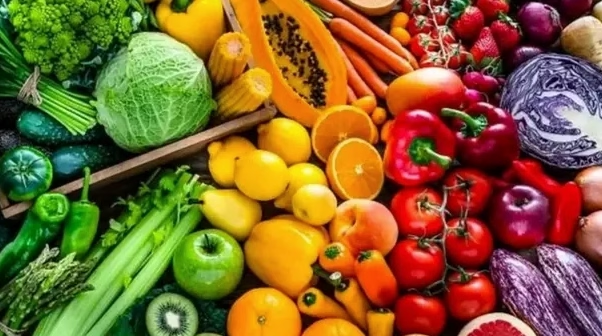
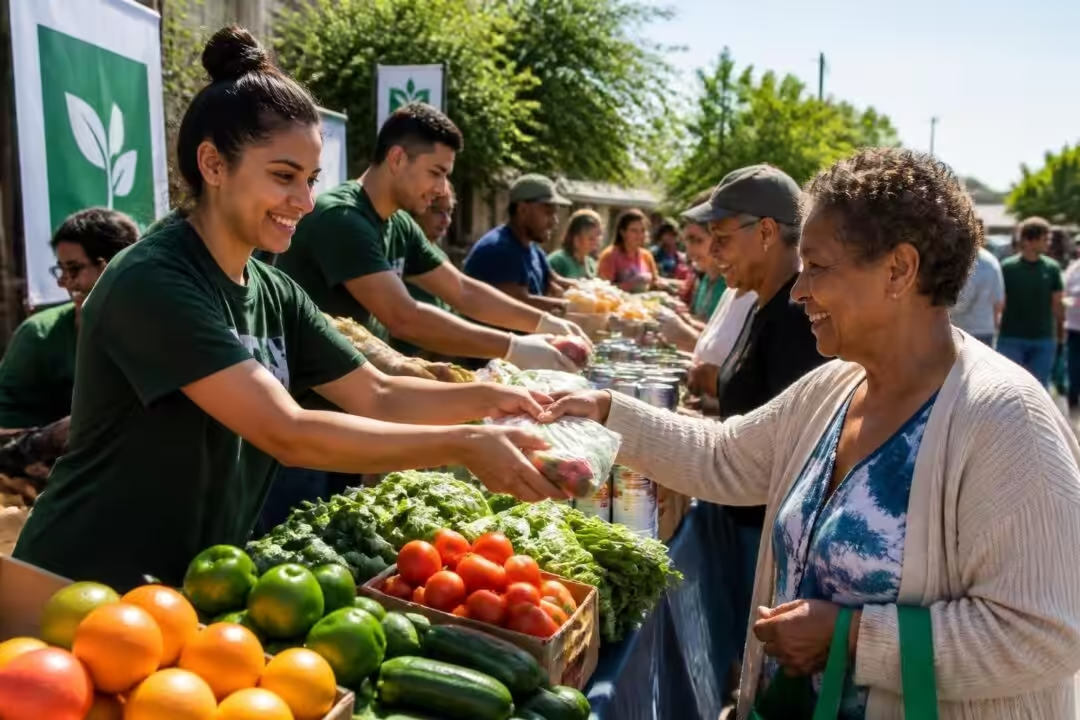
The program’s first rollout centered on drive-thru produce distributions across the Valley. Volunteers loaded cars with around 35 pounds of produce per household, a quantity that feels tangible when pictured on a countertop: sturdy greens for sautés, citrus for bright salads, potatoes that can become soups, and seasonal fruit ready for breakfast. This model respects dignity and speed; families remain in their vehicles, lines move, and food lands directly in trunks instead of being handled multiple times.
Three Square reported that nearly 2,500 families were served through nine distribution sites in that first major push. That scale matters because it signals more than a feel-good event—it reflects operational coordination: refrigerated transport, site logistics, volunteer scheduling, and a steady pipeline of farm partnerships. It also spotlights a local truth: when high-quality produce becomes available, people show up.
CEO Beth Martino has pointed to a growing appetite for fresh items as new relationships with farms increased the supply of fruits and vegetables. The reaction from residents has been described as “incredible,” not because produce is novel, but because it’s often the first thing cut when budgets are squeezed. What stretches a food budget further than ingredients that can be cooked in batches, used in multiple meals, and turned into leftovers that still feel nourishing?
Consider a simple weeknight scenario: a parent picks up a box with peppers, onions, greens, and squash. In one hour, those vegetables can become a sheet-pan roast for dinner, a scrambled-egg filling for breakfast burritos, and a blended soup for lunches—three different meals from the same base. That is the quiet genius of a produce-first approach: it multiplies possibilities rather than dictating a single dish. 🍲
Farm Fresh also serves a broader purpose: reducing food waste. Farms frequently face surplus due to bumper harvests, cosmetic imperfections, market fluctuations, or shifting contracts. Rescuing that produce keeps it out of landfills and channels it into households that will use it. The value is environmental and human at once, and it positions Southern Nevada as a place where the supply chain can be redesigned with community outcomes in mind.
From here, the story naturally shifts from “what happened on Saturday” to “how it keeps happening on Monday.” The next angle is the operational blueprint that turns a big launch into a dependable food access system.
How the Farm-to-Community Model Works: Logistics Behind Three Square Food Bank’s Innovative Program
Programs like Farm Fresh succeed or fail on execution. It is one thing to announce free produce distribution; it is another to keep lettuce crisp in desert heat, move pallets efficiently, and ensure households don’t wait for hours. The behind-the-scenes mechanics resemble a well-run kitchen line: sourcing, storage, prep, and service—each step timed to protect quality. ⏱️
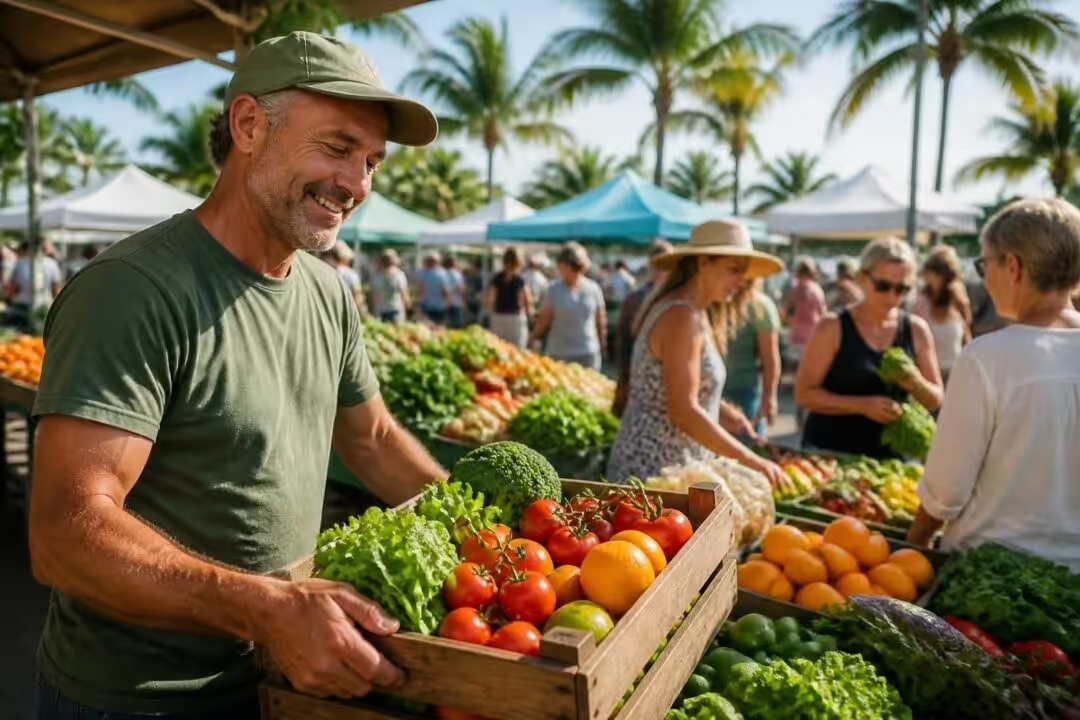
At the sourcing level, the initiative partners with farms and growers across the country to rescue high-quality surplus. The phrase “across the country” is important because it reduces reliance on any single region’s growing cycle. When one area slows due to weather or seasonality, another may be flush with produce. That variety can also improve the nutrition mix, bringing different colors and nutrients through the year rather than repeating the same few items.
Once produce is secured, cold-chain decisions become essential. Leafy greens and berries demand refrigeration; root vegetables tolerate ambient temperatures more easily. A smart distribution box balances delicate items with sturdy ones so households receive both quick-use and long-lasting ingredients. A chef would recognize the same logic used in menu planning: pair perishables with shelf-stable staples to reduce waste in the home.
The drive-thru structure simplifies distribution while keeping volunteer roles clear. One team manages traffic flow and safety. Another team stages boxes in a consistent order—heavier items below, softer produce above—so food arrives in good condition. A third team handles quick count-and-go tracking that supports reporting and planning. That small piece of data discipline enables the program to estimate future demand and adjust deliveries accordingly.
Three Square has indicated that future locations will operate seven days a week across the community. That shift matters more than it might sound. Hunger does not schedule itself for weekends, and neither do work shifts, childcare, medical appointments, or bus routes. By spreading access throughout the week, the program reduces the “all-or-nothing” pressure of single-day events and allows families to choose what fits their lives.
For residents trying to find a site, the organization points to its Food Finder tool as a central way to locate Farm Fresh distributions alongside typical food drives. In practice, tools like this act like a service map: they reduce confusion, prevent wasted trips, and help first-time visitors feel confident. Is there anything more discouraging than arriving somewhere for help and discovering the time or location changed? Clear information is a form of care.
To make the system feel real, imagine a fictional but plausible household: the Rivera family, living near a busy corridor where a car is shared between two jobs. A weekday distribution site closer to home changes everything. Instead of choosing between missing work and missing food, the family can pick up produce after a shift, then cook a simple dinner anchored by fresh vegetables. That is how logistics translate into health outcomes—quietly, meal by meal.
This operational view sets up the next question: who benefits most, and what does “access” mean beyond a trunk full of food?
To see similar community distribution models and news coverage, explore reporting and features like:
Nutritious Food Access in Southern Nevada: Who the Program Serves and Why It Matters Year-Round
Food insecurity in Southern Nevada is not a seasonal headline; it is a constant pressure that can rise after a medical bill, a rent increase, or a reduction in work hours. Three Square leadership has emphasized that the region’s need remains high throughout the year, and that households can be food insecure 12 months out of the year. That framing is crucial because it shifts the conversation from emergency relief to sustained access. 🌵
Farm Fresh speaks to a particular gap: many assistance models deliver calories, but not always fresh fruits and vegetables. Yet produce is what helps a pot of beans feel complete, what brings balance to a plate, and what supports long-term health. When budgets tighten, people often “stretch” meals with inexpensive starches, which makes sense for fullness but can leave nutrition uneven over time. By injecting fruits and vegetables into that equation, Farm Fresh improves the overall pattern of what families can realistically eat.
Access, however, is not only about food being available. It is also about whether people can reach it, whether the hours align with their schedules, and whether the format feels safe and welcoming. Drive-thru distribution reduces barriers for families with children, for caregivers who can’t leave someone unattended, and for people with limited mobility. It also supports home cooks who may be managing chronic conditions and need foods that align with dietary guidance from clinicians.
In 2026, the cost of living conversation still echoes through many U.S. cities, and Southern Nevada is no exception. When grocery prices fluctuate, fresh items can feel like a luxury. A box with 35 pounds of produce becomes more than ingredients; it becomes breathing room. That breathing room can prevent households from turning to cheaper ultra-processed choices day after day, not because of preference, but because of necessity.
There is also a community health ripple effect. More produce at home can mean children see fruits and vegetables as normal, not occasional. It can mean seniors can prepare lighter meals that are easier to digest. It can mean fewer skipped meals that lead to energy crashes at work or school. Small improvements compound when repeated weekly.
Importantly, Farm Fresh is not positioned as a replacement for other forms of assistance. It works best as a companion—something that fills the “fresh gap” alongside pantry staples. That combination supports cooking flexibility: rice, pasta, or canned proteins can be paired with peppers, onions, greens, and citrus to create meals that are both comforting and nutrient-dense.
One way to visualize the program’s household impact is to translate produce into meals. A typical mix could support: a veggie-packed omelet, a roasted vegetable tray, a citrusy slaw, a blended soup, and fruit-forward breakfasts. The exact recipes vary, but the principle stays consistent: variety unlocks consistency. 🥗
That leads naturally to the next focus—how Three Square can help people not only receive produce, but also use it confidently so nothing goes to waste at home.
From Distribution to Dinner: Practical Cooking Strategies That Make Free Produce Go Further
Receiving a large box of fruits and vegetables can feel like a gift and a challenge at the same time. When households bring home 35 pounds of produce, success depends on what happens in the next 48 hours: storage choices, quick prep, and a plan that fits real schedules. Farm Fresh supports nutrition, but kitchen know-how is what turns that nutrition into meals. 🍋
A helpful approach is to think like a prep cook. First, sort produce into three zones: “use now,” “use soon,” and “use later.” Leafy greens and berries belong in the first zone. Peppers, zucchini, citrus, and grapes often fit “use soon.” Potatoes, onions, and winter squash can sit in “use later” if stored correctly. This simple triage reduces the chance that delicate items spoil while sturdier ones wait their turn.
Batch cooking is another multiplier. A sheet pan of roasted vegetables can anchor several meals without feeling repetitive when flavors change. Roasted peppers and onions can become taco filling one night, pasta topping the next, then a quick add-in for scrambled eggs. A pot of vegetable soup can be brightened with lemon and herbs one day, then thickened with beans or lentils the next.
For families concerned about picky eaters, produce can be introduced through familiar formats. A fruit salad works when it’s chilled and slightly sweet; adding a squeeze of citrus and a pinch of salt makes flavors pop. Vegetables can slide into comfort foods: finely chopped greens in mac and cheese, grated zucchini in muffins, or roasted carrots blended into a tomato sauce. These are not tricks—they are legitimate culinary techniques used in restaurants to layer flavor and nutrition.
Free produce also invites cultural creativity. Citrus and onions can become a quick pickled topping. Greens can be sautéed with garlic and a splash of vinegar, echoing Southern styles. Peppers and squash can be charred and folded into a simple arroz-style skillet. When households see produce as adaptable rather than prescriptive, it becomes less intimidating.
Below is a practical, household-friendly set of actions that can help recipients make the most of a Farm Fresh box:
- 🥬 Wash and dry greens right away, then store with a paper towel to extend crispness.
- 🍲 Cook one big pot (soup, chili, or stew) that welcomes extra vegetables.
- 🍋 Use citrus strategically: zest for flavor, juice for dressings, wedges for finishing.
- 🧅 Prep an “aromatics jar” (chopped onions/peppers) to speed up weeknight cooking.
- 🫙 Pickle or freeze what won’t be used within a few days to prevent spoilage.
Programs can also reinforce these habits through recipe cards, short demos at distribution sites, or partnerships with local culinary educators. Even a simple “What can be cooked tonight?” handout can help a stressed parent turn a box of ingredients into dinner without extra expense.
To ground it in an example, imagine the Riveras again. On pickup day, they roast half the vegetables with oil, salt, and spices. The next day, leftover roasted vegetables become quesadilla filling with a quick citrus slaw. On day three, any softening vegetables get blended into soup. The box becomes a sequence of meals rather than a race against time.
With home strategies in place, the next lens is measurement: how to track impact, waste reduction, and reach as Farm Fresh scales across Southern Nevada.
Measuring Impact in 2026: Waste Reduction, Reach, and Community Outcomes for Three Square’s Farm Fresh
When a program is designed to reduce food waste and improve nutrition, its strongest proof comes from consistent metrics. Farm Fresh begins with clear, reportable outputs—nine distribution sites, approximately 35 pounds per household, and about 2,500 families served during the early rollout. Those numbers can be translated into operational learning: which locations draw the most cars, what times reduce lines, and what mix of produce results in the least leftover inventory. 📊
Waste reduction is often discussed abstractly, so it helps to define it in program terms. Rescuing surplus produce means moving edible food that would otherwise be discarded into households that will eat it. The climate benefit is real, but so is the local benefit: rescued produce is typically picked at peak quality and can be surprisingly beautiful. This challenges the outdated assumption that “rescued” food is inferior. In practice, it is frequently just “extra,” not “bad.”
Reach is more nuanced than a total count of boxes. A seven-day-a-week footprint can reduce access inequities by serving people who cannot attend weekend events. It can also help distribute demand across the week, preventing the long lines that discourage participation. For seniors, caregivers, and hourly workers, time is often the biggest barrier; increasing schedule options can be as impactful as increasing volume.
Community outcomes also include confidence and stability. When households know a produce distribution will be available regularly, they can plan meals and budgets differently. That reduces stress and can lower reliance on last-minute convenience purchases. In this way, predictability becomes a nutrition tool.
To present the program’s operational elements clearly, the following table outlines key components and why each one matters. The emojis highlight focus areas without overwhelming the details.
| Program Element | What It Looks Like | Why It Matters |
|---|---|---|
| 🚗 Drive-thru distribution | Cars move through stations; volunteers load produce boxes | Speeds service, supports dignity, helps families with limited mobility |
| 🥕 35 lbs per household | A substantial mixed-produce allotment | Enables multiple meals and stretches food budgets meaningfully |
| 🗺️ Nine initial sites | Multiple locations across the Valley | Reduces travel burden and distributes access across neighborhoods |
| 📦 Farm partnerships | Rescuing surplus from growers nationwide | Improves variety, stabilizes supply, reduces food waste |
| 🧭 Food Finder tool | Online locator for times and places | Prevents confusion, supports first-time visitors, boosts reliability |
Beyond these basics, deeper evaluation can look at repeat participation, household satisfaction, and whether recipients report eating more fruits and vegetables over time. Partnerships with local health clinics or universities can support anonymized surveys that respect privacy while giving a clearer view of outcomes. The goal is not bureaucracy; it is improvement—learning what works so the program can serve more people with the same care.
Finally, storytelling remains a form of measurement too. When residents say they are “seeking fresh produce” because it helps stretch budgets, that’s qualitative data pointing to a clear need. Combined with distribution counts, it creates a compelling case for scaling Farm Fresh while keeping quality at the center. The next step is to examine how community partners—delivery networks, volunteers, and local organizations—can amplify that scale without losing the human touch. 🧡
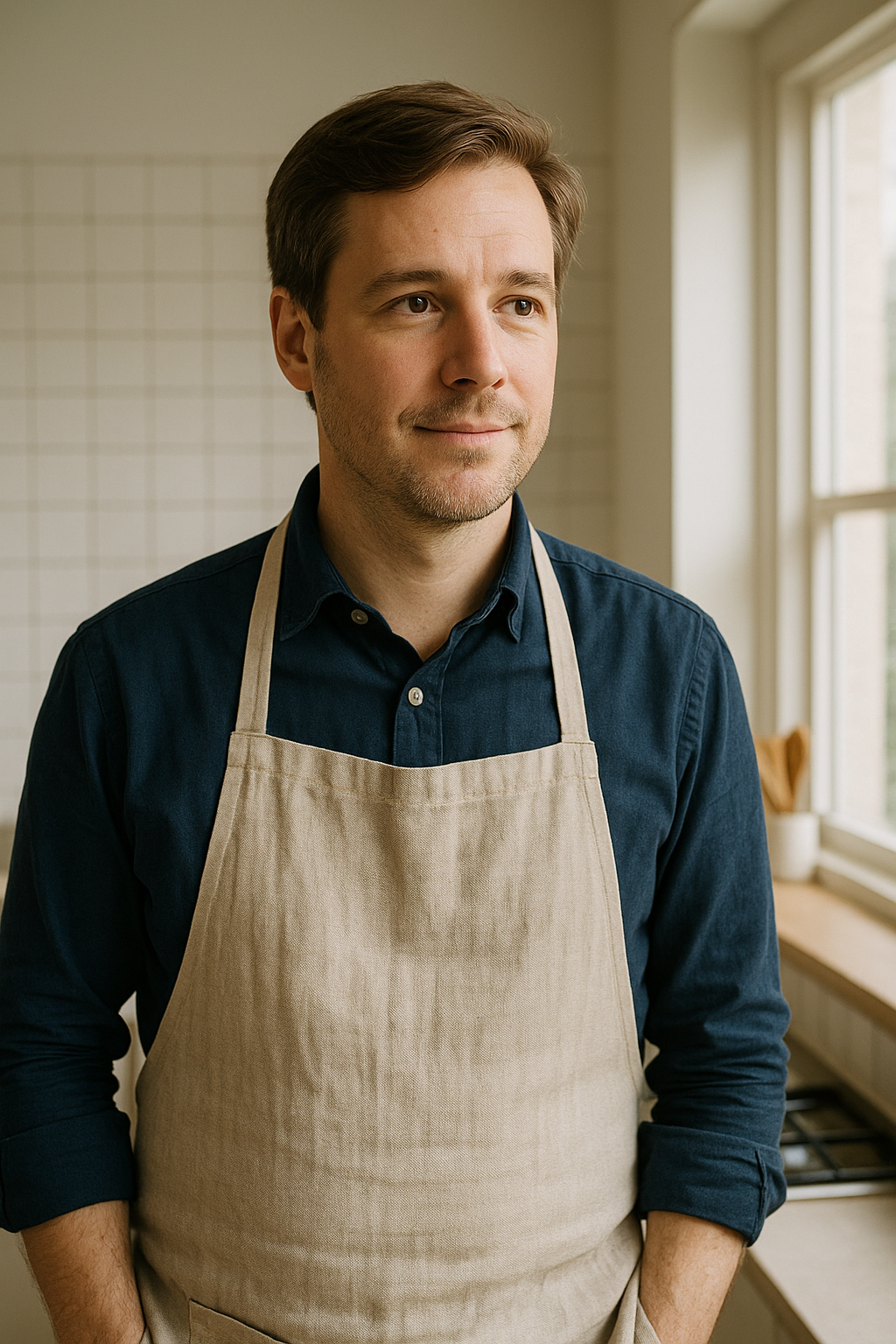
Hi, I’m Landon Brooks. I am the editor-in-chief of Cook and Design, but for the first decade of my working life I was actually a product designer in New York.