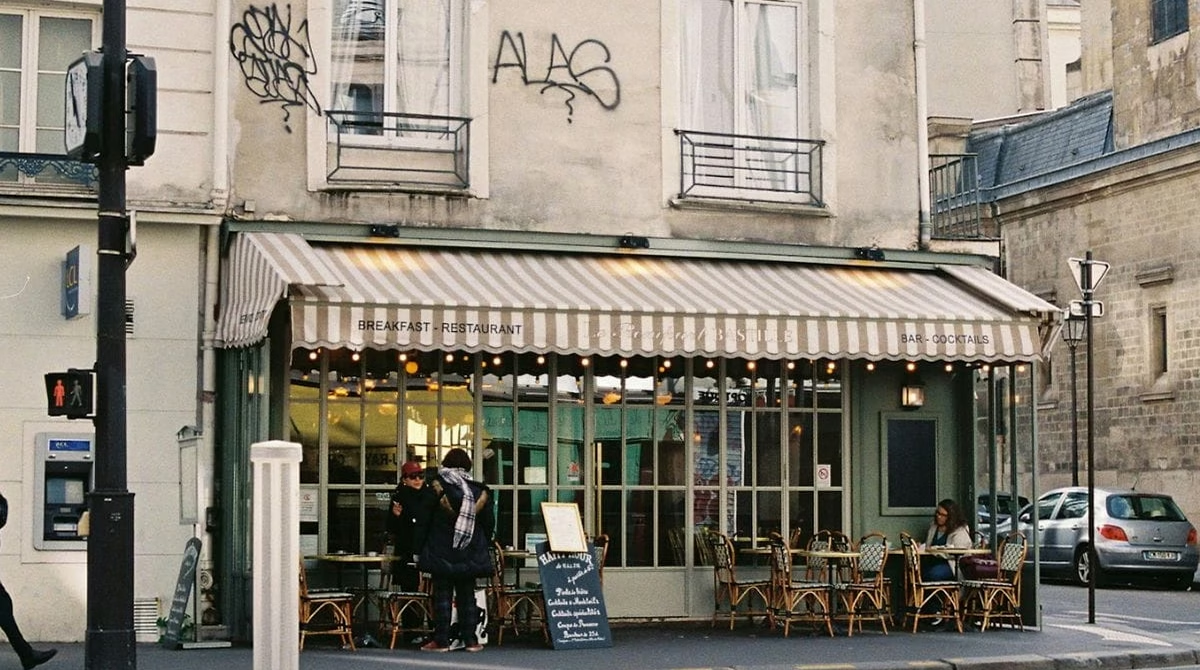
Café Notte, the Italian restaurant and bar tucked into a quiet corner of Emsworth, Pennsylvania, has spent the past year under a peculiar kind of spotlight. The cameras from Fox’s Kitchen Nightmares arrived in July 2025, more than a year before the episode finally aired in August 2026. In between, the restaurant quietly rebuilt itself — not just the menu or the dining room, but the family running it.
This is what happens after the makeover fades: which changes held, which were adapted, and what the family learned when chef Gordon Ramsay turned their kitchen into a mirror. The answer, it turns out, had as much to do with carpentry as with cooking.
What the Cafe Notte Kitchen Nightmares Episode Revealed About the Family Behind the Restaurant
For nearly two decades, Café Notte had been a neighborhood staple known for scratch-made Italian cooking. But by the time Debbie Santucci wrote a five-page letter to the show — after a friend’s tip that Gordon Ramsay was coming to town — the restaurant was running on fumes. Sales had dipped, tensions had risen, and the kitchen had become a battlefield between her husband, Jerry, and her son, David Mielnicki.
The episode, aptly titled “Cafe Notte,” didn’t just document a restaurant in trouble. It documented a family at odds. Jerry, a carpenter for three decades, had stepped into the kitchen after COVID when reliable help was impossible to find. David, who’d grown up in the business, clashed with his stepfather over prep methods, menu direction, and who was really in charge. The friction showed up in the food.
Ramsay’s first lunch was blunt. The frozen fish, the overworked chicken, the tense kitchen dynamic — none of it escaped his notice. Jerry, who never claimed the title of chef and kept his jacket unstitched, absorbed the criticism with unexpected grace. “It’s a shot to the gut,” David later admitted, “but if somebody with Ramsay’s caliber has something to say, it’s probably a good idea to listen.”
The Jacket Burning and the Conversation That Shifted Everything
One of the episode’s most striking sequences came when Ramsay took Jerry’s jacket, questioned its silent claims, and burned it in the parking lot. The theater of the gesture landed differently in retrospect. “Stick to carpentry,” Ramsay said — and what looked like dismissal became direction. Jerry was a builder. The restaurant needed a different kind of structure.
Then came the sit-down. Ramsay pulled David and Jerry aside for a conversation that had nothing to do with food. David suggested Jerry step back from the kitchen. Jerry agreed. The two exchanged “I love yous” that had been a long time coming. Debbie, watching the episode back for the first time, cried. “They’re willing to listen to each other a little more,” she said, “not so quick to judge and snap.”
That emotional core is what distinguished this episode. Yes, there were the standard restaurant improvements — a spruced-up dining room, new kitchen equipment, Ramsay’s recipes added to the menu. But the transformation that lasted happened between the lines.
Cafe Notte Menu Changes: What Stayed, What Left, and What Came Back
The renovation is only a starting point. what matters is what the kitchen does with it. At Café Notte, the answer is a study in thoughtful adaptation.
After the makeover wrapped, the family interviewed chefs with intention and hired Jennifer — Chef Jennifer, as Debbie calls her — who has now been with them a year. She’s farm-focused and fully committed to the local sourcing Ramsay had pushed. She’s kept roughly 40 percent of Ramsay’s menu intact, David estimates, while adapting the rest to Pittsburgh’s seasons.
Ramsay’s Recipes, Rebuilt for Real Life
The dishes that sold well stayed. The ones that didn’t — or cost too much — were retired without sentimentality. The snapper entree Ramsay created? Prices climbed, so the kitchen swapped to a different fish. The pinwheel pork? Heavy prep, light demand. The chicken Milanese? That one is now, half-jokingly, “Gordon Ramsay’s chicken.”
- 🍝 Meatballs — brought back after regulars campaigned loudly for their return
- 🌶️ Banana peppers — a local favorite that resurfaced alongside the meatballs
- 🥣 Lobster bisque — another guest-driven resurrection
- 🐟 Seasonal fish — replacing the cost-prohibitive snapper with market-fresh options
- 🍗 Chicken Milanese — the Ramsay creation that became a permanent fixture
- 🌱 Farmer’s market produce — zucchini in summer, root vegetables in winter, always local
Local sourcing wasn’t a slogan. Chef Jennifer works with Pittsburgh-area farmer’s markets, letting the seasons dictate the menu. In summer, that meant zucchini straight from the farm. In winter, she pivots to what’s actually available. The principle Ramsay drilled in wasn’t “serve local at all costs” — it was “serve ingredients worth serving.” That principle has become the restaurant’s spine.
The Business Turnaround at Cafe Notte: Clear Roles, Healthier Kitchen
The most significant shift at Café Notte wasn’t visible on a plate. It was the reallocation of roles within the family. Jerry, now 66, with three back operations and two knee replacements behind him, stepped out of the kitchen entirely. He’s no longer there daily. When he visits, he has dinner with his wife. He doesn’t cook. He doesn’t hover.
“It’s a lot easier to be a father than a boss,” Jerry said — one sentence that captures the heart of the business turnaround. David has taken over operations. Debbie handles the books and the front of house. Chef Jennifer runs the kitchen. The bickering hasn’t vanished — “All families have that,” Debbie says — but it no longer happens over a pass, during a rush, with the restaurant’s solvency on the line.
What Customer Reviews Reveal About the Post-Makeover Restaurant
Regulars who followed the episode have been vocal. The “bring back the meatballs” campaign was loud enough that the family surrendered. Early customer reviews since the reboot have skewed positive, with frequent mentions of the brighter atmosphere, the polished service, and the consistency of the food. The post-makeover success isn’t just a television bump — it’s repeat business from neighbors who noticed the shift.
The family also learned something about pacing. The episode aired in late August 2026, and they deliberately skipped a watch party. David watched with his 91-year-old grandmother, alone. Debbie planned to be in bed with a bag of chips. “Someone in marketing asked how much money we could make,” she said. “I told them to ask what’s more important: my family or money?”
Is Cafe Notte Still Open? The Restaurant Status After the Makeover
Café Notte is open, serving a steady stream of regulars and newcomers alike. The restaurant promoted the episode appearance on its website and social channels ahead of the broadcast, and the response has been buoyant. “It’s like waves,” David said. “We’ve been riding waves for seventeen years. Nobody can be ready for a tsunami, but we’re as ready as we’re ever going to be.”
The restaurant status question that follows every Kitchen Nightmares appearance — open or closed? — has, for now, a clear answer. The more interesting question is how the family plans to sustain momentum after the cameras have left. Their answer involves a new chef, a clearer division of labor, and a menu that breathes with the seasons.
Jerry described Ramsay as their “sensei.” “I would love to have him come back and see what we’ve evolved to,” he said. “It would be a great privilege.” Whether or not that visit happens, Café Notte has achieved something most restaurants on this show never do: a way to keep changing without losing its identity.
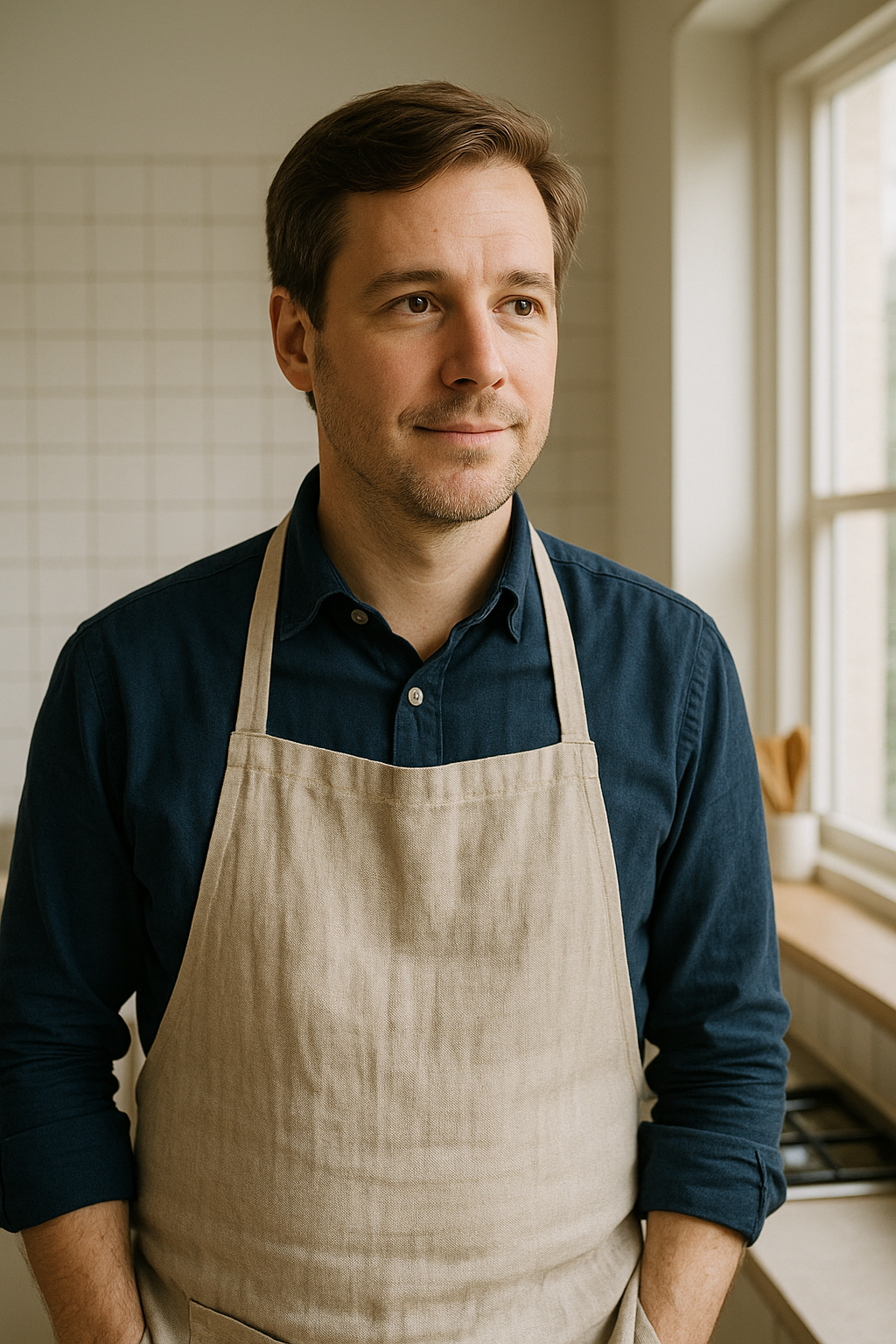
Hi, I’m Landon Brooks. I am the editor-in-chief of Cook and Design, but for the first decade of my working life I was actually a product designer in New York.