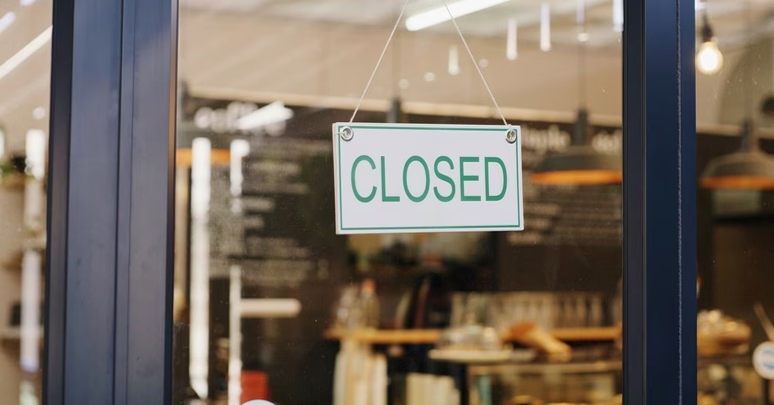
At a glance: The Raley’s Companies has confirmed another round of store closures, bringing its regional downsizing plan to seven locations across California and Nevada. The Petaluma market will close on Jan. 26, 2027, displacing 48 employees. Roseville, Antioch, and Mountain View have already shuttered; Brentwood, Los Gatos, and Elko, Nevada, are next.
What to remember:
- 🔑 This is targeted market adjustment, not a collapse — the chain will still operate roughly 100 stores
- 🔑 Lease expirations and cost cutting are driving nearly every decision
- 🔑 Expansion reduction has replaced growth as the company’s defining business strategy
- 🔑 Kitchen routines in affected towns will shift, often redirecting shoppers toward competitors, farmers markets, and delivery apps
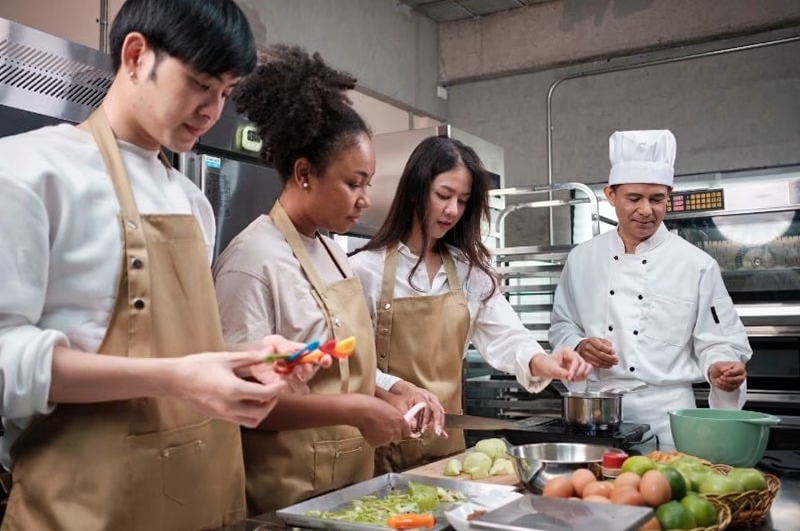
Here’s the thing about grocery stores that most people don’t consider until one vanishes: they function as quiet infrastructure for a neighborhood’s cooking life. When a Raley’s closes in Petaluma, the story isn’t merely corporate — it’s about where families will shop on a Tuesday night, which ingredients become suddenly inconvenient, and how the weekly rhythm of a home kitchen recalibrates.
Why Raley’s Companies Accelerates Downsizing in 2026
The West Sacramento-based chain, a family grocer since 1935, recently announced that its Petaluma location will close on Jan. 26, 2027. That follows a year of steady contraction: three stores already closed, four more scheduled. Company leadership frames the moves as disciplined regional consolidation, but the underlying math reflects broader pressures facing American retail.
Lease renewals no longer pencil out in some markets. Labor and energy costs keep climbing while grocery margins stay razor-thin. And customer habits have migrated toward discount banners and warehouse clubs in ways legacy chains never fully anticipated.
For Raley’s, which became The Raley’s Companies in 2021 after acquiring Bashas’ Family of Stores, this is an explicit expansion reduction — a choice to deepen investment in strongest markets rather than chase new ones. That marks a meaningful break from the growth-at-all-costs playbook that defined American groceries for the past two decades.
Behind every closure sits a spreadsheet that someone examined far longer than they’d like to admit. The Petaluma store didn’t meet its occupancy cost threshold — that’s the banality of cost cutting at scale. It’s rarely personal, rarely dramatic, and almost always about the arithmetic of square footage per dollar.
- 7store closures totalthree already closed
- 48workers displaced in Petalumaalone
- ~100stores still operatingafter the cuts
- Jan 26, 2027Petaluma closing datenext year
The Petaluma Closure and Its Ripple Effect
Petaluma loses a significant grocery anchor early next year. Shoppers will redirect toward competitors, drive a bit farther, or lean harder on delivery. For home cooks, the practical effects arrive fast: less access to the specialty items that gave Raley’s its identity, fewer last-minute produce runs, and a little more planning required for every meal.
Then there’s the human cost. Forty-eight workers face displacement, and while Northern California’s tight labor market will absorb many of them, the transition carries genuine uncertainty. Some will transfer to other Raley’s locations; others will take their experience elsewhere. No lease negotiation ever captures that dimension.
The Broader Supermarket Contraction in American Retail
Raley’s is not an outlier. The supermarket industry is navigating one of its most significant downsizing phases in decades. Kroger has said it expects to close roughly 60 stores. Albertsons locations are being streamlined nationwide. Stop & Shop has announced cuts that span multiple states.
Consumer demand for groceries hasn’t fallen — it has actually ticked upward. What changed is where shoppers spend. Discount chains like Aldi and WinCo, warehouse clubs like Costco, and a permanently expanded online grocery sector have all carved out pieces of the traditional weekly shop.
Legacy grocers now carry real estate built for a different era of American consumption, one built around a single big weekly trip. Today’s shopper moves in fragments: a bit from Trader Joe’s, a haul from Costco, a delivery order on Thursday night. The market adjustment underway is about resizing to fit that reality — often painfully, but necessarily.
What Business Strategy Experts Are Watching
The Raley’s playbook is one analysts recognize immediately: trim the tail, protect the core, keep the brand strong where it matters most. Closing seven stores while improving the rest is textbook cost cutting discipline. It’s not retreat — it’s consolidation.
The company will continue operating roughly 100 locations under its various banners, including Nob Hill Foods and Bel Air. That footprint still carries serious weight in Northern California. But the era of aggressive expansion has ended across American retail, from Seattle to Boston, replaced by a more surgical approach to geography.
There’s a design principle hiding in this strategy. The strongest grocery stores share traits with the strongest kitchens: thoughtful layout, clear sight lines, curated shelves, nothing wasted. Raley’s is pruning its garden, not burning it down — and that distinction matters for the communities it serves.
What Home Cooks Should Expect When a Grocery Store Closes
When a neighborhood anchor disappears, the kitchen feels it first. That’s true in Petaluma, in Brentwood, in Los Gatos, and in Elko, Nevada. Shopping habits shift, and so does the shape of everyday cooking.
- 🛒 Expect higher prices at nearby competitors in the short term — reduced competition always has a cost
- 🛒 Specialty ingredients become harder to source: the Korean pantry staples, artisanal dairy, and seasonal produce that made the store distinctive
- 🛒 Farmers markets often gain a temporary boost as displaced shoppers seek alternatives
- 🛒 Delivery services fill some voids, but spontaneity and freshness usually take a hit
Consider what happened in Mountain View after its Raley’s closed earlier this year. Residents who once walked to the store started driving to Safeway and Lucky. Some discovered a small H Mart twenty minutes away and expanded their culinary horizons in the process. That’s the paradox of grocery closures: they disrupt, but they also redirect. A forced change in routine occasionally surfaces a better ingredient, a different cut of meat, a new favorite noodle.
A Thoughtful Approach to a Changing Grocery Landscape
For the Raley’s Companies, the path forward is about focus. Leadership has signaled that surviving locations will receive more investment, sharper merchandising, and a clearer identity. That strategy deserves attention, because it might be the recipe that works.
American grocery is writing a new chapter in 2026 — one defined less by growth than by precision. The stores that thrive will understand their neighborhoods, respect their customers’ time, and hold a quality standard worth driving past a competitor for.
Raley’s has been feeding Northern California families for 91 years. If this downsizing is what allows it to keep doing that for another 91, then it’s the most honest kind of business strategy there is — the one that knows when less is actually more.
What the Raley's downsizing actually means
Raley's going out of business completely?
Raley's keeps around 100 stores open, so this is far from a full shutdown. These closures are about trimming weak locations, not killing the whole chain.
Which locations are closing?
Seven stores in total. Petaluma closes Jan 26, 2027. Roseville, Antioch, and Mountain View are already closed. Brentwood, Los Gatos, and Elko, Nevada are next.
Why is this happening now?
Lease renewals stopped making sense in some markets. Labor and energy costs keep rising while grocery margins stay thin. Raley's is focusing on its strongest regions instead of trying to keep every old store alive.
What should shoppers in Petaluma do?
Start mapping out alternatives. The chain's specialty items and produce are the biggest loss. Local competitors, farmers markets, and delivery apps will fill part of the gap, but meal planning will take a bit more effort.
A comment is what keeps us going
Leave a comment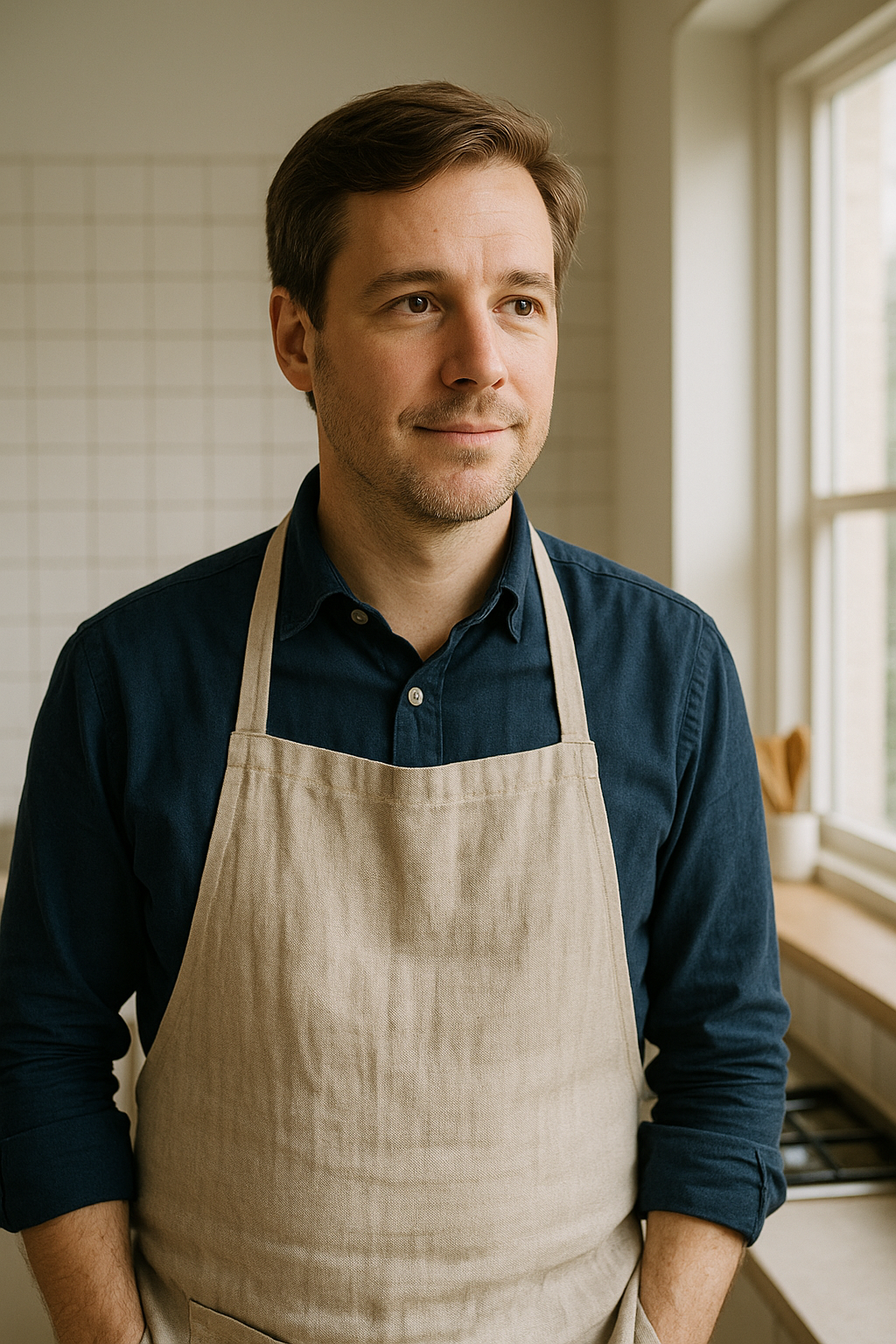
Hi, I’m Landon Brooks. I am the editor-in-chief of Cook and Design, but for the first decade of my working life I was actually a product designer in New York.