| In this story 🧭 | Quick wins ✅ |
|---|---|
|
|
There’s a particular kind of relief that hits when a produce store is designed for actual cooking, not just browsing. SWFL Produce arriving at Coconut Point folds a regional farm network into a mall stop—an everyday errand turned into a seasonal reset. For home cooks who care about flavor and layout equally, this isn’t just another place to grab berries; it’s a system that makes weeknight meals feel structured, local, and visually alive.
SWFL Produce at Coconut Point: farm-fresh shopping designed for real weeknight cooking
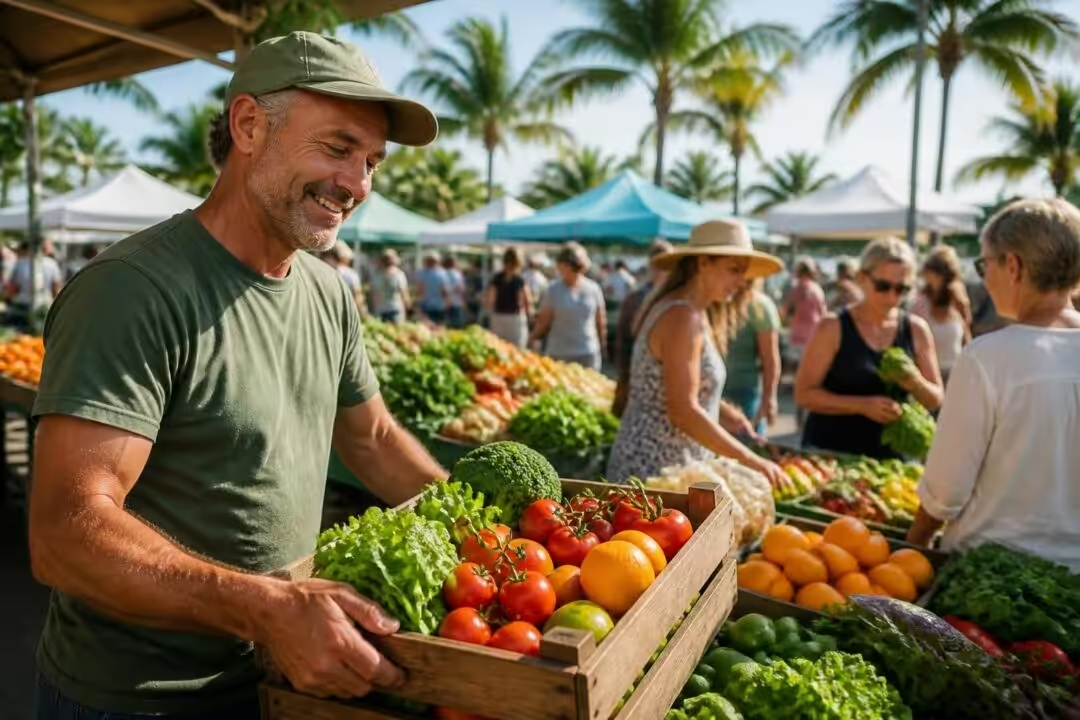
SWFL Produce’s Coconut Point location lands with a clear intention: make local food easy to buy, easy to understand, and easy to cook. The store sits at Coconut Point Cinema Circle, Unit 105—positioned like a neighborhood pantry stop rather than a special-occasion farmers market. That matters because frequency is what turns “support local farms” from a good idea into a habit. A weekly stop changes the way a fridge behaves: fewer “mystery leftovers,” more ingredients with a plan.
Unlike a single-farm stand that peaks with one grower’s strengths, SWFL Produce operates as a farm co-op model. The store connects a family farm based out of Punta Gorda with a network of eight additional Southwest Florida farms plus Florida cattle ranchers supplying meat. The result is range: the citrus and greens can coexist with eggs, bread, honey, and pantry pieces without asking one farm to be everything to everyone. For a home cook, that variety translates into coherence—shopping becomes menu-building instead of scavenger hunting.
Inside the space—described as a roomy, multi-aisle store rather than a small kiosk—shoppers can browse fresh fruit and vegetables alongside local staples. That “plus pantry” detail sounds small, but it’s the difference between buying tomatoes and actually making dinner. A jar of local jam, a loaf of bread, or a bottle of pressed juice can bridge the gap between aspiration and execution on a Tuesday.
What “farm-fresh” means here (and what it doesn’t) 🌿
“farm-fresh” is often treated like a vibe: handwritten signs, rustic crates, a photo of a tractor. At Coconut Point, the more meaningful interpretation is operational: produce coming through a shorter chain, with fewer anonymous handoffs. That doesn’t guarantee perfection—Florida weather can be dramatic, and seasonality is real—but it can improve baseline flavor and reduce the odds of buying items that already feel tired by day two.
It also resets expectations in a healthy way. The best local shopping isn’t about finding every item year-round; it’s about letting the region tell you what’s good right now. In Southwest Florida, that can mean a rotation of citrus, greens, tomatoes, peppers, tropical fruit, and more, with the mix shifting as temperatures and rainfall change. The win is responsiveness: a store that can pivot as farms harvest, rather than forcing sameness.
A quick case study: the “free stir-fry pack” as a design signal 🍳
Promotions can be noise, but a targeted giveaway—like a stir-fry pack offered to early visitors during a store push—reveals how the team thinks. A stir-fry kit isn’t a random freebie; it’s a weeknight strategy. It says: here’s a set of vegetables chosen to cook quickly, with high payoff, minimal waste. For busy households, that’s a nudge toward action, not just shopping.
Imagine “Maya,” a fictional Coconut Point regular: she walks in planning to pick up eggs and ends up with a stir-fry pack, local honey, and greens. Dinner becomes a fast skillet with sliced veg, a soy-garlic sauce, and a fried egg on top—low effort, high reward. The next day, leftover vegetables become a lunchtime rice bowl. The promotion becomes a workflow, not clutter.
Insight to keep: when a store designs for cooking (not just selling), it helps shoppers leave with a meal, not a pile of good intentions. 🥬
That cooking-first approach becomes even more interesting once the co-op model and sourcing network comes into focus.
Inside the SWFL Produce co-op model: eight local farms, Florida ranchers, and why variety matters
The most practical advantage of SWFL Produce is structural: it isn’t locked into a single farm’s output. By partnering with multiple growers—reported as eight Southwest Florida farms—SWFL Produce can smooth out the highs and lows of local agriculture. If one farm’s greens slow down, another’s might be peaking. If tomatoes are stunning this week, the store can lean in hard. That flexibility is what keeps “local” from becoming a once-a-month novelty.
For a home cook who builds meals visually—color, shape, contrast—the co-op model is a kind of creative insurance. It increases the odds that a basket can hit multiple tones: something crisp, something juicy, something bitter, something sweet. When produce is treated like a palette, dinner gets easier to compose. A salad becomes less like a chore and more like an arrangement: pale greens + deep herbs + citrus + a salty element.
Then there’s protein. SWFL Produce highlights beef through Florida cattle ranchers, and the shop messaging also points to specialty meats like bison and venison alongside local beef. That matters in a very non-theoretical way: if the store can cover both produce and protein, it can genuinely replace a big-box grocery trip for the week’s core dinners. It also gives shoppers a direct line to regional ranching—less abstract, more accountable.
How to shop a multi-farm store without overspending 🧺
More selection can backfire if it turns into impulse buying. The fix is a designer’s constraint: choose a limited set of “modules,” then repeat them across meals. A simple approach is to pick one anchor vegetable, two supporting vegetables, and two brighteners (citrus, herbs, pickles). Add eggs and one protein, and a week of dinners basically designs itself.
To make that concrete, here’s a pattern that works particularly well with Southwest Florida produce:
- 🥬 Anchor: sturdy greens (kale, collards, chard) for sautéing and soups
- 🍅 Support: tomatoes or peppers for sweetness and body
- 🥒 Support: cucumbers or snap peas for crunch
- 🍊 Brightener: citrus for dressing, marinades, and quick desserts
- 🌿 Brightener: herbs (cilantro, basil, mint) to make leftovers feel new
- 🥚 Protein helper: farm eggs—fast dinners, binding for fritters, ramen upgrade
- 🥩 Main protein: local beef (or bison/venison if that’s your lane)
This list isn’t about restriction; it’s about momentum. When the cart has roles, not random items, the fridge becomes a toolkit. The meals become repeatable without feeling repetitive.
Local pantry staples as “connective tissue” 🍯
SWFL Produce isn’t only produce. The shop categories associated with their broader program include honey, bread, jams, pickles/olives, dried fruit and nuts, and even gift baskets. Those shelf-stable pieces are often what turns a bowl of vegetables into a finished plate. A spoonful of local honey can soften a citrus vinaigrette. A good loaf makes tomatoes and salt into lunch. Pickles add snap to grilled meat.
In practical menu terms, a pantry item should earn its space by doing at least two jobs. If a jar of jam only shows up on toast, it’s a treat. If it becomes a glaze for roasted carrots and a swirl into yogurt, it’s a tool. That’s the mindset that keeps “farm store shopping” from becoming expensive décor for the fridge.
Insight to keep: the co-op model isn’t just feel-good sourcing; it’s a resilience strategy that increases menu options while keeping the shopping trip focused. 🌱
With the sourcing logic set, the next step is using Coconut Point’s convenience to build a week that actually gets cooked.
Farm store strategy at Coconut Point: building a full week of meals from one produce run
A good produce trip should feel like a plan, not a haul. The Coconut Point setup makes it tempting to “treat yourself” with extra items—especially when fruit is glossy and the eggs look like they came from a painting. The trick is to shop with an order of operations: what gets eaten raw first, what gets cooked midweek, what becomes long-game ingredients on day five.
This matters even more in Southwest Florida, where humidity and heat can speed up spoilage the second groceries hit the car. A successful week is partly culinary, partly logistical. Keep a cooler bag in the trunk. Separate herbs from heavier items. Don’t stack tomatoes under anything. Small moves, big difference.
The three-zone fridge method (raw, cook, rescue) 🧊
One of the most reliable systems we’ve used at Cook and Design is a three-zone approach:
- 🥗 RAW zone (Days 1–2): berries, salad greens, cucumbers, herbs—anything that shines uncooked
- 🍲 COOK zone (Days 3–4): sturdier greens, peppers, onions, squash—items that improve with heat
- 🥕 RESCUE zone (Days 5+): soft tomatoes, aging greens, extra citrus—destined for sauces, soups, smoothies
This system keeps the week honest. If herbs are in the RAW zone, they get used while they’re still perky. If tomatoes are drifting into RESCUE, they become a quick blistered sauce. Waste drops because the plan adapts as ingredients change.
A Coconut Point weeknight menu that looks as good as it tastes 🎨
Here’s an example menu designed around the kinds of items SWFL Produce is known to carry—fresh produce, eggs, honey, bread, and local meats. It’s not a rigid meal plan; it’s a set of flexible compositions that work even when the exact vegetables shift week to week.
| Day & dish 🍽️ | What to buy at SWFL Produce 🛒 | Design cue (color/texture) 🎨 |
|---|---|---|
| Mon: Stir-fry veg + fried egg | 🥬 stir-fry mix veg, 🥚 eggs, 🌿 herbs | Glossy sauce + crisp greens + soft yolk |
| Tue: Tomato toast + honey-citrus salad | 🍅 tomatoes, 🍞 local bread, 🍯 honey, 🍊 citrus | Red + gold + white, crunchy toast edge |
| Wed: Local beef lettuce cups | 🥩 local beef, 🥬 lettuce/greens, 🥒 cucumber | Hot/cool contrast, handheld bite |
| Thu: Greens frittata + jam | 🥚 eggs, 🥬 greens, 🍯/🍓 local jam | Matte slice, bright sweet accent |
| Fri: Rescue soup (tomato/pepper) + bread | 🍅 soft tomatoes, 🌶️ peppers, 🍞 bread | Warm bowl, smooth texture, char notes |
The key is that each dinner borrows from the next. Herbs used on Monday reappear in Wednesday’s lettuce cups. Citrus purchased for Tuesday’s salad becomes Thursday’s finishing squeeze. That repeating architecture is what makes shopping at a farm store feel economical rather than indulgent.
Two “visual rules” that keep plates modern 🥣
Design-aware cooking doesn’t require tweezers. Two simple rules carry most of the effect. First: aim for one bold color and one neutral base per plate (tomato against rice, citrus against yogurt, greens against eggs). Second: add one crisp element—cucumber, toasted nuts, or a quick pickle—so every bite has a snap.
Those rules make even a rushed dinner feel composed. And because SWFL Produce is built around fresh ingredients and local staples, it’s easy to find the crisp and the bold without adding processed extras.
Insight to keep: a farm store trip works best when the week is treated like a system—raw first, cooked second, rescued last. 🧺
Once the menu logic is in place, the big question becomes how to actually get the food home: in-store, pickup, or delivery.
SWFL Produce delivery and pickup in Southwest Florida: what convenience looks like when it’s done right
The modern promise of “farm-fresh” often collapses at the last mile. It’s easy to romanticize local food; it’s harder to deliver it consistently across real schedules, traffic, and summer storms. SWFL Produce addresses this with a broader online ordering program that supports weekly home delivery and pickup options around Southwest Florida, with the Coconut Point store functioning as a physical hub where shopping can happen in person or support fulfillment.
For American home cooks balancing work, kids, caregiving, or simply a packed calendar, this hybrid model matters. In-store shopping is inspiring, but delivery is what keeps the fridge stocked when life gets loud. The best systems let the cook choose: browse when there’s time, automate when there isn’t.
Choosing between in-store, pickup, and delivery 🚚
Each channel has a sweet spot, and treating them differently can cut waste. In-store is ideal for fragile produce and anything where ripeness is personal—tomatoes, berries, peaches, herbs. Pickup works well for heavier items and staples: eggs, bread, pantry goods, citrus, root vegetables. Delivery is perfect for “restock weeks,” where the goal is continuity, not surprise.
One effective rhythm looks like this:
- 🛍️ Week A: in-store at Coconut Point for inspiration + best-looking produce
- 📦 Week B: pickup for staples and repeat purchases
- 🚚 Week C: delivery for busy weeks, with one optional add-on “treat” item (fruit basket, pressed juice)
This rotation prevents the common problem of delivery-only shopping: losing the sensory connection to ingredients. It also prevents the in-store-only problem: buying too much because everything looks so good under bright lights.
How to pack and store for Florida heat ☀️
In Southwest Florida, the distance from store to kitchen can be the most damaging part of the food’s journey. A few practical choices protect quality. Keep a collapsible cooler in the car. Bring a towel to shade delicate items if errands stack up. Ask for eggs and meat to be bagged separately so they stay cooler longer. These aren’t “pro tips”; they’re the difference between basil lasting two days and basil lasting five.
At home, herbs do best when treated like flowers: stems trimmed, placed in a jar with a little water, loosely covered. Leafy greens last longer when washed, spun dry, and stored with a towel to absorb moisture. Citrus can live on the counter for quick grabbing, but the fridge extends its life when the kitchen is warm.
A note on access, privacy, and modern local food media 🔒
Sometimes readers try to click local coverage and run into region-based access blocks—often tied to privacy regulations like GDPR in parts of Europe. That’s not a Coconut Point problem; it’s a modern web publishing reality. The practical takeaway is simple: for official details like store announcements or local broadcast segments, rely on primary sources that are accessible in the U.S., such as the store’s own channels or local TV clips, rather than a single newspaper link that may be blocked abroad.
In a way, SWFL Produce’s physical presence at Coconut Point is its own solution. When information gets fragmented online, a real store with staff and signage becomes the most reliable interface: hours, sourcing, what’s in season, what’s coming next.
Insight to keep: convenience isn’t the enemy of quality—when delivery and pickup are built around freshness, they protect it. 🚚
The last piece is what happens after the groceries land: turning Florida produce and local staples into fast, repeatable meals with intention.
Tested cooking playbook: fast recipes and flavor pairings built around SWFL Produce at Coconut Point
When ingredients are good, the cooking can be simple—but “simple” still needs structure. The most useful home-cook recipes are modular: they accept whatever is in season, they reheat well, and they look intentional on a plate. With SWFL Produce’s mix of produce, eggs, bread, honey, and local meats, a handful of techniques covers a surprising amount of ground.
Below are practical, executable frameworks that can flex with the week’s haul. They’re written for American kitchens: a skillet, a sheet pan, a pot, a cutting board, and the kind of time most people actually have.
1) The 10-minute citrus dressing that fixes “salad fatigue” 🍊
A bright dressing is the fastest way to make local greens feel special. In a jar, combine 2 tablespoons citrus juice (about 30 g), 1 tablespoon honey (about 21 g), 3 tablespoons olive oil (about 40 g), a pinch of salt, and black pepper. Shake hard. Add grated garlic if the salad is going savory, or a little chili flake if it’s going bold.
Use it three ways in one week: as salad dressing, as a drizzle over sliced tomatoes, and as a finishing sauce for sautéed greens. The through-line flavor makes the week feel cohesive, like a restaurant menu rather than a random set of meals.
2) Sheet-pan vegetables + local protein, with one “crunch” add-on 🥩
Roast what’s sturdy: peppers, onions, squash, or whatever looks good. Toss with oil and salt, spread on a sheet pan, roast hot until edges brown. While that cooks, sear local beef (or bison/venison) in a skillet. Slice thin. Serve everything with a crunch element—cucumber, toasted nuts, or quick pickles.
The crunch is not garnish; it’s balance. It keeps roasted flavors from feeling heavy, especially in warm weather. It also makes leftovers feel fresh when reheated, because the crunch can be added at the last second.
3) Egg-forward dinners for the nights that get away from you 🥚
Farm eggs are a weeknight superpower. A frittata with greens, a soft scramble folded into toasted bread, or a fried egg on rice with sautéed vegetables—these are dinners that don’t require a plan, only ingredients. When produce is the star, eggs act like a sauce: creamy, rich, and fast.
For a simple greens frittata: sauté greens, season well, pour in beaten eggs, cook gently until set. Serve with a spoonful of jam on the side for a sweet counterpoint. It sounds unusual until it isn’t—sweet, salty, and bitter can coexist beautifully on one plate when each element is clean.
4) A “rescue soup” that turns soft produce into something elegant 🍲
When tomatoes soften or peppers wrinkle, don’t toss them. Char them in a pot with oil, add sliced onions, cook until sweet, add water or broth, simmer, blend. Finish with citrus or a small spoon of honey to round edges. Serve with local bread. The soup will taste like it took hours; it takes less than one.
This is where farm-store shopping pays off: the ingredients have enough character that a minimal soup still tastes specific. It’s also a strong visual bowl—warm coral-red soup in a matte ceramic, a navy napkin beside it, a clean slice of bread. Simple, but not plain.
Flavor pairings that reliably work with Southwest Florida produce 🌿
- 🍊 Citrus + bitter greens: balances sharpness and adds lift
- 🍯 Honey + roasted vegetables: deepens browning and rounds heat
- 🥒 Cucumber + rich meat: cool contrast, keeps the plate light
- 🍅 Tomatoes + eggs: savory-sweet, fast, and satisfying
- 🌶️ Chili + tropical fruit: bright heat that feels regional, not gimmicky
These pairings aren’t rules; they’re shortcuts. When the shopping basket changes week to week—as local baskets should—shortcuts keep cooking confident.
Insight to keep: the best farm-store cooking is modular—repeat the techniques, rotate the produce, and let the season write the variations. 🍳

Hi, I’m Landon Brooks. I am the editor-in-chief of Cook and Design, but for the first decade of my working life I was actually a product designer in New York.