
| Sections / What to remember 🍽️ | Quick takeaways 🔑 |
|---|---|
| Heinz ready meals UK launch: product line & flavours | Three 250g pouches: Chilli Black Beanz, Curry Chickpeaz, Tomato Cannellini Beanz — ready in ~90 seconds. ⚡️ |
| Market context & distribution | Launched into Sainsbury’s after Ocado trial; taps into +30% pulse consumption trend. 📈 |
| Culinary uses & plating ideas | Designed for quick lunches or as components of tacos, curry night, or an updated beans-on-toast. 🎨 |
| Nutrition, sustainability, pricing | Natural ingredients, low sugar, source of protein and fibre, £2.50 RRP — affordable plant-forward option. ♻️ |
| Retail strategy & cultural resonance | Signals a move by Kraft Heinz UK into ready meals category with global-flavour positioning. 🛒 |
Heinz ready meals UK launch: what’s inside the new pouch range
The new Heinz ready-meal pouches present a compact trio of pulse-forward dishes, each packaged in a 250g microwaveable pouch designed for speed and pantry practicality. The three flavours—Chilli Black Beanz, Curry Chickpeaz, and Tomato Cannellini Beanz—translate classic bean profiles into globally-inspired sauces that aim to be both familiar and slightly adventurous for UK shoppers.
Each pouch advertises natural ingredients, no artificial flavours, low sugar content, and a claim to deliver at least one of the recommended five-a-day portions of fruit and veg. That positioning meets two overlapping consumer demands: clean-label convenience and a move toward plant-forward meals.
From a product design perspective, these pouches occupy a compact portion size that sits between single-serve meals and side-dish offerings. At an RRP of £2.50 per 250g pouch, the price point signals an intent to be an affordable everyday purchase rather than a premium impulse buy. For households balancing budgets and time, that matters.
The sauces were tailored with distinct culinary cues. The Chilli Black Beanz rely on a smoky chipotle profile and are suggested as tacos or rice companions. The Curry Chickpeaz use coconut-curry notes and pair naturally with naan or braised greens. The Tomato Cannellini Beanz recall Italian tomato-and-garlic marinades and reframe classic beans-on-toast concepts for a slightly more refined plate.
Packaging claims aside, real-world use will reveal more: texture of the legumes after reheating, sauce-to-bean ratios, and whether the flavour depth translates beyond label copy. Early shopper reactions highlight the “homemade” mouthfeel and convenience, but those are subjective and contingent on reheating method, pairing choices, and expectations about portion size.
Below is a concise reference table that maps each SKU to core attributes and suggested pairings, useful for cooks and merchandisers alike.
| SKU 🍽️ | Size & Price 💷 | Key attributes 🌿 | Suggested pairing 🍚 |
|---|---|---|---|
| Chilli Black Beanz 🌶️ | 250g — £2.50 | Smoky chipotle, source of protein & fibre | Rice, tacos, baked potato |
| Curry Chickpeaz 🥥 | 250g — £2.50 | Coconut-curry notes, low sugar | Naan, steamed rice, quick dhal mix |
| Tomato Cannellini Beanz 🍅 | 250g — £2.50 | Tomato & garlic sauce, at least 1 of 5-a-day | Beans on toast, polenta, grilled veg |
Key insight: these pouches are designed to be meal components rather than culinary finales, intentionally leaving room for home cooks to complete the plate with starches, greens, or bakery items.
Heinz ready meals UK launch: market context and distribution strategy
The Heinz move into pouch-based ready meals comes at a moment when pulse consumption has seen measurable growth across Western markets. Over roughly the past decade, global bean and pulse consumption increased by an estimated 30%, buoyed by shifts in dietary patterns and a greater appetite for convenient plant proteins. That macro trend frames the launch as less a novelty and more a strategic entry into an expanding category.
Distribution followed a familiar test-and-scale approach. Initial trials on online retailer Ocado provided performance signals—conversion rates, repeat purchase propensity, and consumer feedback—before a broader supermarket rollout through Sainsbury’s. Listing at a national grocer indicates confidence in the SKU’s mass-market appeal and an expectation of steady, lower-single-digit weekly sales rather than splashy seasonal spikes.
Kraft Heinz UK’s decision to place these pouches on mainstream shelves addresses multiple retail dynamics: grocers need shelf-stable, margin-friendly meal options; shoppers want quick heat-and-eat items; and manufacturers seek incremental growth within existing brand equity. Heinz leverages its long-standing association with beans to reduce the friction of trial among legacy fans while reaching new shoppers who prize global flavours.
Operationally, the pouch format offers logistical advantages versus tins: lighter weight, reduced shipping volume, and a modern convenience signal to consumers. Microwaveability in roughly ninety seconds becomes a marketing hook that aligns with longer-term trends toward time-saving kitchen solutions. Yet microwaving also compresses sensory expectations; a stellar pouch experience requires attention to sauce viscosity and legume texture so the meal doesn’t feel over-processed after rapid reheating.
Beyond retail placement, messaging emphasizes clean-label cues—“no artificial flavours,” “low in sugar”—and nutritional framing—“source of protein and fibre,” “at least one of your five a day.” Those claims matter most when they match the sensory reality on the plate. Brand trust eases trial, but repeat purchases hinge on consistent eating experiences and perceived value versus price.
To better understand shopper motivation, consider a fictional household: Mina, a 34-year-old art director living in Leeds, and her partner. Mina shops Sainsbury’s weekly, partially for curated pantry staples, and values packages that bridge time pressure with visual restraint. The new Heinz pouches slot into Mina’s routine—easy to heat for solo lunches or to dress up for casual weeknight dinners. This archetype helps explain why the SKU targets both convenience seekers and design-aware cooks who think with their eyes.
Key insight: the launch is a market-extension play—using established brand heritage to occupy a growth category where speed, price, and trusted flavour cues determine shelf success.
Heinz ready meals UK launch: culinary uses, plating and weeknight menus
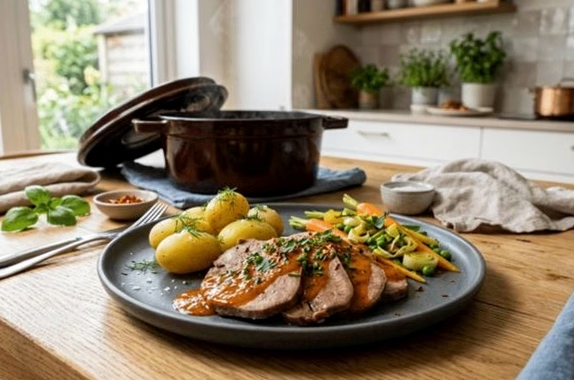
For design-minded home cooks, these pouches are less about following a packaged recipe and more about composition. Each pouch functions like a prepared component—a pantry-friendly protein and sauce—that invites pairing, layering, and visual play on the plate. The creative brief for home use is simple: treat the pouch as a building block, not the final dish.
Start by thinking in terms of texture contrast: a soft legume in a glossy sauce benefits from crunchy or acidic companions. A bowl of Chilli Black Beanz gains dimension with pickled red cabbage, crisp radish, lime wedges, and toasted tortilla shards. The bean’s smokiness pairs well with a herby salsa verde or a quick slaw. For a plated taco night, the pouch allows speed—heat, spoon, and finish with a squeeze of citrus and a scattering of coriander seeds.
The Curry Chickpeaz behaves like a short-cut korma; pair with sticky basmati rice, sprigs of coriander, and a torn naan for softrounded contrasts. Adding a splash of lemon and a spoon of quick raita (yogurt, cucumber, salt) brightens the coconut-curry base. For an at-home meal kit approach, assemble small bowls with chopped tomatoes, toasted almonds, and fried onions so the pouch becomes the heart of an interactive family dinner.
The Tomato Cannellini Beanz are the most adaptable in classic British contexts: they can reinvent beans-on-toast with extra acidity and texture. Try thick-sliced sourdough, a smear of ricotta or tahini, and a scattering of charred spring onions. For a lighter approach, spoon the tomatoes over charred polenta rounds and finish with lemon zest and parsley.
Presentation matters: choose matte ceramic plates, single-stem garnishes, and restrained colour palettes to keep the focus on texture. A deliberately imperfect smear of sauce across a plate reads modern rather than casual; it signals intention. For communal meals, heat multiple pouches and arrange them in shallow bowls with accompaniments in pebble trays—this encourages sharing and visual variety.
Practical examples that home cooks can execute in under 15 minutes:
- 🌮 Quick taco plate: heat Chilli Black Beanz, warm corn tortillas, top with quick-pickled onions and cotija-style cheese.
- 🍛 Weeknight curry swap: heat Curry Chickpeaz, serve over microwaved basmati, garnish with fried curry leaves.
- 🍞 Elevated beans-on-toast: toast sourdough, ladle Tomato Cannellini Beanz, finish with lemon oil and cracked pepper.
These ideas aim to keep dishes visually compelling while preserving the central convenience of the pouches. Each suggestion pairs colour, texture, and flavour contrasts to make a reheated pouch feel considered rather than hurried.
Key insight: the pouches work best when used as compositional elements—they simplify weeknights while offering space for design-forward plating.
Heinz ready meals UK launch: nutrition, sustainability and consumer trends
The nutritional and sustainability narratives are tightly interwoven in this launch. Product claims state that each pouch is a source of protein and fibre, low in sugar, and made from natural ingredients. Those features respond to sustained consumer shifts: more shoppers aim to eat healthier, cut back on meat, and prioritize plant proteins. In market terms, that behavioural pivot has driven roughly a 30% rise in global pulses consumption over the past decade.
From a dietary standpoint, pulses deliver satiety, micronutrients, and a favourable macronutrient profile for many eating patterns without requiring refrigeration. For households balancing nutrition and cost, a £2.50 pouch that can constitute a main or substantial side becomes a pragmatic option. However, it’s important to read labels for sodium content and portion comparisons to homemade equivalents.
Packaging and lifecycle impacts matter to design-aware consumers. Pouches reduce tin weight but often rely on multi-layer laminate structures that complicate recycling. Retailers and manufacturers are exploring recyclable mono-material pouches and take-back schemes, yet not all markets have matching infrastructure. In the UK context, recyclability claims must be clear and actionable to avoid greenwashing perceptions.
There’s also a cultural angle: pulses carry culinary histories from South Asia, Latin America, the Mediterranean, and Africa. Heinz’s flavour choices nod to those regions but package them for mainstream UK taste. The challenge is doing so respectfully—acknowledging origins while avoiding tokenism. This is where thoughtful back-of-pack storytelling and ingredient transparency help.
For shoppers who track budgets, the pouch price undercuts many ready-meal alternatives while offering more perceived wholesomeness than some ultra-processed microwavable dinners. This creates a sweet spot in value-driven purchasing decisions, particularly among younger urban households who want better-for-you options that still satisfy time constraints.
Practical checklist for consumers considering the pouches:
- 🔍 Check the salt per pouch and compare to homemade equivalents.
- 🌱 Use as a meal component to stretch portions and increase veg variety.
- ♻️ Verify local recycling rules if concerned about pouch materials.
- 💷 Consider price-per-protein calculation versus canned legumes to evaluate value.
Key insight: the nutritional and environmental promise is credible but conditional—repeat purchase will hinge on alignment between label claims, eating experience, and recyclable packaging clarity.
Heinz ready meals UK launch: retail implications and cultural resonance
Moving into ready meals via pulse-based pouches positions Kraft Heinz UK at a junction of heritage and experimentation. The brand’s long-standing bean credentials lower barriers to entry, while the pouch format signals modern convenience. For supermarkets, the SKU fills a visible gap in chilled and ambient meal zones: a shelf-stable, plant-based, quick-heat option that can be merchandised alongside sauces, meal bases, or health-led ranges.
Sainsbury’s national listing suggests category managers view the range as complementary to own-brand ready meals rather than direct competition at launch. Ocado’s earlier trial served as a low-risk environment to test receptions from an audience that skews interested in novel or premium pantry items. Success metrics likely included repeat purchase rate, basket attach rate, and social sentiment.
Merchandising tactics that will likely work: eye-level placement in ambient meal aisles, multipack promotions for family shoppers, and cross-merch with rice and flatbreads for instant meal solutions. Sampling programs in store or recipe-card inserts could bridge the gap between curiosity and habitual use, showing how to dress a pouch into a fuller plate in under 10 minutes.
Consumer reactions so far are anecdotal but positive—callouts of “homemade taste” and “perfect taco night side” appear in early feedback. That sentiment matters because emotional connection to a product often trumps functional claims. Brand storytelling that highlights provenance of ingredients, recipe inspiration, and simple plating ideas will strengthen cultural resonance.
From a competitive standpoint, the launch pressures both private-label ranges and established ready-meal brands to sharpen their plant-forward offerings. Expect rivals to accelerate their own pulse-based innovations or price adjustments to protect margins. For retailers, the strategic question becomes whether to promote such SKUs as health-led, convenience-led, or lifestyle-led—each framing targets different shopper motivations.
For the editorial-minded consumer archetype (like the earlier Mina), the SKU’s success will be judged on repeatability: does the pouch reliably heat to a pleasant texture, and does it lend itself to playful plating without demanding extra time? If yes, it will move from trial to habit.
Key insight: this launch is as much about shelf strategy as it is about recipes; the pouches succeed when placed and presented as flexible building blocks within the weekly shopping ritual.

Hi, I’m Landon Brooks. I am the editor-in-chief of Cook and Design, but for the first decade of my working life I was actually a product designer in New York.


7 Comments
Beans in 90s—feels like a compile time. I’d add a microservice for toast. #FoodTech
Those pouches finally make beans look like modern art. The label designer deserves a raise.
Distributing hot meals in 90 seconds? Now that’s an infrastructural flex. Curious about the supply chain carbon cost.
Landon, the 30% pulse consumption rise is promising, but let’s see pouch recyclability numbers before celebrating. #sustainability
Thanks Landon — intriguing to see pulse-based dishes in multilayer pouches. I wonder how the barrier film compares to glass jars for carbon footprint.
Pulses restore soil nitrogen; these pouches bring that quiet regenerative power to urban lunch breaks. Lovely.
The ‘z’ in Beanz and Chickpeaz gives playful branding, but the pouch front could use more breathing room. Color palette? Chef’s kiss.
Les commentaires sont fermes.