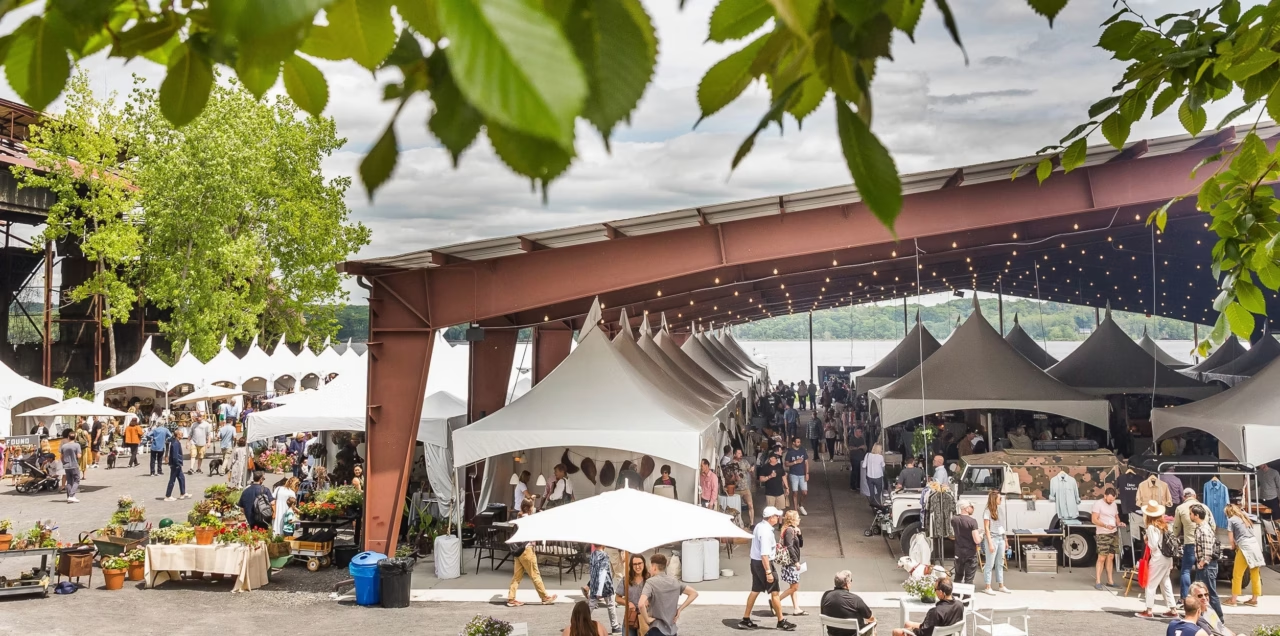
Sitting on the banks of the Illinois River, with the Peoria skyline catching the first light of the day, something quietly extraordinary happens every Saturday morning.
By 8 a.m., the tents are up, the crates of just-picked sweet corn are stacked like amber towers, and the smell of fresh-baked sourdough drifts through the air. This is the Riverfront Market, and as of the 2025 voting season, it has been officially recognized as one of America’s Top Ten Farmers Markets. The American Farmland Trust, which has run the America’s Farmers Market Celebration since 2008, announced the results after a two-month public voting period that wrapped up on September 30, 2025. Peoria’s beloved gathering earned the ninth spot — a national nod that feels less like a trophy and more like validation for a community that has shown up week after week for years.
| At a Glance | What to Remember |
|---|---|
| 📅 Voting period: August 1 – September 30, 2025 | 🏅 Riverfront Market placed #9 nationally |
| 🏆 Hosted by American Farmland Trust | 🌽 Direct-from-farmer shopping experience |
| 🌆 Location: Downtown Peoria, Illinois | ❤️ Public votes powered the entire ranking |
| 🛒 Focus: Fresh produce, local vendors | 🗳️ 2026 voting season is already on the horizon |
What makes this ranking genuinely meaningful isn’t just the prestige — it’s the fact that it comes from the people who actually shop, eat, and wander through the stalls. This is not a panel of critics in a New York boardroom; it’s a celebration built on the collective voice of everyone who has ever left the market with a bag of heirloom tomatoes and a full heart.
Why a Top Ten Ranking Matters More Than a Trophy
The America’s Farmers Market Celebration is the only annual ranking of its kind that relies entirely on public votes. When someone takes a moment to log in and click “Vote” for their favorite market, they are signaling something deeper than appreciation — they are saying that this place matters to them. The Peoria RiverFront Association, which organizes the Riverfront Market, has long understood that a successful market is less about the stalls and more about the relationships that form around them.
A ninth-place finish puts Riverfront Market in the company of coastal giants and metropolitan staples. It sits alongside markets from states with far larger populations and longer growing seasons. That Illinois holds its own — and that Peoria specifically receives this kind of love — speaks to the market’s ability to feel both grand and intimate at the same time.
There is an economic dimension to this too. The $2,500 prize that comes with winning the celebration is a modest sum, but the real windfall is the attention. Being named a top market draws curious visitors from neighboring states, brings media coverage, and reinforces the perception that Peoria is a place where food culture thrives. In an era when local journalism is stretched thin and small businesses struggle to be seen, a national ranking cuts through the noise.
The Riverfront Market Difference: Structure, Seasonality, and Soul
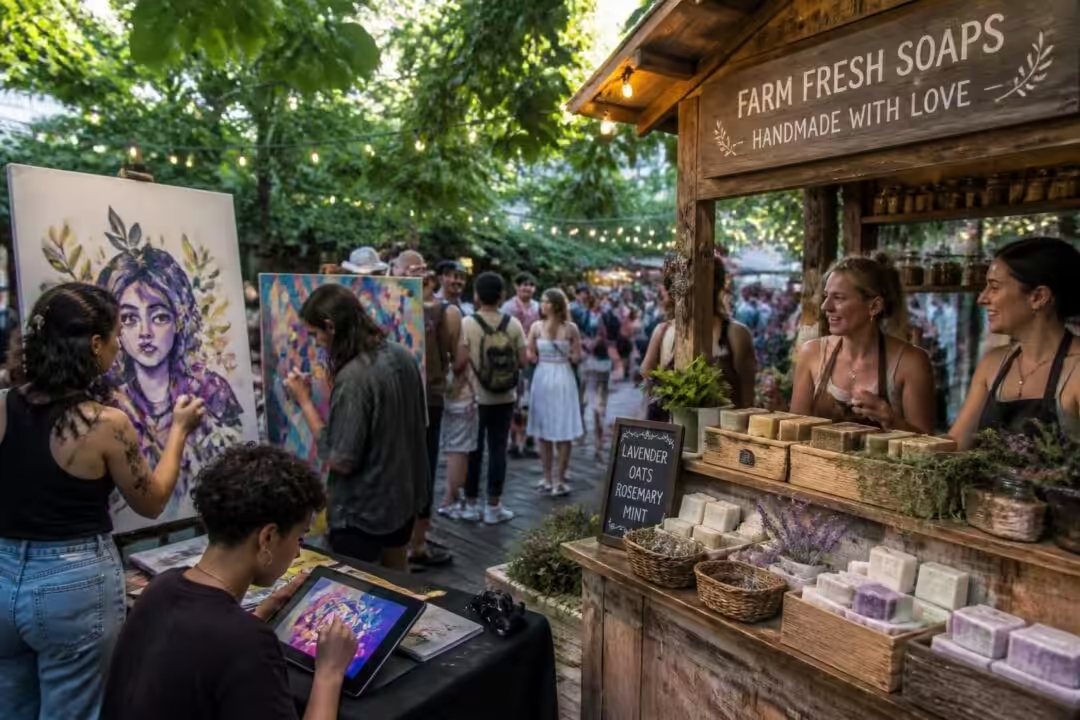
What is it about this particular market that made voters across the country take notice? It starts with the setting. Held in the shadow of the Peoria RiverFront, the market enjoys a backdrop that feels almost cinematic — barges gliding along the water, fountains spraying kids chasing each other, and the silhouette of the Murray Baker Bridge framing the scene. But the setting alone isn’t enough. The local vendors are the beating heart, and they bring a level of craft that transforms an ordinary grocery run into a weekly ritual.
Walk past the mushroom stand and you’ll find varieties that never make it to supermarket shelves — lion’s mane, chestnut, and blue oyster mushrooms with their delicate frills still intact. Further down, a baker pulls organic rye loaves from a portable oven, steam rising in the cool morning air. A farmer from Tazewell County weighs out snap peas that were picked six hours earlier. The through-line is directness: no middlemen, no distribution warehouses, no shrink-wrapped plastic trays.
Farm-to-Table Without the Marketing Campaign
The phrase farm-to-table gets thrown around casually in restaurant marketing, but at Riverfront Market, the concept is literal. The people selling the produce are the people who grew it, weeded it, and harvested it. That proximity creates an accountability that supermarket supply chains simply cannot replicate. When a customer asks how the peaches were grown, the answer isn’t a vague gesture toward a corporate sustainability report — it’s a detailed explanation of soil composition and frost dates from someone who has dirt under their fingernails.
This direct relationship also builds community resilience. Shoppers aren’t just buying food; they are investing in local land stewardship and supporting the economic viability of small farms in the region. Every dollar spent at a market stall circulates within a tighter radius, keeping farms alive, funding local families, and preserving the agricultural character of central Illinois.
For home cooks, this translates into better meals. A tomato that traveled sixty miles instead of six hundred keeps its structure, its acidity, and its sweetness. Eggs from pasture-raised hens have yolks the color of a sunset. Honey from a regional apiary tastes like the wildflowers of the Illinois River valley — something no factory bottling line can replicate. The seasonal goods found at the market shift week by week, which keeps cooking exciting and grounds eaters in the rhythm of the calendar.
Fresh Produce, Organic Choices, and the Changing Shape of American Grocery Habits
Shopping habits across America are shifting, and the Riverfront Market is riding that wave with intention. Nationally, farmers markets have seen a resurgence as consumers increasingly question where their food comes from. The pandemic accelerated a trend that was already in motion: people want transparency, traceability, and a visceral connection to the land. When shoppers choose fresh produce from a local stand, they opt out of the opaque system that keeps most grocery shelves stocked with items harvested weeks earlier on distant continents.
The organic offerings at Riverfront Market are not relegated to a single token stall. Several vendors operate with certified organic practices, while others use regenerative methods that go beyond certification requirements. For shoppers, this means access to produce that is both honest and nutritious. It also means learning moments: a conversation with a farmer about integrated pest management is infinitely more valuable than a sticker on a plastic-wrapped cucumber.
There is also a generational shift happening. Young families are bringing their kids to the market not just for the donuts (which are exceptional, let’s be honest) but as a form of food education. Watching a child point at a kohlrabi and ask “what is that?” is exactly the kind of moment that builds a healthier relationship with eating. The market becomes a classroom without walls, where curiosity is rewarded with samples and stories.
Behind the Scenes: How a Small Market Took on the Nation
The journey to a top ten finish didn’t happen by chance. The Peoria RiverFront Association ran a smart, sustained campaign that rallied loyal shoppers, local influencers, and even neighboring communities to vote daily during the voting window. It was a grassroots effort in every sense of the word — no PR agency, no paid ads, just enthusiastic social media posts, handwritten signs at the market, and reminder emails to mailing lists. There’s something deeply democratic about a ranking that can be won through sheer community enthusiasm.
One particularly creative push came from vendors themselves. Several farmers printed QR codes on their tent signage that linked directly to the voting page. Bakery boxes were stamped with gentle reminders. The local food blog scene rallied. Even the Steamboat Classic Road Race, which briefly forced the market to relocate to the Northwoods Mall parking lot in June, turned into a publicity moment rather than a disruption. That kind of adaptability is exactly what has kept this market resilient through heat waves, storms, and global supply chain chaos.
What This Means for the 2026 Season
As the 2026 market season approaches, the stakes are already rising. The 18th annual America’s Farmers Market Celebration will open its voting period on August 1st and run through September 30th. The Riverfront Market won’t just be defending ninth place — it will be gunning for the top spot. And why not? The foundation is already there: dedicated vendors, a stunning riverfront location, and a community that has demonstrated it knows how to show up. The market’s Facebook page has already begun teasing the campaign, and the energy is palpably different this year.
But rankings aside, the real victory is the daily one. Every Saturday, thousands of people choose to spend their morning outdoors, talking to farmers, comparing heirloom varieties, and building the kind of community that feeds both body and soul. In an increasingly digital world, this market stands as a testament to the irreplaceable value of in-person connection.
A Shopper’s Guide to Getting the Most from Riverfront Market
Whether you’re a longtime regular or planning your first visit, there are ways to elevate the experience from a simple shopping trip to a genuinely satisfying ritual. The market rewards early birds — the best selection crates disappear by 10 a.m., and some specialty bakers sell out within the first two hours. Conversations with farmers, too, are easier before the midday rush. Arrive with a strategy, but stay flexible: the market is a place for serendipity, and the best finds are often the ones you didn’t plan for.
Bringing cash is still smart, although most vendors now accept cards. Bring your own bags — sturdy canvas totes are the unofficial uniform of regulars. And come hungry. The prepared food stalls serve breakfast burritos with farm-fresh eggs, Korean-style breakfast bowls from a local fusion vendor, and pastries that justify the line that forms every single week. There is a communal rhythm to the morning, and falling into it makes the experience feel less like errands and more like a small celebration.
- 🌅 Arrive early — between 8 and 9 a.m., for the best selection and easier conversations with farmers.
- 💵 Bring both cash and a card — most vendors take cards, but a few prefer cash.
- 🎒 Carry a sturdy canvas bag — the free plastic bags aren’t great for hauling heavy produce.
- 🥕 Be adventurous — ask about unfamiliar vegetables; farmers love to share preparation tips.
- ☕ Grab breakfast first — eat before you shop so you can take your time comparing tomatoes.
- 🗳️ Vote daily — during the AFMC voting window, set a reminder to vote for the Riverfront Market.
There is a reason markets hold a special place in the American culinary imagination. They are not just places to buy food; they are places where food, people, and place converge. In a country that has become increasingly packaged and sanitized, the Riverfront Market offers a glimpse of something more human — a reminder that eating well is not just about nutrition but about connection. The next time you find yourself in central Illinois on a Saturday morning, follow the scent of fresh bread and coffee down to the river. The local vendors will be waiting, their crates full of the season’s best, and somewhere along the way, you’ll understand why this market made the list.

Hi, I’m Landon Brooks. I am the editor-in-chief of Cook and Design, but for the first decade of my working life I was actually a product designer in New York.