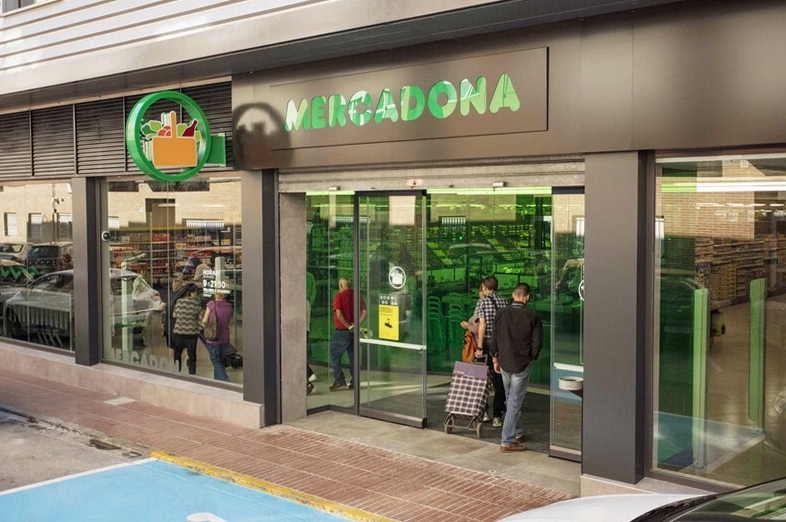
There’s a particular electricity that moves through a neighborhood the week a grocery store opens its doors. It’s not just the logistics of it — the stocking of shelves, the tuning of refrigerated cases, the inevitable first-day hiccup with the espresso machine. It’s the promise of something more permanent. When a local green grocer expands, it signals that a community has reached a certain critical mass, that its residents have been seen, and that their daily needs finally have a proper address.
We’ve been watching this happen across the country, from the revitalized corners of Detroit to the sun-baked blocks of Inglewood, and now it’s happening again — a new location opening that carries with it the values of fresh produce, community, and sustainability. This isn’t just another ribbon-cutting; it’s a statement about how we want to shop and eat in 2026.
Why a Local Green Grocer Expansion Matters More Than Ever
Walking through the doors of a new green grocer feels different from entering a conventional supermarket. The light is often warmer, the aisles narrower, the produce piled with visible intention. This new expansion is part of a larger shift in American retail — one that values smaller footprints, deeper relationships, and a sense of place over sheer square footage.
Consider the data: while big-box chains continue to consolidate, independent grocers have quietly become the darlings of urban planning departments. Detroit’s Green Grocer Program, relaunched in 2024, has been a powerful case study. “Every corner of our city deserves this type of investment,” said Mayor Mary Sheffield at a recent ribbon cutting. That program prioritizes small-format grocery stores and hybrid food concepts, proving that a new location opening can be equal parts commerce and civic renewal.
What makes these spaces resonate isn’t nostalgia. It’s a sustainability model that actually works — both for the planet and for the local economy. When a green grocer opens, it often anchors a small-business ecosystem. The baker down the street gets foot traffic. The coffee roaster gains a wholesale partner. The farmers find a consistent buyer for their weekly harvest.
This particular opening we’re celebrating follows that same blueprint. It’s the second location of a beloved neighborhood operation that started as a single produce stand with a couple of folding tables and a persistent belief that fresh food could be accessible to everyone.
- Shop seasonal
Buy what's in season around you. It's cheaper, tastier, and it's what the produce section is actually set up to sell.
- Talk to the produce team
Ask what came in this morning. They'll point you to the best picks and give storage advice that actually works.
- Bring your own bags
Most neighborhood grocers reward it. You'll cut down on waste and avoid the crumpled-paper-bag scramble at checkout.
- Don't judge by looks
A crooked carrot or sunburned tomato can taste better than the picture-perfect ones. Flavor doesn't follow symmetry.
- Arrive early
The first hour after restocking gets you the freshest greens and the best selection. Weekends get picked over fast.
What a New Neighborhood Grocery Store Brings to Your Table
Let’s talk specifics. A community-focused grocery store doesn’t just replace the convenience of a big chain — it recalibrates what convenience means. Here, convenience means the lettuce was harvested 24 hours ago. It means the tortillas are made locally, not flown in from a central commissary. It means the organic section isn’t a single sad shelf of overpriced kale; it’s a full display of seasonal produce that rotates with what actually grows around you.
One of the most successful recent examples of this model is El Sereno GreenGrocer in Los Angeles. Their mission is to feature culturally relevant food that celebrates and supports local, urban Black Indigenous people of color-run farms and entrepreneurs. It’s a mission-driven approach that goes beyond the transactional — it produces a table that reflects the community itself.
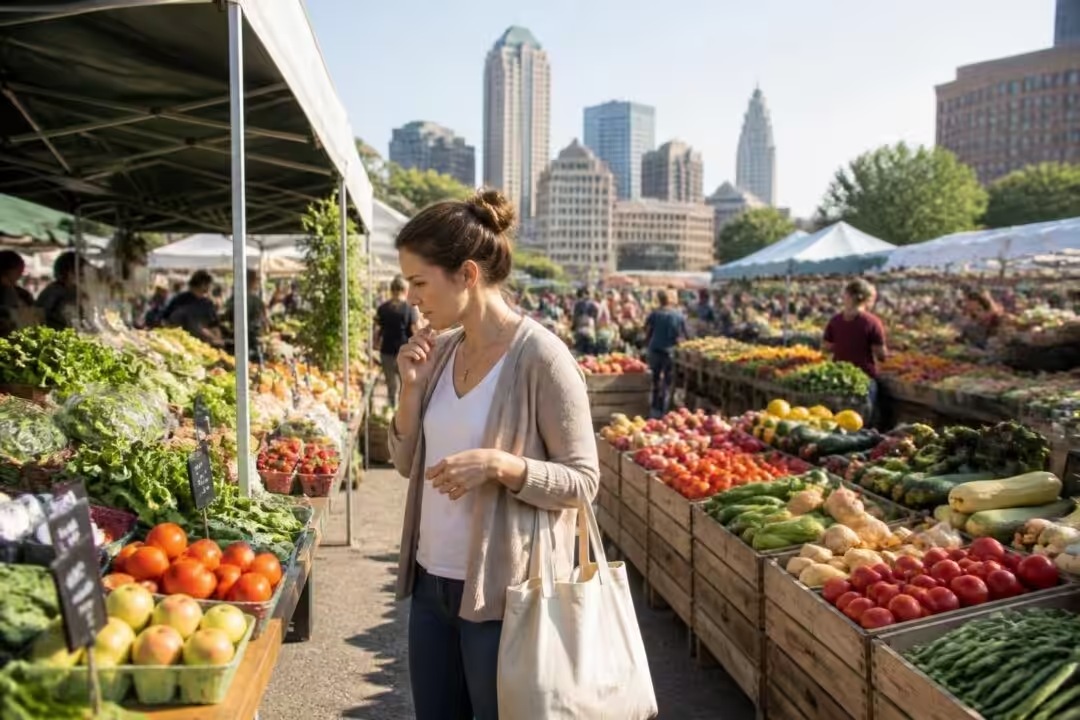
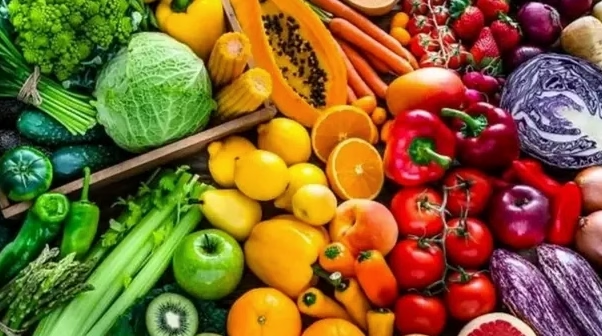
The fresh produce at this new location is the star of the show, arranged with a designer’s eye. That’s not an accident. We’ve written before about how good food styling affects our perception of taste — it’s the difference between grabbing a sad, mealy tomato and reaching for one that looks like it got sunburned on the vine in the best way possible.
What’s the first thing you notice? For most people, it’s the smell. A proper green grocer smells of earth, citrus, and cold water. It doesn’t smell of cleaning products or stale packaging. This new opening has been designed to engage all the senses — there’s a visible prep station where produce is trimmed and refreshed, a setup that most supermarkets hide in the back.
Designing a New Location That Feels Like Home
When we talk about design at Cook and Design, we’re not just talking about aesthetics. We’re talking about how a space makes you feel — and in the world of food retail, that feeling directly influences what you buy and how you cook. The best grocery stores function like an extension of your own kitchen. They propose meals, not just ingredients.
This expanded green grocer uses a simple, material palette: raw wood shelving, matte ceramic display bowls, soft cream walls with deep navy signage. The lighting is warm and directional, doing more flattering work than any sterile fluorescent grid ever could. It’s a Korean-modern visual language that values negative space — not every shelf is crammed to bursting, and that restraint on the shelves creates a sense of abundance in the shopping experience.
The designers took a cue from farmers market layouts, with produce bins placed on island tables so you can circle them, inspect from all angles, and engage with the food before you commit. It’s a subtle behavioral nudge toward more mindful shopping. You aren’t just grabbing a bag of spinach; you’re choosing the bunch that looks best, and that act of choosing deepens your connection to the meal you’ll make.
The Produce Section as a Community Trust Signal
The produce section is ground zero for consumer trust. If a grocer is transparent about where their food comes from, it’s a good sign they’re transparent about everything else. Along the back wall of the new store, there’s a chalkboard map showing which farms supplied which crates that week. It’s not a gimmick — it’s an act of accountability.
Local sourcing isn’t always cheaper for the store, and that’s an honest conversation we should be having. But what a local green grocer loses in volume discounts, they gain in unmatched freshness and reduced spoilage. A tomato that travels forty miles instead of four hundred doesn’t need to be picked early. It can ripen on the vine, which means it tastes better on your table.
Some chains have tried to mimic this with marketing, slapping “seasonal” labels on items that have crossed the equator. But shoppers are sharper than they’re given credit for. When you taste the difference between a forced rhubarb that traveled across the ocean and a local stalk that was pulled from the ground this morning, there’s no comparison. The local one tastes like spring; the other tastes like logistics.
What about the organic question? At this new location, the store works with a flexible definition. They carry certified organic staples, but they also work with small farmers who use regenerative practices but can’t afford the certification process. It’s a pragmatic approach that prioritizes actual farming methods over paperwork, and it’s one we fully support.
Building Community Through Sustainable Grocery Retail
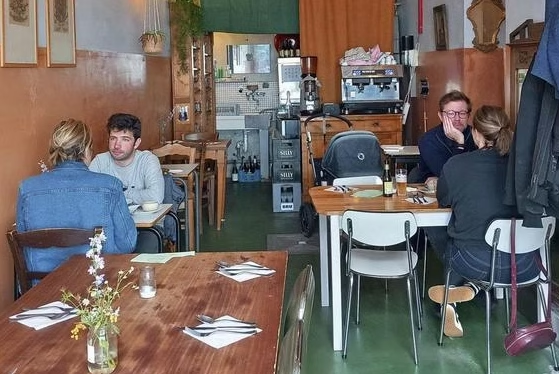
This expansion puts community at the center of its operating model. The founders of this green grocer understand that a store can be a third place — a space that’s neither home nor work, but a familiar ground where neighbors run into each other, where recipe ideas are exchanged, and where the rhythm of the week is measured in produce deliveries.
The new location includes a small community bulletin board — not a generic corkboard, but a beautifully designed magnetic wall. Here, you’ll find flyers for local CSA sign-ups, a call for volunteers at the neighborhood garden, and a notice about a cooking demo night hosted by the store. These are the small details that make an opening feel less like a retail event and more like a welcome home.
What to Look For in a New Neighborhood Grocery Store
As this expansion continues to take shape, we spent time thinking about what makes a grocery store genuinely worth walking to. Not driving to — walking. It changed our perspective.
Here’s our shortlist of signals that a green grocer is getting it right:
- 🥕 Proximity to the source — The store can name at least three farms within a 100-mile radius that supply them weekly.
- 🌱 Seasonal honesty — They’re excited about what’s ripe right now, not what they can source from the other hemisphere year-round.
- 💬 Knowledgeable staff — The produce manager can explain the difference between two varieties of peaches, and might even let you taste both.
- ♻️ Reduced packaging — Bulk bins are visible, and bring-your-own-container programs are encouraged, not just tolerated.
- 🍞 Complementary local goods — They stock bread from the bakery three streets over, not shrink-wrapped loaves from a national distributor.
- 👥 Genuine community programming — A calendar of events that includes conversations, not just transactions.
It’s this final point that feels most valuable. Grocery shopping is a weekly ritual — through that repetition, it becomes a foundation of daily life. A store that supports the farmers market ethos is building something larger than a place to buy groceries; it’s becoming a steward of local culture.
We’ve been tracking this shift for a while, and it points to a deeper truth. The success of independent grocers like this one represents a counter-narrative to the soullessness of algorithms and the endless scroll of online shopping. It’s not about rejecting convenience — it’s about redefining it. The convenience of a peach that actually tastes like a peach, of a store where they know your name and your favorite cut of pork, of a space that makes you want to cook rather than just eat.
This new location opens its doors with that exact energy. It’s a continuation of a story that started with a single table of tomatoes, and it’s a bet on the future — that neighborhoods can be built around nourishment, that design can be delicious, and that the act of buying groceries can be a small, beautiful act of citizenship.
The fridge at home might be empty right now, but it doesn’t have to stay that way. This weekend might be the perfect time to walk through those doors, inhale that earthy scent, and see what this corner of the community has been waiting to offer. The produce will be good. That part is almost guaranteed. But the feeling of being part of something worth building — that’s the ingredient you can’t find anywhere else.
Questions every neighbor is asking
When does the new location actually open?
The article points to an opening right now, but exact dates usually get announced last minute. Follow the store on social media for the ribbon-cutting day.
Will prices be higher than at a regular supermarket?
Some staples cost more, especially packaged goods. Produce often runs comparable or cheaper when it's in season, since there's less shipping and waste built into the price.
Do I need to be a member to shop there?
Membership isn't a thing here. It's an open-to-everyone neighborhood grocer, not a club store. You just walk in, shop, and pay at the counter.
Is the produce really fresher than at a big chain?
That's the whole bet. Produce comes from nearby farms and is often harvested within 24 hours of hitting the shelf. Big chains run on longer supply chains with more travel time built in.
Your feedback helps us make our articles better
Leave a comment
Hi, I’m Landon Brooks. I am the editor-in-chief of Cook and Design, but for the first decade of my working life I was actually a product designer in New York.