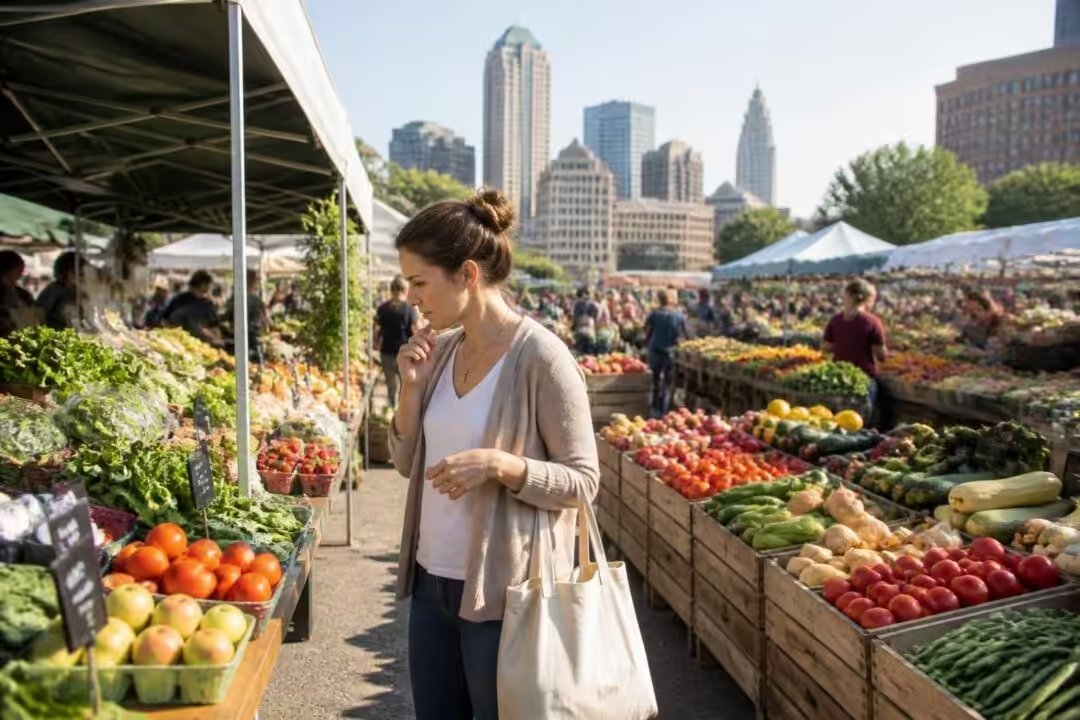
Why Organic Food in Columbus Is 59% Pricier Than Local Produce: What That “Organic” Label Really Buys 🏷️
In Columbus, grocery shoppers often experience sticker shock the moment a carton of berries or a bag of greens flips from conventional to USDA Certified Organic. The reason is not simply “because it’s healthier” or “because it’s trendy,” but because organic is a regulated production system with specific, costly constraints. A national analysis based on USDA retail pricing found that organic fruits and vegetables run about 59% more than conventional on average, a premium that has widened from roughly 52.6% the year prior. That jump matters in a city where many households try to eat well without turning dinner into a luxury purchase.
One key source of confusion is that store signage frequently blurs terms like “organic,” “farm fresh,” and “locally sourced.” The words look equally wholesome, yet only one has a legal backbone. Organic is governed by federal standards administered through the U.S. agricultural marketing system. “Farm fresh” is not. “Farm to table” is not. “Locally sourced” is not. Those phrases can be sincere—or purely branding. This difference can cut both ways for shoppers: the regulated label can justify a premium, while the unregulated language can hide a premium that has no real proof behind it.
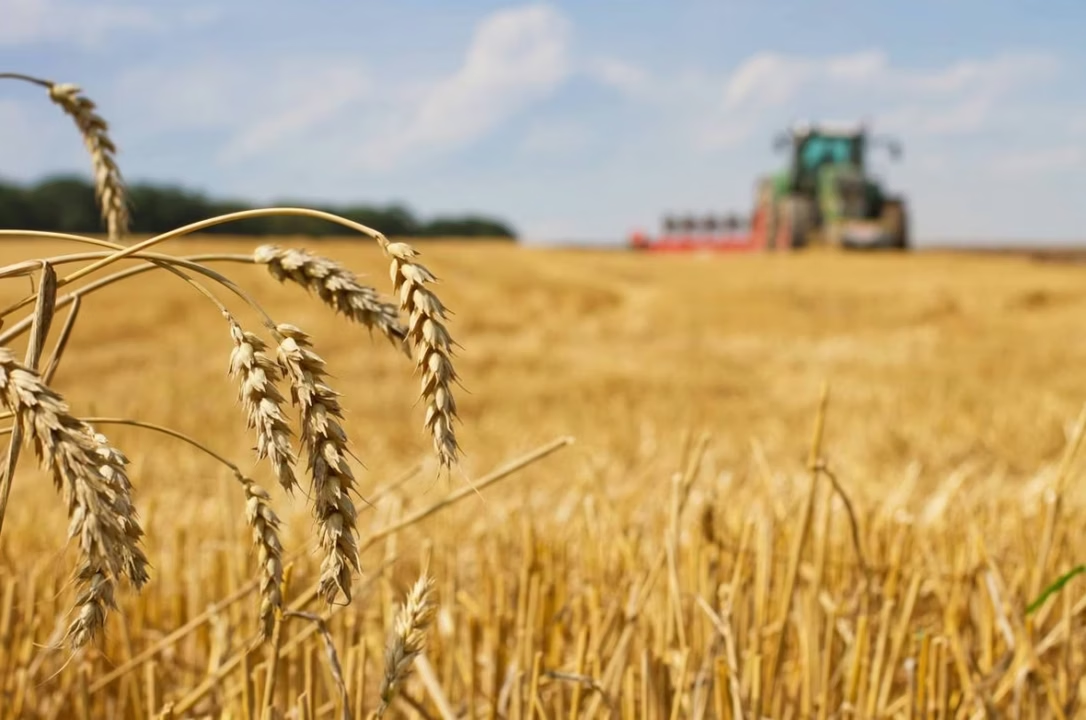
So what does organic certification actually require? The standards are demanding in ways that directly affect supply and cost. Land must be managed for roughly three years without prohibited substances before crops can qualify. Farms must pass annual inspections by accredited certifying agents. Packaged products typically need at least 95% certified organic content to carry the full organic claim; items labeled “made with organic” generally need only 70%, which is a meaningful distinction when comparing price tags on sauces, cereals, or snack bars.
From a cooking-minded perspective, those constraints often show up in subtle kitchen realities: smaller yields, more seasonal swings, and occasional cosmetic imperfections. A tomato grown without certain inputs may be more vulnerable in a tough pest year, and that volatility flows into the distribution chain. Organic also tends to involve more labor and paperwork, plus separate handling to prevent commingling—costs that don’t disappear at checkout. The premium is not only about farming practices; it’s also about traceability, auditing, and segregation through transport and retail.
Yet the most practical shopping insight in Columbus is this: local produce can sometimes deliver comparable freshness and flavor at a lower cost, even when it isn’t organic. Georgia’s agricultural engine is enormous—farming is the state’s largest economic sector, contributing about $91.4 billion to the economy and supporting 370,000+ jobs. Columbus benefits from that network, but the benefits only show up if shoppers can distinguish regulated claims from feel-good phrases. The next step is learning how “local” works in real dollars and real dinner plans.
Smart Shopping in Columbus: How “Farm Fresh” and “Locally Sourced” Can Beat Organic Prices 💸
Columbus shoppers are surrounded by Georgia-grown abundance, but the marketplace can still feel like a maze. The trick is to treat “organic” as a certification and “local” as a relationship. A certification is verified by rules and inspectors. A relationship is verified by questions, transparency, and repeated good experiences with growers and vendors. When handled well, local buying can trim the grocery bill without sacrificing the excitement of peak-season flavor.
Start with label literacy. In many stores, the word “natural” appears in the same visual neighborhood as “organic,” yet it lacks the same teeth. “Natural” often signals very little in terms of production method. For shoppers aiming to pay extra only when it truly matters, the most reliable shortcut is to look for the USDA organic seal rather than trusting a vague adjective. That seal functions like a passport stamp; without it, the product may still be excellent, but it is not making the same legally defined promise.
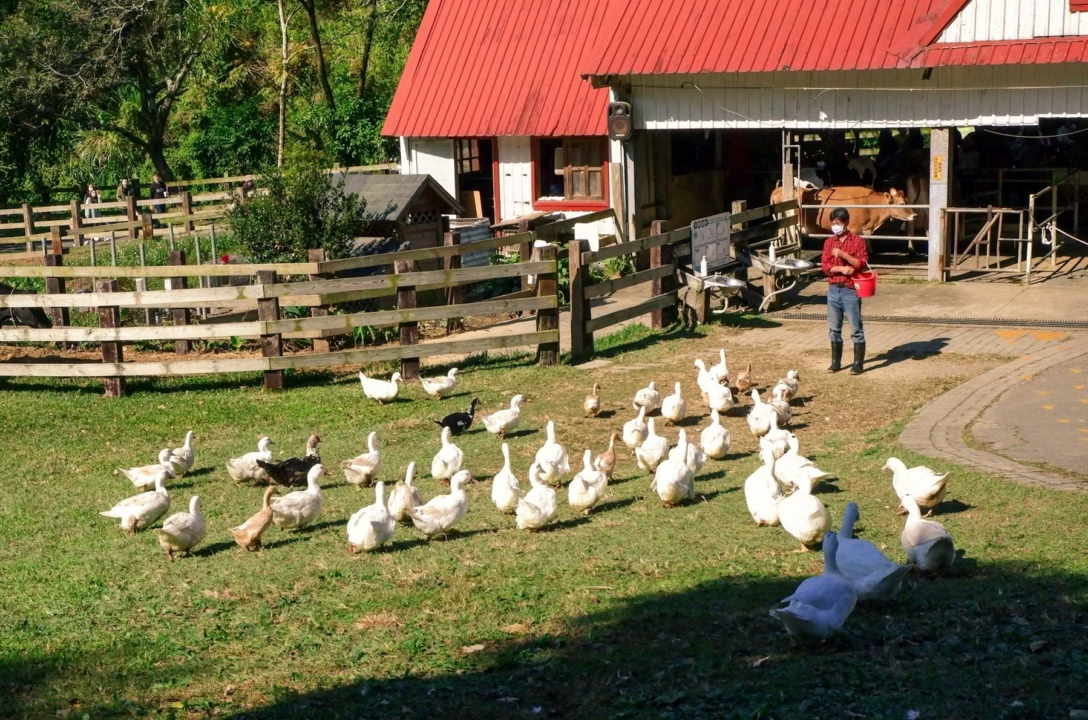
For “farm fresh,” “farm to table,” or “locally sourced,” the best protection is simple curiosity. Ask which farm supplied the item and how far it traveled. Was it harvested yesterday, or shipped through a regional distributor? Vendors who truly work with nearby farms usually answer quickly and proudly. If a seller can’t specify a region—or if “local” means “somewhere in the Southeast”—the term is functioning more like ambiance than accountability. A good rule is to confirm proximity and harvest timing, because those two details often correlate with both taste and value.
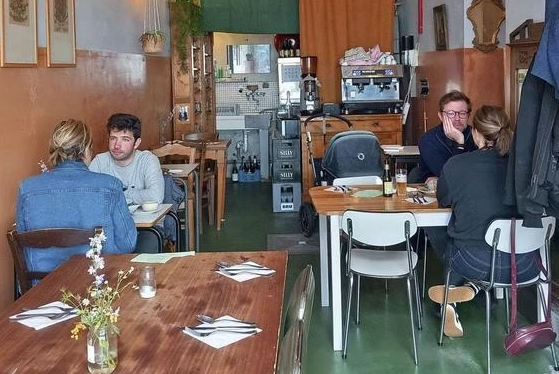
Columbus has several places where that kind of conversation is normal, not awkward. Depending on the day and season, local shoppers commonly circulate through venues and growers such as Midland Community Farmers Market, MercyMed Farms, Bluebelle Local Mercantile (on select days), and producers like Bugg Family Farm, Jim Fuller Farm, and Little Farm That Could. Others look to Legacy Crate Produce, Napiers Produce, The Shed at Fitzgerald, Highside Market (select days), and aggregators like The Local Harvest website to compare sources. The point is not to memorize names; it’s to choose at least one dependable outlet where growers can be asked direct questions.
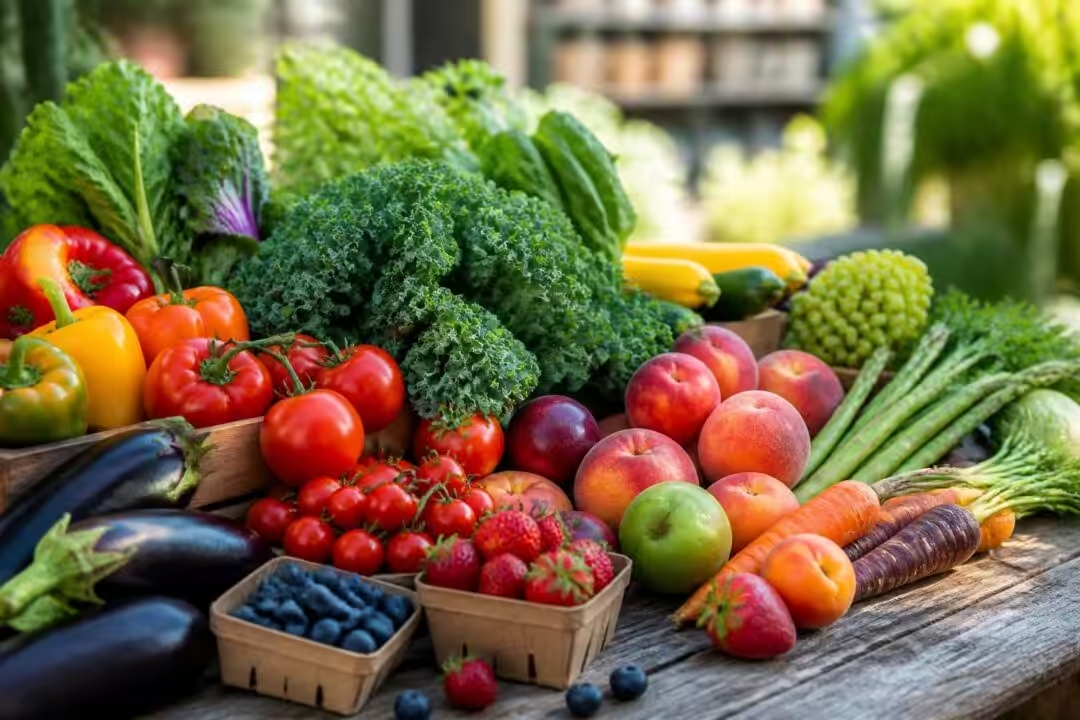
A useful way to visualize the pricing difference is to imagine three baskets: conventional grocery produce, organic grocery produce, and direct-from-farm produce. The LendingTree-style national pricing work suggests the organic basket averages about 59% higher than conventional. The local basket has no fixed premium at all; the price depends on the season, the vendor’s scale, and how much middleman cost was removed. In practice, many Columbus shoppers report that buying direct can be cheaper than either grocery-store option, especially during peak harvest windows when supply is strong and farms want volume moved quickly.
Consider a realistic scenario: a busy household plans five dinners, two packed lunches, and a weekend brunch. At the supermarket, organic add-ons can stack fast—greens, herbs, berries, tomatoes, apples. At a farmers market, a shopper might bundle: a mixed greens bag, a bunch of peppers, a basket of tomatoes, sweet potatoes, and a melon. When produce is in season, the local bundle can come in at a surprisingly friendly total, and it tends to inspire more cooking because the flavor payoff is immediate. The core insight is that local buying wins when it is treated as a weekly habit, not a one-off field trip.
To make that habit stick, the next section turns seasonal knowledge into a concrete playbook—because timing is the sharpest knife in a budget-conscious kitchen.
Seeing how vendors display harvest dates, bundle deals, and seconds-grade produce (perfect for sauce) makes the value equation easier to spot in real time.
Seasonal Local Produce in Columbus: A Chef-Style Calendar for Maximum Value 🍑
Seasonality is where Columbus shoppers can outsmart the organic premium without feeling deprived. Georgia’s growing cycles create windows when local produce is abundant, and abundance usually means better pricing and better taste. A creative, kitchen-driven approach treats peak season as a menu generator: buy what’s overflowing, then cook in ways that stretch it—roasting, pickling, freezing, simmering into sauces, or turning soft fruit into compotes.
Late summer (roughly July through August) is a particularly generous stretch. Expect peaches, watermelon, cantaloupe, tomatoes, and peppers to dominate stands. This is the moment to lean into dishes that love ripeness: tomato pan sauces, blistered peppers, peach salsas, melon salads with salty cheese, and cold soups that transform a pile of produce into a weeknight reset. When tomatoes are truly in their stride, “ugly” ones are often sold cheaper and taste better than perfectly polished supermarket rounds—ideal for roasting into a deep, jammy base.
Fall (September through November) shifts toward sturdier crops: apples, sweet potatoes, pecans, pears, plus greens like collards, kale, and mustard greens that become sweeter after temperatures drop. Brassicas also shine—cabbage hits a peak, and broccoli, cauliflower, Brussels sprouts appear more reliably. This is the season to cook once and eat twice: roast a tray of sweet potatoes and Brussels sprouts, then fold leftovers into grain bowls or frittatas. Greens can be braised into a pot that becomes tacos one night and soup the next.
Winter (December through February) is often underestimated, but it’s a strong time for greens and storage crops. After a frost, collards can improve in texture and sweetness. Kale, mustard greens, and spinach remain useful staples, while cabbage (green, red, and Napa) stays versatile for slaws, stir-fries, and long braises. Sweet potatoes and beets keep showing up, and citrus—satsumas, navel oranges, Meyer lemons, grapefruit—can brighten heavier meals. A winter “local” strategy often looks like this: buy greens and cabbage weekly, buy storage roots biweekly, and use citrus to make simple vinaigrettes that keep meals tasting alive.
The best seasonal plan is not rigid; it’s responsive. A chef-minded approach uses a quick decision tree: what’s abundant today, what can be used in multiple dishes, and what can be preserved? Freezing chopped peppers, roasting tomatoes into sauce, and pickling cabbage are low-effort methods that turn a momentary bargain into long-term savings. This matters because it reduces the temptation to pay higher prices later for out-of-season flavor.
Below is a compact seasonal reference designed for a Columbus shopping list, with a focus on meals that stretch ingredients further.
| Season 🗓️ | Local stars 🌱 | Budget-friendly cooking move 💡 | Why it beats paying the 59% organic premium 💰 |
|---|---|---|---|
| Late summer 🍅 | Peaches, watermelon, cantaloupe, tomatoes, peppers | Roast tomatoes into sauce; freeze peppers; make melon salads | Peak supply lowers prices; flavor is naturally high without extra labeling costs |
| Fall 🥬 | Apples, sweet potatoes, pecans, pears, collards, cabbage, broccoli | Sheet-pan roasts; braises; slaws that last 3–4 days | Storage crops and greens offer strong value per serving and reduce food waste |
| Winter 🍊 | Collards, kale, mustard greens, spinach, cabbage, beets, citrus | Big-pot greens; cabbage stir-fries; citrus vinaigrettes | Consistent local availability keeps cost steadier than out-of-season organic imports |
Seasonality, however, only delivers savings if the shopping trip itself is disciplined. The next section focuses on tactical moves—unit pricing, yield, and basket-building—to keep the bill predictable while keeping meals exciting.
Essential Tips for Smart Shopping: A Columbus Strategy to Avoid Overpaying for Organic 🧾
Paying the organic premium selectively—rather than automatically—is where smart shopping becomes almost a culinary skill. The aim is not to “win” against organic food, but to reserve the higher spend for items where it fits a household’s priorities, while leaning on local abundance for everyday cooking. A reliable framework combines three tools: unit pricing, usable yield, and basket planning.
Unit pricing sounds boring until it catches a hidden loss. Two clamshells of berries may look similar, but one may contain fewer ounces or smaller fruit that collapses faster. Comparing price per ounce (or per pound) clarifies whether the organic premium is truly 59% for that item—or much higher once shrinkflation or packaging differences are factored in. In 2026, shoppers have become more aware of these subtle size shifts, and a quick calculator habit protects the weekly budget from “quiet” price increases.
Usable yield is the chef’s secret weapon. A bunch of beets includes greens—if those greens will be sautéed, the yield is higher and the effective price drops. A whole watermelon has rind waste; a smaller local melon might be cheaper per pound but more edible per dollar if it’s perfectly ripe and fully used. The same applies to cabbage: low waste, long shelf life, and multiple meal applications. Organic choices sometimes shine here too—an organic herb bundle that stays vibrant longer could beat a cheaper one that wilts in two days. The point is to evaluate how much food actually hits the plate.
Basket planning turns good intentions into predictable totals. Rather than shopping recipe-by-recipe, build a flexible basket: one leafy green, one crunchy vegetable, one fruit, one “anchor” starch (sweet potatoes, rice, pasta), and one flavor booster (herbs, citrus, onions). Then decide where organic makes sense. For example, choose organic for a salad green eaten raw all week, but go local conventional for tomatoes that will be slow-roasted and concentrated with olive oil and garlic. The meal still feels luxurious, but the spending is strategic.
Practical checklist: 12 smart moves Columbus shoppers can use this week ✅
- 🛒 Look for the USDA organic seal when paying extra—ignore vague “natural” language.
- 📍 For “local,” ask the farm name and distance; transparency is part of the value.
- ⏰ Shop late in the market day for bundle deals on ripe produce suited for sauces and jams.
- 🍅 Choose seconds-grade tomatoes and peaches for cooking; they’re often cheaper and just as flavorful.
- ⚖️ Compare price per ounce/pound, not package price—especially for berries and greens.
- 🥗 Pay organic strategically for raw, quick-perish items the household eats immediately.
- 🔥 Buy local conventional for cooked applications like braises, soups, and roasted vegetables.
- 🧊 Freeze surplus peppers and berries to turn a seasonal deal into future meals.
- 🥬 Pick cabbage and sweet potatoes as budget anchors; they stretch across cuisines.
- 🍊 Use winter citrus to elevate cheaper greens with bright dressings and marinades.
- 🧾 Track two receipts: one “organic swaps” week and one “local-first” week to see savings clearly.
- 🌾 Remember “made with organic” can be 70% organic—compare ingredients before paying premium.
To make these tips feel real, imagine a fictional Columbus household: two adults, one child, busy schedules, and a goal to cook four nights per week. On a supermarket-only run, organic greens, organic berries, and organic tomatoes can blow the budget before proteins are even considered. On a local-first run, the family builds dinners around sweet potatoes, peppers, tomatoes, and greens bought direct, then chooses one or two organic items where the seal truly matches a priority. The result is a cart that still looks vibrant—just less financially stressful.
These tactics naturally lead to a deeper question: if local is sometimes cheaper, why isn’t it always? The final section breaks down the forces—labor, certification, distribution, and retail dynamics—that make the 59% gap persist, even in a farm-rich state.
Understanding how certification differs from marketing language helps shoppers pay for proof, not poetry.
Why the 59% Organic Premium Persists in Columbus: Certification Costs, Supply Chains, and Real-World Tradeoffs 🔍
The organic premium is often framed as a moral story—good farming versus bad farming—but the price gap is mostly a logistics story. Organic production requires a different system, and systems have overhead. Even when Georgia agriculture is booming, the organic share of total production is still limited relative to overall demand, which keeps prices firm. Meanwhile, “local” can be abundant in-season yet scarce out-of-season, creating a shifting landscape where the best value changes month by month.
Certification itself costs money and time. Farms transitioning to organic must manage land without prohibited substances for around three years before they can sell crops as certified. During that period, expenses may rise while the farm cannot yet command the organic price. Annual inspections add recurring costs, and careful recordkeeping becomes part of the workload. For small and mid-sized growers, the administrative burden can be as real as the agricultural one. Those costs do not vanish; they are embedded into the final retail price.
Supply chain segregation is another invisible driver. Organic products typically require dedicated handling and clear separation in storage and transport to maintain integrity. That can mean separate bins, separate processing lines, or more meticulous tracking. In a large retail context, those constraints can reduce flexibility, and reduced flexibility tends to increase costs. Add to that the fact that organic produce prices rose sharply while conventional prices were comparatively steadier in recent national pricing snapshots; when organic pricing increases faster, the gap widens even if conventional doesn’t get cheaper.
Retail markups also behave differently depending on category. Produce is perishable and risky; items that spoil quickly can force stores to price in expected loss. If organic greens have a shorter shelf life due to fewer post-harvest tools, the store may price higher to compensate for shrink. Conversely, certain local purchases—like cabbage, sweet potatoes, or pecans—have long shelf life and lower risk, making them easier for farmers markets to price competitively without baking in as much waste.
Local pricing, however, is not automatically low. A small grower selling premium heirloom tomatoes may charge more than a supermarket, especially early in the season when quantities are limited. Some vendors also price based on the story—rare varieties, regenerative practices, or small-batch harvesting—without pursuing formal organic certification. In that case, the shopper is paying for craft and scarcity rather than for a regulated label. Neither is inherently wrong; it simply means the buyer should align spending with what matters: certification, flavor, farming philosophy, or budget stability.
Columbus sits in a unique position because Georgia’s agricultural economy is vast, supporting hundreds of thousands of jobs and tens of billions in economic activity. That scale creates distribution muscle, but it also means large retail pipelines are optimized for consistency, not always for hyper-local nuance. Farmers markets and direct sales create a different channel—one built around immediacy, conversation, and seasonality. The most effective shoppers treat these channels like different tools: grocery stores for staples and predictability, local markets for peak flavor and deals, and organic certification for targeted priorities.
The lasting insight is that the 59% premium is a useful headline, but the everyday win comes from learning when to pay for verified standards and when to lean into Georgia-grown timing—because the smartest cart is the one that matches the week’s meals, not the loudest label.

Hi, I’m Landon Brooks. I am the editor-in-chief of Cook and Design, but for the first decade of my working life I was actually a product designer in New York.