
| Key notes ✍️ | Sections covered 🧭 |
|---|---|
| It’s a real working organic farm wrapped around a five-star resort 🌿 | Arrival, atmosphere, and “who it’s really for” |
| Rooms lean warm, pine-scented, and chalet-calm—some summer heat caveats 🪵 | Room design, comfort, and practical details |
| Breakfast is the culinary anchor; labeling could be clearer for allergies 🥛 | Food and drink: buffet, pizza, Tyrolean classics, formal tasting |
| Spa culture is Central European: co-ed, textile-free zones exist 🧖 | Wellness, spa etiquette, and standout treatments |
| It’s an activity engine: pools, tennis/padel, lake, kids’ zones, winter sports 🏊 | Activities, location logistics, and value check |
Luxury “farm resorts” are everywhere in 2026—often more branding than barn. What makes Austria’s Bio-Hotel Stanglwirt different is that the farm comes first, and the hotel grew around it over centuries, not the other way around. This review treats the property the way a serious cook treats a new farmer’s market: with curiosity, a practical eye, and respect for what’s real—down to the butter at breakfast and the stone underfoot in the sauna.
My Stay at Austria’s Iconic Luxury Farm Resort: First Impressions, Sense of Place, and Who Returns Year After Year
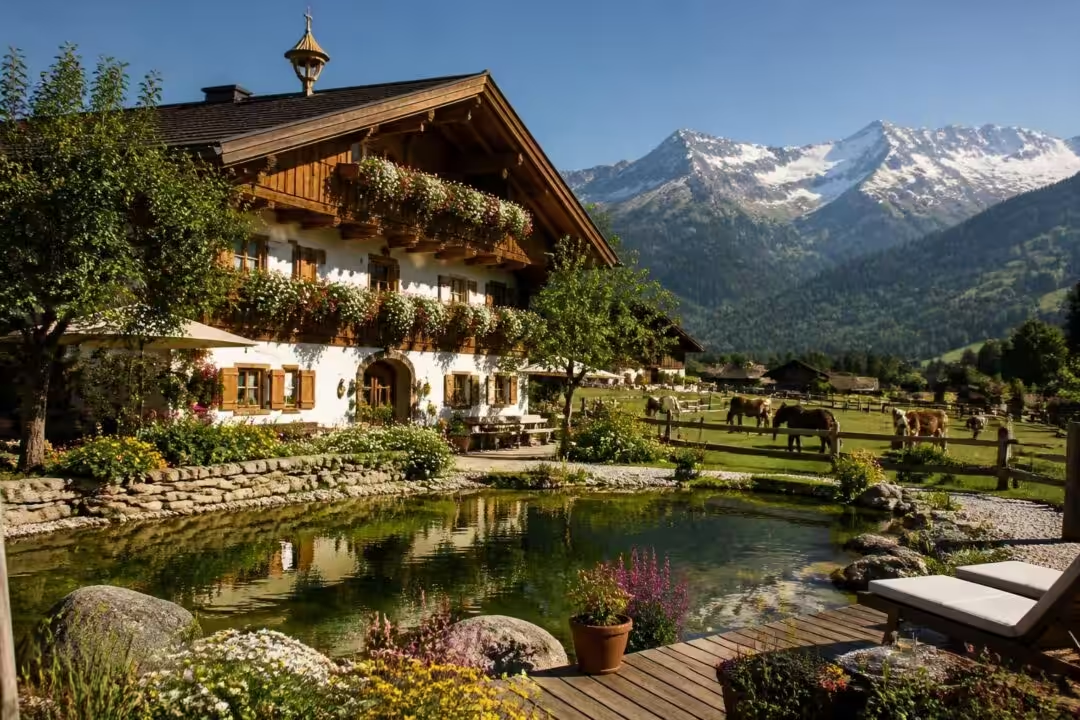
Stanglwirt sits in Tyrol under the Wilder Kaiser range, and the first thing that registers is not “hotel” but scale with softness. The property is sprawling—often described as roughly 160 acres—yet it reads as a village stitched together by footpaths, timber beams, and that unmistakable alpine quiet. Instead of a grand, single-building statement, the resort spreads out like a working landscape that happens to include guest rooms, restaurants, stables, and an enormous wellness complex.
The guest mix tells a story that glossy marketing can’t fake. The resort has a strong core of German- and Austrian-speaking families, many of them multi-generational groups who return on a near-ritual schedule. That repeat energy changes the vibe: staff interactions feel less transactional and more like the cadence of a place that knows its regulars. American and British voices show up too, but they’re woven into an ecosystem that still feels primarily local—which, for many travelers, is the point. 🌿
Design-wise, the property commits hard to regional material honesty. Swiss stone pine appears everywhere—on walls, ceilings, and furniture—creating a warm, resinous scent that functions like aromatherapy without trying. Natural stone shows up in the spa and communal zones, sourced from the nearby mountains, which matters because it prevents the “imported luxury” feeling. Even the uniforms—traditional tracht—could feel costume-y in another context, but here it reads as continuity.
History Without the Museum Glass: How a 400-year origin shapes the modern stay
Stanglwirt’s origin story goes back to the early 1600s, and the property has remained family-run for centuries (often cited as in the same family since the 1700s). That longevity shows up less in plaques and more in practical decisions: buildings feel added when needed, not when a brand guideline demanded symmetry. Corners are a little irregular. Corridors open into unexpected courtyards. A modern resort developer would “fix” those quirks; here, the quirks are the charm.
A recurring question from design-aware travelers is whether a legendary hotel feels stiff. The surprise is the balance: Stanglwirt has hosted major celebrities—Arnold Schwarzenegger is the name most people associate with it, but other high-profile guests have included athletes and actors—yet the hotel doesn’t perform exclusivity. Photos exist, sure, but they’re background texture, not a velvet-rope message. The overall tone is approachable luxury: expensive, cared for, and oddly unpretentious.
A quick, practical “who this is for” lens
It helps to name the resort’s sweet spots plainly. families with kids will find both infrastructure and tolerance (noise doesn’t feel like a violation). Couples can absolutely do a romantic stay, but the property is not trying to be a hushed, adults-only hideout. The best match is anyone who likes a day structured around movement, sauna, and meals—then repeating that loop with small variations.
- 👨👩👧👦 Best for: multi-generational trips, active families, wellness-forward travelers who still want excellent food
- 🧘 Also great for: couples who don’t mind sharing space with families and want a big spa culture experience
- 🎒 Not ideal for: travelers who want a small boutique property or who feel uncomfortable with European textile-free sauna norms
- 🌡️ Worth noting: summer comfort depends on room category—air conditioning is not universal
The next useful layer is the room experience, because at a resort this size, the guest room is less “a place to sleep” and more the private studio where the whole stay gets edited into something personal. 🪵
My Stay at Austria’s Iconic Luxury Farm Resort: Room Review, Design Details, and Comfort Reality Checks
With around 170 rooms, Stanglwirt functions like a small town, and room category matters. The Kaiser Junior Suite is a useful reference point because it captures the house style: wood-forward, spacious enough to breathe, and built for guests who spend real time inside rather than simply passing through. Think of it like a well-designed apartment: a living area that can hold a conversation, storage that actually works, and a balcony that pulls the mountains into the daily rhythm.
One of the strongest signals of five-star intention is the bathroom planning. Double sinks reduce friction for couples and families, and the separation of shower and tub lets the room handle different tempos—one person rinsing off after tennis while another takes a slower bath. A fireplace in the suite category isn’t just romance; it’s climate logic in shoulder seasons when alpine nights cool off fast.
Material palette and “designer comfort”
The all-wood furniture and floors read consistent rather than themed. There’s a difference. The best hospitality interiors don’t scream “rustic”; they use restraint and repetition to let natural material do the talking. Here, the pine doesn’t feel like a gimmick—it’s a constant, quiet element that makes the room feel anchored. For American travelers used to brighter, more minimal hotel rooms, the palette can feel cocooning in a good way, especially after a day of outdoor light.
Textiles deserve a specific callout because they affect comfort more than most travelers admit. The robes and towels are notably thick and plush—exactly the kind of detail that signals “you’re allowed to slow down.” It’s the same logic as a great restaurant napkin: weight communicates care. The fact that robes are available for purchase is both predictable and, honestly, fair; it’s a product people would actually use at home. 🧺
The summer heat question (and how to plan around it)
Here’s the reality check: not every room has air conditioning. In a cooler year, or if windows can be left open to pull in evening air, this is manageable. During heat waves—which Europe has seen more frequently in recent summers—rooms without AC can feel stuffy mid-afternoon. Portable fans are often available, but fans are not the same as temperature control.
For travelers booking from the U.S., the best approach is simple: request an air-conditioned room category if visiting in July or August, and confirm it in writing. If AC is non-negotiable, treat it like you’d treat a bed size—don’t assume. 🌡️
Micro-location on property: why it matters at a resort this spread out
Because Stanglwirt is expansive, being near the fitness center, pools, or spa can change how much you actually use them. A suite that’s “only” a seven-minute walk from the wellness complex might still discourage a spontaneous late-night sauna if you’re carrying robes and sandals. This is where a good front desk team becomes a design feature: a well-placed room edits friction out of your day.
Room experience sets the baseline; food is where the resort shows whether “farm-to-table” is real or just a sign in the lobby. And at Stanglwirt, the food program is both a comfort and a test of operational clarity. 🥛
My Stay at Austria’s Iconic Luxury Farm Resort: Food & Drink Review from a Chef’s Perspective (Breakfast, Pizza, Tyrolean Classics)
Staying on a working farm creates expectations, and Stanglwirt largely meets them: the food feels connected to a supply chain you can almost see. The strongest meal is breakfast, not because it’s showy, but because it’s daily and consistent—the culinary equivalent of good house lighting. If a hotel nails breakfast, it usually means the rest of the operation has discipline.
The breakfast buffet is abundant without feeling chaotic: an omelet station, dairy that tastes freshly handled, and a wide spread of fruits, vegetables, and preserves. A DIY juice setup encourages guests to build something bright and personal rather than grabbing a pre-mixed, sugary option. Local cheeses provide that gentle funk and depth that pairs beautifully with darker bread and butter.
Labeling and allergens: a fixable weak point
One critique lands squarely in the “easy to improve” category: buffet signage. When items aren’t clearly labeled, guests with allergies or dietary restrictions end up doing awkward, repeated checks with staff—or they avoid foods altogether. In 2026, with allergen awareness higher than ever, clear labeling is not a luxury detail; it’s hospitality basics. 📝
A smart fix would be bilingual labels (German/English) plus the standard allergen icons used across much of Europe. It would also align with the resort’s otherwise thoughtful design language: clear system, low friction, calm confidence.
Leni’s: the flexible, modern option (and the pizza that earns its hype)
For lunch and dinner, Leni’s plays the role of the crowd-pleaser without turning generic. The menu pulls from Mediterranean and Asian influences—handmade pasta, salads, bowls, and vegan-friendly plates—served in a way that suits terrace dining with a mountain view. The terrace overlooking Kaiserwiese is not background; it’s a mood-setting device, especially in shoulder seasons when the air is cool but the sun sticks around.
The stone-oven, Naples-style pizza is the item that guests talk about for a reason. The crust has that right balance: crisp edge, tender interior, enough char to taste like fire rather than a conveyor oven. A mushroom-and-mozzarella combination like a Boscaiola works particularly well here because the dairy is strong and the mushrooms echo the alpine setting. 🍕
Gasthof Stanglwirt and Dreiklang: tradition vs. ceremony
Gasthof Stanglwirt leans into rustic Austrian comfort in a courtyard setting. This is where classic dishes—like schnitzel or a simmered veal preparation in the tafelspitz family—feel appropriate rather than heavy. The menu often includes lighter “green” options for guests who want something fresher, which matters at a resort where days can include rich breakfasts and long sauna sessions.
Dreiklang is the more formal dining room, typically with two seatings. A multi-course menu with regional roots makes sense here, and the atmosphere is intentionally intimate—sometimes with live harp, which could read corny, but in the right room it becomes texture. For American travelers, this is the night to dress slightly up and lean into the pacing. It’s less about being impressed and more about allowing the kitchen to steer the evening.
- 🥛 Don’t miss: the breakfast dairy (yogurts, cheeses) and house-made breads
- 🍕 Order once: the stone-oven pizza on the terrace—especially after an active morning
- 🍏 Save room: warm apple tart with vanilla ice cream hits the exact comfort note alpine trips promise
- 🌿 If balancing richness: look for lighter “green” dishes at dinner to keep the next day feeling good
Food creates the day’s pleasure; the spa defines the day’s tempo. And at Stanglwirt, wellness is not a side amenity—it’s practically its own district. 🧖
Watching other guests move through the spa—quiet, unhurried, towel in hand—helps set expectations before stepping into the culture of it. The next section gets specific about what the spa includes, how to navigate textile-free zones as an American, and which treatments actually feel worth the time.
My Stay at Austria’s Iconic Luxury Farm Resort: Spa Review, Sauna Etiquette, and the Treatments Worth Booking
The spa at Stanglwirt is so large—often cited at nearly 130,000 square feet—that it changes how a guest uses time. Instead of squeezing in a massage between activities, a spa day becomes the activity. That scale can swallow you if you don’t set a loose plan: a sauna circuit, a soak, a rest, then another circuit. The goal is not to “do everything,” but to let the space do what it’s designed to do: downshift the nervous system.
Facilities include multiple saunas at different temperatures, steam baths, and hydrotherapy elements like a Kneipp grotto. There’s also serious family infrastructure, including a children’s water park with a long slide (the kind that turns “spa day” into “everyone got what they needed” for parents). Pools are spread across indoor and outdoor zones, and there’s a natural spring-fed lake that’s part of the resort’s signature wellness identity.
Textile-free zones and American comfort: a clear-eyed guide
Here’s where cultural expectations matter. In parts of Central and Northern Europe, sauna culture is typically mixed-gender and often textile-free in designated areas. Stanglwirt follows that tradition in adults-only spaces, where guests may be expected to go without swimsuits. For Americans encountering this for the first time, the moment can feel like a record scratch—even if the environment itself is calm and non-sexual.
The most helpful framing is to treat it as etiquette, not bravado. People are there to sweat, cool down, and rest. A towel wrap is generally acceptable while moving around, and no one is paying attention the way anxious newcomers fear they are. If anything, the culture rewards quiet confidence and respect: keep your voice low, follow posted guidance, and avoid phones entirely. 📵
Aufguss rituals: why they feel intense (and why that’s the point)
When Aufguss is offered—where an attendant increases perceived heat with scented steam and towel movement—it can feel dramatically stronger than a typical American sauna session. The point is controlled intensity followed by deliberate cooling and hydration. If trying it, it’s smarter to leave early than to push through and feel wrecked afterward. Wellness should sharpen the trip, not flatten it.
Treatments: what stands out and what to ask for
Among the treatments, a well-executed massage is always a good use of time after tennis, hiking, or skiing. What’s more distinctive is a hydrating oxygen facial that leaves skin looking plumper and calmer—especially after long flights and dry alpine air. The resort’s house skincare line emphasizes natural ingredients and avoids preservatives, which will appeal to guests looking for a simpler formulation philosophy.
Booking advice: schedule bodywork on day two or three, not the first afternoon. Arriving bodies are often stiff from travel, but they haven’t yet accumulated the pleasant fatigue of movement that makes a massage feel transformative. 🗓️
The spa sets the body; the activities set the appetite. And Stanglwirt is built for motion in a way that’s unusually comprehensive for a resort that also claims to be about slowing down. 🏊
That mix—serious sport options next to serious lounging—is exactly what makes planning important. The next section maps the activity ecosystem, language considerations in classes, and the real logistics of getting there from major airports.
My Stay at Austria’s Iconic Luxury Farm Resort: Pools, Sports, Family Activities, and Location Logistics Near Kitzbühel
Stanglwirt runs like a daily activity studio with hotel keys. There are multiple pools—six is a commonly cited number—covering different moods: a lap pool for people who want real exercise, an adults-only pool for quieter floating, and indoor options that make bad weather irrelevant. Then there’s the natural lake element, spring-fed and tied to the resort’s sauna culture. The variety matters because it prevents the classic resort problem where everyone funnels into the same rectangle of water at 3 p.m.
On the sports side, the menu is unusually broad: tennis, padel, boxing, biking, hiking, fishing, horseback riding, and winter ski instruction when the season turns. The key is that these aren’t token offerings. Courts and coaching are positioned as real programming, not as decoration. A one-hour tennis or padel lesson with a professional can quickly show whether a resort is serious: are they assessing your level, giving cues that actually change contact, and structuring drills with intent? When it’s done right, guests leave not just “entertained,” but measurably better.
Fitness classes and language: what English-speaking guests should expect
Wellness and fitness classes may be offered daily, but many sessions are conducted primarily in German. For some guests, that’s fine—movement can be followed visually. For others, especially in yoga where cues matter, language becomes a barrier. The most realistic approach for non-German speakers is to treat group classes as optional and rely on the fitness center for self-directed training.
The gym itself is well equipped—free weights, cardio, strength machines—designed to handle crowds without feeling like a chaotic apartment gym at 6 p.m. That matters on family-heavy weeks when many adults try to squeeze workouts into the same morning window. 🏋️
Family travel: why the property works for multi-generational groups
What makes the resort work for families isn’t just “kids are welcome.” It’s that the infrastructure is genuinely layered: water play for children, adults-only calm zones, and enough dining variety that picky eaters and adventurous eaters can coexist. Grandparents can do a gentle sauna session and a long lunch while teens do sports, and parents can float between roles without feeling trapped in one identity.
- 🏊 Best family hack: designate one “everyone together” pool hour, then split into adult/kid zones
- 🎾 Skill-building move: book one coached session early in the stay, then practice casually later
- 🥾 Low-pressure outing: short hikes paired with a terrace lunch keep the day buoyant
- 🧖 Adult reset: schedule sauna time before dinner to arrive at the table calm, not ravenous
Getting there and using Kitzbühel wisely
Logistics are straightforward by alpine standards. Salzburg and Innsbruck airports are roughly an hour-plus away by car (about 50 miles), while Munich is farther (around 75 miles) but can be convenient for U.S. routes. Planning a transfer matters because arriving calm sets the tone; a complicated last-mile can sour the first afternoon.
Kitzbühel, about 20 minutes away, is the nearby upscale ski town—known internationally for hosting the Hahnenkamm race each January. Even outside winter, it’s useful for shopping, cafés, and a change of scenery if the resort starts to feel like a beautiful bubble. ☕
Value check: what the price buys (and what it doesn’t)
Nightly rates often start in the high hundreds for two guests in an entry category, and that number is only meaningful when connected to what’s included. The organic breakfast buffet is a real value add. The scale of the spa and the breadth of activities function like bundled programming. On the other hand, certain “luxury defaults” Americans expect—like universal AC—are not guaranteed, and that should be part of the mental math.
The clearest way to judge Stanglwirt is not as a hotel, but as a self-contained alpine ecosystem: farm, food, sport, and sauna stitched into one place that can hold a family for a week without anyone feeling bored. That ecosystem is exactly why the property’s details—labels at breakfast, room placement, sauna signage, class language—matter so much: small frictions are amplified in a destination designed to keep guests on-site. 🔍
Hi, I’m Landon Brooks. I am the editor-in-chief of Cook and Design, but for the first decade of my working life I was actually a product designer in New York.



3 Comments
Farm first, hotel second—I respect that. The stone and timber details sound like they’re built to last.
Finally, a resort where the agricultural landscape isn’t just a backdrop. Genuine place-making that respects the land and the local community.
Merci Landon pour cette revue détaillée. L’angle ferme d’abord est rafraîchissant, comme un bon systemd log.
Les commentaires sont fermes.