
| Sections 🧭 | Key notes ✅ |
|---|---|
| Farmers markets as community infrastructure | Markets work like “third places” where weak ties become real relationships 🤝 |
| How to shop like a cook (and a designer) | Use seasonality + constraints to make better meals with less waste 🍑 |
| Scranton’s Electric City Farmers Market as a case study | Downtown markets can pull foot traffic and create cross-support with restaurants 🏙️ |
| What vendors wish shoppers understood | Predictable routines (and thoughtful questions) help farms survive 🌱 |
| Designing a market routine that sticks | Small habits—cash, coolers, timing—make the market feel effortless 🧺 |
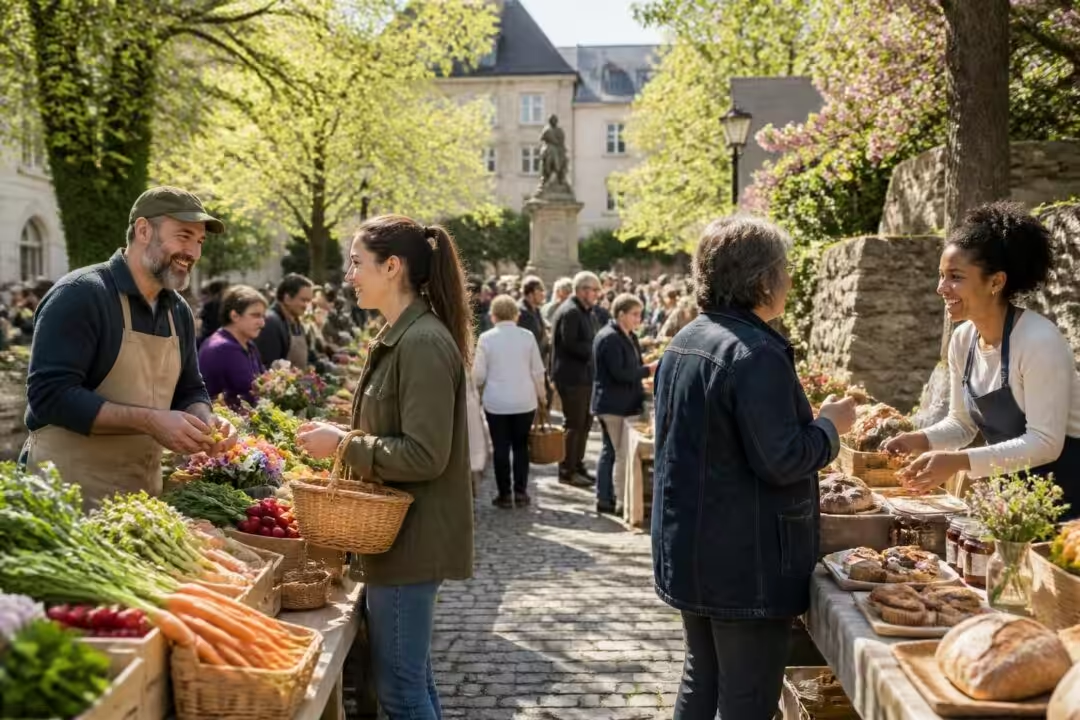
Farmers markets have always been about food, but they’ve quietly become one of the most practical ways to feel a neighborhood again. When supply chains run long and grocery aisles start to look identical coast to coast, the market offers the opposite: specificity. Specific farms. Specific soil. Specific people who can tell a tomato story without selling a brand narrative. The more American cities invest in walkable downtowns and local small business corridors, the more the farmers market functions as both pantry and civic commons—and the timing is right to look at how that plays out in real places, with real cooks and real budgets.
Farmers Market Community Connections: Why Markets Feel Like a Neighborhood Again
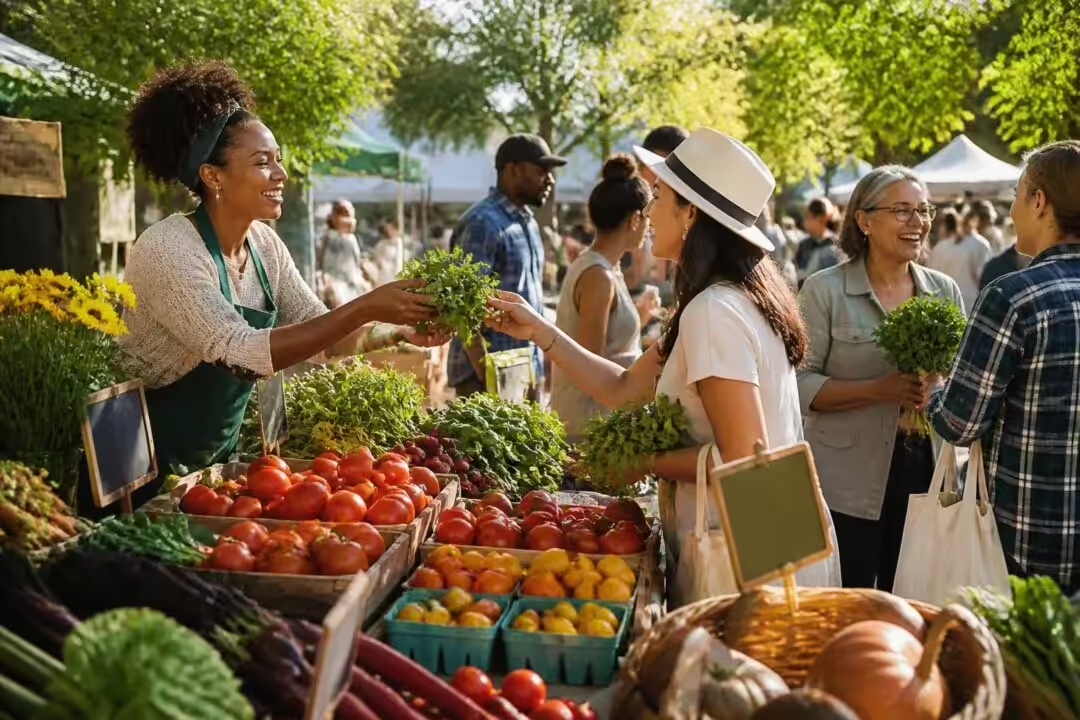
A strong farmers market does something subtle: it lowers the social barrier to interaction. A person doesn’t need an invitation, a membership, or a specific hobby to show up. The shared task—choosing produce, tasting a slice of melon, asking how to store basil—becomes a gentle excuse to speak. That’s why markets are repeatedly described as places where people “run into” each other, even when they didn’t plan to.
Recent national survey work in the U.S. (with a sample size in the thousands) has pointed to a consistent pattern: people who attend farmers markets tend to report stronger neighborhood connection and higher civic participation than people who never go. That doesn’t mean a Saturday stroll magically turns anyone into a super-volunteer. It suggests something more believable: repeated low-stakes contact makes community easier. When faces become familiar—vendors, regular shoppers, the musician by the entrance—it becomes more natural to show up for other local things, too.
Markets as “third places” with practical benefits
Urban planners have a phrase for places that aren’t home and aren’t work: third places. The best ones are informal, welcoming, and easy to return to. farmers markets fit because they’re anchored in necessity—food—so they never feel like forced socializing.
Consider the micro-moments that build trust: a vendor holds back the last bunch of dill for someone who always cooks pickles in August. A shopper shares a tip on grilling corn without drying it out. A kid gets a sticker for trying a cherry tomato. These interactions are small, but they accumulate into what sociologists call “social capital,” and what most people simply recognize as belonging 🧡.
Inclusive by design—when the design is intentional
Markets don’t automatically become welcoming; they become welcoming when organizers treat them as public space rather than boutique retail. That means thoughtful layout (wide aisles, clear signage), predictable schedules, and a mix of vendors that reflects how people actually eat: produce, eggs, bread, culturally specific prepared foods, and affordable pantry items.
It also means building for comfort. Shade, seating, water fountains, and nearby transit stops matter more than a “cute vibe.” When a market gets those basics right, it invites the quick stop and the slow linger—and both forms of attendance create connection.
A simple way to participate without being performative
Community isn’t only volunteering. Sometimes it’s learning names, returning regularly, and paying attention to what’s in season. A shopper who buys what’s abundant and asks “What’s best today?” signals respect for the grower’s reality. The result is a market that feels less like a transaction and more like a local relationship network.
That network becomes the foundation for the next layer: cooking with intention, not impulse. That’s where the market starts changing what ends up on the plate.
Insight to carry forward: the farmers market builds community not through grand gestures, but through repeatable, low-pressure encounters that make neighbors visible again 🤝.
Next comes the most practical question: how does a cook walk into a market, see chaos, and leave with a plan?
The mechanics of connection are only half the story. The other half is what happens when those strawberries, greens, and loaves land on a cutting board.
Local Flavors at the Farmers Market: How to Shop with a Cook’s Eye (and Waste Less)
Grocery shopping often rewards abstraction: brands, fixed prices, and the comforting illusion that everything is always available. A farmers market rewards attention. The payoff isn’t only better-tasting produce; it’s a clearer sense of what to cook this week, and a lower chance that wilted greens become compost guilt by Thursday.
The most reliable market strategy is counterintuitive: don’t start with recipes. Start with structure. Think in components—something juicy, something crunchy, something green, something starchy, something fermented or pickled. That framework works whether the market is overflowing with summer stone fruit or leaning into late-season roots.
A “market palette” approach to meal planning
One tested way to shop is to build a palette like a designer builds a color system: a few anchors, a few accents, and one surprise. Anchors might be onions, potatoes, eggs, or a sturdy loaf. Accents are herbs, citrus, peppers. The surprise is the thing that’s perfect today—maybe a basket of tiny cucumbers or a farmer’s last flush of strawberries.
From that palette, meals assemble quickly. Tomatoes plus basil plus good bread becomes a dinner with olive oil and salt. Peaches plus arugula plus feta becomes a salad that feels like a restaurant, without trying too hard. The market doesn’t demand culinary theatrics; it rewards restraint—letting peak ingredients do the talking.
Questions that unlock better buying
The best markets are full of information, but it isn’t always labeled. Asking a vendor a precise question can save money and prevent waste. “Is this basil sturdy or tender?” determines whether it should be blended into a sauce or scattered raw. “Will these peaches be ready tonight or in two days?” dictates whether they go into lunchboxes or a weekend tart.
These questions also create a tiny bridge between cook and producer. Over time, that bridge becomes a shortcut to quality: vendors will often point regulars toward the best box on the table, or explain how a rainy week shifted flavor and texture.
A practical list for market shopping that supports local farms 🧺
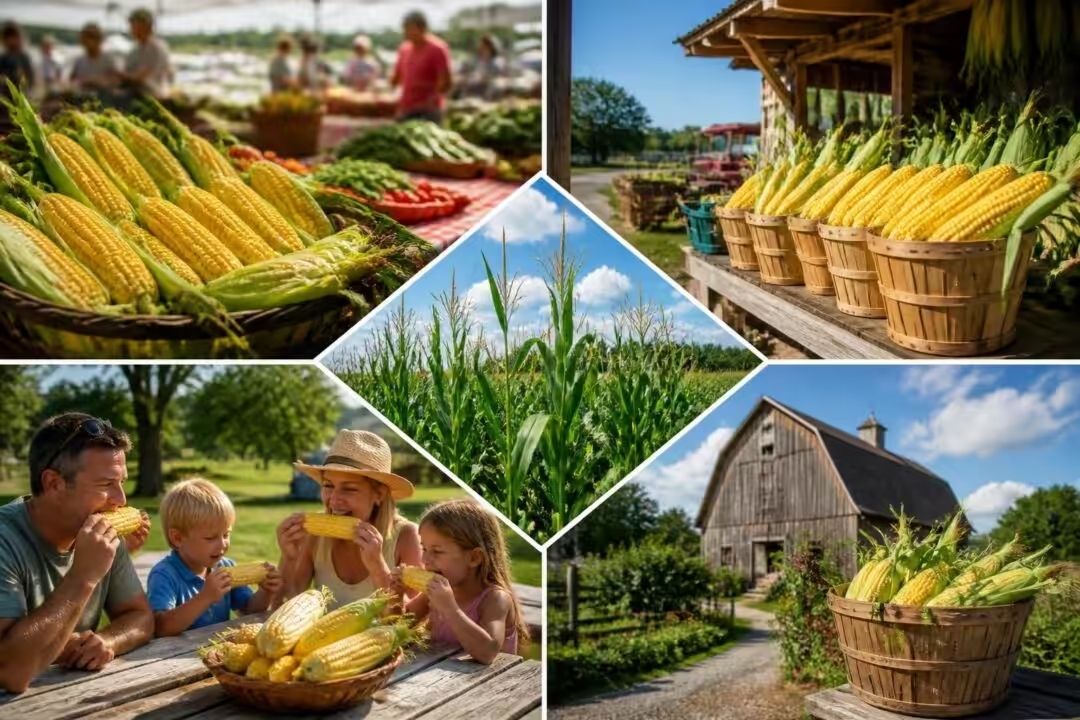
- 🥬 Buy at least one high-volume seasonal item (corn in summer, squash in fall) to match what farms are harvesting in quantity.
- 🍞 Add one ready-to-eat item (bread, dumplings, salsa) so the market trip feeds the same day, not “someday.”
- 🧂 Pick one pantry builder (honey, beans, grains) to stretch the week without extra shopping.
- 🌿 Choose two herbs: one for fresh finishing (cilantro, basil) and one sturdy for cooking (rosemary, thyme).
- 🧊 Bring a small cooler for eggs, dairy, and berries to keep quality high on warm days.
Cooking examples that stay flexible
A cook who buys a pound of mixed tomatoes can turn them into three different dinners depending on the weeknight mood: a raw chopped salad with feta; a quick blistered pan sauce for pasta; or a slow roast on a sheet pan that becomes the base for eggs the next morning. That flexibility is the secret to market cooking: the ingredient is stable, the format is adaptable.
Even “imperfect” produce becomes useful when the plan is component-based. Soft tomatoes become sauce. Slightly bruised peaches become compote. Older greens become a sauté with garlic and a squeeze of lemon. Nothing feels like failure; it feels like designing with constraints 🎯.
Insight to carry forward: a market trip works best when it’s built around components and questions, not rigid recipes—because peak produce is a moving target.
With that approach in mind, it’s worth looking at a real market launch and how it reshapes a downtown quickly.
One city’s new market shows how local flavor and civic energy can appear almost overnight when the setting is right.
Electric City Farmers Market in Downtown Scranton: A 2026 Case Study in Local Flavor and Foot Traffic
When a farmers market starts from scratch, the first day tells the truth. Are people curious enough to stop? Do vendors feel the effort is worth it? Does the space invite browsing, or does it feel like a pop-up dropped from the sky? In Scranton, Pennsylvania, the new Electric City Farmers Market launched in Christopher A. Doherty Park with a clear premise: bring farm-fresh goods into the downtown core and see if the city responds.
Early reporting from local television coverage described the opening as immediately busy, with residents drawn to farm produce, plant starts, and locally grown succulents. Shoppers framed the appeal in plain language: in a landscape dominated by big-name grocery stores, buying from nearby growers felt like a direct way to keep local agriculture alive. That sentiment matters because it’s not ideological; it’s practical. People want alternatives that feel real, especially when budgets are tight and food experiences can feel generic.
Why downtown placement changes the equation
A market in a downtown park does more than provide a place to shop. It creates a recurring reason to show up in the city center, which is exactly what many mid-sized American cities have been trying to rebuild post-pandemic: daytime foot traffic that supports restaurants, coffee shops, and small retail.
In Scranton’s case, organizers framed the park itself as a civic investment—built to celebrate and serve downtown—then filled it with a weekly ritual. That’s a design move as much as an economic one: rather than waiting for “vibes” to appear, the schedule manufactures predictability. Predictability brings people, and people bring more people.
Vendor variety as an engine for growth
One local plant and garden business owner noted that variety would be key as the market grows. That’s not just a vendor wish list; it’s a shopper psychology point. A small market can be charming, but it becomes a habit when it reliably solves multiple needs: produce, flowers, bread, and something to eat right now.
Scranton’s market was scheduled on Tuesday afternoons for a limited run of about six weeks. That time-bounded season can work well for a launch because it creates urgency without overpromising. It also allows organizers to collect feedback, recruit more vendors, and adjust hours before scaling up.
Restaurants as the multiplier 🏙️
One of the most compelling arguments from market backers was the spillover into local dining: restaurants can build farm-to-table specials around what growers bring, and diners get the satisfaction of knowing where food came from. That relationship is not automatic; it requires chefs to talk with farmers, plan around harvest, and accept variability.
But when it clicks, it becomes a virtuous loop. A restaurant buys local produce; the market gains credibility; customers start cooking with the same ingredients at home; and the downtown corridor benefits from a stronger identity.
How community shows up in quotes, not slogans
Residents interviewed at the market described something that research often captures with numbers: they met people they wouldn’t otherwise meet. That’s the quiet civic power of a market. It’s a place where shared interest—gardening, cooking, supporting local business—creates a natural conversation starter.
When a shopper says they’ll “be here all the time” because the schedule fits, that’s more than enthusiasm. It’s a signal that the market achieved the hardest thing: it found a slot in real life.
Insight to carry forward: downtown markets succeed when they’re treated as repeatable civic design—a schedule, a space, and a set of relationships that compound over time.
After the city-level view, the next perspective is even more actionable: what growers and vendors wish shoppers knew, so the whole system holds together.
Supporting Local Farmers at Farmers Markets: What Vendors Need (and How Shoppers Can Help)
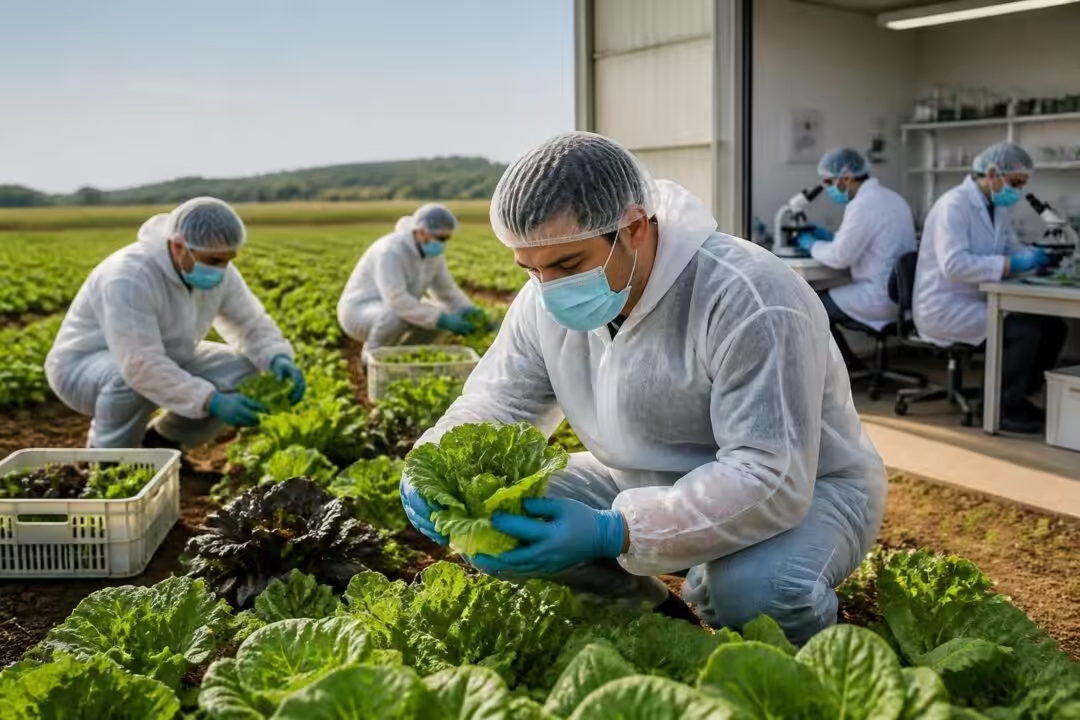
Vendors arrive early, haul tents, set up tables, and stand for hours answering the same questions with patience. The romantic image of a market—sunlight and baskets—skips the operational truth: farming is unpredictable, and selling direct is labor. The good news is that small shopper behaviors can make a meaningful difference without turning the trip into a moral project.
The first thing vendors need is simple: consistent demand. A market is a weekly bet. Growers harvest and pack before they know what sales will be. When customers build routines—showing up twice a month, buying the “in season” item, pre-ordering when available—farm planning becomes less risky.
How to ask questions that respect the work
Questions are welcome, but the most supportive questions are the ones that lead to a purchase and reduce waste. Instead of asking, “Is this organic?” as a conversation ender, ask, “How was this grown, and what pests were tough this week?” That invites a real answer and reflects actual farm conditions.
For eggs, asking “Are these unwashed?” affects storage. For greens, “Were these picked yesterday?” informs how quickly to use them. This is knowledge grocery stores rarely offer, and it’s one reason markets feel like education you can eat.
Pricing, value, and the hidden costs
Market prices can surprise shoppers who are used to loss leaders at big chains. But direct-market pricing often reflects true costs: labor, land, insurance, feed, and climate-related unpredictability. In the mid-2020s, weather volatility has made many crops more variable in yield and quality, which pushes growers to diversify and price accordingly.
That doesn’t mean every shopper can pay any price. It does mean it’s worth choosing one or two items to buy directly—eggs, berries, salad greens—where the quality difference is immediate and the money goes straight to the producer.
A table of vendor-friendly shopper habits (small actions, big impact) 🧾
| Shopper habit 🛒 | Why vendors appreciate it 🌱 | What it looks like in practice ✅ |
|---|---|---|
| Arriving early for best selection | Early sales set the tone and reduce end-of-day leftovers | Buy berries and greens before heat builds ☀️ |
| Buying “seconds” when offered | Reduces farm waste and increases usable revenue | Grab slightly blemished tomatoes for sauce 🍅 |
| Bringing reusable bags/containers | Lowers packaging cost and speeds up service | Keep a tote and a small produce bag set in the car 🧺 |
| Using multiple payment options | Faster lines help every stall, especially at peak hours | Have a card ready, plus small bills if possible 💵 |
| Committing to a routine | Predictability helps farms plan planting and harvest | Choose “every other Tuesday” and stick to it 📅 |
Community support that goes beyond buying
Markets also thrive when shoppers amplify them in low-effort ways: inviting a neighbor, bringing an out-of-town friend, or telling a local restaurant about a farmer’s standout peaches. These actions create the network effects that help new markets—like Scranton’s—move from “nice idea” to stable institution.
When vendors feel seen and sales feel steady, they invest more in the market: better variety, more experimentation, and often more transparency about how food is grown. That’s the loop worth protecting.
Insight to carry forward: the most powerful support is predictable, practical loyalty—habits that make farming and selling direct less risky.
With the vendor perspective in place, the final step is designing a market routine that works in modern American schedules—so good intentions become repeatable meals.
Farmers Market Routine for Busy Home Cooks: A Repeatable System for Local Flavor
A farmers market can feel like a leisurely weekend activity, but the most loyal shoppers often treat it like a designed system. A system removes friction: fewer forgotten bags, fewer impulsive buys, fewer “What am I doing with this?” moments. When the routine is right, the market becomes the easiest place to shop, not the cutest.
The core idea is to build a loop: plan lightly, shop intentionally, prep minimally, and cook flexibly. That loop respects real constraints—work schedules, kid pickup, limited fridge space—without sacrificing the pleasure that makes markets worth it.
Timing, temperature, and the “two-bag” method
Most market disappointment is a temperature problem disguised as a shopping problem. Greens wilt in hot cars. Berries turn soft. Cheese sweats. The fix is straightforward: a tote for shelf-stable items and a small insulated bag for cold-sensitive ones. This matters even on mild days because market time adds up—chatting, sampling, waiting in line.
Timing matters too. Early shopping yields best selection; late shopping can yield deals. A helpful rhythm is early once a month for “prime pick,” and late once a month for pantry restocks and markdowns. The goal isn’t optimization for its own sake; it’s making the market fit the calendar.
Prep like a restaurant, but smaller
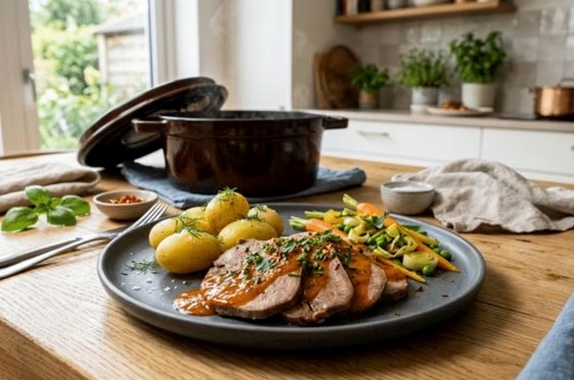
Restaurants move fast because components are ready: washed greens, sliced onions, a pot of grains, a sauce that makes everything taste intentional. A home version can be done in 30–45 minutes. Wash and spin greens, trim herbs, roast a tray of vegetables, and cook one pot of grains. Suddenly, market food becomes weeknight food.
That prep also protects the purchase. Herbs last longer when stems are trimmed and stored like flowers in a jar. Greens stay crisp when wrapped in a towel. Berries last longer when they’re chilled dry and only rinsed right before eating.
Menus that let the market lead
Instead of locking into a rigid plan, build a “choose-your-own” menu that can bend. If tomatoes look incredible, they become the centerpiece. If the best thing is corn, dinner becomes corn salad plus grilled chicken or tofu. The market decides the star; the kitchen supplies the supporting cast.
Here’s a flexible example set that can adapt to whatever is overflowing at the stalls:
- 🍳 One egg dinner: market greens sautéed + eggs + toast.
- 🍚 One bowl meal: cooked grains + roasted vegetables + a crunchy topping (nuts, seeds) + something tangy (kimchi, pickles).
- 🥗 One big salad: sturdy greens + fruit + cheese or beans + toasted bread crumbs.
- 🍝 One pantry pasta: blistered tomatoes or sautéed squash + garlic + olive oil + herbs.
A thread that ties it together: a fictional but familiar neighbor
Picture a shopper named Tessa, a nurse with alternating shifts. She can’t do a slow Saturday every week, but she can do Tuesday afternoons twice a month. She brings a cooler, buys what’s abundant, and asks one useful question at each stall. At home, she washes greens and roasts vegetables before showering. The next three dinners come together fast, and her grocery store trips shrink.
Tessa’s routine isn’t aspirational; it’s realistic. It’s also the kind of repeatable pattern that helps a new downtown market—like Scranton’s—stay busy beyond opening week. When enough people adopt a similar loop, the market stops being an event and becomes infrastructure.
Insight to carry forward: the best farmers market habit is the one designed for real life—two bags, light prep, flexible menus—so local flavor becomes automatic, not occasional 🧺.
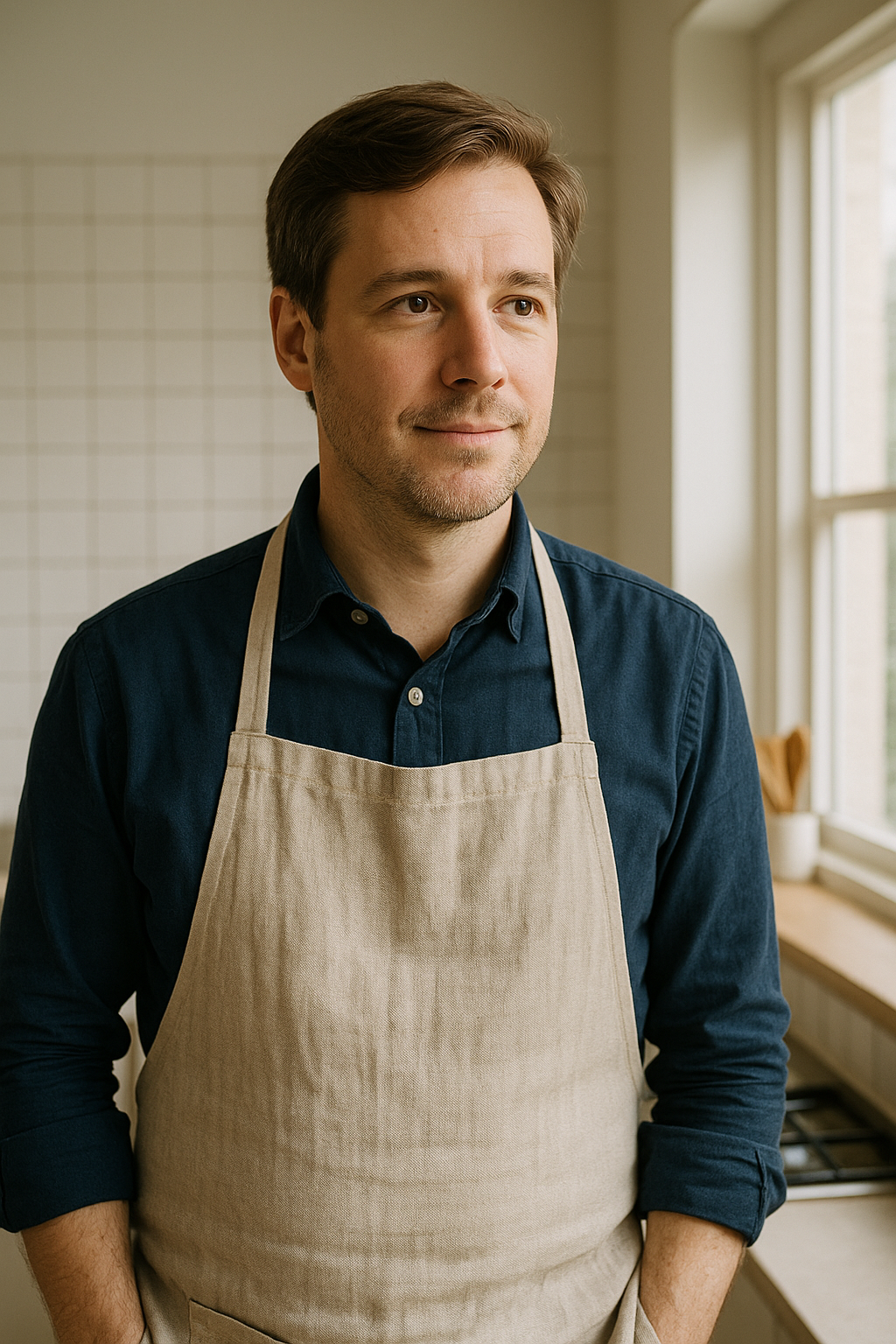
Hi, I’m Landon Brooks. I am the editor-in-chief of Cook and Design, but for the first decade of my working life I was actually a product designer in New York.

6 Comments
Great piece Landon! Markets truly are civic infrastructure—they stitch neighborhoods together and anchor walkable downtowns. Let’s keep supporting them!
Good read. Markets are the ultimate open-source platform: low entry, high community return.
Landon, solid breakdown. The market’s a wiring diagram for community—connections carry the current.
The market as civic UX—low friction, high trust. Seasonality as a design constraint is genius.
Lovely piece. Markets are upstream interventions—they feed both bodies and social bonds.
Markets as low-friction social APIs. The best feature? No onboarding required.
Les commentaires sont fermes.