
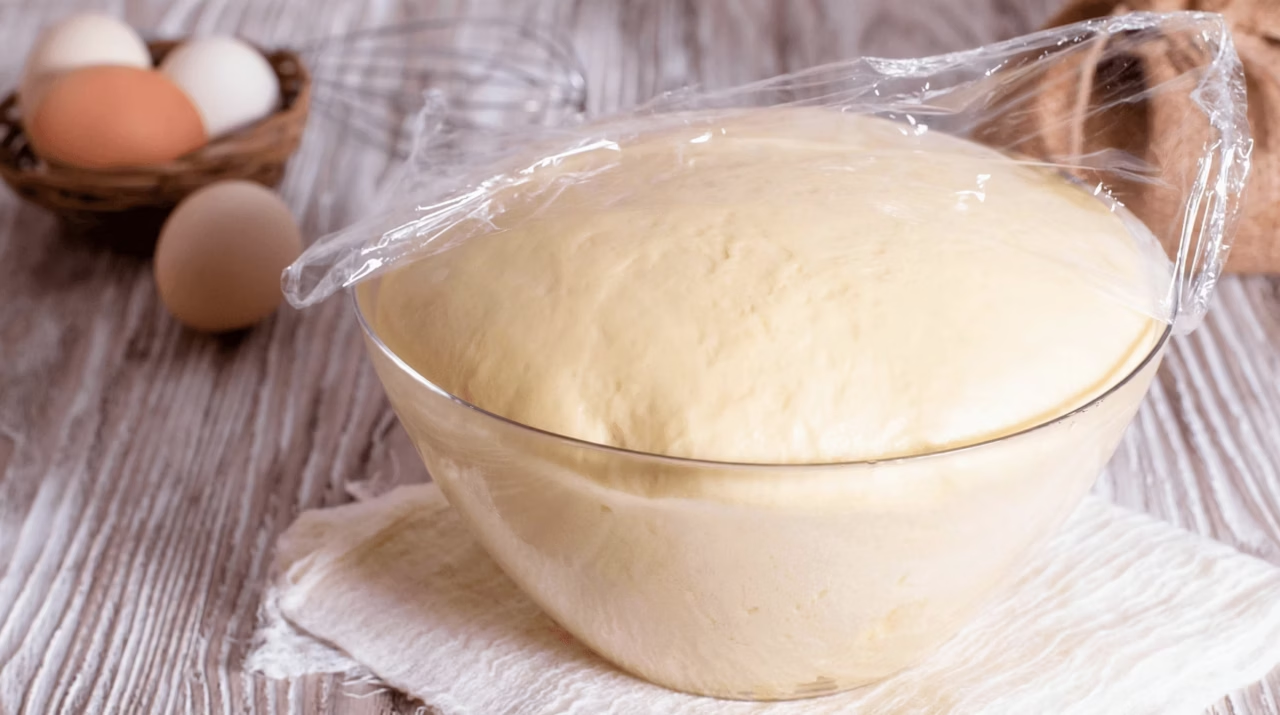
| In this story / Sections 🧈➡️ | Key notes / What to remember ⭐ |
|---|---|
|
1. Best Butter Substitutes for Baking: Overview and How to Choose 2. Plant-Based Oils & Fats: Oil, Coconut, Margarine 3. Fruit & Dairy Swaps: Applesauce, Yogurt, Avocado 4. Shortening, Nut Butters & Emulsifiers 5. Ratios, Testing Notes & Practical Cheat Sheet |
• Match function: fat for flavor, oil for tenderness, solid fat for structure. 🧪 • Adjust liquids when swapping oils or purees. 💧 • Test in small batches for crisp cookies vs. tender cakes. 🧁 |
Why this matters this week: Pantry gaps and dietary preferences shape weekend baking in 2026; home cooks need a compact, design-minded guide to substitute butter without losing texture or aesthetic control. The following sections present swaps organized by function — flavor, structure, moisture — with practical ratios, troubleshooting, and a fictional baker’s thread to make testing feel actionable rather than theoretical.
Best Butter Substitutes for Baking: Overview and How to Choose (function-first guide)
When butter is absent, allergic, or intentionally omitted, the choice of substitute should be guided by function rather than by brand. Butter performs three core roles in baked goods: flavor, structure, and moisture. Identifying which role matters most for a given recipe — the flaky lift in a pie crust, the tenderness in a muffin, or the spread in a cookie — simplifies the swap decision.
Consider a fictional home baker, Mina, who makes weekend sweets for a small café. Mina treats each recipe like a small product brief: what must the final piece look and feel like? For a glossy, visually pleasing tart, the structure of solid fat is essential. For a rua of hydrating muffin, moisture matters far more.
Start with these rules of thumb: solid fats (butter, shortening, margarine) are best when a recipe relies on creaming or lamination; liquid oils are preferable for quick breads and some cakes because they produce a moister crumb; fruit purees and yogurts lower fat but keep moisture, which works for muffins and some cakes but not for laminated or flaky doughs. Each option trades something: flavor, browning, flakiness, or rigidity.
Below is a compact table comparing common substitutes and their primary effects. It helps to view choices as trade-offs instead of replacements.
| Substitute 🍽️ | Best for ✅ | Notes & Adjustments 📝 |
|---|---|---|
| Vegetable oil 🥥 | Muffins, quick breads | Keep moisture, omit melted-butter browning; reduce added liquid slightly. 🔧 |
| Coconut oil 🥥 | Cookies, brownies (texture), vegan recipes | Solid at room temp → good for structure; coconut flavor varies. 🌴 |
| Margarine 🧈 (stick) | General butter swap | One-to-one for most baking; watch water content for flaky pastry. ⚖️ |
| Applesauce 🍎 | Cakes, quick breads (fat reduction) | Halves fat and keeps moisture; reduce sugar slightly if using sweetened. 🍰 |
| Greek yogurt 🥄 | Moist crumb, tender cakes | Adds acidity and protein; best when some fat is retained elsewhere. 🥛 |
| Shortening 🧈 | Pie crusts, flaky pastries | Great for lift and flakiness; lacks butter flavor — consider browned-butter flavoring. 🥧 |
Key insight: choose the substitute that replicates the butter role most crucial to the recipe — do that, and the final product will respect both texture and appearance.
Plant-Based Oils and Fats: When to Use Oil, Coconut Oil, and Margarine
Liquid oils (canola, sunflower, grapeseed, olive) are the designer's tool for tenderness. In cakes and muffins, replacing butter with oil typically yields a more uniformly moist crumb and less brittle crust. Use a neutral oil for delicate flavors; choose light olive or toasted sesame sparingly when a savory or subtly nutty note is desired.
For quick breads, the standard conversion is ¾ cup oil for 1 cup butter. This adjustment accounts for butter’s ~15–20% water content. In practice that means a batter made with oil will be slightly richer in fat and should often be balanced by reducing another liquid by a tablespoon or two to prevent an overly wet crumb.
Coconut oil: solid fat with a coconut note
Coconut oil behaves like a hybrid. When used solid, it can stand in for butter in cookies and some pastry where creaming or layering is required. Its melting point leads to a crisp-tender edge once baked. Be mindful: virgin coconut oil leaves a coconut aroma; refined coconut oil is more neutral. For visually crisp cookies, chill cookie dough made with coconut oil before baking to prevent excessive spread.
Margarine and vegan spreads
Stick margarine is often the most straightforward one-to-one swap for butter, because it mirrors butter’s plasticity and water content. For laminated doughs, choose a formulation with higher fat (often labeled for baking) to mimic rollability. The trade-off is flavor; a small added tsp of butter extract or browned butter-flavored oil can reintroduce the savory notes missing from margarine.
Example: A batch of shortbread made with margarine spreads a touch more but still retains a pale, structured bite — pairing with flaky sea salt and a thin lemon glaze will elevate the visual and gustatory finish.
Technique note: when creaming sugar with an oil-based substitute, the batter won’t trap air the way butter does. For recipes that rely on creaming for lift, consider adding an extra egg white or a teaspoon of baking powder to compensate.
Key insight: liquid oil wins for moistness; solid plant fats win for structure. Match the substitute to the physical demand of the recipe rather than to an ingredient’s familiar name.
Fruit, Dairy, and Yogurt Swaps: Applesauce, Greek Yogurt, and Avocado in Cakes and Muffins
Fruit purees and dairy-based swaps are the minimalist’s approach: they reduce fat while preserving moisture and often add subtle flavor. Applesauce is the most common fruit swap for cakes and muffins, prized for its neutral sweetness and thickening properties. Use unsweetened applesauce to control sugar and replace up to half the fat without collapsing the structure.
Practical example: for an oil-based banana bread, replacing 50% of the oil with applesauce produces a lighter crumb and more pronounced banana flavor. In a yellow cake where browning and crumb tenderness matter, limit applesauce to 25–30% of total fat to avoid gummy texture.
Greek yogurt: protein-forward moisture
Greek yogurt brings both liquid and protein, which helps with crumb integrity. It’s particularly effective in coffee cakes and loaf cakes where a slight tang can lift sweetness and complement spices. For substitution, replace half the butter with an equal weight of plain Greek yogurt and slightly reduce other liquids.
Texture trade-offs: Greek yogurt can tighten crumb due to protein, so include a touch of oil or an extra yolk if a tender, cake-like crumb is desired.
Avocado: green fat with a creamy finish
Mashed avocado is an excellent visual and textural substitute in chocolate cakes and some cookies. Its fat profile is heart-healthy and the green tone disappears in dark batters. Use a one-to-one replacement by volume for butter in dense cakes; for lighter bakes, reduce the avocado slightly and incorporate a small amount of oil to improve aeration.
Anecdote: Mina tested avocado brownies for a summer menu and found that chilling the batter overnight improved flavor melding and reduced surface cracking — a small behavioral change that maintained both appearance and texture.
Key insight: fruit and dairy swaps excel where moisture and flavor balance matter more than flakiness. Use them confidently in quick breads, muffins, and certain cakes; avoid in laminated or layered pastries.
Shortening, Nut Butters, and Alternative Emulsifiers: Texture, Structure, and Flavor Calibration
When the recipe demands structure — think flaky pie crusts, puff pastry alternatives, or crisply edged cookies — hydrogenated shortening and certain solid baking fats remain useful. Shortening, because of its higher melting point and neutral flavor, produces superior lift in pie dough and tender texture in biscuits. The downside is the absence of butter’s flavor; compensate with an aromatic: a tablespoon of browned-butter-flavored oil or a small quantity of cultured butter swirled in after lamination can restore depth.
Nut butters (almond, peanut, cashew) are another class of substitute. They introduce both fat and protein along with pronounced flavor. Use them in cookies and bars where the nut character is welcome. Replace up to 75% of the butter with nut butter and reduce other liquid components to avoid a dense, under-baked center.
Emulsifiers and lecithin
Modern baking sometimes benefits from added lecithin or commercial emulsifiers when replacing butter with oils in batters that require aeration. A small teaspoon of soy or sunflower lecithin can stabilize emulsions and improve crumb hold in cakes using oil and egg replacements.
Case study: a small bakery in Portland reformulated its shortbread using a blend of half shortening and half cultured butter alternative, achieving flaky layers with a better shelf life and a neutral palate—useful for a pastry case where appearance must be consistent across a busy weekend.
Practical tips: chill doughs made with solid substitutes thoroughly before rolling; hydrate nut-butter-based batters briefly (10–20 minutes) to allow oil migration to stabilize; add flavor enhancers like salt flakes, citrus zest, or browned-butter essence to compensate for neutral fats.
Key insight: for structure, prefer solid fats or blends; for pronounced flavor, embrace nut butters and compensate with small aromatics.
Ratios, Testing Notes, and a Practical Baking Cheat Sheet for Everyday Swaps
Successful substitution is about small experiments, not wholesale swaps. The following cheat sheet synthesizes functional ratios and quick troubleshooting steps to test in 1–2 small batches before scaling.
- 🍰 Oil for butter (cakes/muffins): ¾ cup oil per 1 cup butter. Reduce other liquid by 1–2 tbsp. ✅
- 🥧 Shortening for butter (pastry): 1:1 by weight. Add 1 tsp butter flavor for aroma. ✅
- 🍎 Applesauce for butter (cakes): Replace up to 50% of fat; prefer unsweetened; reduce sugar slightly. ✅
- 🥑 Avocado for butter (chocolate cakes): 1:1 by volume for dense cakes; add small amount of oil for tenderization. ✅
- 🥛 Greek yogurt for butter: Replace up to 50% by weight; decrease liquids and possibly add extra yolk for richness. ✅
| Recipe Type 🍪 | Preferred Substitute 🔁 | Troubleshoot Tip 🔧 |
|---|---|---|
| Cookies 🍪 | Coconut oil or margarine | Chill dough to control spread; adjust sugar for browning. ❄️ |
| Cakes 🎂 | Oil or applesauce | Reduce oven temp by 15°F if sides brown too quickly. 🌡️ |
| Pie crusts 🥧 | Shortening or margarine | Cut in chunks and keep cold; rest dough before rolling. 🧊 |
| Brownies 🍫 | Avocado or oil | Test bake time; avocado can lead to fudgier center — check with skewer. ⏱️ |
Final practical routine: run one small test batch (6–8 cookies or a 6-inch cake) when changing the fat. Photograph results from a slight overhead angle to assess spread and crumb; record adjustments in a single notebook or note app. This disciplined, design-minded approach turns substitutions into repeatable wins rather than guesswork.
Key insight: substitution is iterative — test small, observe precisely, and keep the sensory goal (appearance, texture, flavor) central. This practical method keeps both the plate and the palate consistent across creative swaps.

Hi, I’m Landon Brooks. I am the editor-in-chief of Cook and Design, but for the first decade of my working life I was actually a product designer in New York.
7 Comments
Landon, solid framework. But like electrical loads, wrong fat type trips your texture breaker.
Landon, your function-first breakdown is as elegant as a well-run trial—clear endpoints, practical swaps. More please!
Love the function-first approach. Like circuit design, each swap changes the whole system.
Butter’s carbon footprint vs. avocado’s? Great guide, but let’s quantify water use next time.
Treating fat as structural load? Smart. The ratios here mirror mix design principles. Precision in baking is like calibration in concrete.
Function-first is the right abstraction. Show quantified moisture offsets per substitute, and this becomes a spec.
Butter’s a complex emulsion; swapping needs a rheological perspective. Great breakdown, Landon. Ratio cheat sheet is my new tensile test.
Les commentaires sont fermes.