| Key notes ✅ | Sections 🧭 |
|---|---|
| Choose Yukon Gold for a buttery interior and thin skin 🥔 | Greek lemon potatoes, defined: texture + flavor architecture |
| Don’t crowd the pan or the potatoes steam instead of roast 🔥 | Ingredients that matter (and what to swap without regret) |
| Broth first, lemon later for tenderness without dulling the citrus 🍋 | Method: staged roasting for glossy edges and soft centers |
| Finish with pan juices for that Greek taverna sheen ✨ | Serving design: plating, pairings, and tzatziki logic |
| Reheat in the oven to bring back the crisp ⚡ | Leftovers: storage, freezing, and second-day upgrades |
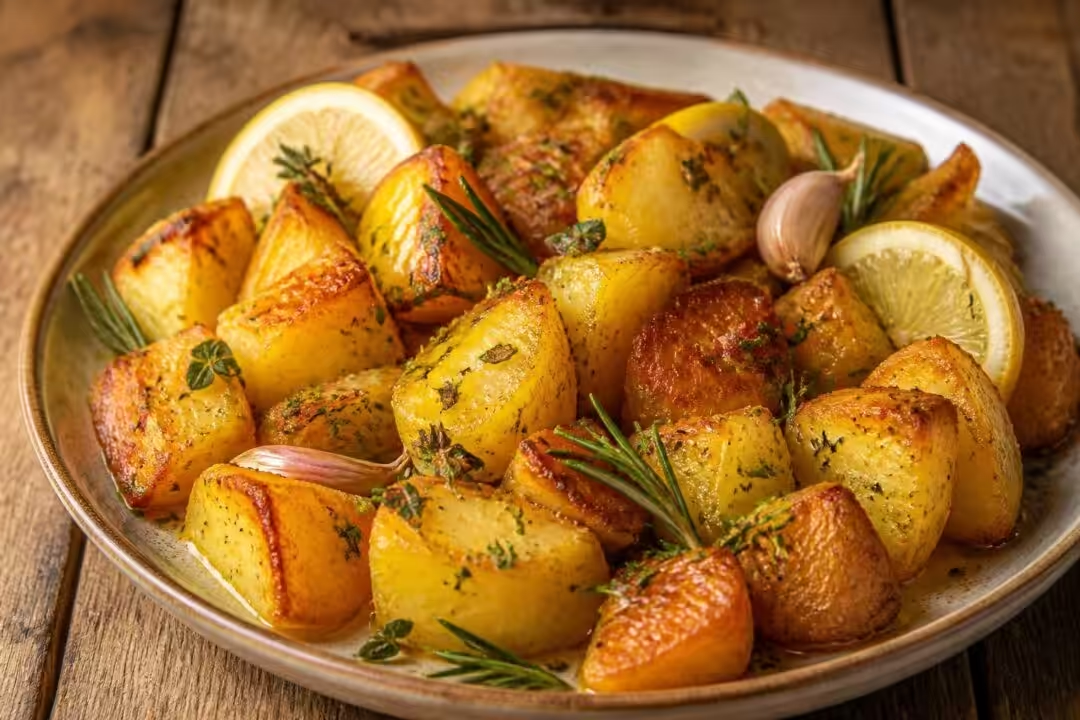
Greek lemon potatoes are one of those dishes that feel like a small miracle: minimal ingredients, almost no active labor, and the payoff is both sensory and visual. The goal isn’t “potatoes with lemon.” The goal is tender wedges that taste like they roasted in the same pan as a Sunday chicken—even when there’s no chicken in sight—plus edges that catch the light the way good lacquer does. The secret is staged moisture and staged acidity, so the potatoes soften first, then bronze, then sharpen into something unmistakably Greek. Next comes the part that makes this side feel like a headline: how to build that herby, glossy roast without overcomplicating it.
Greek Lemon Potatoes, Explained: The Herby Roast Side You Need for Texture and Brightness
The best Greek lemon potatoes land in a very specific zone: soft, almost spoon-tender interiors with edges that are crisp but not chip-hard. That texture contrast is why they work next to nearly anything—eggs at brunch, steak on a Friday, or a simple sheet-pan of roasted vegetables when the fridge looks sparse. In many Greek homes, potatoes are roasted in the same pan as chicken or lamb, absorbing juices and fat as they cook. When making them as a standalone side, the method mimics that effect by using stock for savory moisture and extra virgin olive oil for richness and browning.
There’s also a design principle at play: the potatoes should look intentionally rustic, not messy. Wedges give you flat faces for browning, plus crevices that hold the lemon-garlic oil like little reservoirs. On a platter, those shapes read as abundant and generous—exactly what a side dish should communicate at the table. A pile of evenly cut wedges also photographs beautifully under soft light, because the surfaces catch highlights differently and create depth without needing garnish overload.
Flavor architecture: why oregano + lemon never feels tired
Lemon and oregano is a pairing that can sound obvious until it’s done correctly. The oregano—especially dried Greek oregano—brings a warm, slightly peppery backbone that holds up through a long roast. Lemon brings clarity, but if it goes in too early or in the wrong amount, it can taste flat or even bitter after an hour in a hot oven. The move is to treat lemon like a finishing instrument, not background noise: add it after the potatoes have already started to soften and take on color, so the final roast keeps the citrus lively 🍋.
Garlic is the third pillar, and it can go two ways: sliced for little sweet, browned bits; or microplaned/grated for a more even infusion. Either works, but the choice affects the visual: sliced garlic gives you caramelized confetti; grated garlic gives you a glossy, unified sauce that clings to every edge.
A small, real-world test scenario (because dinner is never theoretical)
Picture a Sunday dinner for six. There’s a roast chicken, a salad, and a tray of these potatoes. The tray comes out smelling like lemon grove air and warm herbs, but the real moment is when the potatoes hit the platter: the pan juices—oil, stock reduction, garlic—get poured over the top, and suddenly they look like they came from a taverna kitchen that has been doing this for decades. That’s the bar. Anything less is just roasted potatoes.
Insight to carry forward: Greek lemon potatoes succeed when the method is staged—first tenderness, then browning, then brightness—so every bite has contrast, not chaos 🔥.
Next, it’s time to talk ingredients, because this is a “few things, done well” recipe and every item pulls weight.
Best Ingredients for Greek Lemon Potatoes: Yukon Gold, Olive Oil, Oregano, and Smart Swaps
This dish doesn’t need a long shopping list; it needs good decisions. The most important is the potato. Yukon Gold is the go-to for a reason: it has enough starch to go fluffy inside, but enough structure to keep wedges intact. The thin skin also means peeling is optional if the potatoes are clean and unblemished. If baby gold potatoes are what’s available, halving them works well—just expect a shorter cook time because smaller pieces brown faster 🥔.
Lemons matter more than people think. Use fresh juice, not bottled. Bottled lemon can carry a dull, cooked-note that reads “cleaner” instead of “citrus.” Fresh lemon also gives you the option of serving wedges at the table, which is both practical and visually bright—tiny pops of yellow that signal freshness.
Extra virgin olive oil is non-negotiable for flavor. That doesn’t mean using the most expensive bottle saved for salads, but it does mean choosing something that tastes like olives, not like neutral fat. Because the pan juices become a sauce, a flat oil makes a flat finish. Stock (chicken or vegetable) brings the “roasted-with-meat” savor. Low-sodium stock is the easiest way to control salt without sacrificing depth.
Ingredient list that’s tight but complete
- 🥔 Potatoes: 3 lb / 1.36 kg Yukon Gold, scrubbed and cut into wedges (or baby gold, halved)
- 🫒 Extra virgin olive oil: about 1/2 cup / 120 ml
- 🧄 Garlic: 4–5 cloves, thinly sliced or grated (microplane for even infusion)
- 🌿 Dried oregano: 1 Tbsp (Greek oregano if possible)
- 🧂 Sea salt + black pepper: season assertively
- 🍲 Stock: 1/2 cup / 120 ml (up to 1 1/2 cups / 360 ml if using a larger pan and wanting softer potatoes)
- 🍋 Fresh lemon juice: from 2–3 lemons, added later for brightness
- 🌱 Fresh herbs for serving (optional): oregano, thyme, rosemary, or a few sage leaves
Swaps that won’t break the dish (and ones that will)
Vegetable stock works perfectly for a meatless table; the potatoes still taste rounded because olive oil and oregano do a lot of heavy lifting. Russet potatoes can work, but they’re more fragile; they can slump and break if overcooked or aggressively turned. If using russets, cut larger wedges and handle gently.
Fresh oregano is excellent as a garnish, but dried oregano is the backbone during roasting. Fresh herbs can scorch in high heat and turn bitter, so they’re best saved for the end when the potatoes are glossy and hot enough to release aroma without burning 🌿.
One more note that comes up in real kitchens: tri-colored baby potatoes are fun for a party tray, but they cook at slightly different rates. A reader comment from Felice captured it perfectly—smaller potatoes need a time adjustment. That’s not failure; it’s just physics. Keep an eye on color, not the clock ⏱️.
Insight to carry forward: When the ingredient list is short, quality choices become the seasoning—especially the oil and oregano.
With the pantry set, the real craft is the roast: how to time moisture and lemon so the tray comes out bronzed, not soggy.
Watching a few different cooks roast these can be useful, not for copying, but for noticing cues: how much space the wedges need, what “golden edges” actually look like, and how the pan juices reduce.
How to Make Greek Lemon Potatoes: Staged Roasting for Crispy Edges and Tender Centers
The signature of Greek lemon potatoes is that they’re not simply roasted dry. They’re roasted in a shallow bath that shifts over time: first it’s oil plus stock, then it concentrates, then lemon joins and the whole thing turns into a pan sauce. That staged approach is what keeps the potatoes plush inside while still allowing the exterior to bronze.
Temperature matters, but spacing matters more. A crowded pan traps steam; steam turns crisp edges into soft ones. Use a baking dish or roasting pan large enough that the wedges sit mostly in a single layer with a little breathing room. Slight overlap is survivable; a packed pan is not. If doubling for a party, use two pans—this is one of those cases where more surface area beats “one big tray” every time 🔥.
Executable method with cues (not just timers)
- 🧼 Scrub and cut: Clean 3 lb / 1.36 kg Yukon Gold potatoes and cut into wedges. Heat oven to 400°F / 205°C.
- 🫒 Season and start the roast: In a large baking dish, toss potatoes with olive oil, garlic, dried oregano, sea salt, and plenty of black pepper. Roast 15 minutes so surfaces start to dry and take heat.
- 🍲 Add stock for tenderness: Pour in stock (chicken or vegetable). Roast another 15 minutes. The stock should bubble, not flood; it’s there to soften and season.
- 🍋 Add lemon later: Add fresh lemon juice and continue roasting about 35 minutes, or until wedges are fully tender and edges are deeply golden.
- ✨ Finish like a saucy roast: Transfer to a platter and pour the lemon-garlic oil and reduced juices over the top. Add fresh oregano leaves if using.
The cues to look for: the potatoes should yield easily when pierced, but they shouldn’t collapse. The pan juices should smell like toasted garlic and lemon peel, and the oil should look slightly thickened from starch and reduction. If the liquid seems watery late in the roast, the pan may be too deep or the potatoes too crowded; spread them out and raise heat slightly for the final stretch.
The optional crisping move (when the table wants drama)
For extra crisp edges, use a two-stage tray approach: after most of the stock has reduced, transfer the potatoes to a second tray, leaving behind some oil in the original pan. Then drizzle a bit of that reserved oil over the wedges and roast again until the edges look aggressively golden. This step is especially satisfying when serving alongside something juicy like roast chicken, because the potatoes hold their structure and don’t turn soft under the pressure of sauces.
Insight to carry forward: Crispness here is a product of space + reduction; the oven can’t brown what it’s steaming.
Once the tray is right, serving becomes the final design pass—where these potatoes go from “side” to “center of gravity.”
How to Serve Greek Lemon Potatoes: Pairings, Plating, and the Tzatziki Shortcut
Greek lemon potatoes are flexible enough to support almost any main, but they shine brightest when the rest of the meal stays simple. Think of them as a bold, herby starch with built-in acidity. That means they naturally balance rich proteins (roast chicken, lamb chops, steak) and also elevate lighter plates (grilled fish, roasted vegetables, a big chopped salad). They can even anchor a vegetarian dinner with stuffed peppers or a tray of roasted chickpeas and blistered tomatoes.
The plating should lean into abundance while staying clean. A wide platter is better than a bowl because the wedges need air; stacked too deep, they steam and lose the edges you worked for. A final drizzle of pan juices makes them gleam under dining-room light—an easy way to make the dish look “restaurant” without garnish theatrics ✨.
Tzatziki + potatoes: the Greek combo that feels like a cheat code
There’s a reason potatoes and tzatziki show up together so often in Greek meals: the cool yogurt, cucumber, and garlic act like a soft counterpoint to the hot, oily, citrusy wedges. The contrast is textural (crisp vs creamy) and temperature-based (hot vs cold), which makes each bite feel complete.
If the meal needs a little more structure, build a casual platter: lemon potatoes, tzatziki, a tomato-cucumber salad, and something grilled. It’s the kind of spread that looks intentional even if it came together on a weeknight. For readers who like to cook by “modules,” this is a great place to link out—Cook and Design keeps a growing archive of dip-and-salad pairings, and a Greek dip set is a strong companion move when hosting.
Pairing guide for real American tables
| Main dish pairing 🍽️ | Why it works 💡 | One plating tip 🎨 |
|---|---|---|
| Roast chicken (or sheet-pan chicken thighs) | Lemon + oregano echoes classic roast flavors; stock-built savor feels seamless ✅ | Serve potatoes on a platter; spoon pan juices last for shine ✨ |
| Grilled salmon or white fish | Potatoes bring comfort; citrus cuts richness without heavy sauces 🍋 | Add extra lemon wedges for squeeze-at-table freshness |
| Steak (cast iron or grill) | Herbs and garlic stand up to char; potatoes replace fries with more depth 🔥 | Scatter fresh oregano at the end for a green pop 🌿 |
| Stuffed vegetables (peppers, zucchini) | Acidity keeps the plate from feeling too soft; wedges add structure 🥔 | Keep potatoes in a single layer until serving to protect edges |
| Eggs (fried or soft-scrambled) | Potatoes become brunch-ready; lemon makes the plate feel awake ☀️ | Use smaller wedges for fork-friendly bites |
For hosting, a smart move is to roast the potatoes slightly longer than seems necessary, then let them rest five minutes before serving. The surface oil settles, the starch tightens, and the wedges hold their shape on the platter. That rest is quiet but powerful—like letting a design breathe.
Insight to carry forward: The most memorable serving move is also the simplest: platter + pan sauce + a cold dip on the side.
And when the meal is over, these potatoes don’t fade. They turn into one of the best leftovers in the fridge—if they survive the table.
Reheating is where many roasted potato dishes lose their magic. A quick video refresher on oven re-crisping can save the second day, especially if the potatoes were stored with a little pan juice.
Greek Lemon Potatoes Leftovers: Storage, Reheating, and Second-Day Upgrades
If a side dish disappears fast, it’s doing its job. Still, Greek lemon potatoes have a rare talent: they stay interesting the next day because the flavors continue to settle. The lemon mellows, the garlic sweetens, and the oregano tastes deeper. The key is treating leftovers like a component, not an afterthought.
For storage, move the cooled potatoes into an airtight container and refrigerate. They keep well for 3–4 days. It’s worth storing any remaining pan juices separately if possible, because the potatoes can soak them up and go soft. A spoonful saved for reheating brings back gloss and aroma without turning everything soggy.
Reheating that actually restores texture
The microwave will warm them, but it will also erase the edges. For crispness, the oven (or toaster oven) is the right tool. Spread the wedges on a sheet pan so hot air can circulate. Warm at 350°F / 180°C for about 15 minutes, and add a small drizzle of olive oil if they look dry. If there’s reserved pan juice, spoon a little on during the last few minutes so it perfumes without steaming.
When time is tight, an air fryer works too—just don’t overload the basket. In 2026, plenty of American kitchens have compact air fryers that can handle a leftover portion quickly. The same rule applies: space equals crisp.
Freezing: possible, with realistic expectations
Freezing roasted potatoes is always a compromise, but it can be useful. Freeze in an airtight container for up to 6 months. Thaw overnight in the fridge, then reheat in the oven. The interior will remain tender, but the edges won’t be as snappy as day one. If crispness is the goal, add a little oil and give them a longer final blast of heat 🔥.
Second-day upgrades (the fun part)
- 🍳 Breakfast hash move: Chop and crisp in a skillet, then top with a fried egg and a squeeze of lemon.
- 🥗 Warm salad trick: Toss reheated wedges with arugula, cucumbers, and a spoon of tzatziki thinned with lemon juice.
- 🍗 Pan sauce partner: Serve under roasted chicken thighs; the potatoes catch drippings like they were born to do.
- 🧀 Feta finish: Add crumbled feta after reheating for salty contrast without melting into the pan.
- 🌶️ Heat option: A pinch of chili flakes wakes up the lemon and turns the dish into something new.
A small hosting note: making “enough for seconds” isn’t just generosity, it’s strategy. These potatoes tend to vanish quickly at the table because they’re both comforting and bright—people go back for “one more wedge” without thinking. Planning for leftovers means intentionally sizing the batch, not hoping restraint appears mid-dinner.
Insight to carry forward: Treat leftovers like a designed component—reheat with space, finish with a little oil or saved juice, and they’ll feel freshly made.

Hi, I’m Landon Brooks. I am the editor-in-chief of Cook and Design, but for the first decade of my working life I was actually a product designer in New York.