| Key notes ✅ | Sections 📌 |
|---|---|
| Keep the dough tender: stop mixing as soon as flour disappears 🍞 | 1) What Jam Drops are and why they work |
| Use thick jam and stir it smooth so it sits cleanly in the well 🍓 | 2) Ingredients that control texture, spread, and flavor |
| Thumbprint with intention: warm dough in hands to prevent cracks 👍 | 3) Method: shaping, filling, baking, and cooling |
| Color is a doneness cue: edges pale-gold, top still light 🌤️ | 4) Design-forward serving, pairing, and plating |
| Make-ahead friendly: freeze baked cookies or dough balls ❄️ | 5) Variations, troubleshooting, storage, and reheating |
There’s a reason Jam Drops—also known as thumbprint cookies—keep resurfacing whenever home bakers want something that reads as thoughtful without turning into a weekend project. They’re built from the simplest pantry architecture—butter, sugar, egg, flour—yet the finished cookie looks designed: a pale, buttery round with a glossy jewel of jam set into the center. It’s the kind of bake that fits a casual Tuesday tea as easily as a cookie box you’d actually feel good gifting.
Jam Drops (Buttery Thumbprint Cookies): what they are and why the simple formula works
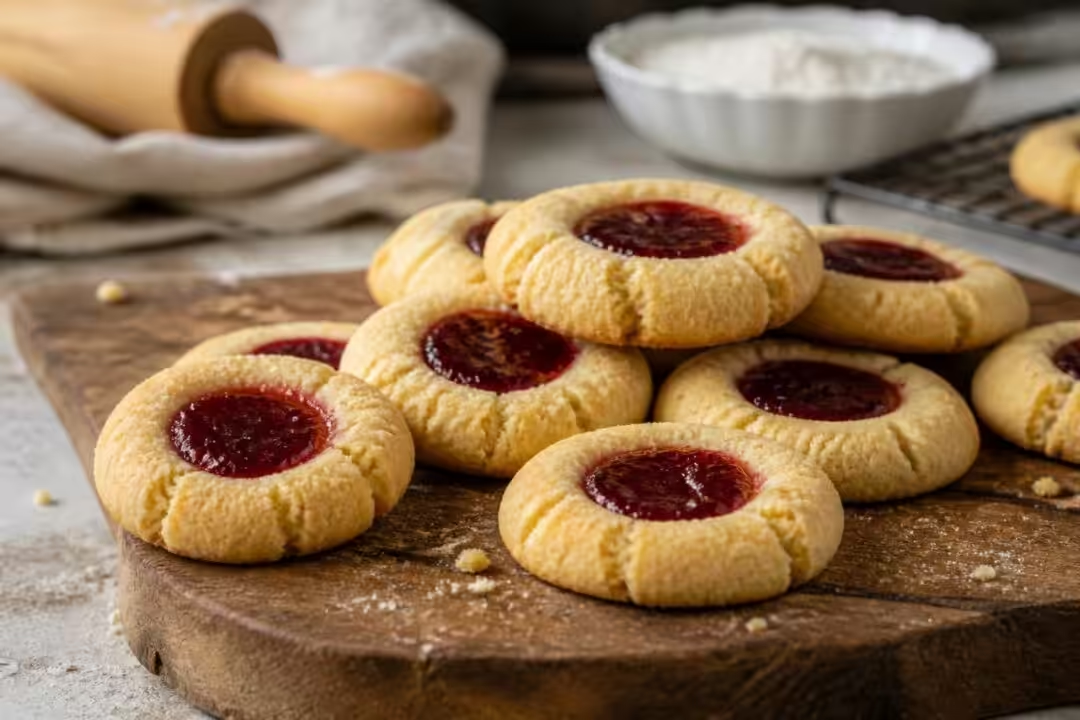
Jam Drops sit in the shortbread-adjacent family: tender, buttery, and structured by flour rather than leavening. The “thumbprint” isn’t just nostalgic theater—it’s a practical design element. The indentation creates a dedicated space for jam to thicken and set, keeping the center glossy while the cookie base stays intact.
In many Australian, New Zealand, and UK kitchens, Jam Drops are a classic tea biscuit: modest in size, easy to share, and reliably good even when baked in a busy home oven. In the U.S., they often show up around winter holidays as “thumbprints,” sometimes with nuts or icing. Same idea, different styling language.
Texture contrast is the point
A great Jam Drop is about the tension between two textures. The cookie should have a fine, buttery crumb—not sandy-dry, not cakey—while the jam delivers a concentrated, fruity chew. That contrast is why a plain sugar cookie plus jam won’t hit the same: a higher-butter, lower-water dough gives you the melt that makes the center pop.
One useful mental model: treat each cookie like a tiny tart. The base should hold its shape, the filling should stay where it’s placed, and the edges should color gently without turning brittle. If that sounds like pastry thinking, it is—and it’s exactly why these cookies are so satisfying to bake.
A small story that explains the technique
During testing, the most consistent failure wasn’t flavor—it was geometry. A too-deep well can thin the base so much that the underside over-browns before the center sets. A too-shallow well makes the jam sit high and spill. The fix is simple: press firmly but not aggressively, creating a bowl that’s deep enough to cradle about a heaping half-teaspoon of jam.
For a concrete example, imagine a Saturday bake sale board: two dozen cookies, each needing to look uniform. A consistent scoop—about 1 tablespoon per cookie—plus a repeatable press gives that tidy, intentional look without a ruler. The point isn’t perfection; it’s repeatability.
Why this cookie suits modern American home baking
Jam Drops work with the way people bake now: smaller batches, flexible flavor choices, and make-ahead options that respect a crowded week. They also play well with design-forward presentation—high contrast jam colors, clean negative space on the plate, a single garnish choice rather than a scattered sprinkle situation.
That idea of restraint—letting one element sing—is what carries into ingredients next.
Jam Drops ingredients (butter, sugar, flour, jam): choosing the right details for a tender, buttery crumb
Jam Drops are pantry-friendly, but the details determine whether they bake up plush and elegant or dull and crumbly. The ingredient list is short; that means each component is doing more work. The goal is a dough that’s easy to shape, holds a clean thumbprint, and bakes to pale-gold edges with a soft center.
The essential lineup and what each one controls
- 🧈 Unsalted butter, softened: the main flavor and the texture driver; soft butter creams smoothly and helps the dough hold a fine crumb.
- 🍚 Caster/superfine sugar (or granulated): superfine dissolves quickly for a more delicate bite; granulated works but benefits from thorough creaming.
- 🌼 Vanilla extract: warmth and roundness; a small amount makes the butter taste more “buttery.”
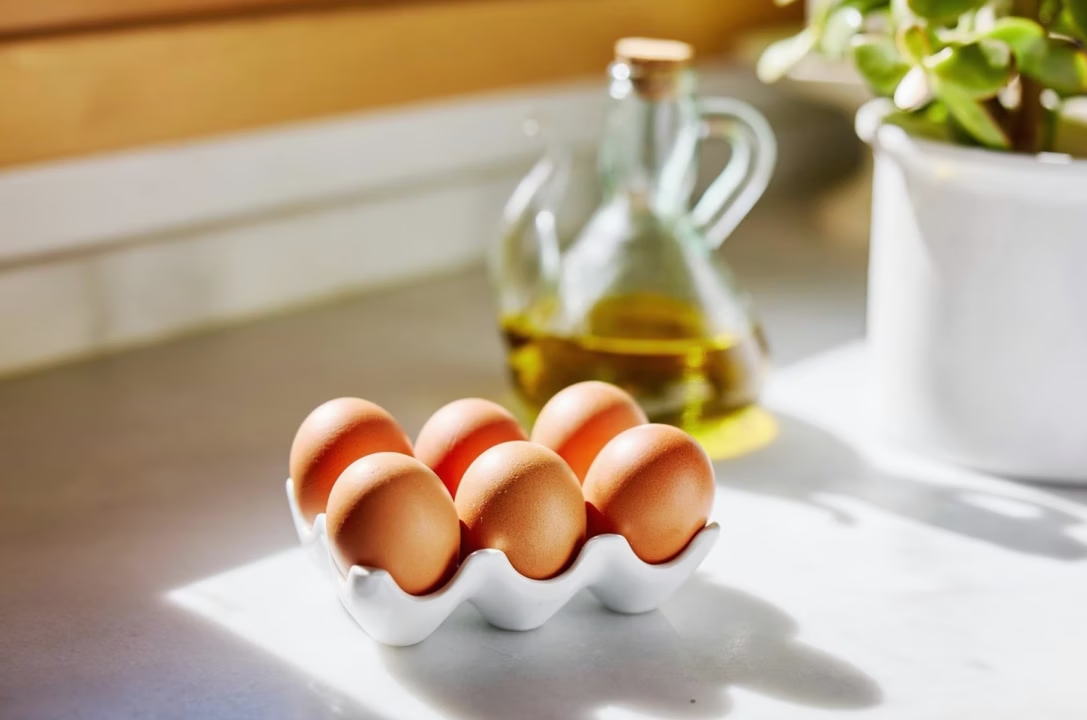
- 🥚 One large egg (room temperature): binds and adds tenderness; cold egg can seize butter and make mixing uneven.
- 🌾 All-purpose flour: structure; too much mixing after flour goes in makes the cookie tougher.
- 🧂 Salt: contrast; it keeps the jam from tasting flat and makes vanilla read clearer.
- 🍓 Jam (strawberry, raspberry, or any thick jam): the visual focal point and the bright finish; thickness matters more than brand.
For a tested baseline, a classic proportion is 225 g (2 sticks) butter, 3/4 cup superfine sugar, 1 large egg, and 2 1/2 cups flour with a modest pinch of salt. That ratio lands in the “shortbread-meets-cookie” zone: stable, tender, and not overly sweet.
Jam selection as a design decision
Jam isn’t only flavor; it’s color and finish. Raspberry gives a saturated ruby center that looks bold against a pale cookie. Strawberry reads softer and more nostalgic. Apricot delivers a warm amber glow that feels almost mid-century. Marmalade can look stunning, but its peel can tug the eye toward rustic rather than minimal—perfect if that’s the intent.
Whatever flavor is chosen, it should be thick. If a jam pours like syrup, it tends to run and stain the cookie edges. Stirring the jam well before filling loosens it just enough to spoon neatly while keeping it cohesive.
A practical table for ingredient choices and outcomes
| Choice 🎯 | What changes in the cookie 🧠 | When to use it 🗓️ |
|---|---|---|
| Superfine (caster) sugar 🍚 | Finer crumb, smoother bite, less gritty sweetness | When the goal is a clean, shortbread-like finish |
| Granulated sugar 🥄 | Slightly more texture; needs proper creaming for best results | Everyday pantry baking; still excellent |
| Raspberry jam 🍇 | Tangier, high-contrast color; center looks jewel-toned | Cookie boxes, holiday platters, bold visual styling |
| Apricot jam 🍑 | Gentle sweetness; warm amber center | Brunch spreads, tea trays, subtle palettes |
| Extra pinch of salt 🧂 | Sharper flavor definition; jam tastes fruitier | Any time the jam is very sweet |
Once ingredients are chosen with intention, the method becomes predictable—and predictability is what makes these cookies feel calm to bake.
Jam Drops recipe method: mixing, shaping, filling, baking, and cooling for bakery-level consistency
Jam Drops reward a measured approach. The steps are straightforward, but the order matters: cream first for tenderness, add egg briefly for cohesion, then add flour only until it disappears. The shaping step is where the cookie becomes what it is—uniform rounds, neat thumbprints, jam centered like a deliberate focal point.
Mixing: the timing that keeps the crumb tender
Start by heating the oven to 350°F (180°C) (or 320°F / 160°C with convection) and lining two trays with parchment. Cream softened unsalted butter with superfine sugar on medium speed until creamy—about 90 seconds is a useful benchmark. The mixture should look lighter, not whipped into a mousse.
Add vanilla, egg, and salt, then mix briefly—around 20 seconds—just to combine. It may look a little uneven or crumbly at this stage; that’s normal. Add flour and mix only until no dry patches remain. Overmixing after flour is the fastest way to lose that melt-in-the-mouth texture.
Shaping: building uniform cookies without fussy tools
Portion the dough using a tablespoon measure or a #60 scoop. Compress the dough in the spoon or hand first—this prevents ragged edges—then roll into smooth balls about 3 cm (1.2 inches) across. Flatten into thick discs, roughly 1.25 cm (1/2 inch).
Press the thumbprint with a firm, centered motion. If the dough cracks, it’s often because it’s too cold or too dry. Warming the disc briefly in the hands makes it more pliable, which keeps the edges clean. Place cookies about 1.5 inches apart; they spread slightly but shouldn’t collide.
Filling and baking: controlling spill and color
Fill each well with a heaping 1/2 teaspoon of jam that has been stirred smooth. Avoid piling jam above the rim of the indentation; overflow caramelizes quickly and can glue cookies to parchment.
Bake for about 14 minutes total, rotating and switching tray positions around the 10-minute mark if baking two trays at once. Look for pale golden edges and tops that are still light. The center should remain tender, because the cookies finish setting as they cool.
Cooling: the overlooked step that protects texture
Cool the cookies fully on the trays. This sounds small, but it’s structural: the base continues to bake gently from residual heat, and moving them too soon can cause breakage. Once cool, the jam sets to a glossy center that won’t smear when stacked with parchment.
The next decision is how to serve them—because presentation can elevate a simple cookie into something that feels editorial.
How to serve Jam Drops (thumbprint cookies): tea pairing, plating, and cookie-box styling with a designer’s eye
Jam Drops are visually self-sufficient. They don’t need frosting, glitter, or loud garnish. What they benefit from is a little restraint in how they’re presented: one plate, one accent color, one beverage pairing that makes the butter taste deeper and the fruit taste brighter.
Serving temperature and what it does to flavor
At room temperature, the cookie’s crumb is soft and cohesive, and the jam reads as a distinct center rather than a sticky glaze. Slightly warm—just a few seconds—makes the jam looser and more aromatic, but too much heat can push the cookie toward greasy. A gentle re-warm is best saved for day-two cookies when the butter has firmed up.
A helpful hosting move: place half the batch on a platter at room temp, and keep the rest sealed. Refreshing the second half later keeps the tray looking intentional instead of picked-over.
Pairings that respect butter and fruit
Jam Drops pair naturally with black tea (English breakfast is classic), but coffee also works well—especially medium-roast drip or an Americano that won’t bulldoze the vanilla. For kids, cold milk is the obvious move. For adults, a lightly sparkling water with lemon can keep the palate clean if the jam is especially sweet.
When building a cookie plate, Jam Drops can function as the “bright” item next to something chocolatey and something nutty. That balance reads curated, not random.
Plating and gifting ideas that look modern, not fussy
For a Korean-modern visual mood: use a matte ceramic plate, keep negative space, and choose a single jam color theme—ruby (raspberry), coral (strawberry), or amber (apricot). Add a small bowl of extra jam on the side only if it serves a purpose, like letting guests top a cookie that’s lighter on filling.
For gifting, parchment is your friend. Layer cookies with parchment squares so the jam centers don’t glue together. A shallow box prevents vertical pressure that can crack the jam. A minimal label—flavor and date—feels more generous than a long ingredient essay.
Once serving is dialed in, it’s easy to start playing with variations without losing the core identity of the cookie.
Jam Drops variations, troubleshooting, storage, and reheating: flexible baking without sacrificing the classic look
The best Jam Drops feel classic, but they don’t have to be rigid. Variations work when they respect the cookie’s structure: a tender base and a jam center that stays put. The moment a variation makes the dough oily, the jam runny, or the cookie cakey, the identity blurs.
Flavor variations that stay structurally sound
Swapping jams is the easiest move: blueberry, blackberry, plum, apricot, or marmalade all work if they’re thick. A more dramatic twist is adding a small accent to the dough—lemon zest for brightness or a whisper of almond extract with apricot jam for a bakery-style profile.
Texture add-ins can be elegant if controlled. Finely chopped nuts placed around (not on top of) the jam well can frame the center like a border. A thin drizzle of melted dark chocolate after cooling adds contrast, but it should be a line, not a blanket—Jam Drops should still look like Jam Drops.
Troubleshooting: the problems that show up in real kitchens
If the dough won’t roll and feels excessively crumbly, it usually needs a touch of moisture or warmth. A teaspoon of milk can help, but the more reliable fix is letting the dough sit for a few minutes so the flour hydrates and the butter softens slightly. If cracks form during the thumbprint, the dough is often too cold; warming each piece briefly in the hands before pressing makes the surface pliable.
If jam overflows, there are two common causes: the well is too shallow, or the jam is too thin (or overfilled). Stirring jam smooth helps portioning, but if it’s runny, it needs a different brand or a thicker style. Also, keep the fill amount around a heaping 1/2 teaspoon, not a mound.
Storage and make-ahead that actually works
For short storage, keep cookies in an airtight container at room temperature for up to 5 days, layering with parchment to protect the centers. The butter aroma stays present, and the jam remains tidy instead of smearing across the tops.
For freezing, cooled cookies can be flash-frozen on a tray, then transferred to a bag or container for up to 3 months. Dough balls also freeze well: freeze the shaped discs (without jam), then bake from frozen and add a minute or two as needed. For fully assembled unbaked cookies, freeze on trays first so the jam doesn’t slide, then package once firm.
Reheating without ruining the crumb
The best refresh is a low oven: about 300°F (150°C) for 5–7 minutes. That warms the jam and perks up the cookie without drying it out. Microwaving works only in short bursts—10 seconds at a time—because too much turns the cookie rubbery and pushes butter out.
With variations, storage, and troubleshooting in place, Jam Drops become less of a single recipe and more of a reliable template—one that still looks intentional on the plate every time.

Hi, I’m Landon Brooks. I am the editor-in-chief of Cook and Design, but for the first decade of my working life I was actually a product designer in New York.