Foods That Start With M: An Overview of M-Word Ingredients and Their Culinary Impact
Exploring foods that begin with the letter M reveals a sweeping culinary alphabet filled with textures, aromas, and histories. From bright tropical fruits to fermented staples, the letter M anchors pantry shelves and restaurant menus alike. This section charts categories—fruits, vegetables, proteins, dairy, condiments—and explains why those items remain central to both home cooking and professional kitchens in 2026.
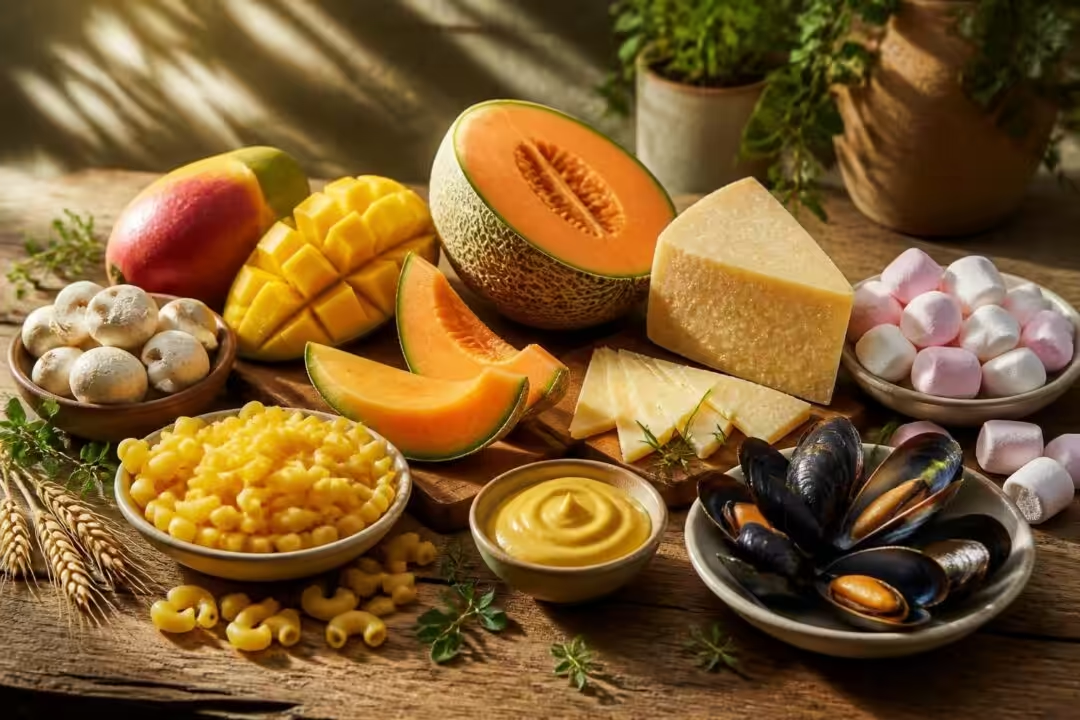
The diversity of M foods is striking: items such as Mango and Mandarin showcase the world of fruit; staples like Milk and Mozzarella represent dairy classics; while umami-heavy choices such as Miso and Mackerel bring savory depth. Each ingredient carries a cultural fingerprint, whether it’s the centuries-long fermentation practice behind miso or the seasonal harvest rituals for mangoes in tropical markets. Culinary creatives often pair these M-ingredients to produce contrasts—sweet mango with salty miso glaze, or creamy mozzarella set against tangy marinara.
Consider the hypothetical bistro “Maison M,” a small culinary collective led by a fictional head chef named Marlow. Maison M built a rotating menu around M-ingredients as an exercise in menu cohesion and branding. This approach demonstrates how a single letter theme can produce an engaging dining narrative: guests encounter a tasting menu that moves from Mango ceviche to Miso-glazed cod and finishes with a Molten lava cake. The result is both a marketing hook and a creative constraint that pushes kitchen teams toward inventive combinations.
Why M-ingredients remain relevant in modern kitchens
Several drivers explain the sustained popularity of M foods. First, nutritional appeal plays a role: Mango is rich in vitamin C, while Mackerel offers omega-3 fatty acids prized for heart health. Second, convenience and shelf stability matter—items like Molasses, Malt, and Miso paste are pantry-friendly and enhance dishes with concentrated flavor. Third, globalization and food culture exploration have brought regional M-items—such as Mapo tofu or Mofongo—into broader consciousness, particularly as travel and media continued to influence palates into the mid-2020s.
Menus and retail shelves often exploit the mnemonic power of letters. Using an M-themed tasting or educational series helps diners remember ingredients and their uses, and it provides educators and language learners with tangible vocabulary anchors. In language learning contexts, exploring foods that start with M proves practical—students learn words with concrete sensory associations, which enhances retention.
Finally, seasonality and sustainability shape how chefs choose M-ingredients. In 2026, many kitchens source Mango during peak harvest and shift to preserved forms (freeze-dried, purees, or dried mango powder) off-season. Sustainable sourcing campaigns spotlight fish like Mackerel because it can be a lower-impact alternative to some overfished species, and plant-forward eating trends encourage more frequent use of ingredients like Mushroom and Moringa. These dynamics ensure that M-ingredients will remain both fashionable and functional in contemporary cooking.
Insight: Letter themes such as the M-collection are not gimmicks but useful creative constraints that foster menu innovation and deepen culinary literacy.
Popular M Ingredients and Practical Cooking Uses: Fruits, Grains, and Pantry Staples
Many everyday recipes rely on staple M-ingredients that cross culinary categories. This section examines practical uses, technique notes, and pairing suggestions for a selection of popular M foods—fruit, grain, dairy, and shelf-stable items. Examples will reference the Maison M tasting program to illustrate how a single ingredient can be adapted in several preparations.
Fruits and sweet M-entries
Mango stands out as a flexible fruit: eaten raw, puréed into smoothies, reduced as a glaze for proteins, or transformed into desserts like mango cheesecake. At Maison M, mango purée was used to finish a spicy glaze for Mahi-mahi, balancing heat and acidity. Mandarin segments brighten salads and sauces, while Melon varieties pair well with cured meats for sweet-savory contrasts.
Grains, legumes, and millets
Millet and Muesli offer breakfast and baking opportunities: millet becomes a textured porridge or a gluten-free flour; muesli can be served soaked overnight as a refreshing base for fruit. Mung beans sprout into crunchy additions for stir-fries, and Manioc (cassava) transforms into chips, flatbreads, or the classic fritter format in many global cuisines.
Dairy, cheese, and egg-based items
Milk provides foundational structure for sauces, custards, and beverages, while Mozzarella brings stretchy texture essential for melt-based dishes like margherita pizza. Egg-forward items such as Masala omelette turn humble eggs into vibrant, spiced breakfasts. Maison M features a smoked-mozzarella tart to demonstrate how a single cheese can shift a plate’s character.
- 🥭 Mango Smoothie — blend with yogurt and a squeeze of lime for balance.
- 🍞 Multigrain Toast — top with mashed avocado and mandarin segments for acidity.
- 🥣 Muesli Bowl — soak overnight with milk or plant milk and finish with honey.
- 🍄 Mushroom Omelet — sauté mushrooms in butter, add herbs, fold into eggs.
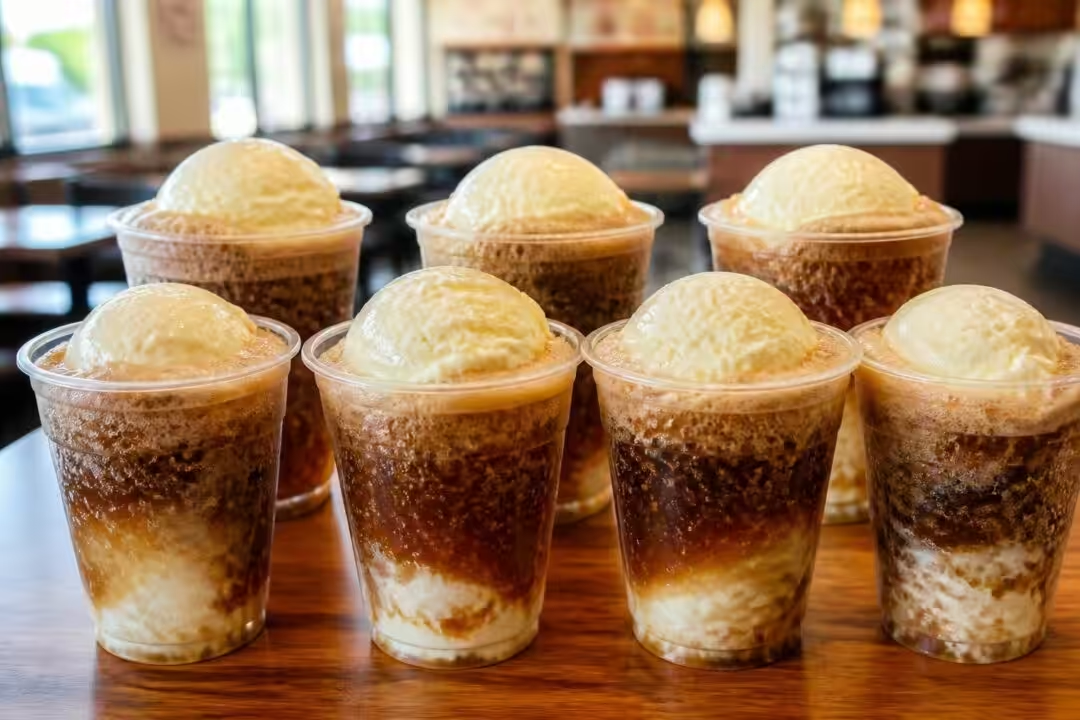
- 🥛 Milkshake — milk and ice cream blended; experiment with malt powder for depth.
Technique tips: roast mangoes briefly to concentrate sweetness before using in salsas; toast millet and grind some to add a nutty flavor to bread; bloom miso in warm broth rather than boiling it to preserve probiotics. These small technical choices shift texture, aroma, and nutrient profiles.
Case study: Maison M’s “Morning M” breakfast plate combined millet porridge topped with mandarin segments, a small side of miso-glazed mushrooms, and a miniature mango chia pudding. The dish demonstrates balance—complex carbs, protein, and bright fruit—and shows how combining M-ingredients elevates perceived value without complex execution.
Insight: Practical adaptability makes many M-ingredients indispensable—simple technique changes unlock dramatic flavor upgrades.
M Dishes Around the World: Regional Recipes, Techniques, and Cultural Contexts
The globe offers a rich catalog of dishes starting with M, each tied to specific techniques and social contexts. This section organizes notable M-dishes by region, explains cooking methods, and offers serving suggestions. Examples range from layered casseroles like Moussaka to street foods such as Momo dumplings.
Europe and Mediterranean
Moussaka exemplifies a baked, layered casserole—typically eggplant and spiced meat with béchamel—and showcases slow, communal cooking traditions in Greece and the Balkans. Margherita pizza highlights simplicity: high-quality tomato, fresh mozzarella, basil, and a well-fermented dough. Both dishes emphasize ingredient integrity and timing: eggplants should be salted and roasted to remove bitterness; pizza dough benefits from a long, cool fermentation.
Asia and the Pacific
Asian M-dishes often emphasize fermentation and spice layering. Miso soup relies on gentle heat to preserve miso’s probiotics, while Mapo tofu builds umami through fermented bean pastes and toasted Sichuan peppercorns. In Southeast Asia, Mango sticky rice pairs ripe mango with coconut-sweet rice—illustrating how texture and temperature contrast can define a region’s palate.
Africa and the Americas
West African Mafe (peanut stew) uses slow-cooked tomatoes and ground peanuts to create rich, nutty sauces. In Latin America, Milanesa is a breaded cutlet rooted in European techniques but localized through seasoning choices. The Caribbean’s Mofongo transforms fried plantains into a savory mashed staple, often combined with meats or seafood.
| 🍽️ Dish | 🌍 Origin | 🧩 Main Technique | 💡 Serving Idea |
|---|---|---|---|
| 🎯 Moussaka | Greece | Baked layering and slow roast | Serve with herb salad and lemon |
| 🥟 Momo | Nepal/Tibet | Steaming dumplings | Accompany with spicy chutney |
| 🍛 Massaman Curry | Thailand | Slow simmering of spices and peanuts | Pair with jasmine rice |
| 🍚 Mango Sticky Rice | Thailand | Steaming and sweet coconut infusion | Top with sesame and mango slices |
| 🥘 Moroccan Tagine | Morocco | Low-and-slow clay pot cooking | Serve with couscous and preserved lemon |
Technique note: many M-dishes depend on time and gentle heat—tagines, mafes, and moussakas benefit from low-temperature braising to develop depth. Steamed items such as momo require precise humidity control to maintain tender wrappers. For chefs like Marlow at Maison M, mastering these methods allowed the kitchen to present an authentic cross-section of global M-dishes while respecting traditional timelines.
Case example: to adapt Miso-glazed cod for a tasting menu, Maison M reduced marinated time from overnight to four hours, using a light broil to caramelize the glaze and a fast chill to hold texture before plating. The adaptation preserved miso flavor while aligning with service pace.
Insight: Technique fidelity—maintaining the essential method behind each dish—preserves cultural identity even when recipes are innovated for contemporary kitchens.
Healthy M Foods: Nutrition, Smart Substitutions, and Menu Strategies
Many M-ingredients are naturally nutrient-dense and lend themselves well to health-focused menus. This section outlines nutritional profiles, practical substitutions for reducing calories or allergens, and a small case study of a menu redesign using healthier M options. The goal is to show how healthful choices can remain flavorful and satisfy culinary expectations.
Nutrient highlights and examples
Mango is a source of vitamin C and beta-carotene, supporting immune and eye health. Mackerel contains high levels of omega-3 fatty acids, beneficial for cardiovascular health. Millet and muesli are whole-grain options that provide fiber and slower-digesting carbohydrates. Moringa leaves are nutrient-rich, offering iron, calcium, and a range of vitamins—ideal for boosting green smoothies and powdered supplements.
Smart substitutions and allergen-aware swaps
To create lighter versions of beloved M-dishes, several straightforward swaps work well: replace heavy cream with low-fat milk and a small cornstarch slurry to thicken; use mashed roasted cauliflower in part to reduce the calories in some mashed potato dishes; substitute multigrain breads for refined white bread in sandwiches to increase fiber. For nut allergies, replace macadamia nuts with toasted seeds to retain crunch and healthy fats.
Menu redesign case: a neighborhood restaurant inspired by Maison M shifted three popular dishes to healthier formats. The Mac & Cheese received a reformulation using whole-grain macaroni, a light béchamel made with low-fat milk and a touch of real cheese for flavor, and roasted mushroom addition to increase umami without adding fat. Sales remained steady while customer feedback highlighted improved satiety and perceived freshness.
Practical meal planning with M foods
Breakfasts built around M-ingredients can be both nutritious and quick: Muesli soaked in low-fat milk with sliced mandarin and a sprinkle of chia seeds creates a fiber-rich meal. Lunch bowls featuring mixed greens with mackerel, millet, avocado, and a miso-lemon dressing deliver balanced macronutrients ideal for sustained energy. Snacks such as a small handful of macadamia nuts or sliced mango with yogurt satisfy cravings without large caloric loads when portioned mindfully.
Insight: Simple swaps and portion awareness transform indulgent M dishes into nutritionally robust options while retaining character and flavor.
Sweet, Savory, and Unexpected: Desserts, Snacks, Brands, and Rare M Foods
The letter M also collects treats, convenience foods, and rare curiosities. From classics like Macarons and Marshmallows to quirky traditional items such as Muktuk or Mopane worms, this section canvasses snacks, branded favorites, and unusual M entries with cultural context and tasting notes.
Desserts and sweet M-entries
Pastries and sweets beginning with M are plentiful: Macarons require a precision technique balancing meringue and almond flour; Molten lava cake demands timing that yields a set exterior and a flowing center. Classic comfort sweets like Mango pudding and Milkshake are versatile—both can be adapted with nondairy milks or reduced-sugar versions for modern tastes.
Snacks, fast food, and brand culture
Major brands that start with M—global names such as McDonald’s, M&M’s, and Mountain Dew—have shaped snack culture and fast-food expectations. These items offer case studies in branding and scalability, illustrating how an M-name can become globally recognizable. Fast-food menu items like Mozzarella sticks or Meatball subs demonstrate how M-ingredients occupy both mainstream and niche markets.
- 🍪 Macadamia Nut Cookies — buttery crunch enhanced by sea salt.
- 🍫 Milk Chocolate Bar — classic comfort, often reformulated for varying cocoa percentages.
- 🍭 Mango Gummies — fruit candy that can be made with real fruit purée for better flavor.
- 🔥 Mega Burger — example of fast-food scale and indulgence.
- 🥨 Mustard Pretzels — savory snack fusion that pairs acid and crunch.
Rare and culturally specific M foods
Unique items such as Muktuk (traditional Arctic whale blubber and skin) or Mopane worms (an edible caterpillar in parts of Africa) highlight food systems adapted to local ecosystems and nutritional needs. These foods are rarely encountered in mainstream Western menus, yet they carry deep cultural significance and high nutrient density. Responsible presentation requires contextual storytelling—chefs and educators must explain origins, sustainability, and respectful sourcing to audiences unfamiliar with such foods.
Fun facts and cultural notes: Mango is often called the “King of Fruits” in many tropical countries, and Miso has a recorded use extending over a thousand years. Marshmallows originated from a plant-based remedy and evolved into sugary confections enjoyed worldwide. These anecdotes enrich menus and classroom lessons by connecting taste to history.
Insight: Taste curiosity combined with respectful context enables diners and learners to appreciate both familiar and exotic M foods without reducing them to novelty items.

Hi, I’m Landon Brooks. I am the editor-in-chief of Cook and Design, but for the first decade of my working life I was actually a product designer in New York.