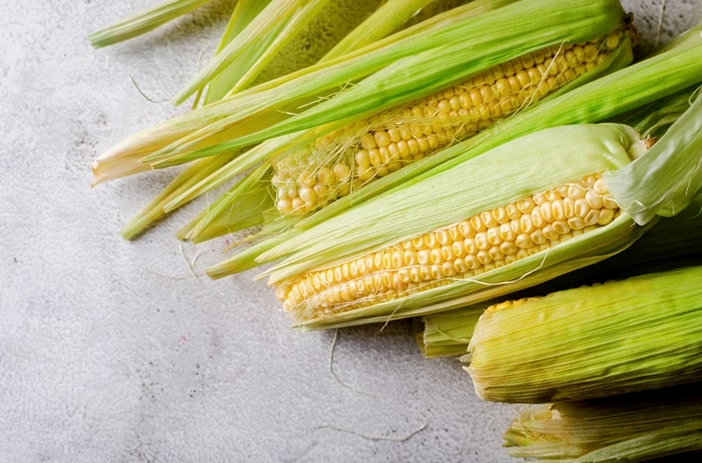
Every summer, the green towers arrive at farmers markets across the Midwest, and for a few short weeks, sweet corn is the undisputed king of the American table. From July through August, no vegetable captures the season quite like an ear that bursts with juice at the first bite. But that magic is fragile. The difference between a transcendent cob and a disappointingly mealy one often comes down to what happens in the hours after the corn leaves the stalk.
The science is simple and unforgiving: once picked, the sugars in each kernel begin converting to starch. Kelly Wenning at Tuttle Orchards in Indiana explains that an ear of corn “may only last a couple of days before losing its flavor.” That’s the hidden reality behind every fresh corn purchase — and it’s also why the right storage habits can feel like a superpower in the kitchen.
What to remember:
- 🥶 Get corn into the refrigerator as soon as possible to slow the sugar-to-starch conversion.
- 🟤 Store ears in a paper or cloth bag, never plastic, and keep the husk on until cooking.
- ⏱️ Eat within a day or two of buying for peak sweetness and crunch.
- 🧊 Blanch and freeze kernels to capture summer flavor for the cold months.
Why Fresh Corn Loses Its Sweetness So Fast
Think of an ear of corn as a living thing cut off from its food supply. The stalk was feeding it sugar continuously, and the moment that flow stops, the kernel starts converting its reserves into starch. It’s a survival mechanism, but for the eater, it’s a countdown.
Temperature changes everything. Cold dramatically slows the sugar-to-starch conversion, which is why refrigeration is non-negotiable. The harvesting tips farmers rely on revolve around the same principle: pick in the cool morning hours, cool the ears quickly, and get them to the customer as fast as possible. The home kitchen can borrow that logic.
Those agriculture techniques also explain why farm-stand corn tastes different from grocery-store corn. A local farmer can deliver ears within hours of picking. A supermarket ear may have traveled 1,500 miles, spent time in a warehouse, and lost a significant portion of its sweetness along the way. The husk protects the kernels from physical damage, but it can’t stop time.
What’s Happening Inside the Kernel
The sugar-to-starch conversion isn’t just about flavor. As the days pass, the internal pressure inside each kernel drops, which is why older corn feels soft and mealy instead of crisp. Crunchy corn is a sign of freshness — each kernel is a tiny pressure vessel full of sweet liquid, and the snap you feel when biting into it is that pressure releasing. Preserving that texture is as much about moisture as it is about sugar.
That’s why the best cooks in the Midwest treat corn like cut flowers: water, cool, and use it fast.
Start at the Source: The Farm Stand Advantage
The most effective strategy for great corn begins long before the pot is on the stove. Farm to table isn’t just a trend; it’s a flavor equation. Wenning notes that Tuttle Orchards’ triple sweet, farm-fresh corn lasts up to a week — an impressive lifespan compared with the three-day shelf life of most grocery-store ears harvested days earlier.
Visiting a local farm stand, a u-pick field, or a CSA offers an advantage that no supermarket can replicate: the ability to ask when the corn was picked. That single question transforms how you shop. A farmer who harvests every morning is delivering sweet corn at its absolute peak, and that freshness translates directly to the plate.
How to Pick a Good Ear at the Market
When the farm stand isn’t an option, the eyes become the best tool. Look for husks that are supple and green, with no yellowing or dryness at the tips. The silk should feel slightly damp and cling to the ear rather than pulling away loosely. Gently squeeze along the length of the ear — you want to feel firm, plump kernels without soft indentations.
Skip any ear with loose, papery husks. That’s a visual warning that the ear has been sitting around long enough for the sugars to have already started their march toward starch.
Farmers think in terms of days, not weeks, when it comes to crop care. The best operations harvest in the cool morning, when sugar concentration peaks, and they often keep the corn shaded until it’s sold. It’s a level of attention that makes the so-called farm secrets less mysterious and more practical: respect the timing, and the corn rewards you.
The Right Way to Store Fresh Corn at Home
Once the corn is home, the counter is the wrong place for it. The refrigerator is where fresh corn goes to stay sweet. Stack the ears directly on the shelf, husk intact, and leave them there until you’re ready to cook. No bag needed — in fact, plastic is the enemy.
Plastic produce bags trap moisture around the husks, and that trapped moisture accelerates spoilage. A paper bag or a breathable cloth bag is a better choice if the ears are rolling around the fridge. The goal is airflow, not an airtight seal. This is one of the simplest corn preservation tricks, and it makes a measurable difference in how long the kernels hold their sweetness.
Plan to eat the corn within a day or two of buying it. Farm-stand corn purchased in the morning can stretch to three days or more, but the sweet spot for flavor and texture is immediate. The longer the ear sits, the more sugar converts and the softer the kernels get. This is why restaurant kitchens order corn daily during the season.
A common mistake is shucking the corn before storing it. Once the husk is removed, the kernels lose moisture at a much faster rate. Leaving the husk on until the water is boiling is a small habit that reaps a noticeable reward.
The Crunch Factor: Why Texture Tells the Truth
Texture is the farmer’s honest indicator of freshness. When a kernel is first picked, its cell walls are rigid with moisture. That’s what creates the satisfying pop when you bite into it. Over time, the cell walls lose turgor pressure, and the kernel deflates. Old corn doesn’t just taste starchy — it feels starchy, too.
Proper storage slows this process. Cold temperatures slow the sugar conversion and reduce moisture loss, which protects both the flavor and the crunch. For anyone who has ever been disappointed by a mealy ear, the fix isn’t a different variety — it’s a different storage routine.
Freezing Corn at Its Peak for the Cold Months
Midwestern farms have long known a trick that home cooks can borrow: freeze the corn at its peak to capture the taste of summer. Tuttle Orchards sells bushels specifically for this purpose, knowing that a cold January evening is a far better time to taste August’s best work.
The process is straightforward but requires about an hour of focused effort. Husk the ears, remove every strand of silk, and bring a large pot of water to a rolling boil. Submerge several ears at a time and blanch them for four minutes — long enough to deactivate enzymes that would otherwise degrade the kernels in the freezer.
- 🧊 Plunge the blanched ears into an ice bath immediately to stop the cooking.
- 🔪 Cut the kernels off the cob once the ears are cool enough to handle.
- 📦 Pack kernels into freezer-safe quart bags, pressing out as much air as possible.
- 🏷️ Label each bag with the date — frozen corn keeps well for 8 to 10 months.
- 🥘 Add frozen kernels directly to soups, chowders, or sautéed dishes without thawing first.
Blanched and frozen at its peak, sweet corn retains both its sweetness and its texture. The kernels stay individually distinct, which means even a February stir-fry can carry the echo of a July barbecue. It’s the closest thing to time travel that a home freezer offers.
Farm to Table: Putting the Secrets to Work
None of this advice matters if the cooking undoes it. The restaurant approach to fresh corn is refreshingly simple: keep the boil short. Four to five minutes in salted water is enough to warm the kernels and set their sweetness without turning them to mush. Grilling over high heat until the husk chars slightly offers a smoky counterpoint, but the same rule applies — pull the corn off before it loses its crunch.
The farm-to-table ethos isn’t about fancy plating or imported ingredients. It’s about respecting the moment when something is at its absolute best. Corn farming, at its core, is a lesson in timing, and that lesson translates directly to the home kitchen. Buy well, store cold, cook fast, and the corn does the rest. For more ways to make the most of the season, the Cook and Design test kitchen has assembled a collection of sweet corn recipes worth bookmarking.
When the green towers show up at the market this summer, treat each ear like the fleeting gift it is. The refrigerator holds the sweetness, the paper bag preserves the moisture, and the four-minute blanch protects the crunch. Those are the secrets — passed down from farmers who have spent their lives getting corn from the field to the table with its joy intact.

Hi, I’m Landon Brooks. I am the editor-in-chief of Cook and Design, but for the first decade of my working life I was actually a product designer in New York.