
| In this story 🧭 | Quick wins ✅ |
|---|---|
|
|
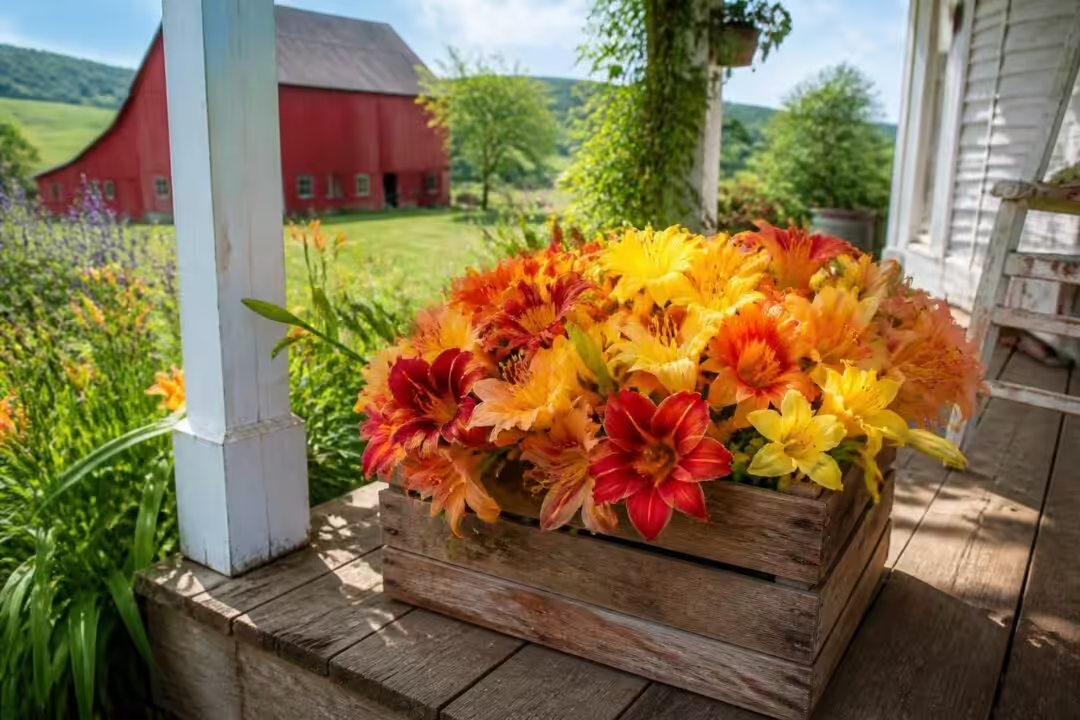
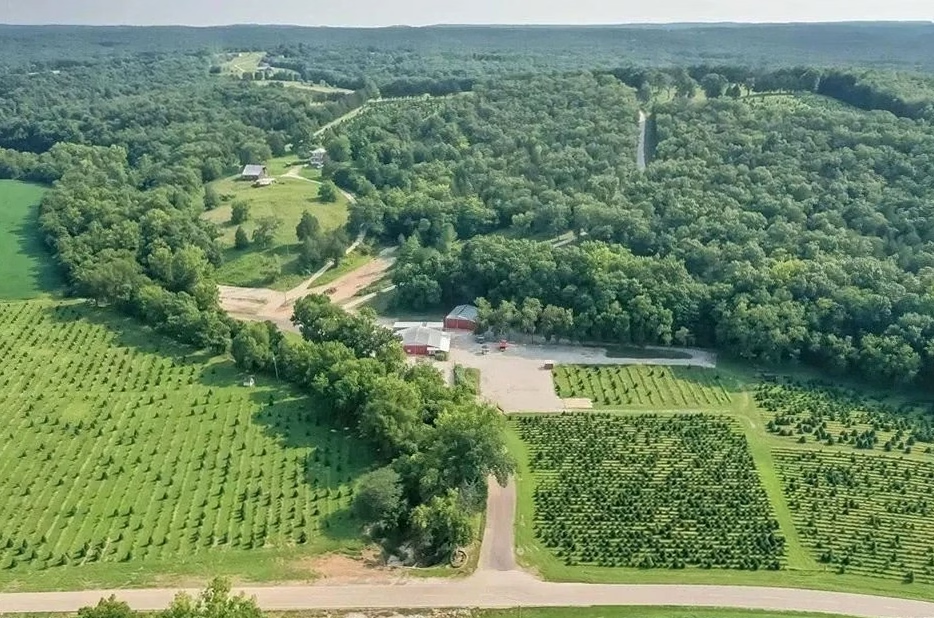
There’s a particular kind of beauty that only comes from something harvested close to home: petals that still hold their tension, color that hasn’t dulled in a warehouse, and stems that smell like actual green life rather than refrigeration. Champion Daylilies—a Knoxville-area farm and nursery with roots in daylilies and a presence at local markets—fits that feeling. The appeal isn’t just “flowers delivered,” it’s place delivered: East Tennessee sun, weekend farmers-market energy, and the kind of practical know-how that comes from growing what gets arranged.
Champion Daylilies farm-fresh blooms: what “fresh” really means at the doorstep
“Fresh” gets thrown around so casually in floral retail that it can start to sound like a vibe instead of a measurable thing. For Champion Daylilies, the farm context changes the definition. Farm-fresh blooms are typically cut closer to peak structure—when petals are resilient, stems are hydrated, and the plant’s own energy hasn’t been spent sitting in a distribution chain. That matters at your doorstep because the first 24 hours of a stem’s life in a vase are essentially the make-or-break period for how it performs on day three and day five.
Daylilies, in particular, have a reputation for being fleeting if handled like grocery-store mixed bouquets. The trick is that they’re not meant to be treated like a generic rose bunch. They’re more like summer produce: timing and handling matter. The most satisfying arrangements often start with a mix of stages—some buds tight, some showing color, and a couple already open. That creates what cooks would call a “service window”: a bouquet that looks good now and continues to evolve rather than peaking all at once and collapsing.
From field to front door: the cold chain is a design problem 🧊
Florals are logistics, and logistics are design. A stem’s job is to move water upward; anything that interrupts that—heat, crushed ends, bacteria—shortens vase life. Doorstep delivery can actually be an advantage when the workflow is tight: quick post-harvest hydration, protected transport, and less time bouncing between storage rooms.
Readers who cook will recognize the parallel. A peach picked ripe and driven 20 minutes tastes different than one bred to survive 2,000 miles. With flowers, the “taste” is visual: saturation, firmness, and that clean silhouette that makes an arrangement read as intentional rather than tired. The payoff is especially noticeable with bright reds, corals, and yellows—tones that can look chalky when they’ve spent too long under harsh refrigeration.
Choosing stems like choosing produce at the market 🍅
When ordering from a local farm-and-nursery operation, it helps to think like a shopper at a Saturday stall rather than a customer clicking a national wire-service catalog. Ask what’s peaking this week, what’s sturdy for heat, and what pairs well with daylilies in a vase. A practical order is not “one of everything,” but a curated set that balances focal blooms, supporting shapes, and greenery.
A useful mental model is the “three-layer bouquet”: structure (greens, branches, grasses), faces (the daylilies), and spark (small accents—tiny blooms or textural bits). That’s how the arrangement avoids looking like a single note. The best part: it’s a method, not a rule, so it scales from a small kitchen jar to a big dining table moment.
That produce-forward approach sets up the next question: if the blooms are local, how does the arrangement communicate local flair rather than generic seasonal color?
Authentic local flair from Knoxville to your table: designing with place, not trends
“Local flair” can get reduced to rustic twine and a mason jar, which is both lazy and unfair to places with real visual identity. East Tennessee has its own palette: mountain greens, clay earth, bright summer roadside blooms, and that hazy blue distance that shows up in ceramics and textiles if you look for it. Champion Daylilies sits in that context—Knoxville/Farragut energy, farmers-market rhythm, and a farm-nursery sensibility where plants aren’t props; they’re living inventory with quirks and seasons.
To translate that into a home arrangement, it helps to borrow principles from plating. a well-plated dish isn’t maximal; it has negative space, clear hierarchy, and a focal point that tells you where to look first. Flowers can do the same thing. The most “authentic” arrangement isn’t the one with the most stems, but the one that feels like it belongs in the room—on that specific table, beside that specific bowl of peaches, under that specific lamp.
Color palettes that feel local (and still look modern) 🎨
Daylilies come in colors that can skew loud—hot oranges, sharp yellows, saturated reds. The difference between “loud” and “alive” is usually contrast and restraint. Instead of mixing every bright tone, anchor the bouquet with one main hue and choose a secondary accent that either harmonizes or creates a controlled pop.
For example: a coral daylily reads fresher when paired with deep greens and a single burgundy accent rather than competing with purple, magenta, and lemon all at once. In design terms, it’s a limited palette. In cooking terms, it’s salt: the right amount makes the whole thing taste more like itself.
Vessel choice: treat the vase like cookware 🏺
A good vase is like a good pan: it supports the ingredient rather than shouting over it. Matte ceramics, simple glass cylinders, or a stoneware pitcher can all work, but the scale matters. Too tall and stems disappear; too wide and the bouquet collapses into a dome.
A practical guideline is to keep the arrangement height around 1.5× the vase height for dining tables (so people can still see each other). For an entryway or kitchen counter, height can go taller—just keep the silhouette clean. If a vessel has a busy pattern, use fewer blooms. If the vase is plain, let the flower do more of the talking.
A market-bouquet move: add edible greens for cross-sensory charm 🌿
One of the easiest ways to make an arrangement feel like it came from a local market, not a national template, is to incorporate edible greens—mint, basil, rosemary—tucked into the structure. The scent is subtle but real, and it connects the bouquet to the kitchen without becoming a gimmick.
Picture a Saturday dinner: grilled chicken, sliced tomatoes, a bowl of rice, and a daylily arrangement with mint threaded through. It doesn’t try to be precious. It just feels like a home that pays attention. That’s the kind of “flair” people remember.
Once the bouquet looks like it belongs on the table, the next challenge is making it last—especially with daylilies, where small handling choices have outsized impact.
Doorstep delivery to vase: conditioning daylilies for maximum vase life at home
The unglamorous truth about flowers is that most of the beauty happens after a few invisible steps. Conditioning is the floral equivalent of tempering ingredients—bringing stems into the right state so they perform. When blooms arrive from a local grower, they’re often in better shape than big-box bunches, but they still need a reset after transit.
Start with a clean vase. “Clean” here means not just rinsed; it means washed with hot soapy water, then thoroughly rinsed. Bacteria are the enemy because they clog stems and cloud water. If a bouquet ever died fast “for no reason,” the reason was usually the vase.
A simple, repeatable conditioning routine (works on weeknights) ⏱️
Most home cooks don’t want a fussy ritual, and they shouldn’t need one. This routine is quick, practical, and consistent:
- 🚿 Wash the vase with hot soapy water; rinse well.
- ✂️ Re-cut stems 1–2 inches (2.5–5 cm) at a 45° angle with sharp scissors or shears.
- 🍃 Strip leaves that would sit below the waterline (they rot fast).
- 🧊 Start with cool water for daylilies in summer heat; room temp is fine in mild weather.
- 🧪 Add flower food if provided; if not, change water more frequently rather than improvising additives.
That last point matters. Internet “hacks” (sugar, vodka, coins) often introduce more problems than they solve. If flower food isn’t available, the most reliable approach is clean water and frequent changes.
Placement is preservation: heat, sun, and fruit bowls 🍌
Arrangements die faster when they’re treated like decor instead of living material. Direct sun can cook petals. Heat vents dehydrate stems. And fruit—especially bananas and apples—release ethylene gas, which can accelerate aging for many cut botanicals. Keeping flowers a few feet away from the fruit bowl is a tiny change that often buys an extra day or two.
For dinner parties, a smart move is to stage the bouquet in a cool spot until guests arrive. Bring it to the table closer to serving time, the way a cook holds a crisp salad until the last moment. The flowers look more awake, and the room reads more intentional.
Case study: a Saturday market bouquet that still looked good on Tuesday 📆
Consider a typical weekend pattern in Knoxville: a stop at the farmers market, groceries for the week, and a bouquet as the mood-lifter. In testing a similar routine at Cook and Design, the longest-lasting results came from two behaviors: re-cutting stems immediately and changing water every other day. The bouquet didn’t look identical on day four—it looked evolved, softer, more relaxed—but it still read as fresh rather than fading.
That evolution is part of the point. A farm-forward bouquet behaves like a seasonal menu: it shifts, it responds to the room, and it rewards attention.
With conditioning handled, the next layer is taste—how to style blooms alongside food so the whole table feels composed, not crowded.
Cooking-meets-design styling: using Champion Daylilies to elevate tablescapes and weeknight meals
Flowers at home don’t need to be reserved for birthdays. The most convincing argument for doorstep blooms is how they change the texture of an ordinary weeknight. Not in a performative way—more like how a good olive oil makes a basic salad feel finished. Champion Daylilies have the kind of bold form that can carry a table with minimal effort, which is exactly what busy households need.
The key is to style flowers the way a chef plates: with intention, contrast, and a clear focal point. When a bouquet competes with the meal—too tall, too fragrant, too chaotic—the table feels anxious. When it’s calibrated, it’s calming. People sit down and instantly understand where to look.
Three tablescape formats that work in real American homes 🏠
Rather than inventing a whole new lifestyle, it helps to choose a format that matches the way people actually eat.
- 🍽️ The weeknight centerline: one medium vase, low enough for conversation, with a tight palette (two main colors max).
- 🕯️ The scattered mini-vases: three small vessels with 2–4 stems each; ideal for long tables or clutter-prone surfaces.
- 🥗 The kitchen island anchor: a taller arrangement that lives near prep, paired with a fruit bowl moved a few feet away.
Each format has a design benefit. The centerline is simplest. Mini-vases create rhythm and keep sightlines open. The island anchor turns cooking into a scene—especially satisfying in winter when the kitchen needs color.
Pairing blooms with menus: a practical color logic 🧠
When flowers sit near food, color relationships get louder. A red daylily next to a bowl of strawberries can feel either harmonious or chaotic depending on the supporting colors. A useful strategy is to echo one element of the meal—just one—then let the bouquet do its own thing.
Example: a summer tomato salad already brings red-orange. Choose daylilies in a softer coral, then ground the whole table with greens (herbs, leafy stems) and neutrals (stoneware, linen). The meal and the bouquet talk, but they don’t argue.
Local flair without kitsch: small cues that signal “from here” 📍
Local doesn’t have to mean themed. A single handmade ceramic vase from a regional potter, a linen napkin in a clay tone, or a simple bunch of greens that looks like it could have come from the same market as the daylilies—that’s enough. The goal is not to decorate “Tennessee.” The goal is to make the table feel rooted.
For readers who want to go one notch further, adding a small place card that notes the farm name—Champion Daylilies—can be charming when hosting, especially if guests ask where the flowers came from. It’s information, not branding, and it tends to spark the kind of conversation that makes a dinner feel like a gathering.
Once the table is set, the final practical question is how to order and communicate needs clearly—so the flowers arriving at the door match the vision in the room.
Ordering Champion Daylilies with confidence: delivery details, market pickups, and clear requests
Good results come from good inputs, and ordering flowers is no different than ordering seafood or produce. Specificity helps. Champion Daylilies operates as a local farm and nursery in the Knoxville area, with a public-facing presence that includes online touchpoints and local-market visibility. That means customers can often choose between a doorstep delivery mindset and a market-pickup mindset—two options that call for slightly different expectations.
Doorstep delivery is about timing and protection: ensuring blooms aren’t sitting in heat and that the handoff is smooth. Market pickup is about selection: seeing colors in person, choosing bud stages, and asking quick questions that change the outcome of the arrangement.
Use this request language to get better blooms (and fewer surprises) 📝
When placing an order or sending a message, a few well-chosen details do more than a long paragraph. These prompts are practical and tend to translate cleanly for growers and designers:
- 📦 “Please include mostly buds with 2–3 open blooms for a longer vase window.”
- 🎨 “Looking for coral + green with one darker accent (burgundy or deep purple).”
- 📏 “Arrangement should be table-height (low) for a dinner.”
- 🌿 “Open to adding herb-like greens for a market feel.”
- 🌞 “Delivery will sit on a shaded porch for up to 30 minutes; please pack accordingly.”
This kind of clarity keeps the experience personal without being demanding. It also helps a farm-based business do what it does best: respond to seasonality instead of forcing a fixed catalog year-round.
Key contact details and what they’re best for 📞
For local businesses, contact channels aren’t interchangeable. A phone call is best for same-day questions. A website order is best for clarity and confirmation. Messaging is best for quick palette checks or availability snapshots. Here’s a tidy reference using publicly listed details:
| Contact point 🔎 | Details 📌 | Best use ✅ |
|---|---|---|
| Website 🌐 | www.championdaylilies.com | Browsing offerings, placing planned orders, confirming availability |
| Phone ☎️ | +1 865-777-2625 | Time-sensitive questions, delivery coordination, quick substitutions |
| Address 📍 | 341 McFee Road, Knoxville, TN 37934 | Planning visits, understanding local proximity for freshness |
A realistic delivery checklist for hot-weather weeks 🌡️
Summer is daylily season, and it’s also when porches get brutal. A few small logistics choices protect the blooms and make the whole “to your doorstep” promise actually work:
- 🕒 Choose a delivery window when someone can bring flowers inside within 30–60 minutes.
- 🧊 Set up the vase and water before arrival so stems can be conditioned immediately.
- 🚪 If the porch is sunny, leave a cooler shaded spot instruction for the driver.
- ✂️ Keep shears accessible—conditioning should happen right away, not “after dinner.”
Done well, ordering local blooms becomes less like buying decor and more like buying ingredients: a small luxury that pays off in mood, atmosphere, and the subtle confidence of a home that feels cared for.
Hi, I’m Landon Brooks. I am the editor-in-chief of Cook and Design, but for the first decade of my working life I was actually a product designer in New York.



6 Comments
Anchor color, accent color, negative space—someone’s been reading design books.
Appreciate the precision: fresh as a measurable thing, not marketing. And the 45° cut? Basic physics, beautiful results.
Love the emphasis on measurable freshness — like optimizing for latency, but with petals.
Love that they focus on measurable freshness and local sourcing. Ethylene tip is a great reminder for extending vase life.
The anchor color tip is pure design sense. Fresh from the farm makes all the difference.
Local sourcing isn’t just a vibe; it’s a supply chain advantage—crisper stems prove it.
Les commentaires sont fermes.