Discover the Origins of Culver’s Decadent Frozen Custard: From Sauk City Roots to a Midwest Legend
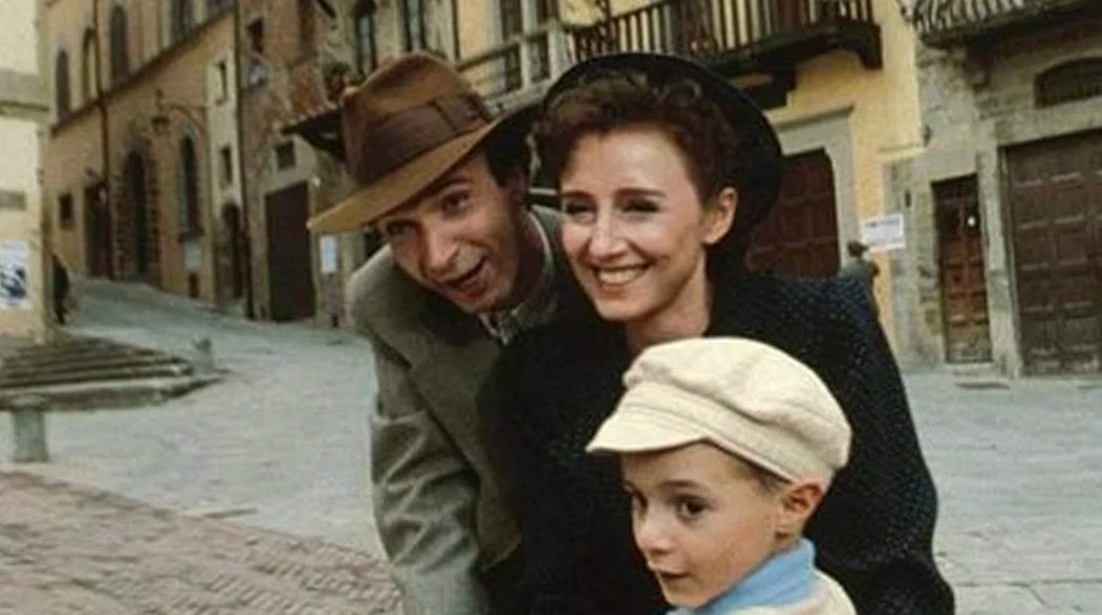
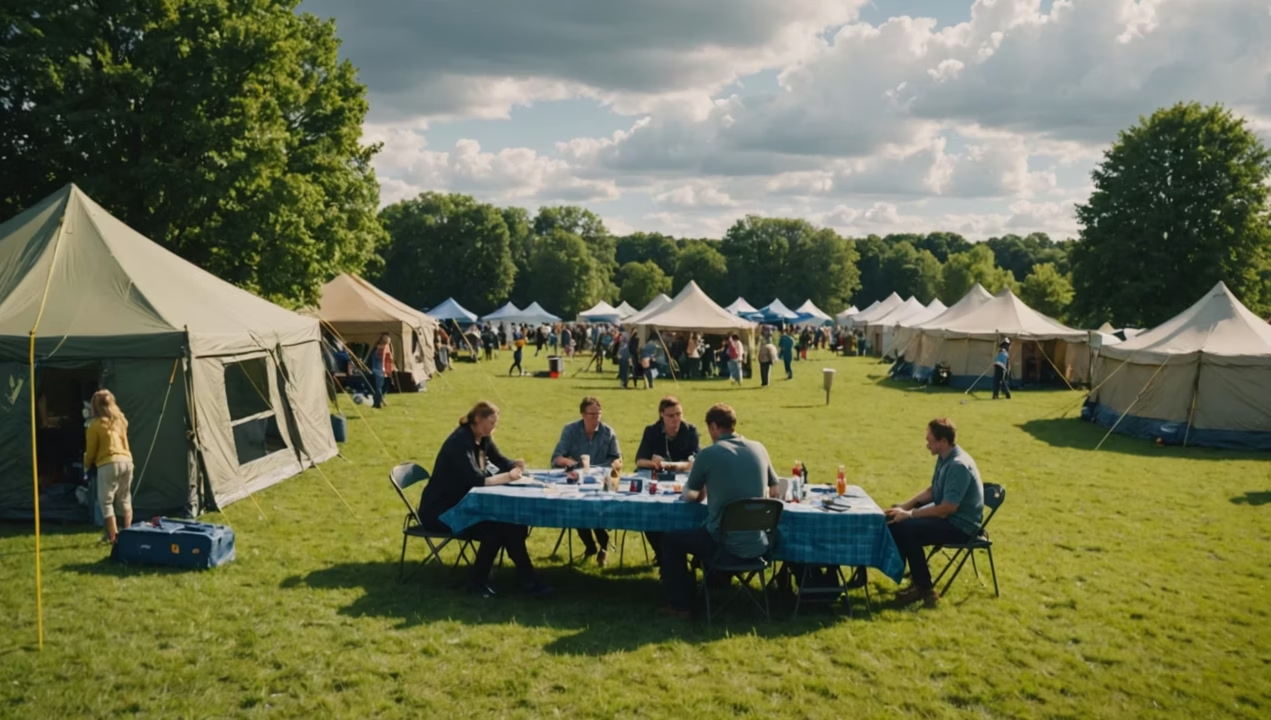
Long before Culver’s became a familiar roadside sign across dozens of states, the brand’s identity was shaped by a very specific place: Sauk City, Wisconsin. When the first restaurant opened in 1984, frozen custard wasn’t a side note—it sat at the heart of what guests were meant to crave and remember. In a region where dairy pride is practically a second language, choosing custard over soft-serve wasn’t just a menu decision; it was a declaration of taste and texture. That early choice still echoes today in the way Culver’s frames “fresh” as a promise rather than a buzzword.
The founders—members of the Culver family—built the concept with a family-owned mindset that continues to influence decisions decades later. That matters because frozen custard is the kind of product that exposes shortcuts instantly. A thin mouthfeel, icy crystals, or muted flavor can’t be hidden behind toppings. The brand’s early commitment to a richer, more indulgent dairy dessert set the expectation that a scoop should feel dense, taste buttery-sweet, and linger on the palate. For guests, that translates into a dessert that feels deliberately made, not simply dispensed.
In Wisconsin, frozen custard carries cultural weight—often associated with community stands and family outings. It’s no accident that the Culver family’s affection for custard was nurtured through trips to Milwaukee, widely celebrated as a custard-loving city. Bringing that tradition back to Sauk City gave the first Culver’s a sense of local authenticity: custard wasn’t imported as an idea; it was lived. And because the original store paired frozen custard with ButterBurgers, the menu offered year-round appeal—an important strategy for a dessert historically linked to summer.
To illustrate how origin shapes identity, consider a simple fictional snapshot: a Wisconsin high school coach stops by after a Friday game in the late 1980s, ordering cones for the team. The custard is served slightly warmer than hard-packed ice cream, so the vanilla blooms on the tongue and the chocolate reads as cocoa-forward instead of icy-sweet. That warmth is not a mistake—it’s part of the sensory design. The memory becomes tradition, and tradition becomes brand loyalty. What seems like nostalgia is actually product engineering meeting place-based expectations.
Even Culver’s visual language—blue and white and clean-lined—supports the “dairy-fresh” story. The earliest locations weren’t trying to imitate a dessert parlor; they aimed to feel like a welcoming Midwestern stop where quality is straightforward and proudly local. In that context, frozen custard is more than a dessert; it’s a symbol of a family business scaling up without losing its hometown compass. That balance—growth without abandoning roots—is the real origin story behind every scoop. 🍦
How Culver’s Wisconsin Dairy Sourcing Shapes Frozen Custard Flavor and Texture
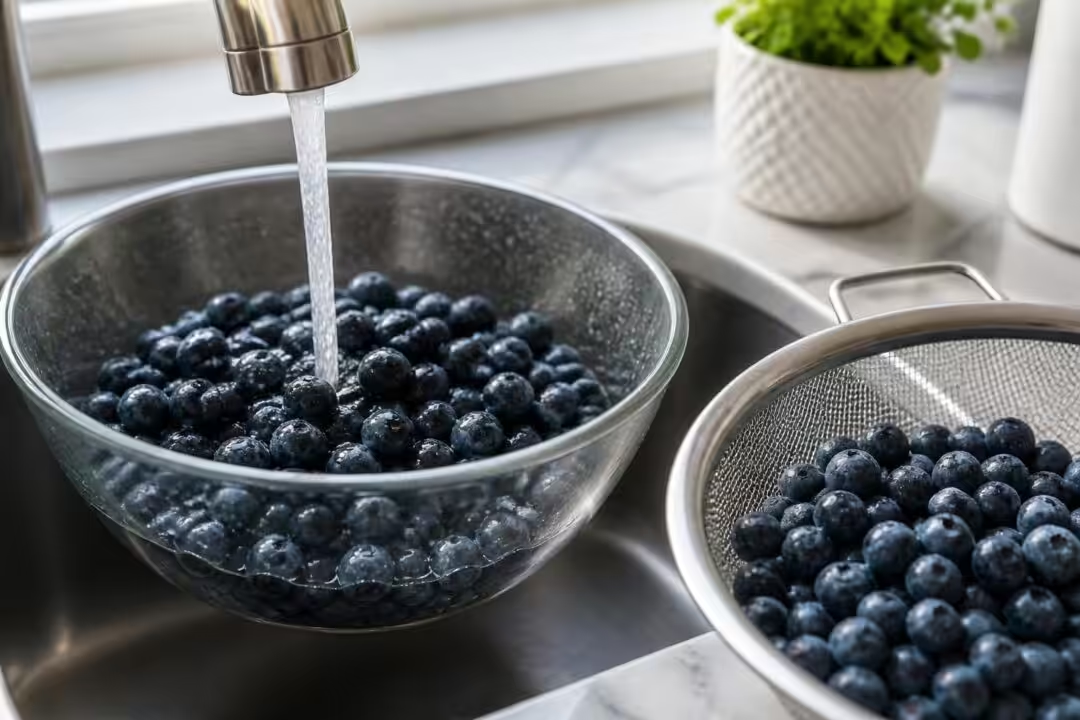
Frozen custard can only be as good as its dairy, and Culver’s has long leaned into a home-state advantage: Wisconsin farms. Rather than building a dessert program around anonymous commodity milk, the brand emphasizes relationships with multiple Wisconsin dairy farms—relationships that, in some cases, have lasted for decades. That choice is as much about flavor as it is about philosophy. Milk and cream carry regional character influenced by feed, seasonal variation, and handling standards. When that supply is close to home, it’s easier to prioritize consistency without flattening freshness.
This proximity also reinforces the “made for today” nature of the custard. A shorter supply chain can support a tighter window between farm and store, which matters because dairy freshness affects how flavors read. In practical terms, fresher dairy tends to deliver cleaner sweetness and a more rounded finish, while older dairy can skew toward a duller profile. That may sound subtle, but custard is a minimalist dessert—its simplicity amplifies every detail.
Culver’s public appreciation of farming communities goes beyond messaging. Through its Thank You Farmers Project, the chain and guests have collectively donated over $8 million since 2013 toward agricultural education. In 2026, that number stands as a meaningful marker of sustained support rather than a one-off campaign. The program’s deeper value is cultural: it positions farming not as a background supply function, but as a craft worth celebrating. For a custard brand, that narrative lands with credibility because the product itself depends on that craft.
There’s also a practical, culinary reason these long-term farm relationships matter: predictability. When a restaurant group can trust the dairy input, it can calibrate the custard base for the desired body and scoopability. That creates a consistent experience whether a guest is visiting in Wisconsin or far beyond. The taste still carries Midwest DNA, even when served across the country.
For readers who enjoy seeing sourcing translated into outcomes, the table below maps farm-to-spoon effects in a way that mirrors how chefs think during recipe development—ingredient, technique, and result.
| 🐄 Supply Detail | 🍨 What It Influences | ✨ How Guests Experience It |
|---|---|---|
| Wisconsin farm dairy | Clean milk flavor, balanced sweetness | Vanilla tastes bright; chocolate tastes deeper, not watery ✅ |
| Long-term farm relationships | Consistency and dependable quality | Custard feels familiar across locations 🧭 |
| Community support via Thank You Farmers Project | Investment in agricultural education | Brand trust grows—values match the product 🌾 |
| Fresh-handling mindset | Better texture potential in finished custard | Dense, creamy mouthfeel with fewer icy notes ❄️➡️🍦 |
The most persuasive “proof” is always in the spoon. When the dairy base tastes complete on its own, toppings become optional rather than necessary. That’s when a chain dessert stops feeling like fast food and starts tasting like a deliberate, dairy-forward treat. In Culver’s case, Wisconsin sourcing isn’t a marketing accessory—it’s the flavor engine. 🥛
Inside Culver’s In-Store Frozen Custard Process: Slow-Churned Freshness in Small Batches
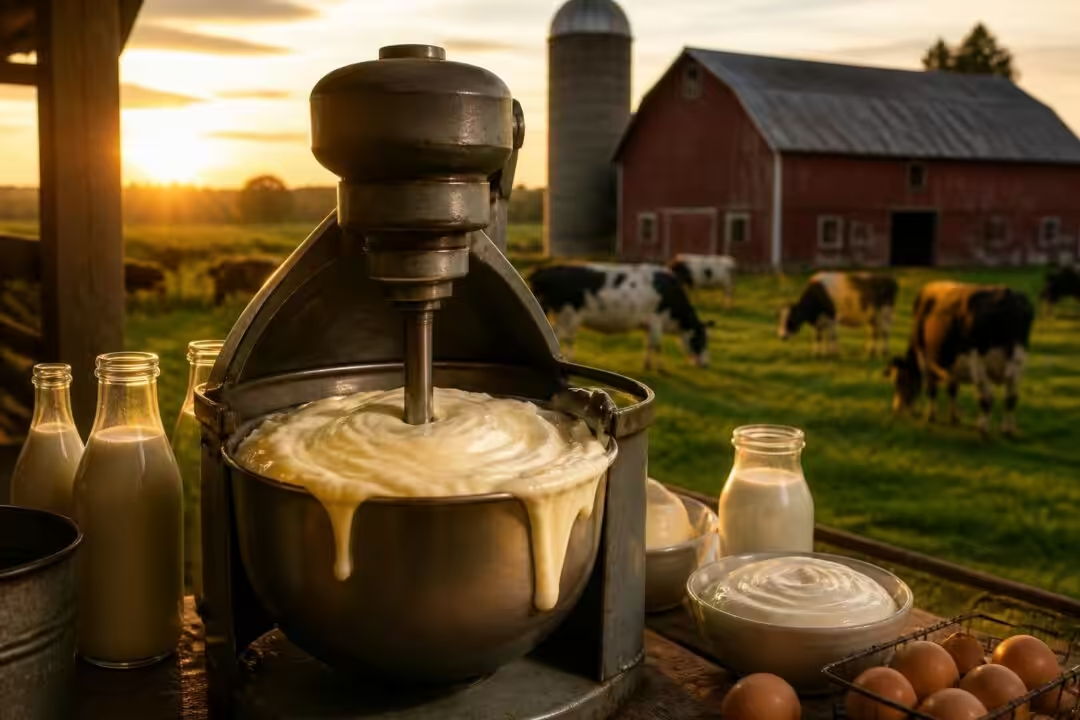
Culver’s frozen custard earns its “decadent” reputation through process as much as ingredients. Instead of relying solely on pre-packed tubs shipped to the store, the custard is prepared in-house each day. That daily rhythm matters because custard texture is fragile: it can turn airy, icy, or overly firm if mishandled. Culver’s leans on a method often described as slow-churned and slow-frozen, a combination that encourages a dense, creamy structure rather than a foamy one.
Small-batch production is another defining choice. Making custard multiple times per day means guests are more likely to get a scoop at its peak—when it’s freshly spun and still carries that slightly warmer serving temperature compared to hard-packed ice cream. That temperature detail is not trivial. A marginally warmer custard releases aroma more readily, which makes flavors read louder. Vanilla becomes more floral and rounded; chocolate becomes more cocoa-like rather than simply sweet. If dessert has ever tasted “flat” straight from a deep freeze, that’s exactly the sensory problem this approach helps avoid.
To keep the story grounded, imagine a busy lunch-to-dinner stretch at a suburban Culver’s. The dining room fills with families, and the custard machine runs through fresh cycles. A teen on a first job learns why timing matters: if the product sits too long, it loses its ideal softness; if it’s spun too early, it lacks body. In that training moment, “freshness” becomes a technical standard, not a vague promise. Guests may never see the machine, but they can feel the outcome in the spoon’s resistance—custard that holds shape yet yields cleanly.
This in-store routine also explains why Culver’s often ranks highly in conversations about quick-service desserts. Many chains can serve something cold and sweet; fewer can deliver a frozen product that tastes like it was made with intent a short time ago. The difference shows up in how toppings behave. A warm caramel ribbon melts into the surface instead of sitting like glue. Crushed cookies soften slightly and bond with the custard, creating a cohesive bite rather than a mix of separate parts.
For culinary-minded guests, this production style can be appreciated like bread baked throughout the day. The appeal isn’t only “fresh”—it’s the idea that food is being actively made, timed, and served at a peak moment. That sense of immediacy is part of the indulgence. When custard is treated like a daily craft, it stops being a commodity and starts behaving like a signature. ⏱️
For a quick visual deep-dive into how frozen custard differs from ice cream and why churn speed matters, the following video searches are a helpful companion to the tasting experience.
Watching the mechanics makes it easier to understand why Culver’s commitment to in-store batches matters: custard is a texture dessert as much as a flavor dessert.
All the Ways to Enjoy Culver’s Frozen Custard: Cones, Concrete Mixers, and Flavor of the Day Creativity
Culver’s offers frozen custard primarily in vanilla and chocolate, but the real fun begins with formats and mix-ins. The brand understands a key dessert truth: guests don’t just want sweetness—they want control over texture, temperature, and nostalgia. That’s why the same custard base can become a cone for purists, a float for soda lovers, a sundae for classic comfort, or a blended creation for anyone who craves a spoon that hits different in every bite.
The most iconic customizable option is the Concrete Mixer, a thick blended custard with toppings mixed throughout. With 30+ topping choices, the combinations can feel endless, but the best results come from balancing three elements: crunch, chew, and sauce. A cookie component brings crunch, candy provides chew, and a syrup ties the flavors together. The goal is to keep the custard as the star rather than burying it under sugar.
To keep choices from feeling overwhelming, a chef-minded approach helps. Start with a “signature bite” in mind. Should the spoon end with a snap of chocolate? A jammy fruit note? A salty-sweet finish? From there, build the mix-ins like a composed dessert plate—contrast is what makes it addictive. For example, cookie dough plus sprinkles plus a berry syrup creates a playful, birthday-cake vibe. On the other hand, hot fudge on vanilla leans into simplicity, letting dairy sweetness and cocoa richness do the heavy lifting. That kind of restraint reads as confidence. 🍫
Then there’s the rotating Flavor of the Day, which uses mix-ins to create limited-time personalities—think strawberry-forward options, candy-bar inspired swirls, or cheesecake-style blends like raspberry cheesecake. These flavors rotate regularly and can vary by location, which turns custard into something like a local ritual: people check what’s spinning today and plan their stop accordingly. That behavior—checking, anticipating, collecting favorites—creates a loop that keeps the custard program feeling alive rather than static.
For anyone who loves rituals, Culver’s also offers birthday rewards that can include complimentary custard more than once a year, turning celebration into a recurring reason to visit. In dessert culture, that matters: the best sweets are the ones linked to memory. A free scoop doesn’t just save money; it anchors a yearly tradition.
Best Culver’s frozen custard formats for different cravings (with smart topping pairings)
- 🍦 Cone: best for tasting the base—try vanilla first to judge dairy quality.
- 🥤 Shake or malt: best for drinkable indulgence—chocolate + malt powder amplifies cocoa depth.
- 🍒 Sundae: best for classic contrast—vanilla + hot fudge keeps flavors bold and clean.
- 🧱 Concrete Mixer: best for texture play—cookie pieces + caramel create a layered bite.
- 🥤 Float: best for nostalgia—custard melts into soda for a creamy, fizzy dessert.
- 🧊 Pint to-go: best for later—ideal when the Flavor of the Day feels unmissable.
The dessert menu’s genius is that it supports both spontaneity and strategy. A guest can walk in and choose a simple cone in seconds, or design a fully customized mixer that feels like a personalized special. That flexibility turns frozen custard into a repeatable pleasure rather than a once-in-a-while splurge. 🎯
Seeing real ordering habits—what people mix, what textures they chase—highlights how the brand’s custard can function like a customizable dessert bar in fast-casual form.
Why Culver’s Frozen Custard Became a Nationwide Favorite: Family Ownership, Midwest Hospitality, and a Fresh-First Promise
The story behind Culver’s frozen custard isn’t only about dairy science or rotating flavors—it’s about how a family-owned brand translates Midwestern hospitality into a scalable experience. Since the first store opened, Culver’s has remained family-owned, and that continuity often shows up in what the company chooses to protect as it grows: ingredient standards, operational routines, and a certain warmth in how the food is presented. Frozen custard fits that ethos because it feels personal. A scoop served at the right moment, with the right density, carries the message that someone cared enough to do it properly.
That “close-to-home energy” also helps explain why the chain’s sourcing and process choices matter. It’s easier to understand the insistence on Wisconsin dairy when the brand’s identity is rooted in Wisconsin pride. It’s easier to respect small-batch cycles when the company is committed to serving something that tastes made, not stored. Over time, these choices become a competitive advantage. Plenty of restaurants can add a dessert to the menu; fewer can build a dessert program that people actively seek out.
In practical terms, custard also functions as a bridge between generations. Grandparents recognize it as a classic dairy-stand treat; kids love the mix-ins and bright candy combinations; parents appreciate a dessert that feels like a reliable reward after a long day. That multi-generational appeal is a powerful growth engine because it turns a stop into a tradition. It’s not just “grabbing dessert”—it’s “going to Culver’s.”
Consider a case-study-style moment: a newly opened Culver’s in a growing suburban area becomes the after-practice meetup for a local youth baseball league. The coach buys pints for the end-of-season party; the parents discover the Flavor of the Day calendar; the kids debate which toppings belong in a Concrete Mixer. Within months, the restaurant becomes part of the neighborhood’s emotional map. This is how brands spread in the real world: not through slogans, but through repeated, satisfying moments that feel consistent.
There’s also an important sensory reason Culver’s custard travels well as an idea: it delivers “premium cues” without requiring premium pricing signals. The custard’s thickness, the way it holds a swirl, the slightly warmer serving feel, and the freshness implied by in-store preparation all suggest quality. Guests may not articulate these cues, but they recognize them. It’s the same reason a well-made sauce feels luxurious even when the ingredients are simple: technique creates perception.
Finally, the Thank You Farmers Project strengthens the emotional logic of the product. When a company and its guests contribute millions over time to agricultural education, it creates a story of reciprocity—enjoying dairy while supporting the communities that make it possible. In an era when diners increasingly care about where food comes from, that’s not just good optics; it’s a long-term trust builder. When freshness, sourcing, and community values align, frozen custard stops being a treat and becomes a signature worth traveling for. 🌟
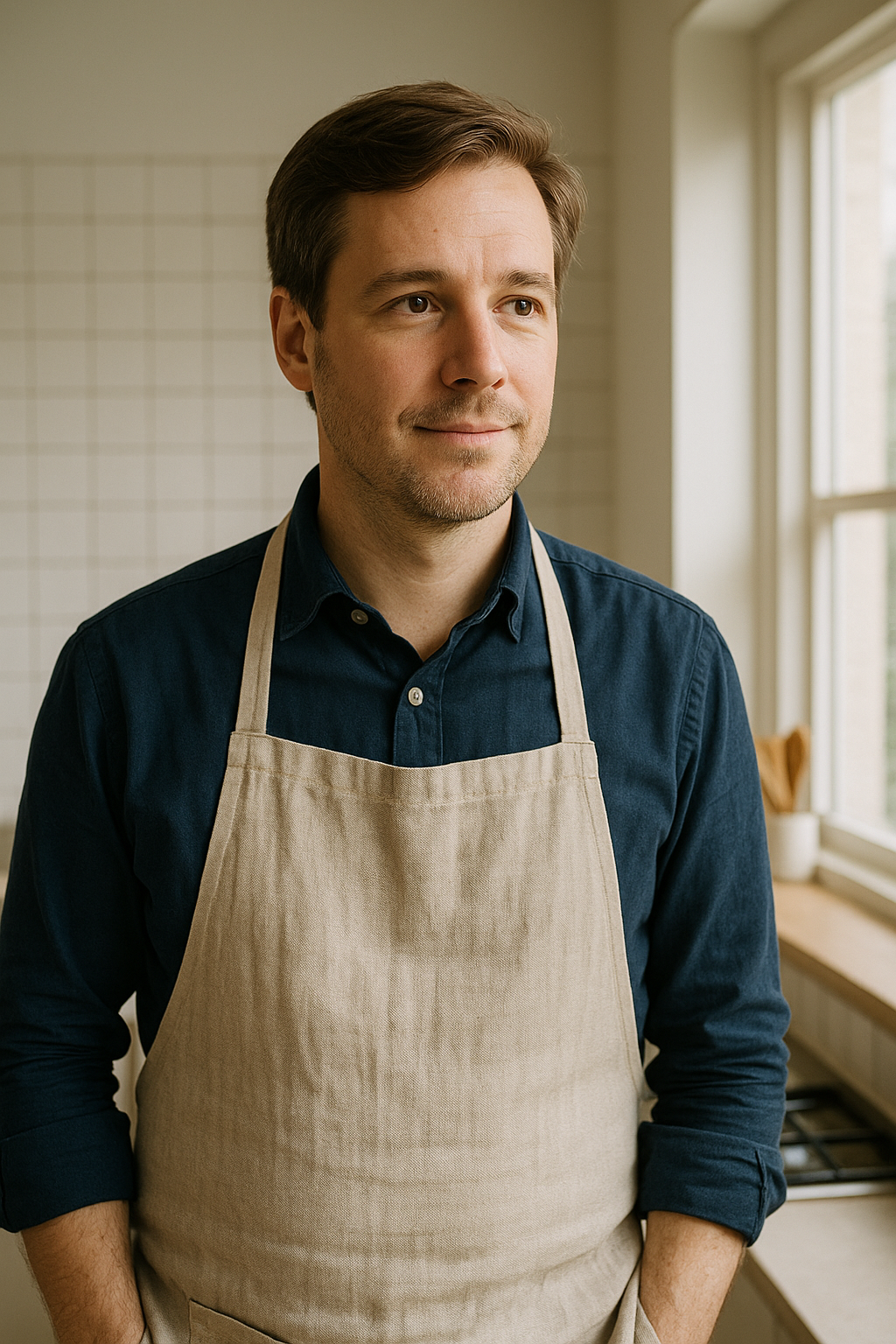
Hi, I’m Landon Brooks. I am the editor-in-chief of Cook and Design, but for the first decade of my working life I was actually a product designer in New York.