
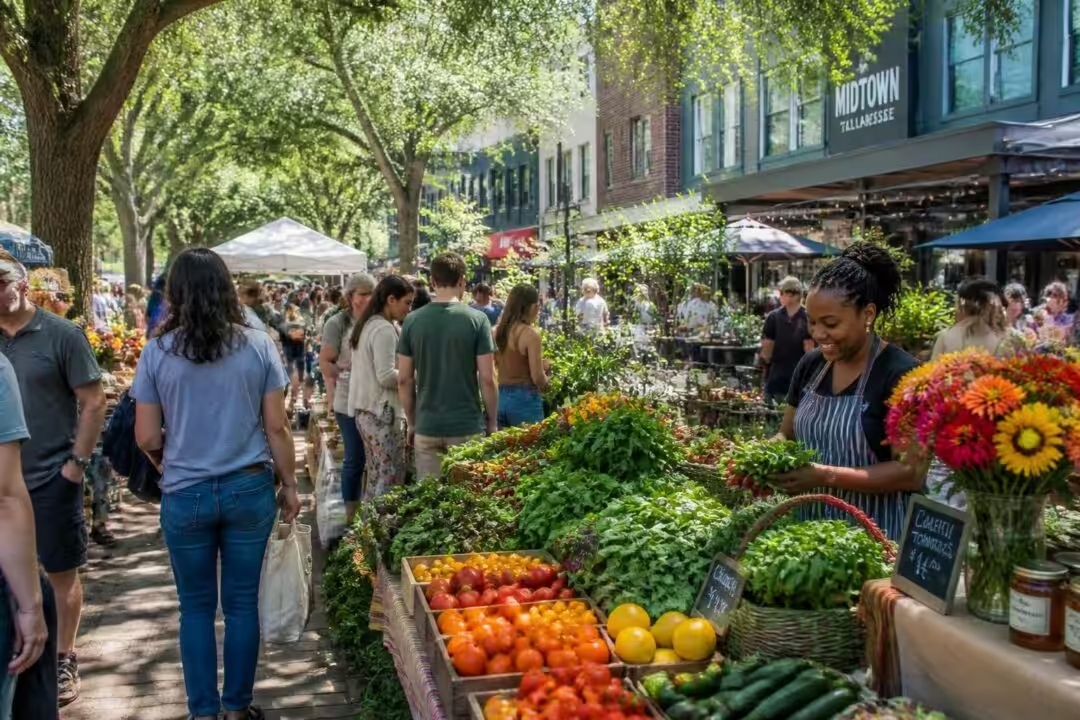
Fresh Flavors Bloom in Midtown Tallahassee: How a Corner Lot Became a Farmers Market Magnet
Midtown Tallahassee has a talent for reinvention, and one of its most visible corners is living proof. At 1334 Thomasville Road, a spot once associated with quick fuel stops and then a parade of short-lived concepts has been transformed into something both new and comfortingly familiar: Davis Farm Fresh Produce & Country Market. The building carries echoes of its past—locals still remember when the address felt like a pit stop rather than a pantry—yet the new identity makes the space feel rooted, almost inevitable.
That shift matters because Midtown’s day-to-day rhythm is built on small errands that turn into conversations. The market’s presence turns “running out for one thing” into a sensory detour: the perfume of peaches, the green snap of okra, and the warm, nutty scent of roasted peanuts. The most striking change is how the corner now invites lingering rather than rushing. A country-store vibe creates a gentle pace, and that slower tempo can be its own kind of luxury in a neighborhood where commutes, school pickup, and evening plans collide.
Behind the counter-story is a farmer’s timeline that stretches far beyond Tallahassee city limits. The owner, Rusty Davis, represents a fifth-generation farming lineage, with established operations in Pelham, Georgia (where the family farm has long been based) and a store presence in Thomasville, Georgia that began back in the mid-2000s. That history shows up in the market’s confidence: bins filled like they’re meant to be replenished, not staged. The goal isn’t novelty for novelty’s sake; it’s dependable abundance.
Longtime Tallahassee shoppers may also recognize the Davis name from a local chapter that still gets mentioned with a little nostalgia. For years, Davis-grown produce helped supply Tomato Land, a beloved farmers market and deli that served the area for roughly two decades before closing in 2016. That relationship created a kind of culinary memory in the city: the taste of a tomato that actually tastes like summer, the heft of greens that don’t wilt on the ride home. When those flavors return under a new sign, they don’t feel imported; they feel reclaimed. 🍅
What makes this Midtown opening especially practical is its schedule. The market keeps long hours—8 a.m. to 7 p.m., seven days a week—which quietly reshapes who can shop local. Not everyone can make a Saturday-morning dash, and not everyone has time to plan meals around a single weekly market window. Here, a late-afternoon stop can still yield dinner inspiration: sweet corn that begs for a quick char, shell peas ready for a slow simmer, or a bag of soup mix that makes weeknight cooking feel less like a chore.
In a city where food culture has matured into something proudly regional, this corner-store-to-farm-market evolution also signals a broader Midtown appetite: people want their neighborhoods to feed them in ways that feel personal, seasonal, and genuinely local. The next question is how the market keeps that promise—especially when “local” can be a slippery word—so it’s worth looking closely at sourcing and selection.
Fresh Produce, Country Staples, and Global Finds: What Shoppers Discover at Davis Farm Fresh in Midtown
A strong farmers market isn’t only defined by what’s on the tables; it’s defined by how those items fit real life. At Davis Farm Fresh in Midtown, the selection aims to cover the full arc of a meal—starting with raw ingredients and ending with comfort staples that make the kitchen feel stocked. The claim is ambitious: “any kind of fresh produce” grown across nearby states, plus the ability to source items from farther afield when shoppers crave something outside the regional crop calendar. That balance—regional first, broader access when needed—can help a market serve both purists and pragmatic cooks.
In practice, the shelves and coolers focus on what the Florida-Georgia line does best: vegetables that thrive in heat, fruits that signal the turn of seasons, and the sturdy pantry extras that help a household cook without overthinking it. Shoppers can expect staples such as okra, sweet corn, butter beans, and shell peas, ingredients that invite classic Southern techniques while still leaving room for modern twists. A chef-minded home cook might blister okra for a crunchy salad topping, while a tradition-keeper might stew it low and slow with tomatoes and onions.
Prepared components also play a quiet supporting role. Pre-cooked greens—think collards and turnips—turn weekday dinner into something that feels like it took hours. That matters in Midtown, where many kitchens are busy but still want the pleasure of a plate that tastes cared for. A container of seasoned greens alongside skillet-seared sausage and sliced tomatoes can read like a Sunday spread, even on a Tuesday.
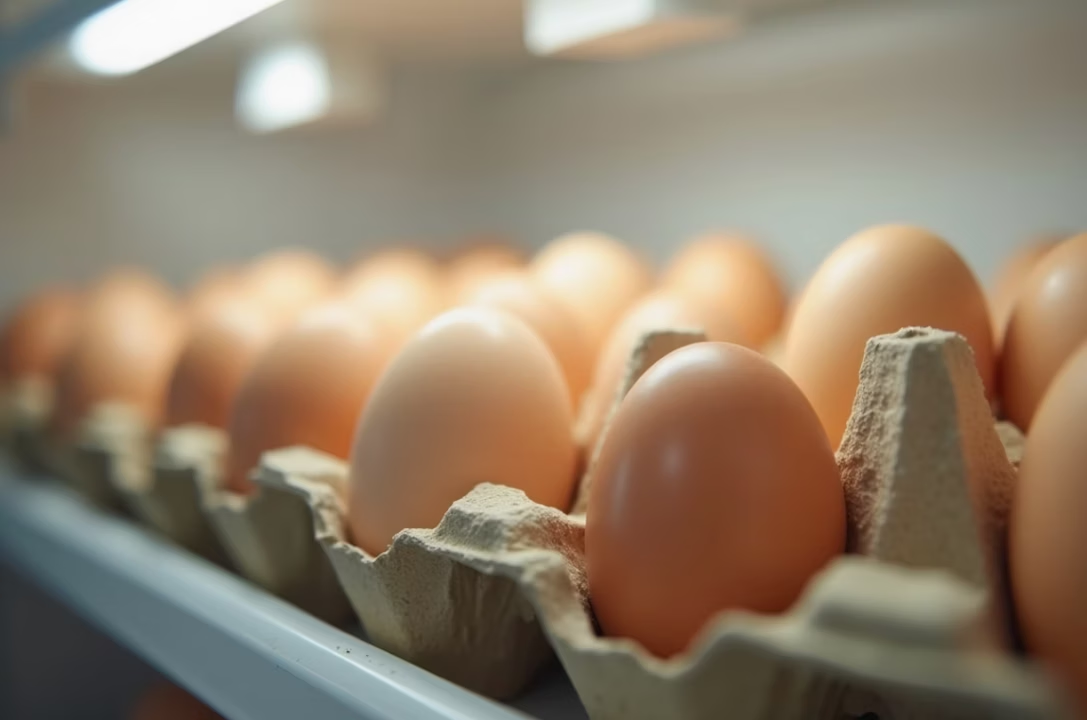
Then there are the dairy and protein companions that transform “produce shopping” into “full-basket shopping.” Expect options such as fresh milk, brown eggs, cheese, and country meats. These aren’t presented as boutique novelties; they’re positioned as everyday essentials, the kind that let a shopper build breakfast, lunch, and dinner without hopping between multiple stores. 🥚
Because curiosity fuels cooking, the market also keeps room for the unexpected. When asked about more exotic items—ingredients like soursop or other tropical imports—the answer is essentially: if people want it, it can be found. That doesn’t dilute the local focus; it acknowledges that Tallahassee’s palates are wider than one region. In 2026, many kitchens in the city blend Southern foundations with Caribbean, West African, and Latin flavors, so having access to the occasional “global guest ingredient” can be an invitation to experiment.
Smart shopping list for a week of Midtown meals (built for flexibility)
A market can feel overwhelming when everything looks good. A useful approach is to shop with building blocks—items that can pivot between cuisines and cooking methods. The list below is designed for mix-and-match meals, from quick sautés to slow-simmered pots.
- 🥬 Greens (collards or turnip greens): serve as a side, fold into omelets, or add to soups
- 🌽 Sweet corn: grill it, shave it into salads, or stir into chowder
- 🫘 Butter beans or shell peas: simmer with aromatics, or toss into grain bowls
- 🍅 Seasonal tomatoes: slice for sandwiches, roast for sauce, or marinate with herbs
- 🥚 Brown eggs: frittatas, soft scrambles, or baking projects
- 🧀 Cheese: crumble over vegetables, melt into grits, or build snack plates
- 🌶️ Okra: roast for crisp edges, fry for tradition, or stew for comfort
- 🥜 Peanuts: snack-ready energy, or chopped into salads for crunch
This kind of shopping isn’t about rigid meal plans; it’s about keeping the refrigerator stocked with ingredients that make good decisions easier. The next layer of the Midtown story is how the market secures that steady flow of freshness—because availability is never an accident.
Local Supply Chains Without the Middleman: How the Midtown Farmers Market Stays Farm-Forward
“Local” is a word that gets used so often it can lose meaning, but the strongest markets give it practical definition. Here, the working model is a tight sourcing network anchored by Davis’s own farming background and supported by partnerships with roughly a dozen regional farms across Florida and Georgia, with additional connections extending into nearby states like Alabama and Tennessee. The point isn’t to collect faraway logos; it’s to keep the product close enough that it arrives with the story still intact.
One of the most consequential promises is the idea of no middleman. In a conventional chain, produce can pass through multiple hands—aggregators, distribution hubs, and warehouse steps that add time and sometimes diminish flavor. A direct or near-direct route does something subtle but important: it preserves texture. Tomatoes stay firmer, greens stay perkier, and corn stays sweet rather than starchy. For shoppers, that translates to food that behaves better in the kitchen, whether it’s a simple salad or a long braise.
There’s also a seasonal honesty to a farm-forward approach, and Midtown cooks can use that to their advantage. When crops shift, menus shift. Late-spring greens give way to heat-loving vegetables; citrus appears when the weather cools. That seasonality can become a creative prompt rather than a limitation. Instead of asking “What recipe should be made?” the better question becomes: “What is the region offering right now?” That mindset is how everyday meals start to feel like travel without leaving town.
A case study in weeknight cooking: the “Lake Ella Loop” basket
Imagine a fictional Midtown neighbor—call her Maya—who likes cooking but doesn’t want a complicated grocery routine. She stops by the market after work, grabs butter beans, okra, brown eggs, and a wedge of cheese. At home, she simmers beans with onion and bay leaf, roasts okra at high heat with smoked paprika, and finishes with an egg cracked over the beans for richness.
The meal tastes layered not because it’s fancy, but because the ingredients are fresh enough to carry themselves. The next day, leftovers become lunch: roasted okra chopped into a salad, beans folded into a wrap with greens. This is the functional power of a market with reliable supply lines—food stays delicious long enough to become more than one meal. 🍽️
Supply chains also influence community trust. When a market can speak clearly about where food comes from, shoppers feel more confident feeding it to kids, serving it to guests, or bringing it to a potluck. That confidence is a cultural ingredient in the South, where hospitality isn’t a performance; it’s a shared language. And when a store is open daily from morning to evening, the trust is reinforced by consistency: the lights are on, the bins are filled, and the staff is ready to help.
All of that sourcing and logistics would still fall flat without a welcoming experience. That’s where service, atmosphere, and a few well-chosen add-ons—like coffee and hot food—turn a stop into a ritual.
Midtown Tallahassee Market Experience: Friendly Service, Coffee Wagon Vibes, and Food-Truck Energy
Great markets succeed when they respect a shopper’s time while still offering a moment of delight. Davis Farm Fresh leans into that idea with a promise of friendly, fast, prompt service—the kind of hospitality that feels particularly Southern because it’s both efficient and warm. In a busy neighborhood, service becomes a feature as valuable as the produce itself. When someone can ask, “What’s best today?” and get a practical answer, dinner gets easier.
The atmosphere is deliberately “country market,” which isn’t about pretending Midtown is rural. It’s about bringing a relaxed, porch-light sensibility into a city corridor. Details like a gourmet coffee setup served from a wagon create a small sense of occasion. That coffee element matters more than it seems: it gives shoppers a reason to slow down, to browse a little longer, to talk to a vendor or a staff member about how to cook a vegetable they haven’t used before. ☕
An on-site food truck adds another layer: aroma and immediacy. Hot food turns a shopping errand into a reward. It also broadens the market’s audience beyond home cooks. A student can stop by for a bite, a parent can grab something quick before practice pickup, and an office worker can turn a lunch break into a walkable reset. The best part is the cross-pollination: someone arrives for food-truck lunch, notices the corn looks incredible, and leaves with a bag of produce. That’s how local food habits grow—one unplanned purchase at a time.
How the market’s hours reshape Midtown routines
The daily schedule—8 a.m. to 7 p.m.—quietly challenges the notion that farmers market shopping has to be a weekend-only lifestyle. Morning shoppers can pick up eggs and fruit for breakfast. Midday visitors can refresh the kitchen with greens and cheese. After-work shoppers can still find dinner ingredients without racing a closing bell.
Those expanded hours also support cooking in smaller increments. Instead of doing one huge weekly grocery run, a shopper can buy for two days, then come back for what looks best next. That approach reduces food waste and keeps meals more seasonal, because the market basket changes as the displays change. It’s a practical pathway to better eating that doesn’t require perfection—just repetition.
To see how this fits within Tallahassee’s wider market culture, it helps to compare it with another beloved local experience: the MidTown Farmers Market at Lake Ella, known for its outdoor setting, music, and artsy energy. The two can coexist beautifully—one as a daily country-store anchor, the other as a weekly community gathering with festival flair. The next stop is exploring how these markets complement each other, shaping Midtown into a true local-food district.
For a glimpse into the kind of coffee-and-market culture that has influenced modern farmers markets across the South, this video search offers helpful inspiration:
MidTown Tallahassee Farmers Markets in Context: Lake Ella Fridays, Saturday Traditions, and the New Daily Corner Store
Midtown Tallahassee’s local-food landscape works best when it’s treated like a calendar rather than a single destination. In one week, a shopper can build a rhythm: a Friday afternoon stroll around Lake Ella for music and artisan browsing, a Saturday morning run to a larger destination-style market for specialty items, and a midweek stop at the new Thomasville Road corner store to fill gaps. The result is a flexible system that fits different households—busy families, curious cooks, students, retirees—without insisting that everyone shops the same way.
The MidTown Farmers Market at Lake Ella has become a recognizable part of Tallahassee’s seasonal heartbeat, often running from spring through fall and typically gathering momentum in the afternoon until dusk. Its appeal is more than produce. It’s the blend of local vegetables and fruit with music and unique art, all set against the lake’s walkable charm. That kind of market is part grocery, part community living room. It’s where people bump into neighbors, discover a new jam or handmade craft, and leave with a tote bag that reflects the mood of the day.
Alongside that, Tallahassee also supports a more classic Saturday-morning farmers market tradition—often earlier in the day and structured like a destination trip. These bigger weekend markets tend to emphasize breadth: meats, cheeses, flowers, plants, natural products, baked goods, and pantry items. They’re ideal for stocking up, chatting with vendors, and planning cooking projects that take more time, like slow-cooked roasts or pickling batches.
What Davis Farm Fresh adds is something different: daily accessibility with a curated country-store feel. Rather than replacing the outdoor market experience, it complements it. A shopper can still chase the festive energy of Lake Ella on Friday, then use the daily store to keep the fridge in good shape on Monday. This is how a neighborhood becomes more food-resilient—not through one perfect market, but through multiple options that cover different needs.
A practical comparison table for Midtown shoppers (choose the right stop for the right day)
| Market option 🧺 | Typical timing ⏰ | Best for 🍓 | Signature vibe 🎶 |
|---|---|---|---|
| Davis Farm Fresh Produce & Country Market (1334 Thomasville Rd) | Daily, 8 a.m.–7 p.m. ✅ | Weeknight produce, eggs, dairy, quick restocks, country staples | Friendly service + coffee wagon + food-truck energy ☕🌮 |
| MidTown Farmers Market at Lake Ella | Fridays, afternoon to dusk (seasonal) 🌅 | Local produce, arts, browsing, community hangouts | Lakeside strolls, music, creative finds 🎨🎵 |
| Saturday destination-style Tallahassee farmers markets | Saturdays, morning hours (often 8 a.m.–noon) 🌞 | Big weekly stock-ups: meats, cheese, flowers, pantry goods | Classic market morning: busy, abundant, social 🥖💐 |
These options also encourage better cooking habits without preaching. When markets are easy to access, people tend to buy more whole ingredients. Whole ingredients lead to more home cooking. More home cooking leads to stronger connections—between neighbors, between cultures, and between generations who pass recipes down. Isn’t that the real point of a farmers market renaissance?
For a feel of the Friday-market atmosphere that markets like Lake Ella often evoke—live music, local vendors, and that “stay a little longer” energy—this video search is a useful window:
With Midtown now offering both festival-style market moments and daily farm-forward convenience, Tallahassee’s local flavor doesn’t just show up on weekends—it can shape the entire week.
Hi, I’m Landon Brooks. I am the editor-in-chief of Cook and Design, but for the first decade of my working life I was actually a product designer in New York.

7 Comments
The market behaves like a well-documented API: simple interface, reliable output. A pleasant addition.
Landon, this is a win for local food access. Let’s push for SNAP acceptance and community cooking demos.
Hope they invested in efficient refrigeration. Good insulation keeps produce fresh and operating costs low.
Landon, curious about the foot-traffic delta. A corner like this can shift Midtown’s flow patterns measurably.
Finally a spot worth stopping at. Good produce beats another vape shop any day.
Like rewiring a tricky panel, they kept the foundation but changed the current. Solid work.
The corner’s reinvention from fuel stop to fresh market reads like adaptive reuse done right. Clean lines, strong anchor.
Les commentaires sont fermes.