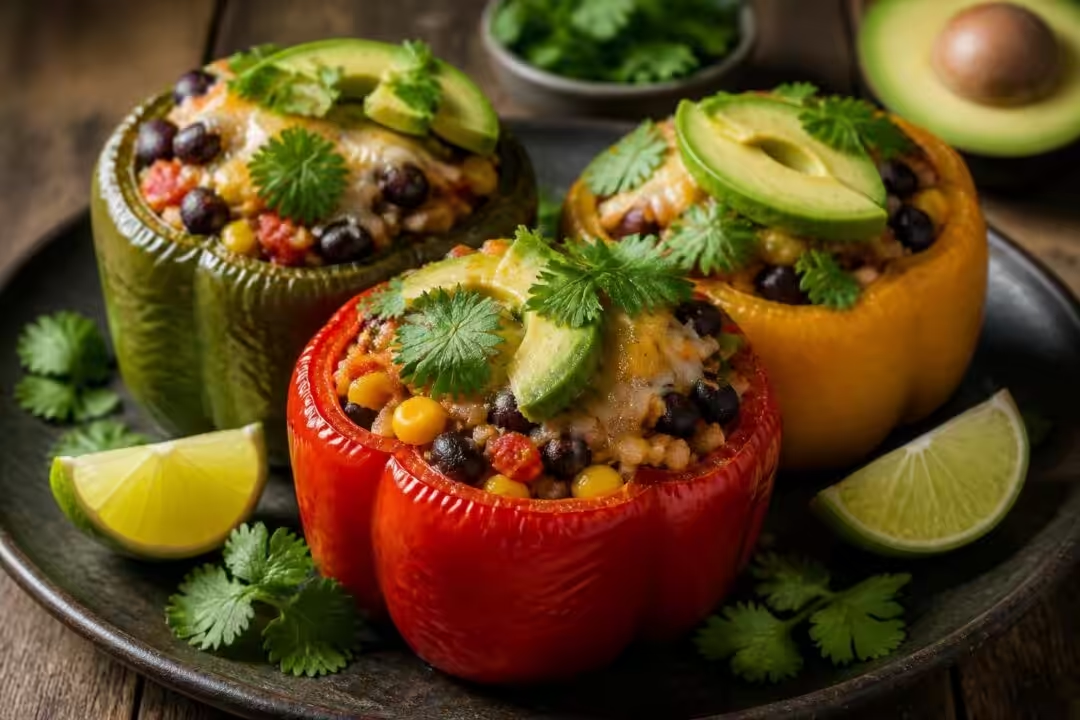
Stuffed Capsicum Mexican-Style: Why These Peppers Taste Like Tacos in a Tender, Edible Bowl 🌶️🧀
Mexican-style stuffed capsicum delivers a very specific kind of satisfaction: the familiar comfort of taco-night flavours, but packaged into a vivid, oven-soft pepper that can be cut with a fork. The brilliance is structural as much as it is delicious. A bell pepper (capsicum) turns into a natural baking dish, holding a savoury mixture of seasoned ground meat, tomatoes, beans, corn, rice, and cheese—each bite balancing sweetness, smokiness, and creamy richness.
In test kitchens and busy homes alike, the dish succeeds because it’s built on layers. The pepper itself becomes gently sweet as it roasts, which offsets the spices in taco seasoning and the acidity of tomatoes. That sweet-and-savory contrast is what makes the filling taste “bigger” than its ingredient list. A red pepper leans candy-sweet after baking, a green pepper stays more vegetal and slightly bitter (in a good way), while yellow and orange sit in between—ideal when a platter needs colour and varied flavour.
Consider a practical scenario: a fictional weeknight routine in Austin where “Taco Tuesday” has started to feel repetitive. The family still wants the familiar seasonings, but not another stack of tortillas. Stuffed capsicum solves the problem by keeping the taco essence—garlic, onion, cumin-heavy seasoning, juicy meat—while changing the format into something that feels new. That novelty matters; it’s often the difference between a meal that’s merely eaten and one that’s remembered.
The dish also works because it adapts to different appetites. Big pepper halves serve as a hearty main. Mini sweet peppers turn the same idea into a colourful party bite. One tray can even mix both sizes: large halves for dinner and small ones for lunchbox leftovers. That flexibility is why this recipe style has stayed popular through years of shifting food trends, including the 2020s’ push toward meal-prep efficiency without sacrificing indulgence.
Texture is another hidden advantage. Rice brings softness and body, beans add creaminess, corn provides bright pops, and cheese creates stretchy cohesion. When tomato sauce is spooned over the top before baking, it acts like a protective glaze, keeping the filling moist and helping the peppers cook evenly under foil. The final moment—uncovering and broiling briefly—adds the browned-cheese effect people chase on casseroles. Who doesn’t pause for that first steamy cut when the top goes golden? 🔥
Done well, Mexican-style stuffed capsicum can taste like a combo of burrito bowl, enchilada filling, and fajita veg all at once, yet still feel tidy on the plate. The next section focuses on building the ideal ingredient lineup and why each component earns its place.
Mexican Stuffed Capsicum Ingredients: A Flavor Blueprint for Bold, Cheesy Peppers 🫘🍅
The most reliable Mexican-style stuffed capsicum begins with a simple promise: familiar ingredients arranged intelligently. Nothing here is “fancy,” but each component has a job, and the best results come from choosing versions that support the final texture. Peppers should be large, firm, and unwrinkled so they hold their shape during baking. Any colour works, but mixing colours makes the tray look festive—especially when the filling includes black beans and yellow corn for contrast.
For the stuffing, ground meat sets the savoury foundation. Turkey is popular because it stays light while still absorbing seasoning, yet beef brings deeper richness and chicken keeps things mild. The onion isn’t optional; it’s the aromatic base that makes the filling taste “cooked” rather than simply mixed. Garlic should be minced fine so it distributes evenly, avoiding harsh bites.
Tomatoes appear in two roles: diced tomatoes (often canned) add juicy chunks, while tomato sauce poured over the top creates a cohesive bake. The sauce also helps when peppers are especially thick-walled; it steams them gently under foil so they soften without collapsing. Beans and corn add bulk and variety, turning a meat filling into something more complete and spoonable.
Rice is the quiet stabilizer. It absorbs juices from tomatoes and meat, preventing a watery cavity. The key is to cook it separately first; uncooked grains won’t soften fully inside the pepper in the allotted bake time. White rice gives classic comfort, brown rice adds chew, black rice adds drama and nuttiness. In 2026, many home cooks keep pre-cooked rice packets on hand; they can work, but the best texture comes from rice cooled slightly before mixing so it doesn’t turn gummy.
Cheese matters because it bridges everything. Monterey Jack melts smoothly and stays creamy. Cheddar offers sharpness and colour. Pepper Jack adds heat without extra chopping. A smart approach is mixing cheeses in the filling and also sprinkling on top, creating both internal richness and that bubbly crust that signals “ready.” 🧀
Seasoning can be a store-bought taco blend or homemade. Either way, it needs salt, cumin, chili powder, and a touch of paprika. Cayenne is the optional accelerator; a pinch is enough to lift the whole tray. Some cooks add a spoon of salsa or enchilada sauce into the filling for tang, but that requires watching moisture levels so the peppers don’t become soupy.
Essential Mexican-Style Stuffed Capsicum Shopping List ✅
- 🫑 Large bell peppers (capsicum) in mixed colours for sweetness and visual appeal
- 🍗 Ground turkey, chicken, or beef as the savoury base
- 🧅 Onion for aroma and depth
- 🧄 Minced garlic for punchy savouriness
- 🍅 Canned diced tomatoes for juicy texture
- 🥫 Tomato sauce to glaze and keep the bake moist
- 🫘 Black beans for creaminess and protein
- 🌽 Corn for sweet pops
- 🍚 Cooked rice (white, brown, or black) for structure
- 🌮 Taco seasoning (or a cumin-chili blend) for instant Mexican-inspired flavour
- 🧀 Monterey Jack, cheddar, or Pepper Jack for melt and richness
- 🌿 Cilantro or parsley to finish with freshness
When each ingredient is chosen with intent, the dish stops being “just stuffed peppers” and becomes a calibrated flavour build. Next comes the technique—how to assemble and bake so peppers are tender, filling stays juicy, and cheese lands perfectly browned.
How to Make Mexican-Style Stuffed Capsicum: Step-by-Step Baking for Tender Peppers and Juicy Filling 🔥
Technique is what turns good ingredients into a tray that disappears fast. Mexican-style stuffed capsicum is forgiving, but a few chef-level habits make it consistently excellent: controlling moisture, building flavour early in the skillet, and using foil strategically. The most dependable temperature for this style is 375°F (190°C), hot enough to soften peppers and melt cheese without drying the filling.
Start with the baking dish. A 9×13 pan is ideal for standard bell peppers because it fits halves snugly. That snugness matters: peppers that wobble can spill filling, and peppers that lie too flat collect liquid. Lightly greasing the pan prevents sticking and makes cleanup less dramatic.
Peppers can be cut in half lengthwise for easy stuffing and faster cooking. Removing seeds and the pale inner ribs creates neat pepper “boats.” For those who prefer the classic upright look, cutting off the top works too, but it often takes longer to soften. A practical middle-ground is halving large peppers for weeknights and using whole peppers for a dinner-party tray where presentation counts.
On the stove, heat olive oil over medium heat and cook ground meat with onion until the onion turns translucent and the meat is no longer pink. This step is not just about cooking; it’s where flavour begins. If the meat is stirred and broken up until finely crumbled, the filling becomes scoopable and cohesive rather than chunky and uneven.
Next, stir in diced tomatoes (with their juices), taco seasoning, and garlic, letting it cook briefly so the spices bloom. That short simmer is where the kitchen starts smelling like a taco stand—warm cumin, tomato, toasted chili. Then add beans, corn, and cooked rice. The goal is an even distribution so every pepper gets a balanced mix rather than one pepper full of beans while another gets mostly rice.
Spoon the filling into each pepper half, mounding it slightly. A light pour of tomato sauce over each pepper adds moisture and helps the cheese adhere. Sprinkle shredded cheese generously. Covering with foil for most of the bake traps steam, softening the capsicum. Removing foil at the end and broiling for a minute or two browns the top. That broil step is optional, but it delivers the “bubbly, golden finish” people associate with comfort food. 🔥
Core and Prep Peppers Without Tearing Them 🫑
A clean pepper shell holds filling like a bowl, so it’s worth doing carefully. Slice with a sharp knife, then use a spoon to scrape out seeds and membranes. Avoid puncturing the walls; small cuts become weak spots that collapse during baking. After scraping, flipping the pepper and tapping it gently helps loose seeds fall out. A quick rinse removes stragglers, then the pepper is ready to be stuffed.
For extra-soft peppers, a pro trick is a brief pre-soften step: place peppers upside down on a plate with a shallow layer of water and microwave for a few minutes, then cool before filling. This is especially useful when peppers are thick or when a faster oven schedule is needed. The payoff is a fork-tender shell without overbaking the cheese.
Timing, Texture, and a Real-World Weeknight Workflow ⏱️
In a busy household, the recipe becomes even smoother with a workflow: cook rice earlier in the day, chop onion while the skillet heats, and rinse beans and corn while meat browns. The filling can be made in advance and refrigerated; the next day, it’s simply stuffed and baked. If baking from cold, adding a few extra minutes keeps the centre hot without scorching the top.
Peppers are done when the shell is tender and the filling is steaming hot through the middle. If the tops brown too quickly, a loose foil tent protects the cheese. If the peppers seem undercooked, keeping foil on longer helps them soften without drying out. Mastering those small adjustments is what makes the dish feel effortless.
With the core method locked in, the next step is creativity: turning one base recipe into Tex-Mex, Southwestern, vegan, low-carb, or party-sized versions—without losing the signature flavour punch.
The most helpful demos show the filling consistency before stuffing—aim for moist but not soupy, so it mounds cleanly in each pepper half.
Stuffed Capsicum Variations: Tex-Mex, Southwestern, Vegan, and Low-Carb Peppers That Still Hit Big Flavor 🎉
The base idea—pepper plus seasoned filling plus melted cheese—can shift in many directions while still tasting unmistakably Mexican-inspired. Variations work best when they keep the same internal logic: savory core + bright acidity + creamy finish. Changing one element is easy; changing several at once requires a little balancing so the filling doesn’t become dry, watery, or bland.
Tex-Mex style leans into comfort and cheesiness. Ground beef often replaces turkey for richness, and cheddar takes the lead. Jalapeños can be stirred into the skillet for heat. A spoon of salsa or enchilada sauce can replace part of the tomato sauce on top, giving a more saucy, casserole-like finish. The important part is moisture control: if salsa is watery, draining it slightly prevents sogginess.
Southwestern style tends to feature smokier flavours. Chipotle powder, oregano, and a squeeze of lime bring the profile into a deeper, campfire-adjacent direction. Diced green chiles add warmth without overwhelming heat. Quinoa can replace rice for a nuttier, slightly firmer texture that holds up well for leftovers. A drizzle of lime-zested sour cream at the end tastes like a restaurant finishing touch, especially with cilantro.
Vegan versions can be genuinely satisfying when beans and grains do the heavy lifting. Swapping meat for extra black beans (and optionally pinto beans) increases creaminess and protein. Adding diced sautéed mushrooms can mimic the savoury depth of meat. Plant-based cheese can be used, but avocado, a cashew-based crema, or dairy-free sour cream also provide the creamy contrast that makes the filling feel complete. A pinch of smoked paprika helps replace the “browned meat” note.
Low-carb and keto-friendly stuffed capsicum are best when rice is removed and replaced thoughtfully. Cauliflower rice works well, but it releases water; sautéing it briefly before mixing helps. Another strategy is using extra meat plus diced zucchini or mushrooms for volume. Full-fat cheese becomes more central here, so adding fresh garnish (cilantro, lime) prevents heaviness.
Mini Peppers for Appetizers vs. Large Peppers for Dinner 🍽️
Switching the pepper size changes the entire vibe. Mini sweet peppers become bright, two-bite appetizers that look playful on a platter. They bake faster and are easier to serve at gatherings. Large halves make an impressive main dish—especially when topped with a dollop of sour cream and a sprinkle of herbs. The same filling can serve both; the only adjustment needed is baking time.
A helpful hosting trick is offering a topping “bar” so guests customize: sour cream, chopped cilantro, sliced jalapeños, lime wedges, hot sauce. This keeps the base tray family-friendly while giving heat-seekers plenty of options. 🌶️
Flavor Pairings That Make the Meal Feel Complete 🍯🌽
Stuffed capsicum pairs well with sides that echo Mexican flavours without duplicating the same textures. Honey-jalapeño cornbread-style biscuits offer sweetness and a gentle bite that contrasts the savoury peppers. For dessert, brownies spiked with cayenne and cinnamon deliver a subtle warmth that feels thematic rather than gimmicky. Those pairings turn a simple pepper tray into a full dinner experience that feels planned, not improvised.
Variations are only truly successful when the finished peppers still slice cleanly and hold their shape. That leads naturally into storage, freezing, reheating, and troubleshooting—because leftovers are part of why this dish stays in rotation.
Look for techniques that reheat without drying: moderate oven heat, a splash of sauce, and covering for part of the warm-up.
Meal Prep, Storage, and Troubleshooting for Mexican Stuffed Capsicum: Keep Peppers Firm, Filling Moist, and Cheese Perfect 🧊✨
Mexican-style stuffed capsicum earns its place in a modern kitchen because it behaves well after cooking. It stores neatly, reheats reliably, and can be frozen either assembled or as filling-only. For households planning weekday meals, that’s a big deal: a single skillet of filling can become dinner tonight, lunches tomorrow, and a freezer backup for later.
Refrigerated in an airtight container, cooked stuffed peppers generally keep their best quality for 4–5 days. The peppers soften slightly over time, but the flavours often deepen as spices mingle. For freezing, the timeline stretches to about 3 months without major texture loss—especially if the peppers were not overbaked initially. Thawing overnight in the refrigerator helps them reheat evenly without turning watery.
Freezing the filling alone is often the highest-quality option. Fresh peppers can be prepped the day of baking, then filled with thawed mixture and topped with sauce and cheese. This avoids the slightly softer pepper texture that can happen when the whole assembled pepper is frozen and reheated. Still, fully assembled frozen peppers are incredibly convenient; they’re the “future dinner” that saves a chaotic evening.
Reheating works best in the oven at a moderate temperature (around 350°F / 175°C) so the filling warms through without scorching the cheese. Covering with foil for most of the reheat locks in moisture, then uncovering briefly refreshes the top. Microwaving is faster, but it can soften the pepper more aggressively; it helps to microwave gently, then finish under a broiler if a browned top is desired.
Common Problems and Fixes (Without Losing Flavor) 🛠️
When peppers turn soggy, it’s usually a moisture-management issue. Draining excess liquid from canned tomatoes, avoiding watery salsa, and ensuring rice is cooked separately all help. Par-baking peppers for a few minutes before stuffing can also drive off some moisture, particularly with very juicy peppers.
If the filling tastes dry, adding a little extra tomato sauce or a splash of broth brings it back. Cheese also contributes moisture, so a slightly more generous topping can help. If the peppers seem undercooked while the top is already browned, keeping them covered with foil longer solves it—steam is the friend of tender capsicum.
Sometimes filling falls apart when served. That’s often because the mixture is too dry or too loosely packed. Stirring thoroughly so rice and beans distribute evenly improves cohesion. Another classic technique is adding a beaten egg as a binder, though many versions don’t need it if moisture is balanced. The goal is a scoopable texture that still clings together on a fork.
At-a-Glance Guide: Baking, Storage, and Texture Targets 📌
| Goal 🎯 | What to Do ✅ | What to Avoid ⚠️ |
|---|---|---|
| Tender peppers 🫑 | Bake covered with foil most of the time; keep peppers snug in the pan | Overbroiling early; peppers spread out and tipping over |
| Juicy filling 🍅 | Add tomato sauce on top; cook spices briefly in the skillet to bloom | Overcooking the meat until crumbly-dry |
| No sogginess 💧 | Drain overly wet tomatoes/salsa; use cooked rice; don’t flood the pan with sauce | Stuffing with uncooked rice; watery filling straight into peppers |
| Great leftovers 🧊 | Store airtight 4–5 days; freeze up to ~3 months; thaw overnight | Reheating uncovered at high heat until the top dries out |
| Golden cheese top 🧀 | Broil 1–2 minutes at the end; watch closely | Walking away during broil (it turns fast) |
Once storage and troubleshooting are dialed in, the dish becomes a reliable staple: a tray of peppers that can be customized, portioned, and revived without losing its punch. The final key is serving strategy—toppings and side pairings that keep every bite bright and exciting.

Hi, I’m Landon Brooks. I am the editor-in-chief of Cook and Design, but for the first decade of my working life I was actually a product designer in New York.