Massaman Curry: the Rich Thai Recipe Made at Home — Origins, Flavor DNA, and Why It Feels Like Comfort Food 🍛
Massaman curry has a reputation for tasting like Thailand met a spice market from farther west—and that’s exactly the point. Unlike the sharper, greener punch of Thai green curry or the chili-forward energy of red curry, massaman is built around warm, perfumed spices that many home cooks already associate with baking: cinnamon, cardamom, cumin, and coriander. That fragrance is not a modern twist; it reflects the dish’s cultural lineage through centuries of trade and migration.
Food historians often connect massaman’s identity to Southern Thailand, close to old maritime routes where spices moved with Muslim merchants and Persian traders. In the Ayutthaya era, those influences filtered into Thai royal and urban kitchens, then traveled outward through family cooking. Even the name is commonly traced to a word meaning Muslim, a clue that also explains a practical culinary detail: traditional massaman avoids pork, leaning instead toward beef, chicken, goat, or lamb.
To keep the story grounded, imagine a fictional Bangkok-based home cook named Nok, planning a weekend meal for relatives who love Thai flavors but don’t enjoy intense heat. Nok picks massaman precisely because it is mellow yet complex. The “spice” reads as aromatic warmth rather than chili burn, which makes it a reliable crowd-pleaser for mixed tables—kids, grandparents, and cautious eaters included.
Massaman’s signature comfort also comes from its structure: it behaves like a coconut braise. Meat is browned, then slowly simmered until tender while potatoes soak up sauce like little sponges. Roasted peanuts (or a spoon of peanut butter) provide a nutty bass note that makes the dish taste “rounder.” The result is a curry that feels simultaneously festive and weeknight-friendly—rich enough for celebrations, approachable enough for Tuesday.
That balance of sweet, salty, and tangy is where massaman distinguishes itself most clearly. A classic finishing trio—fish sauce for savory depth, brown or palm sugar for caramel sweetness, and tamarind or lime for acidity—creates a sauce that tastes complete rather than one-note. When the seasoning lands correctly, the curry doesn’t scream; it hums.
To make the comparison clearer at a glance, the chart below frames massaman against other familiar Thai curries. Notice how the “heat” column is not the main attraction here—massaman’s personality is its spice perfume and nutty richness. 🌿
| 🍛 Curry Style | 🌶️ Heat Level | 🧠 Main Flavor Driver | ✨ Signature Impression |
|---|---|---|---|
| Massaman | Mild | Coconut milk + warm spices | Sweet-nutty, gently tangy, “braised” comfort |
| Yellow | Mild | Turmeric + curry-style aromatics | Earthy, rounded, sometimes Indian-leaning |
| Red | Medium-hot | Dried red chilies | Bold, punchy, chili-forward |
| Green | Hot | Fresh green chilies + herbs | Sharp, bright, herbaceous bite |
One more reason massaman is beloved: it ages gracefully. After resting overnight, fat-soluble spice compounds settle into the coconut richness, and the sauce often tastes deeper the next day. That “leftover magic” isn’t romantic mythology—it’s simply time doing flavor work. The next step is understanding how to build that depth on a home stove without making the process feel precious or complicated.
Massaman Curry: the Rich Thai Recipe Made at Home — Ingredients, Smart Shopping, and Flavor-First Choices 🛒
A dependable homemade massaman begins with a short list of high-impact ingredients. The goal is not an endless pantry; it is selecting a few components that do heavy lifting. Coconut milk defines texture, curry paste defines identity, and the finishing seasonings define balance. Everything else—potatoes, onions, peanuts—supports that core.
Nok, the fictional home cook, shops with two priorities: consistency and control. Consistency comes from choosing coconut milk that behaves the way Thai cooks expect: thick cream on top, thinner liquid below. Control comes from picking a paste with a flavor profile that matches the household’s heat tolerance. A common mistake is thinking all Thai curry pastes are interchangeable; swapping red paste into a massaman plan usually creates a dish that tastes “Thai,” but not specifically massaman.
For coconut milk, the best results come from full-fat, unsweetened cans. Lower-fat versions often turn the sauce watery, and the richness is part of the dish’s charm. Another practical trick: do not shake the can before opening. The thick layer on top can be spooned off and heated first, helping the paste bloom in fat instead of boiling in liquid. That step is one of the easiest ways to make a home curry taste closer to a restaurant version. ✅
Protein choice changes the cooking rhythm. Beef chuck is classic because connective tissue melts during a slow simmer, giving a luxurious mouthfeel. Chicken thighs are faster and forgiving, staying juicy even when the sauce reduces. Plant-based versions can be genuinely satisfying when tofu is browned first and the paste is checked for hidden shrimp ingredients.
Potatoes might seem like a humble filler, but they are structural. Waxy varieties like Yukon Gold hold their shape and still absorb sauce. Floury potatoes tend to collapse, turning the pot starchy and muddy. The onion choice matters too: a large onion cooked slowly creates sweetness that supports the curry’s gentle profile rather than fighting it.
Below is a practical ingredient set designed for a 4-serving pot, using a beef-forward approach that mirrors the most comforting versions. The amounts are calibrated for a rich but manageable pot at home, with room to adjust sweetness and salinity at the end. 🍲
- 🥥 Coconut milk: 1 can for a compact batch, or 2 cans for a more saucy, restaurant-style result
- 🍛 Massaman curry paste: 3–4 tablespoons to start, then adjust for heat and intensity
- 🥩 Beef chuck: about 1 pound, cut into 1-inch cubes for even browning
- 🥔 Waxy potatoes: 2 medium, peeled and cubed
- 🧅 Onion: 1 large, sliced for sweetness and body
- 🧂 Fish sauce: 2 tablespoons for umami depth
- 🍬 Brown sugar: 1 tablespoon to round edges and enhance caramel notes
- 🌰 Roasted peanuts: a handful for garnish and crunch (optional but highly recommended)
- 🪵 Cinnamon stick + 🌿 cardamom pods: for the unmistakable warm-spice perfume
Some kitchens prefer shortcuts that still taste polished. A quality store-bought paste is a legitimate tool, used by many Thai households daily. For cooks who like experimenting, a small boost—like adding a spoon of peanut butter for silkiness—can deepen the nutty backbone without turning the sauce into satay.
Because many readers discover ingredients through online shopping, transparency matters. Affiliate disclosure: if products are purchased through links on a site that uses affiliate programs, the site may earn a small commission at no extra cost to the buyer; it should never dictate what gets recommended. The best approach is still simple: choose coconut milk with clean labeling, and select a massaman paste that tastes good straight from the spoon.
With ingredients locked in, technique becomes the main differentiator—especially how spices meet heat and how coconut milk is protected from boiling. That’s where a home pot starts tasting like a destination meal.
Once the pantry decisions are made, the cooking process can be treated like a series of flavor-building moments rather than a rigid checklist—tempering spices, browning meat, then simmering patiently.
Massaman Curry: the Rich Thai Recipe Made at Home — One-Pot Method, Timing, and Temperature Control 🔥
Massaman curry rewards cooks who treat heat like a dial rather than a switch. The difference between “good” and “can’t-stop-eating” usually comes down to three controlled moves: tempering spices, searing protein, and gentle simmering. These steps are not fussy—they are simply the most efficient way to unlock aroma, sweetness, and depth in one pot.
Nok’s approach is practical: start by staging. Beef is cut into uniform cubes, potatoes are cubed and held in water to prevent browning, onion is sliced, and seasonings are measured. That setup keeps the stove time calm and prevents the common home-cooking mistake of over-browning spices while scrambling to chop vegetables.
| Curry Style | Heat Level | Main Flavor Driver | Signature Impression |
|---|---|---|---|
| Massaman | Mild | Coconut milk + warm spices | Sweet-nutty, gently tangy, braised comfort |
| Yellow | Mild | Turmeric + curry-style aromatics | Earthy, rounded, sometimes Indian-leaning |
| Red | Medium-hot | Dried red chilies | Bold, punchy, chili-forward |
| Green | Hot | Fresh green chilies + herbs | Sharp, bright, herbaceous bite |
Massaman Curry tempering: how cinnamon and cardamom perfume the oil 🌿
Tempering means warming whole spices briefly in oil so their essential oils bloom. In a heavy pot over medium heat, vegetable oil is warmed, then a cinnamon stick and cardamom pods go in for 1–2 minutes. The goal is a gentle sizzle and a rising fragrance, not darkened spices. If the spices smell sharp or burnt, the heat was too high, and the bitterness will echo through the whole curry.
This is where home cooks can create “restaurant aroma” early. The kitchen should smell like toasted spice and warm citrus notes before any paste even touches the pot. That sensory cue is more reliable than a timer.
Searing beef for Maillard depth: why browning matters 🥩
Beef chuck benefits from browning in batches. Overcrowding steams the meat, preventing a crust from forming. A deep brown exterior creates the savory foundation that makes the coconut sauce taste more complex later. The browned bits stuck to the pot are not mess—they’re flavor, and they dissolve into the sauce once onions and coconut milk are added.
After searing, beef can be briefly removed, then onions are sautéed until translucent with a little caramelization. Those softened onions add sweetness that supports the curry’s gentle profile.
Simmering without curdling: coconut milk’s “do not boil” rule 🥥
Once the beef returns to the pot, massaman curry paste is stirred in to coat everything, then coconut milk is added. From here, the rule is simple: keep the pot at a low simmer. Aggressive boiling can split coconut milk, especially if the brand contains stabilizers or if the fat content is low. A stable simmer allows beef collagen to soften over time and gives the sauce a velvety body.
Potatoes go in and stay submerged. The pot is covered for a steady cook, then uncovered later if reduction is needed. Fish sauce and brown sugar are added toward the end so their impact stays clear and adjustable, rather than disappearing into a long braise.
Below is a streamlined step sequence that matches a typical prep time of about 20 minutes and a cook time around 90 minutes for beef-based versions, totaling roughly 110 minutes for a comforting, slow-simmered pot. ⏱️
- 🔪 Prep: cube beef, cube potatoes, slice onion, measure paste and seasonings.
- 🫗 Heat oil in a Dutch oven over medium heat; test with a small onion piece for a gentle sizzle.
- 🪵 Temper spices: cinnamon stick and cardamom pods, 1–2 minutes until fragrant.
- 🥩 Sear beef in batches on higher heat, 3–4 minutes per batch, then set aside.
- 🧅 Sauté onions about 5 minutes, scraping up browned bits.
- 🍛 Coat with paste: return beef, add massaman paste, stir until everything is stained aromatic.
- 🥥 Add coconut milk, bring to a gentle simmer, never a rolling boil.
- 🥔 Add potatoes, cover and simmer about 30 minutes, stirring occasionally.
- 🧂🍬 Season: fish sauce and brown sugar, simmer another 15 minutes until potatoes are tender.
- 🌰🌿 Finish: adjust thickness, garnish with roasted peanuts and cilantro, serve with jasmine rice.
For cooks chasing a silkier sauce, one optional move is to stir in 1 tablespoon of peanut butter when coconut milk is added. Another is a final splash of lime for brightness. The key is restraint: the curry should taste harmonized, not like competing condiments.
Technique also benefits from the right tools. A heavy pot prevents scorching, a sharp knife improves consistency of cuts (which improves even cooking), and a mortar and pestle can transform whole spices into a more aromatic base. When these elements align, the pot tastes layered instead of merely spicy, setting up the next conversation: how to troubleshoot and customize without losing authenticity.
Massaman Curry: the Rich Thai Recipe Made at Home — Troubleshooting Texture, Balancing Flavor, and Saving a Pot in Minutes 🧠
Even experienced cooks occasionally end up with a curry that’s too thin, too intense, or slightly broken. Massaman is forgiving because its flavor profile is designed around balance; small adjustments often fix the entire pot. The smartest troubleshooting begins by diagnosing the problem accurately instead of adding random extra paste or salt.
Nok runs into a classic home-kitchen scenario: the curry smells amazing, but the sauce feels watery. The instinct might be to add more paste. That usually makes the curry harsher without solving the real issue. The correct fix is usually reduction—simmer uncovered so water evaporates and coconut fat concentrates, stirring every few minutes to prevent sticking.
When Massaman curry is watery: reduction beats extra paste 🍲
A thin curry is most often caused by too much added liquid or by using low-fat coconut milk. Simmering uncovered thickens naturally while preserving flavor. If time is short, a small cornstarch slurry can help, but reduction tastes cleaner and keeps the sauce glossy.
If the sauce becomes too thick during reduction, a splash of water or stock loosens it. The key is to add liquid gradually over low heat so the sauce stays emulsified instead of splitting.
When beef stays tough: time and temperature, not force ⏳
Tough beef typically means the simmer ended too early or ran too hot. Chuck needs time for connective tissue to soften. A gentle simmer for longer will often turn “chewy” into “spoon-tender.” Turning up the heat rarely helps; it can tighten proteins and increase evaporation before collagen has time to transform.
A practical rescue is to add a small splash of water, cover, and keep the pot at a low simmer until the beef yields easily. Patience is an ingredient here, and it’s cheaper than switching cuts midstream.
When spices feel overwhelming: dilute and rebalance, don’t panic 🌶️
If the curry tastes too spicy or intensely spiced, the fastest fix is adding more coconut milk in small increments. Sweetness can be adjusted with brown sugar (or palm sugar when available). The final balancing act is often acidity: a hint of tamarind or lime brightens the sauce so spices feel integrated rather than heavy.
In practical terms, massaman seasoning works like a three-legged stool: salty (fish sauce), sweet (sugar), sour (tamarind/lime). When one leg is too short or too long, the stool wobbles. Adjusting tiny amounts of each—then tasting—restores stability.
When coconut milk curdles: heat control and gentle thickening 🥥
Curdling usually comes from boiling or from using a brand that doesn’t emulsify well under high heat. The prevention strategy is keeping the curry at a gentle simmer and avoiding aggressive bubbling once coconut milk is in the pot.
If the sauce already looks split, it can often be improved by lowering heat immediately and whisking gently. In many cases, the texture still tastes fine even if it looks slightly separated, especially after resting. For a smoother appearance, a small cornstarch slurry simmered briefly can help rebind the sauce without muting flavor.
Because home cooks often want predictable results, a compact “save the pot” checklist helps. ✅
- 🫧 Too thin: simmer uncovered and stir; avoid adding extra paste as the first move.
- 🥄 Too thick: add a splash of water or coconut milk over low heat.
- 🥩 Meat tough: keep simmering gently; time is the tenderizer for chuck.
- 🌶️ Too hot: add more coconut milk and a touch more sugar.
- 🥥 Looks split: lower heat immediately; whisk, then simmer gently to recover body.
Massaman also improves with rest. After cooling and chilling, the sauce thickens as fats set and flavors meld. Reheating should be slow and gentle, ideally once, stirring often. That reheating discipline protects both texture and aroma.
With troubleshooting handled, customization becomes fun rather than risky—switching proteins, choosing alternative methods like pressure cooking, and presenting the curry in a way that feels special at the table.

Those fixes make the base dependable, which opens the door to variations—beef for deep braise, chicken for speed, tofu for plant-based comfort—without losing the soul of massaman.
Massaman Curry: the Rich Thai Recipe Made at Home — Variations, Serving Ideas, and Meal Prep for Real Life 🍚
Massaman curry is unusually adaptable for a dish with such a distinct identity. The sauce’s warm spice backbone welcomes different proteins and even different cooking appliances, as long as the final balance stays intact: creamy, gently sweet, savory, and lightly tangy. The best variations respect the core technique—blooming aromatics, controlling simmer heat, and seasoning at the end.
Nok’s household splits into three camps: one person wants the classic beef braise, another wants a quicker chicken version, and a third prefers plant-based meals most nights. Instead of cooking three different dishes, Nok uses one massaman flavor base and changes timing and finishing touches based on the protein. That’s the secret: massaman is a method as much as a recipe.
Chicken Massaman: weeknight speed without sacrificing richness 🐓
Chicken thighs are the clear winner for a fast curry. They tolerate simmering and reduction without turning dry, and they absorb paste quickly. The cooking time drops dramatically: once the sauce is built, chicken can finish in well under half an hour. Potatoes still need tenderness, so cutting them smaller helps them keep pace with the chicken’s shorter cook.
A practical plating upgrade for chicken massaman is a drizzle of coconut cream and a pinch of crushed peanuts. That small contrast of creamy and crunchy makes the bowl feel “special” without extra work.
Beef Massaman: slow comfort and the “next-day” payoff 🥩
Beef chuck is the traditional choice when the goal is spoon-tender meat and a sauce that tastes like it has been cared for. Larger cubes hold their shape better during long simmering and feel more luxurious. Beef massaman also benefits most from an overnight rest: the sauce thickens, and warm spices become more integrated.
For gatherings, beef massaman can be cooked earlier in the day and reheated gently before serving. The aroma that fills the house is part of the experience—soft cinnamon and cardamom over coconut richness.
Vegetarian and vegan Massaman: hearty swaps that still feel authentic 🌱
Plant-based versions work best when texture is treated intentionally. Extra-firm tofu should be pressed and browned so it doesn’t taste watery in the sauce. Chickpeas are convenient and satisfying, especially when paired with sweet potato for a slightly sweeter, sturdier bite.
The most important vegan checkpoint is the curry paste label. Many massaman pastes contain shrimp paste or fish ingredients. When fish sauce is removed, the umami can be replaced with soy sauce or tamari. The goal is not to mimic fish sauce exactly, but to keep the sauce from tasting flat.
Serving Massaman curry at home: traditional comfort or modern sharing plates 🍽️
Serving is where a homemade curry can feel restaurant-level. Jasmine rice is the classic partner because it clings to sauce and brings fragrance without competing. For a southern-Thai-inspired table, roti or flaky flatbread is excellent for scooping.
To keep the meal from feeling heavy, a bright side dish helps. A quick cucumber pickle or a tangy salad resets the palate between bites of rich coconut sauce. For drinks, a lightly sweet iced tea or a crisp lager can cut through richness; a slightly off-dry white wine also pairs well with creamy spice.
Meal prep and storage: making Massaman curry taste even better tomorrow 🧊
Massaman is a standout make-ahead meal because it often tastes deeper after resting. For refrigerator storage, an airtight container for up to 3–4 days is typical for home kitchens, with gentle reheating recommended to preserve coconut texture. For freezing, many cooks prefer freezing the curry without potatoes, since potatoes can become grainy after thawing; fresh potatoes can be cooked and added during reheating if desired.
For a practical home-cook schedule, one efficient strategy is freezing curry paste in small portions (ice-cube size). That turns a multi-step process into a quick “grab and go” dinner base on a busy evening—especially useful for 2026 lifestyles where weeknights are often packed with work, school, and errands.
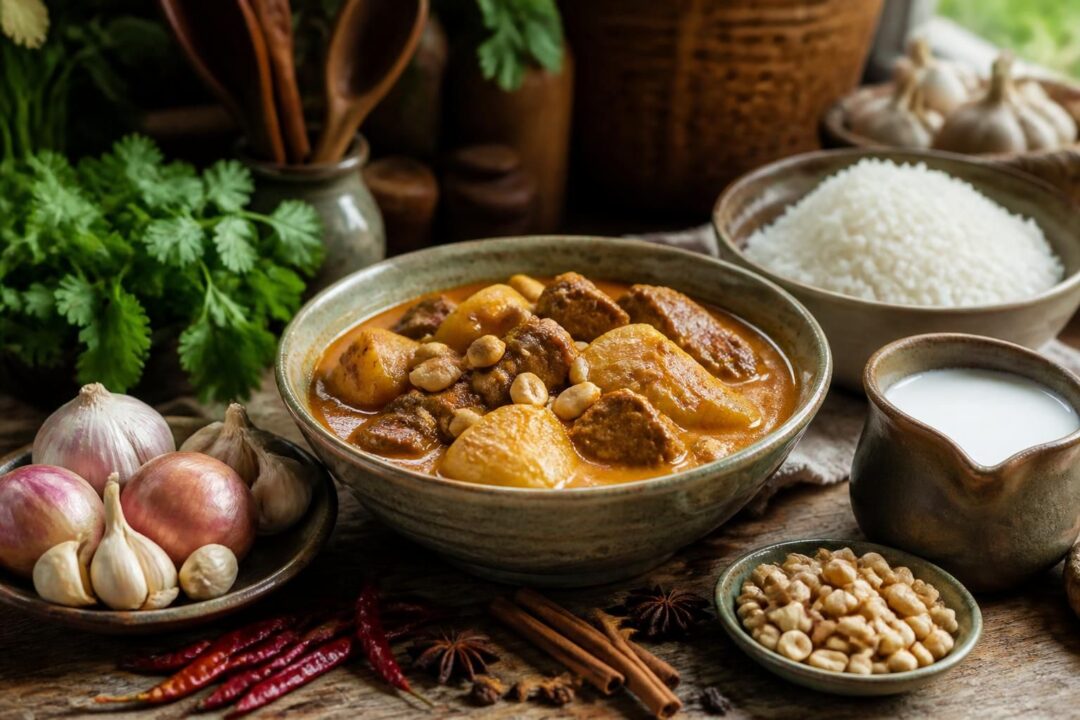
To anchor all of this in a single visual, imagine a family-style table: a deep bowl of massaman in the center, jasmine rice beside it, chopped herbs and peanuts for topping, and lime wedges for brightness. The dish feels both comforting and celebratory, proving that the richest Thai flavors can absolutely live at home—one balanced pot at a time.
What Google won't tell you
What exactly is massaman curry?
It's a mild, rich Thai curry made with coconut milk, warm spices, meat, potatoes, and peanuts. Unlike green or red curries, its heat comes from aromatics, not chilies.
How is massaman curry different from other Thai curries?
Massaman uses baking spices like cinnamon and cardamom, giving it a sweet-nutty flavor profile. It's also less spicy and more like a braised stew.
Can I make it less spicy for kids?
Massaman is already one of the mildest Thai curries. Use a paste labeled 'massaman' and control the amount; you can add less paste for even milder flavor.
What do you serve with massaman curry?
Steamed jasmine rice is classic. You can also serve it with rice noodles or crusty bread to soak up the sauce. Some people add a side of pickled vegetables.
A question we missed? Ask it in the comments
Leave a comment
Hi, I’m Landon Brooks. I am the editor-in-chief of Cook and Design, but for the first decade of my working life I was actually a product designer in New York.