| Sections / What to remember | Quick wins / Key takeaways |
|---|---|
|
|
Why Pizza Dough Gets Sticky: Hydration, Flour Choice, and the Basics
Stickiness often begins at the recipe line: the percentage of water relative to flour, known as hydration, and the type of flour used. A high-hydration dough (above roughly 65–70% hydration for many home flours) will feel wet and cling to hands and surfaces. That tackiness is not a defect per se; it’s part of the texture profile that produces a light, open crumb and blistered oven spring in professional Neapolitan-style pies. But for a home cook who stretches by hand on a kitchen counter, that same wetness reads as a problem.
Flour choice complicates the story. High-protein bread flours absorb more water and develop stronger gluten than all-purpose flour, which means a 68% hydration using bread flour will handle differently than the same hydration using a low-protein, pastry-style flour. Whole-grain flours, including whole wheat or rye, absorb both water and oil differently and often make a dough feel softer after a rest. Conversely, cheap or old flour can behave unpredictably and produce a slack, sticky dough.
Examples from an urban test kitchen: a neighborhood home cook running a weekly dinner club found that switching from a grocery all-purpose (10–11% protein) to a domestic bread flour (12.5–13.5% protein) allowed raising hydration by 4 percentage points without increased stickiness. The dough became more stretchy and less clinging after a 30‑minute bench rest. That change illustrates a core point: stickiness is relative to both water content and how much the flour can absorb and convert that water into gluten structure.
Temperature and water chemistry also matter. Warmer water makes dough feel softer during mixing and accelerates yeast activity, which can produce a slightly tacky surface sooner. Hard water mineral content changes absorption subtly and can make dough either tighter or more slack. Salt slows gluten formation slightly and tightens dough, so reducing salt will increase perceived tackiness.
Actionable basics:
- 🔬 Measure hydration—track grams of water per 100 g flour rather than eyeballing cups.
- 🌾 Match flour to hydration—use higher-protein flour for higher hydration doughs.
- 🌡️ Mind temperature—cool water slows things down and reduces early tackiness.
These fundamentals explain most sticky-dough moments and set the stage for deeper mechanical fixes like kneading and fermentation control. Key insight: stickiness is a sign, not a failure—it points to which variable needs adjustment.
How Gluten Development, Mixing and Kneading Affect Sticky Pizza Dough
Gluten is the invisible scaffold that turns wet flour into a workable dough. Under-developed gluten yields a slack, sticky mass that doesn’t hold shape. Overworked gluten can become tight and dry. The sweet spot is sufficient development to create elasticity while retaining extensibility. Mixing technique—whether by hand, stand mixer, or stretch-and-fold—controls that balance.
Mechanical action aligns protein strands; time and method determine how aligned they become. For a 65% hydration dough mixed in a stand mixer, 6–8 minutes on low-to-medium speed often produces a smooth, slightly tacky surface. The same hydration by hand may require a long bench-fold routine with intermittent rests: 10 minutes of gentle stretching, followed by a 20-minute autolyse and subsequent folds to coax gluten without adding flour.
Autolyse—mixing water and flour and resting before adding salt and yeast—reduces initial stickiness because the flour hydrates and enzymes begin breaking down proteins just enough to make them more extensible. A 20–40 minute autolyse is a simple trick that improves handling dramatically without changing hydration.
Anecdote: the fictional dinner club “Seoul & Stone” adopted a 30-minute autolyse for its house dough. That single change transformed a previously unmanageable 68% dough into a forgiving, sheetable base that could be stretched on lightly floured boards. The club used a tactile test—when the dough could hold a gentle tug without tearing and snap back slightly, gluten was sufficiently developed.
Practical diagnostics and fixes during mixing:
- 🧪 If the dough is sticky and tears easily, it is likely under-developed. Continue gentle kneading or use stretch-and-fold cycles.
- 🔧 If the dough is gluey and never becomes elastic after sufficient mixing, hydration may be too high for the flour—reduce water in the next batch by 2–4%.
- ⏱️ Use short rests: allow bench rests of 15–30 minutes between folds to let gluten relax and absorb moisture.
Below is a compact table of typical hydratings and handling notes to guide decisions during mixing. These are starting points—adjust by feel and flour behavior.
| Pizza Style 🍕 | Typical Hydration 💧 | Handling Notes 🧾 |
|---|---|---|
| Neapolitan | 65–75% 💦 | High oven temp; needs strong gluten and quick handling |
| New York / Hand-tossed | 58–65% 🧂 | Lower hydration for easy stretching and quick launch |
| Pan / Thick-crust | 55–62% 🧰 | Stiffer dough, easier to shape and less sticky |
Finishing thought: mixing and kneading are where structure meets moisture. Adjust technique before adding flour mid-knead; small changes in time and rest often fix stickiness more elegantly than rescue flour. This leads into fermentation, where time becomes an active ingredient in handling and flavor.
Fermentation, Over-Fermentation and Why Slack Dough Gets Sticky
Fermentation is metabolism: yeast and bacteria eat sugars, produce gas, and change the dough’s protein network. As fermentation progresses, the gluten network relaxes and becomes more extensible. Early on, that relaxation is desirable; later, it becomes a liability. Over-fermentation produces a slack, sticky dough that collapses and resists shaping.
Physically, over-fermented dough has weakened protein bonds. Gas pockets coalesce, the matrix loses tension, and the surface develops a tacky film. Temperature accelerates this process. In a warm kitchen—common in urban apartments—bulk fermentation that would take 3–4 hours at 70°F could finish in 90 minutes at 80°F. This can surprise a baker who used the same timing in winter and suddenly faces a gluey mass in summer.
Examples and tests: professional pizzaioli often judge readiness with a simple finger test—press lightly; the dough should slowly spring back but retain a slight impression. If it collapses and stays indented, or if it feels overly loose and wet to the touch, over-fermentation is likely. In the “Seoul & Stone” club, a February session produced sticky dough because the oven room had been heated for a previous bake; the team adjusted by moving the dough to a cooler pantry and shortening bulk time by 30% to regain handling control.
Solutions when fermentation is the culprit:
- ❄️ Cool it down—move the dough to a refrigerator for 20–60 minutes to firm the gluten network before shaping.
- ⏳ Shorten bulk time—reduce room temperature or ferment in smaller batches.
- 🧂 Adjust salt—a slightly higher salt proportion slows fermentation without changing flavor drastically; don’t overdo it.
Preventive strategies include using controlled refrigeration for slow cold fermentation (12–72 hours) which not only reduces stickiness at bench time but also develops flavor. For sourdough or levain-based bases, the same rule applies—long, cool fermentation produces a firmer dough at shaping time than a quick, warm rise.
Final insight for this section: fermentation is a timing and temperature problem disguised as stickiness. When slackness appears, consider time and temperature first; interventions like refrigeration restore workability without sacrificing the dough’s internal structure.
Peels, Launching Technique and Workspace Tactics That Prevent Sticking
Even a perfectly mixed and fermented dough can stick catastrophically at launch. The most common delivery failures stem from three non-dough factors: insufficient dusting technique, improper peel choice, and poor launching motion. Each is fixable with a little practice and the right tools.
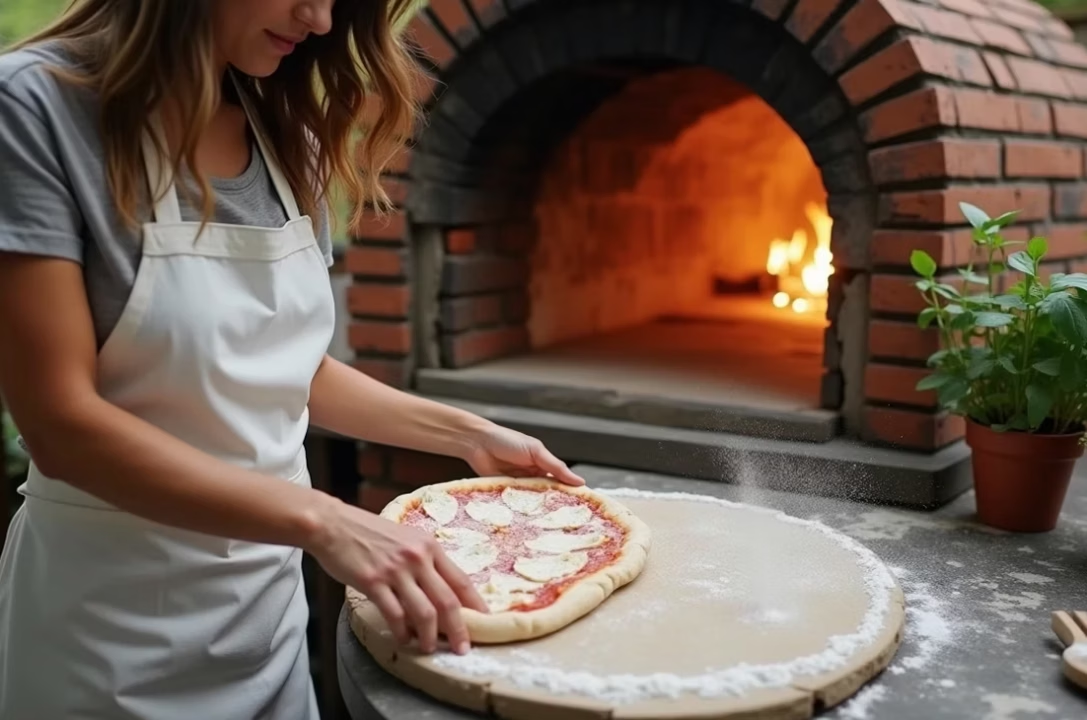
Peel material matters. For launching raw pies, a wooden peel is often preferred because it holds a thin film of flour and slides more predictably into a hot oven. Metal peels are perfect for removing baked pizzas but can adhere when launching if the dough is moist. Many home cooks use parchment paper as a one-time-release surface; it reduces sticking at the cost of slightly slower bottom browning.
Dusting is tactical, not messy. The goal is to create a dry interface between dough and peel without over-flouring the dough’s exterior. A light dust is more effective when the flour particle is coarse—semolina or fine cornmeal work as tiny ball-bearings under the dough. Flour alone can clump and cake, providing less glide. A tested ritual: place a handful of semolina or cornmeal on the peel, shake it evenly, then set the stretched dough gently on top. If the dough trembles when the peel is tapped, it is ready to launch.
Launching motion: a confident, swift slide, not a slow push, is required. Hesitation often causes sticking. For those uncomfortable with tossing, a practical two-person technique works well—one person stabilizes the peel while the other slides the peel into the oven. Workshops run by the fictional “Seoul & Stone” use a dry-run rehearsal: each attendee practices empty launches to build muscle memory before putting sauce on the dough.
Common causes at the peel and remedies:
- Surface moisture from sauces—use a thinner layer of sauce and avoid watery toppings 🍅
- Uneven dough thickness—repair tears by pinching the dough inward to seal before saucing 🩹
- Wrong peel—use a wooden peel for launching and metal for retrieval 🔄
Practice and small tool investments reduce launch failures more reliably than frantic flouring. Key idea: the launch is choreography; tune the cadence of dusting, peels, and motion, and the dough will follow.
Fast Fixes, Preventive Routines and a Checklist to Keep Dough Manageable
When sticky dough appears 15 minutes before guests arrive, practical triage matters. Quick fixes restore workability without compromising final bake quality. More importantly, routine habits prevent sticky crises from happening again.
Immediate interventions for an overly sticky dough:
- 🧊 Chill briefly—place the dough in the refrigerator for 20–40 minutes to firm gluten and slow yeast activity.
- 🧼 Wet hands—work with lightly wet hands rather than dusting heavy flour; that avoids adding too much extra flour that dries and toughens crust.
- 🧂 Pinch and fold—perform a few gentle stretch-and-folds to redistribute moisture and strengthen the surface.
Long-term prevention routines:
- 📏 Document recipes: record the exact flour brand, hydration, and room temps for reliable replication.
- 📦 Upgrade flour: use consistent, higher-protein flour if pursuing high hydration doughs.
- ♻️ Adopt cold fermentation: slow, cool fermentations make dough easier to shape and improve flavor.
- 🧰 Right tools: keep a wooden peel for launching, a metal peel for retrieval, and semolina or fine cornmeal for dusting.
A short checklist for the evening of a bake:
| Step ✅ | Action 🛠️ | Why it matters 🔎 |
|---|---|---|
| Measure | Weigh flour & water ⚖️ | Consistent hydration avoids surprise stickiness |
| Autolyse | 20–30 min rest | Improves handling without changing hydration |
| Chill if needed | 20–60 min refrigeration ❄️ | Firms dough and slows fermentation |
| Dust properly | Use semolina/cornmeal | Creates glide under the dough |
Final practical note: sticky dough is an invitation to refine process rather than a condemnation. The best solution often avoids adding more flour mid-knead, accepts a brief chill as a tactical tool, and invests in a repeatable habit—measure, rest, and match tools to the type of pizza being made. That framing keeps evenings calm and pizzas reliably beautiful.

Hi, I’m Landon Brooks. I am the editor-in-chief of Cook and Design, but for the first decade of my working life I was actually a product designer in New York.