The Juicy Delight of Corn on the Cob: Choosing Peak-Sweet Ears for Maximum Juiciness 🌽
Corn on the cob earns its “juicy delight” reputation long before any pot boils or grill heats up. The most memorable ears share a common origin story: they were picked at peak ripeness, kept cool, and cooked while their natural sugars still tasted bright and milky. That sweetness is not a poetic exaggeration—it’s a fleeting window. Once harvested, corn begins converting sugar into starch, which dulls flavor and tightens texture. The practical lesson is simple: the best cooking method can only do so much if the starting ear is tired.
Shopping for corn can feel deceptively casual—grab a few ears, toss them in a bag, call it summer. Yet the small cues matter. A bright green husk that feels slightly damp is a promising sign, like a fresh bouquet that hasn’t started to wilt. The silk (the tassel peeking from the top) should look golden to light brown and feel smooth rather than brittle. If the silk is black, mushy, or dusty-dry, the kernels underneath often lean starchy. A quick squeeze through the husk should reveal plump, evenly filled kernels with no hollow gaps or soft spots.
Sweetness starts at the market: sensory checks that actually work ✅
Many shoppers hesitate to handle produce, but corn is built for a gentle inspection. The goal is not to peel the ear completely—nobody wants a pile of discarded husks in the produce aisle. Instead, feel for firmness from top to bottom. An ear that’s full near the tip tends to cook more evenly, because there are fewer undersized kernels that can turn leathery.
A helpful mental model is to imagine corn like a summer peach: it should smell like what it is. Fresh silk can carry a faint, sweet aroma. If the ear smells grassy, bland, or vaguely fermented, it’s usually past its prime. And if the husk is pale, papery, or cracking, the ear has likely dried out—meaning less of that “juices-go-flying” bite people crave.
Pre-cook storage: protecting sugars like they’re a spice 🌬️
Once corn gets home, the fastest upgrade is temperature control. Chilling slows the sugar-to-starch shift, preserving that clean sweetness for dinner. If corn sits warm on a counter for hours, kernels often taste flatter even if they’re cooked gently. The best practice is to keep ears in the fridge, loosely wrapped, and cook them as close to mealtime as possible.
farm stands and markets vary widely in how they handle corn. Ears piled in the sun are an instant red flag. Corn held on ice or in coolers signals a vendor who understands the clock is ticking. Many passionate home cooks even bring a cooler for transport—an easy move that feels extra until the first buttery bite proves it wasn’t.
With the best ears selected and sugars protected, the next question becomes method: which technique reliably delivers tender, juicy kernels without fuss? That’s where the stovetop takes the spotlight.
Boiling Corn on the Cob for Maximum Juiciness: The Off-Heat 10-Minute Method 🔥💧
When cooks debate the best corn on the cob method, the conversation often drifts toward smoky char and grill marks. Those are delicious, but juiciness plays by different rules. In many kitchen tests and side-by-side tastings, boiling frequently wins on plumpness and tenderness, especially when the cook avoids a common mistake: leaving corn at a hard boil until it turns waterlogged or tough.
A more elegant approach uses boiling water as a heat reservoir rather than a rolling punishment. The method is straightforward: bring a large pot of water to a full boil, add shucked ears, cover, then turn off the heat and let the corn sit undisturbed for about 10 minutes. The residual heat cooks kernels gently and evenly, preserving that crisp-sweet snap while keeping the interior juicy. It’s the kind of technique that feels like a family secret—simple, calm, and consistently right.
Why the off-heat technique works (and why it tastes sweeter) 🌽
Boiling water sits at a stable temperature, so kernels cook quickly without requiring prolonged exposure. The moment heat is cut, the pot becomes a controlled environment: hot enough to cook, not so aggressive that the kernels burst or shrivel. This balance matters because corn’s charm is a mix of milkiness, snap, and sheen. Overcooking dulls that by breaking down cell walls too far.
There’s also a practical advantage at busy gatherings. The corn can stand in the hot water a bit longer—another 10 minutes is often fine—without turning mushy. That flexibility helps when burgers need flipping, salads need tossing, or guests arrive late.
Ingredients and water ratio: scaling without guesswork 🧂
At its most classic, corn on the cob needs only corn, water, and seasoning at the end. For the pot, using about 1 quart of water per ear gives enough volume to maintain heat when the corn is added. A crowded pot cools too quickly, extending cook time and increasing the chance of uneven texture. For a big cookout, splitting batches across two pots is smarter than cramming everything into one.
Some recipes suggest salting or sugaring the water. In this quick-cook method, those additions rarely penetrate deeply enough to matter. Salt shines best on the surface afterward, where it can cling to butter and hit the palate immediately.
Step-by-step: a calm, repeatable routine 🍽️
- Bring a large pot of water to a full rolling boil. 💨
- Add shucked ears, cover the pot, then turn off the heat. 🔥➡️🛑
- Let corn sit for 10 minutes without stirring or peeking. ⏲️
- Lift ears with tongs or drain carefully. 🥄
- Finish with butter and salt, or dress it up with bolder toppings. 🧈🧂
Shucking deserves a quick note. Hand-shucking can be satisfying—corn fights back a little, and that tactile connection makes the ingredient feel real. For easier prep, a microwave trick can loosen husk and silk with minimal effort; afterward, a brush or gloved fingers help remove stubborn strands. The key is getting the ear clean so every bite feels silky in the best way.
This off-heat boil method is the dependable baseline—the one that makes corn taste like it was harvested minutes ago. Next comes creativity: toppings, transformations, and flavor pathways that turn a simple cob into a signature side.
Once the kernels come out glossy and hot, the finishing choices decide whether corn stays classic or becomes the loudest dish on the table.
Creative Corn on the Cob Toppings: Compound Butter, Herbs, Elote & Esquites 🌶️🧈
Perfectly cooked corn is already sweet and juicy, but the real fun begins when it’s dressed. Toppings are not mere decoration—they’re a way to steer corn into different cuisines and moods. A simple butter-and-salt finish reads like a picnic staple; a chili-lime coating makes it feel like a street snack; shaved herbs and citrus zest turn it into something dinner-party ready. The best approach is to treat the cob as a warm, absorbent canvas and choose flavors that either contrast the sweetness or echo it.
Butter is the first lever. Regular butter is comforting, but compound butter turns corn into a signature. The fat carries aroma, clings to the kernels, and helps seasonings stick. A garlic-chive blend brings savory punch; cilantro-lime lifts sweetness with brightness; lemon-garlic adds a clean edge that pairs beautifully with seafood or grilled chicken. The trick is balance: corn is delicate, so heavy-handed spice can overwhelm. A well-made compound butter tastes bold in the bowl yet restrained once melted across the cob.
Build a “butter flight” for gatherings 🎉
A memorable cookout move is setting out two or three butters and letting guests choose. It also solves the common problem of topping fatigue—after the second ear, the same flavor can feel repetitive. A butter flight keeps the table lively while staying simple to execute.
- 🧄 Garlic-Lemon Butter: bright, savory, and perfect with grilled meats.
- 🌿 Chive Butter: gentle onion notes that make corn taste extra “corny” in the best way.
- 🍋 Cilantro-Lime Butter: fresh and zesty, ideal alongside spicy mains.
- 🌶️ Smoked Chili Butter: a warm, campfire-style finish without needing a grill.
Fresh herbs add a second layer. Sprinkling minced basil, chives, or cilantro over melted butter creates a garden-fresh aroma as heat releases their oils. Herbs also improve texture: tiny green flecks break up the monotony of yellow kernels and make each bite feel intentional. For an even cleaner look, herb leaves can be torn rather than chopped, especially basil, which bruises easily.
Elote: Mexican street corn energy with restaurant-style payoff 🌽🇲🇽
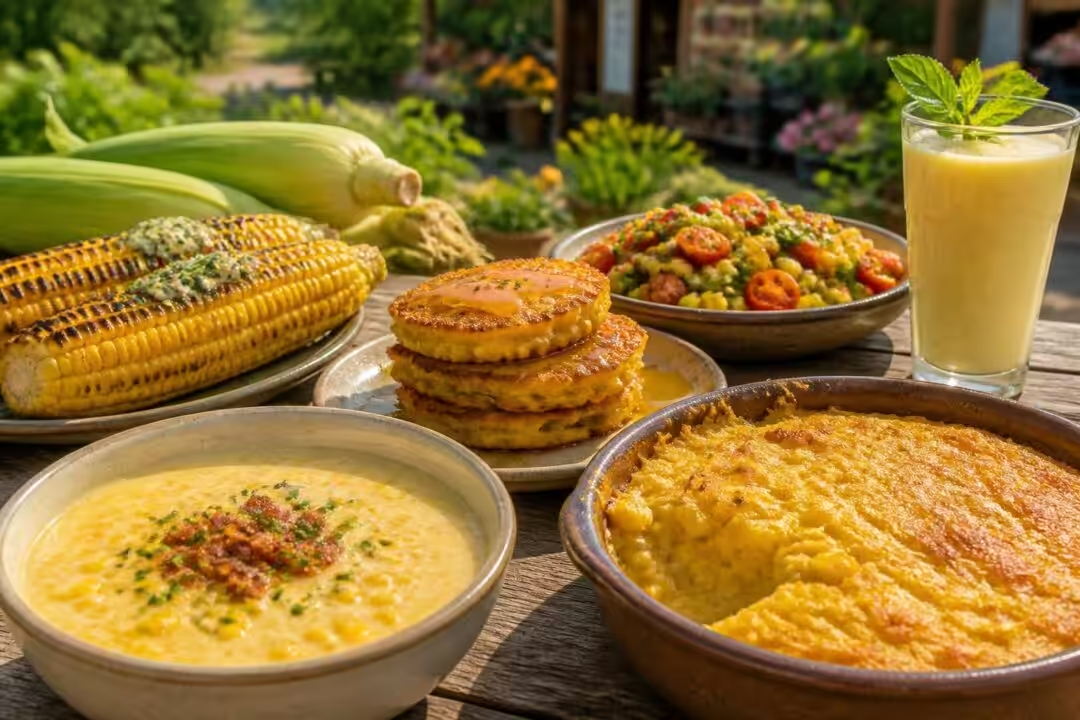
Elote is one of the most crowd-pleasing upgrades because it hits multiple taste notes at once: creamy, tangy, salty, spicy, and bright. A mixture of mayonnaise and sour cream (or crema) spreads easily over hot corn, forming a sticky base that grabs toppings. Cotija adds salty crumble, chili powder adds warmth, and lime juice snaps everything into focus. The result feels indulgent yet refreshing—exactly what summer food should be.
For cleaner eating, skewers can turn elote into a handheld appetizer. For bolder flavor, a touch of grated garlic can be stirred into the creamy spread. And for guests wary of heat, chili can be offered on the side so the corn still sings without scaring anyone away.
Esquites: all the elote flavor, no messy cob 🥣
Esquites takes the same flavor logic and makes it bowl-friendly by cutting kernels off the cob. That change isn’t just about convenience; it changes the eating experience. The creamy mixture coats each kernel more evenly, and add-ins like diced jalapeño, scallions, or roasted peppers integrate naturally. Esquites can serve as a side dish, a topping for tacos, or the star of a picnic bowl alongside chips.
One smart entertaining tactic is offering both forms: cobs for traditionalists and esquites for guests who prefer a fork. Either way, the message is the same: corn doesn’t have to be plain to be pure. The next step is matching cooking method to mood—because sometimes the table wants smoky char, and other times it wants the gentlest possible tenderness.
With toppings in mind, the method can be chosen strategically—grill for aroma, oven for caramel edges, or stovetop for maximum juiciness when timing is tight.
Best Ways to Cook Corn on the Cob: Boil vs Grill vs Microwave vs Roast (2026 Kitchen Reality Check) 🍳
Cooking corn on the cob is less about finding one “perfect” method and more about choosing the right tool for the desired result. In many comparative tastings, boiling tends to deliver the juiciest, most tender kernels, while grilling scores high for smoky aroma and char. Microwaving wins for speed and minimal cleanup, and roasting excels at caramelized edges—especially when cooked in the husk. In a modern 2026 kitchen, where weeknights are busy and outdoor grills aren’t always available, understanding these tradeoffs makes corn an anytime side instead of a once-a-summer event.
A helpful way to decide is to think in priorities: Do diners want maximum juiciness? Do they crave char and smoke? Is the cook juggling multiple dishes with limited burners? Each method answers a different need, and none should be treated as a second-class option when used intentionally.
Comparison table: method, timing, texture, and best use 🧭
| Method 🍽️ | Typical Time ⏱️ | Texture Result 🌽 | Best For 🎯 |
|---|---|---|---|
| Off-heat boiling 💧 | ~10 min steep | Plump, tender, very juicy | Reliable sweetness; feeding a crowd without drying out |
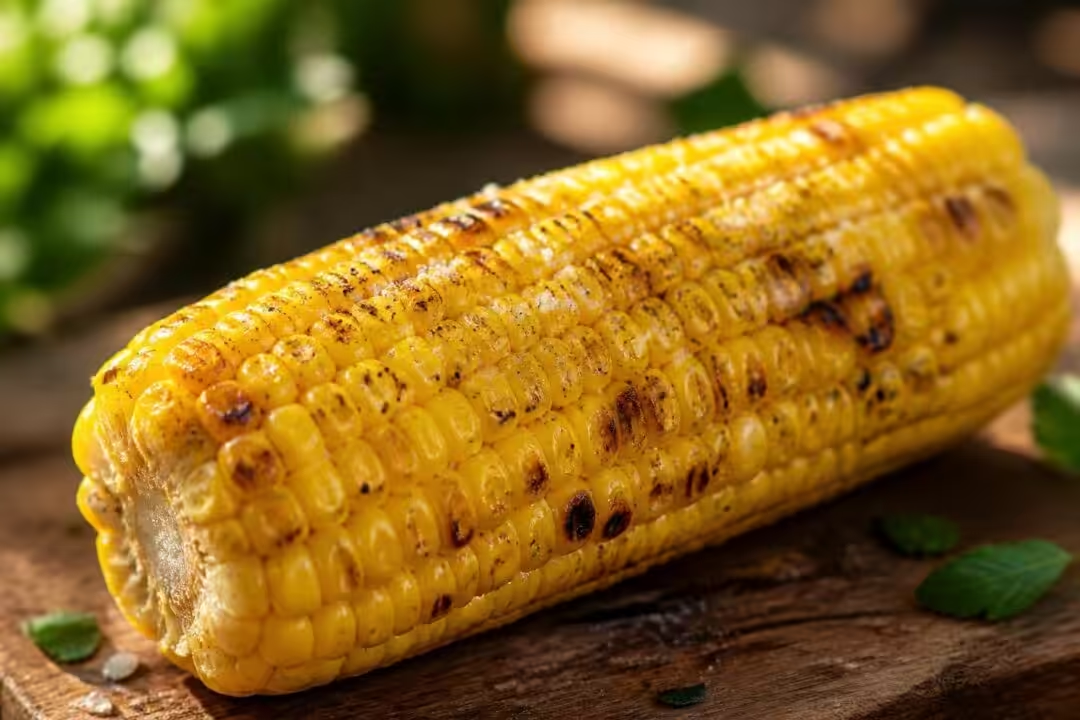
| Grilling (direct) 🔥 | 10–15 min | Snappy kernels with char notes | BBQs; pairing with ribs, burgers, or spicy marinades |
| Grilling in husk 🌿 | 15–20 min | Steamy, aromatic, lightly smoky | Char without harsh dryness; less mess on kernels |
| Microwave ⚡ | 3–6 min | Moist, sweet, slightly softer bite | Fast meals; small batches; minimal equipment |
| Roasting (often in husk) 🧡 | 25–35 min | Juicy with caramelized notes | “Mom-style” husk-roast vibe; deeper flavor without a grill |
| Steaming ♨️ | 8–12 min | Tender, clean flavor | Gentle cooking; when pot size is limited |
| Air-frying 🌪️ | 10–15 min | Toasty edges, slightly drier | Small spaces; quick roasted effect |
| Slow-cooking 🕰️ | 2–3 hours | Soft, infused | Hands-off parties; holding warm for long windows |
Notice how the “juiciness crown” often sits with boiling, especially when the corn isn’t punished by constant heat. That aligns with what many cooks discover after trying multiple approaches: the simplest technique can deliver the most crowd-pleasing bite.
Roasting in the husk: a sweet spot between steam and char 🍂
Keeping husks on while roasting creates a protective jacket. The outer leaves can darken and char, but the kernels inside cook in their own moist environment, picking up a gentle toasted aroma. This is one reason husk-roasted corn is frequently described as surprisingly juicy and caramel-kissed. It’s also forgiving—ideal when the cook wants to set a timer and focus elsewhere.
Microwaving: the weeknight hero with a few rules ⚡
Microwaving corn can be remarkably effective, especially for one or two ears. It’s fast, and it can even help with shucking by loosening silk. The main caution is uneven heating: rotating midway (or letting the ear rest briefly) prevents hot spots that overcook sections. Finishing with butter and salt is non-negotiable; the method is efficient, but the finishing touch is what makes it feel luxurious.
With methods mapped, the final layer is how corn fits into a full meal: what to serve with it, how to prep ahead, and how to store leftovers without losing that juicy magic.
Serving, Pairing, and Storing Corn on the Cob: Make It a Summer Main Character 🧺🌽
Corn on the cob has an unusual talent: it can play backup as a side dish or steal the scene like a headline act. The difference is in how it’s paired and presented. A platter of hot corn with a few finishing options—butter, flaky salt, herbs, lime wedges—invites guests to customize without creating chaos. And because corn is cooked on the stovetop in many homes, the grill remains free for mains, which helps the entire meal land at the same moment.
Pairing corn is easiest when thinking in contrasts. Sweet kernels love salty, smoky, and spicy flavors. They also love creamy elements that echo their natural milkiness. That’s why corn fits so naturally alongside barbecue, but it also shines with seafood, vegetarian grills, and bright summer salads.
What to serve with corn on the cob (and why it works) 🍽️
For a classic cookout, corn pairs effortlessly with burgers, ribs, or barbecue chicken. The char and spice of grilled proteins make corn taste even sweeter. On a vegetarian table, corn can flank veggie burgers or grilled portobello mushrooms, adding a sunny, familiar comfort that balances earthy flavors.
Sides matter too. Corn is juicy and sweet, so pairing it with something tangy or hearty rounds out the plate. Pasta salad brings chew and acidity if dressed with vinegar or lemon. Baked beans add depth and a saucy contrast. For something modern and elegant, grilled nectarines with burrata and a drizzle of honey mirror corn’s sweetness while adding creamy richness and fruit perfume.
Make-ahead strategy: timing without sacrificing juiciness ⏳
Corn tastes best when cooked close to serving, while kernels are still warm and glossy. That said, real life rarely runs on perfect timing. The off-heat boiling method offers a built-in buffer: the corn can rest in the hot water a little longer without overcooking, buying time for the rest of dinner to catch up.
For gatherings, a smart approach is to prep toppings and sides in advance, then cook corn last. Compound butters can be made earlier in the day and chilled. Elote components (cotija, chili powder, chopped herbs, lime wedges) can be set out like a topping bar. When corn comes out, it becomes an interactive moment instead of a rushed chore.
Storage and leftovers: keeping kernels tender for days 🧊
Leftover corn can stay delicious if stored properly. Let cobs cool to room temperature, then place them in an airtight container and refrigerate. They hold well for up to four days. Reheating gently is key—steaming briefly or warming with a splash of water helps restore moisture. If kernels are removed from the cob, they’re easy to fold into salads, salsas, or a quick esquites-style bowl with mayo, lime, chili, and cheese.
One particularly soulful trick is simmering cobs with milk, a Southern-inspired method that leans into corn’s natural sweetness and creates an even more tender bite. It’s not an everyday move, but it’s the kind of kitchen tradition that turns an ordinary weeknight into something remembered.
The most satisfying corn on the cob meals share a pattern: excellent ears, a method chosen with intention, and finishing flavors that respect corn’s sweetness while adding personality. That combination is what makes the “juicy delight” feel inevitable every single time.

Hi, I’m Landon Brooks. I am the editor-in-chief of Cook and Design, but for the first decade of my working life I was actually a product designer in New York.