
| Sections / What to remember | Quick wins |
|---|---|
|
|
How long to grill tuna steaks — timing, doneness, and the nutrient trade-offs
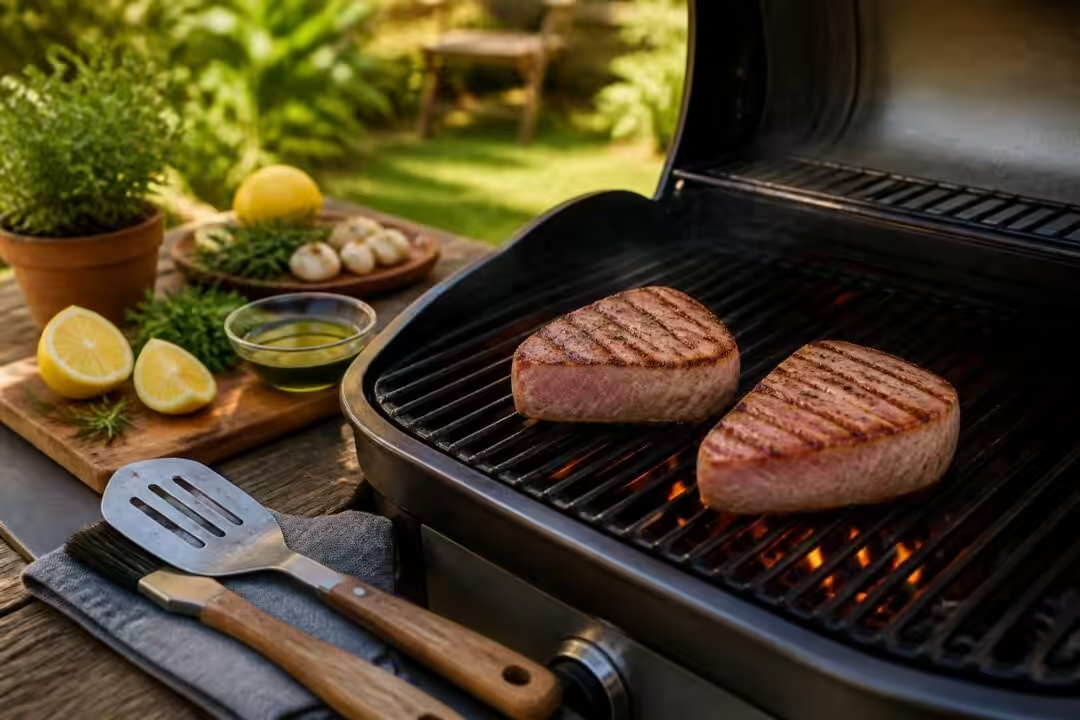
Tuna is a dense, low-moisture fish with high myoglobin and a texture closer to a beef steak than to flaky white fish. That structure means heat moves differently through the flesh, making short, intense grilling the preferred approach for both texture and nutrient retention. For home cooks aiming to preserve long-chain omega-3s (EPA and DHA) while achieving a satisfying sear, the practical benchmark is 2–3 minutes per side on a preheated grill at 400–450°F (204–232°C). This yields an internal temperature near 115–125°F (46–52°C), classically described as medium-rare.
From a biochemical perspective, prolonged exposure to high heat accelerates lipid oxidation and degrades heat-sensitive nutrients. Short cooks lock in omega-3s and limit formation of lipid oxidation byproducts such as malondialdehyde. For example, an overcook of 1.5 minutes on a typical 6-oz steak can reduce DHA by around 20% and raise oxidation markers several-fold. Those numbers make timing more than a culinary nicety — they are material to the nutritional value of the meal.
Thermal targets and safety considerations
Food-safety guidance differentiates vulnerable diners from the general population. For healthy adults eating properly handled tuna, the 115–125°F window is widely accepted for steak-style tuna for its balance of safety and nutrient conservation. However, immune-compromised guests should be served fish cooked to the FDA-recommended internal temperature of 145°F. When sourcing tuna, prioritize suppliers who can confirm harvest and handling timelines; this reduces parasitic and histamine risks and supports safely consuming less-cooked centers.
Doneness cues remain valuable when a thermometer isn’t available. Visual signs for medium-rare include a deeply seared exterior with a translucent pink center and an opaque band starting to appear around the edges. Tactile cues—slight resistance under fingertip—complement color. Yet visual and tactile methods are subjective; an instant-read thermometer provides repeatability, especially for cooks testing new grills, variable thicknesses, or high-stakes dinner guests.
Key takeaway: manage total thermal exposure. For a 1-inch (2.5 cm) steak, aim for 2–3 minutes per side. Thinner steaks need under 90–120 seconds per side; thicker steaks require brief searing and an indirect finish. This approach preserves omega-3s, controls oxidation, and delivers the pleasing silkiness associated with “tuna steak” in modern American kitchens.
How long to grill tuna steaks on a gas grill: technique, step-by-step timing, and common errors
Gas grills are favored for tuna because they heat quickly and offer consistent temperature control. For cooks who prize visual results and reliable timing, gas grills make it easier to hit the 400–450°F (204–232°C) sweet spot. The basic routine is: preheat until grates are very hot, pat the steaks dry, lightly oil the surface, place on the hot zone, sear without pressing, flip once, and rest briefly.
Step-by-step timing for 1-inch steaks
Preheat the grill for 10–15 minutes, then use an infrared thermometer or trust the calibrated burners to reach 400–450°F. Thicken a one-inch steak should generally be grilled for 2–3 minutes per side. For a rare result, reduce to around 1.5–2 minutes per side. A single flip preserves the seared crust and minimizes juices lost to repeated handling.
Practical examples help translate this into practice. With a mid-tier gas grill that runs a little hot along one burner, move steaks from direct heat to indirect heat after a 90–120 second sear on each side. This two-zone approach protects the core from overshooting desired temperature while still producing a deep crust. Thin steaks (0.5–0.75 inch) will only need about 60–90 seconds per side on high heat.
Common grilling errors and how timing fixes them
One frequent issue is over-reliance on time alone. Timing-only methods are simple but sensitive to variations in steak thickness, grill calibration, and ambient conditions. A more robust practice combines timed searing with an instant-read thermometer to confirm an internal temperature in the 115–125°F range for medium-rare. Another mistake is applying salt too early; salt draws moisture and can cause premature oxidation and a dry surface. Salt just before or after grilling instead.
Use oils with high smoke points — avocado or grapeseed — to lubricate the surface without burning. Avoid pressing steaks with a spatula; that action forces out juices rich in taurine, selenium, and omega-3s. Finally, allow steaks to rest for about two minutes: within that window the residual heat evens out the gradient, creating better sliceability and mouthfeel.
Insight final: on a gas grill, precision is the design advantage — a predictable 2–3 minute per side routine, backed by a thermometer and simple two-zone tactics, yields the best combination of texture and nutrient retention.
How long to grill tuna steaks: choosing, thawing, and prepping sushi-grade tuna for best results
selecting the right raw material matters as much as timing. Sushi-grade labeling isn’t standardized, but good vendors track harvest date, freezing protocol, species, and storage temperatures. For frequent consumption, choose species with lower methylmercury risk such as skipjack or yellowfin rather than bigeye or bluefin. Typical retail ranges in 2026 keep fresh sushi-grade loin between about $14–$26 per pound for skipjack and yellowfin, offering a practical trade-off between cost and nutrient density.
Inspection and thawing protocol
Look for a firm texture, bright red or pink color, and a clean ocean scent. A slimy surface, dull gray tone, or ammonia-like odor indicates deterioration and should be avoided. If using frozen steaks, thaw them overnight in the refrigerator (never at room temperature) and pat dry thoroughly before grilling. Surface moisture will steam on contact with hot grates, delaying the Maillard reaction and increasing histamine formation risk.
Pre-grill conditioning matters: steaks should be refrigerated to 34–38°F (1–3°C) until 15–20 minutes before placing on the grill. Chilling immediately before a short, high-heat sear can help form a crust while limiting core temperature rise — a technique that benefits texture and nutrient preservation when executed correctly.
Thickness, trimming, and seasoning choices
Measure the thickest point; steaks in the 0.75–1.25 inch (1.9–3.2 cm) range respond predictably to standard timing charts. Trim ragged edges and any discolored areas. Seasoning should be restrained: light oil then a brief sprinkle of salt and pepper just before grilling. Acidic marinades should be short (under 30 minutes) or avoided; prolonged acid exposure denatures surface proteins and can make the flesh mushy.
- 🔪 Thickness check: 0.75″ → 1.5–2 min/side; 1.0″ → 2–2.5 min/side; 1.25″ → 2.5–3 min/side
- ❄️ Thawing: overnight in fridge, pat dry
- 🧂 Seasoning: oil + salting immediately before grilling
- 🐟 Sourcing: prefer skipjack/yellowfin for weekly consumption
Final insight: attention to sourcing, thawing, and thickness measurement reduces the need for corrective tricks mid-grill and preserves both flavor and the nutritional qualities that make tuna an appealing protein choice.
How long to grill tuna steaks vs other methods: poaching, pan-searing, and raw preparations — pros, cons, and timing charts
Grilling is one among several valid ways to cook tuna, and the method chosen shapes outcomes around flavor intensity, nutrient retention, and convenience. Each method demands different timing logic and trade-offs. The following discussion compares grilling with pan-searing, poaching, and raw preparations like tataki or sashimi to help select the right technique for the occasion.
Comparative timing and rationale
Grilling at 400–450°F for 2–3 minutes per side balances crust formation and internal translucence. Pan-searing offers greater heat transfer uniformity and often needs only 90 seconds per side on very hot cast iron, but it uses more oil. Poaching at 140°F in gently circulating water for 8–10 minutes maximizes EPA/DHA stability and is the safest option for histamine-sensitive diners. Raw preparations preserve virtually all heat-labile nutrients but demand strict sourcing, freezing, and handling per FDA guidelines if parasites are a concern.
For cooks seeking the highest omega-3 retention with a mild texture, poaching will outperform grilling in preserving labile lipids, albeit at the cost of the charred flavor many associate with grilled fish. Conversely, grilling produces Maillard-derived melanoidins that can contribute antioxidant effects and complex flavor compounds — an attractive quality for many palates.
| Method 🍽️ | Best For ⭐ | Timing ⏱️ | Trade-off ⚖️ |
|---|---|---|---|
| Grilling | Flavor intensity, weeknight speed | 2–3 min/side | Good omega-3 retention; risk of surface charring if not watched |
| Pan-searing | Rapid crust, indoors | 90–120 sec/side | More oil; very fast cook |
| Poaching | Maximal nutrient preservation | 8–10 min @140°F | Milder flavor; softer texture |
| Raw / Tataki | Full nutrient retention | None (prep & sear edge for tataki) | Requires strict sourcing & freezing protocols |
Insight final: match technique to priority. For weeknight balance, grilling hits the sweet spot. For maximal nutrient preservation, poaching or raw service is superior, provided sourcing and safety checks are met.
How long to grill tuna steaks: troubleshooting, maintenance, costs, serving suggestions and a cook’s narrative
Real kitchens present real variables. To illustrate, follow Mina, a design-conscious home cook in Portland who prepares tuna twice monthly for friends and her running club. Mina’s priorities are texture, appearance, and a predictable routine that supports a weekly menu. Her decisions — from buying skipjack at the local fishmonger to investing in a <$25 instant-read thermometer — shaped consistent outcomes and reduced food waste.
Troubleshooting common issues
Problem: dry, gray interior. Cause: overcooking beyond 3–4 minutes total or steaks left to sit pre-grill causing surface moisture. Fix: measure thickness, use short sears, and rest steaks 2 minutes. Problem: metallic aftertaste. Cause: poor storage or corroded grates. Fix: buy from reputable source and clean grates; avoid reactive foil with citrus. Problem: sticking. Cause: dirty or improperly oiled grate or wet surface. Fix: preheat grates, pat dry, brush with high-smoke-point oil just before grilling.
Maintenance and safety are small efforts with outsized returns. Clean grates after every cook, avoid worn wire brushes that can shed bristles, and store leftovers at ≤38°F for no more than 24 hours. For social gatherings, verify local public-health guidance if serving undercooked fish to ensure compliance with group-safety expectations.
Cost analysis and serving ideas
Investing in a simple thermometer ($12–$25) quickly pays back in consistent results. Fresh sushi-grade tuna pricing encourages substitution choices: skipjack and yellowfin at $14–$26/lb are accessible for regular use, while premium species like bluefin command much higher prices and higher methylmercury exposure. For presentation, slice steaks thin against the grain and arrange on matte ceramic plates with bright accents: citrus segments, sesame-kimchi slaw, or a quick-cucumber-and-gochujang vinaigrette reflect Cook and Design’s Korean-modern aesthetic.
- 🍋 Serve idea: thinly sliced tuna over a citrusy salad with sesame oil and shiso
- 🥗 Weeknight: tuna tucked into a bowl with brown rice, pickled veg, and a soft yolk
- 🔥 Entertaining: seared tuna can sit on a communal board with dipping sauces — advise guests on doneness
Mina’s insight: modest investments in tools and a disciplined routine around sourcing, thickness measurement, and a single-flip grilling habit produced reliably elegant plates that look intentional and taste balanced. Final insight: controlling the variables before the fire — quality, thickness, dry surface, and a thermometer — removes guesswork and preserves both flavor and the nutritional value that makes tuna a smart, design-forward staple.

Hi, I’m Landon Brooks. I am the editor-in-chief of Cook and Design, but for the first decade of my working life I was actually a product designer in New York.
2 Comments
Grill’s like a circuit—too much heat and you fry the good stuff. Pull at 120, let it rest.
Interesting how the myoglobin structure mirrors heat diffusion in metals — short bursts preserve both texture and omega-3s. Nice data on DHA loss.
Les commentaires sont fermes.