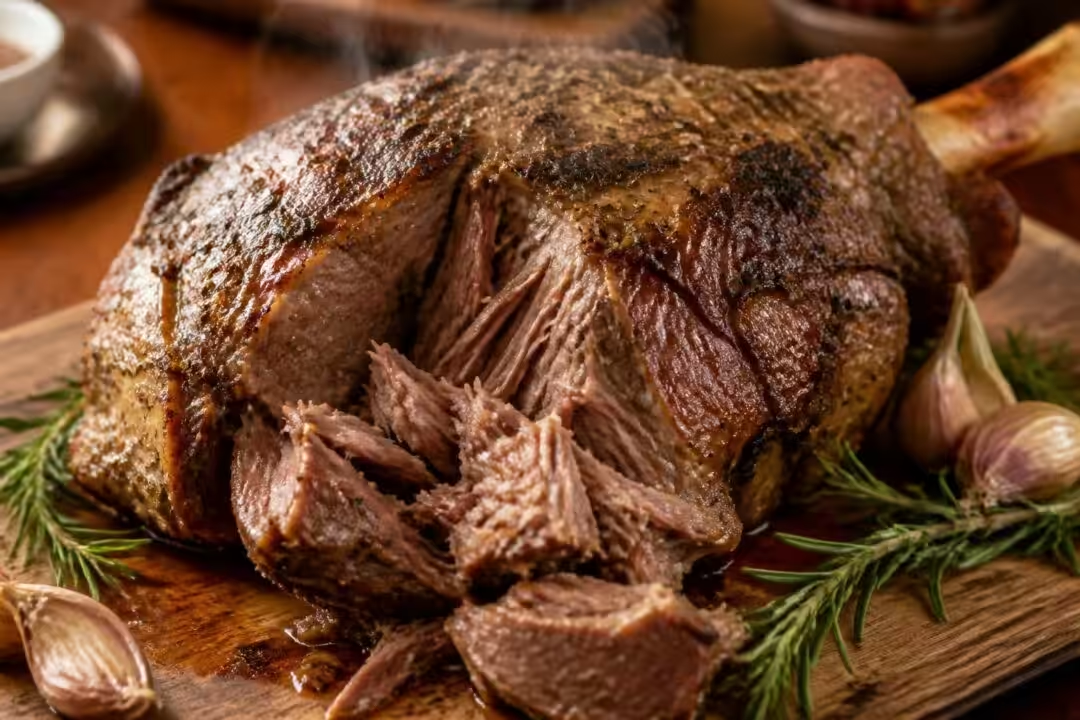
Slow Cooked Lamb Leg Roast: Choosing the Right Cut for Fall-Apart Tender Results
Slow cooked lamb earns its “fall-apart” reputation long before any seasoning is discussed. It starts at the butcher counter, with a cut that can handle long heat without turning stringy. The classic choice is a bone-in leg of lamb, because the bone helps buffer heat and contributes a deeper roasted character to the juices. A boneless leg works beautifully too, especially when space is tight in a round slow cooker, but it benefits from being tied (or already netted) so it cooks evenly and holds a neat shape.
A practical detail often overlooked: many supermarket legs have the shank end partially cut so it can bend, which makes fitting a full leg into a standard round cooker much easier. That small butchery trick can be the difference between a relaxed Sunday plan and an awkward wrestling match with the lid. If the slow cooker is compact, a half leg (often sold without the long shank) slips in with no drama and still delivers the same melting texture.
Weight and time need to match. A bone-in leg around 2 kg / 4 lb is a sweet spot for many home slow cookers. Smaller legs (around 1–1.25 kg / 2–2.5 lb) can finish sooner, while larger roasts may need extra hours to soften fully. In a 2026 kitchen where schedules run packed and appliances are often set-and-forget, it’s tempting to push heat higher for speed; yet the most luxurious results come from low temperature over more hours because collagen has time to dissolve into silky gelatin.
To keep this article grounded, a simple recurring scene helps: a fictional neighborhood supper club called Harbor Table that rotates hosts each month. When it’s lamb night, the host chooses a cut based on two things—guest count and carving style. If the goal is dramatic, sliceable pieces, a higher internal finish temperature is avoided. If the goal is a relaxed, help-yourself platter, the lamb is cooked until it can be pulled with tongs, then served in juicy chunks with gravy on the side. Which is more modern and friendly: formal carving or a communal platter that invites everyone to dive in? 😋
Bone-In vs Boneless Leg: What Changes in the Slow Cooker
Bone-in tends to feel more “traditional roast,” especially when finished under high heat for browning. The bone also provides a natural guide if slicing is desired, though truly slow-cooked legs are often too tender for perfect slices and prefer to be pulled apart. Boneless is easier to portion and can cook a touch faster due to its shape, but it’s wise to ensure it’s compact and tied so the thick and thin ends don’t overcook unevenly.
At Harbor Table, one host once chose a boneless leg for convenience, then regretted skipping the tying step. The outer layers became shreddable while the center lagged behind. The fix was simple: tie next time, and place thicker sections lower in the cooker where heat is more consistent.
Size, Cooker Shape, and a Quick Fit Test
Round cookers are common, and legs can fit if the shank bends. Oval cookers are even easier for long cuts, making full-size legs realistic. A quick fit test is worth doing before seasoning: place the lamb in the crock (cold, unwrapped) and confirm the lid closes properly. If not, a half leg is not a compromise—it’s a streamlined path to the same tenderness.
The next step is where flavor turns from “nice” to “memorable”: a seasoning strategy that holds up through hours of gentle heat. That’s where herbs, garlic, and the right liquid enter the story.
Slow Cooker Roast Lamb Seasoning: Garlic, Rosemary, Thyme, Salt, Pepper, and Smart Flavor Layers
Slow cooking amplifies certain flavors while muting others. That’s why lamb seasoning needs to be clear, structured, and built for endurance. The classic backbone—garlic, rosemary or thyme, salt, black pepper, and olive oil—isn’t popular by accident. Garlic sweetens as it cooks; rosemary and thyme remain fragrant; salt penetrates deeply over time; pepper rounds out richness without turning harsh.
Instead of complicated marinades, a practical approach is a quick rub. The lamb is patted dry, then seasoned generously with salt and pepper, followed by minced garlic and dried thyme or rosemary (or finely chopped fresh herbs). A drizzle of olive oil helps everything adhere and encourages better browning during the finishing step. The beauty is that it takes minutes, yet it tastes like planning happened days in advance.
Why Dried Herbs Can Beat Fresh in Long Cooking
Fresh rosemary is fantastic, but it can darken and turn woody if left pressed against meat for many hours. Dried thyme or dried rosemary (used in sensible quantities) stays more stable and disperses evenly. Fresh herbs can still play a role: a single sprig of rosemary in the cooking liquid perfumes the juices without turning bitter. That small detail often separates “tastes like lamb” from “tastes like a roast worth talking about” 🌿.
At Harbor Table, one host tried stuffing the lamb with large rosemary branches. The flavor was intense, but slightly resinous. The following month, the host used a lighter hand—dried thyme in the rub and one rosemary sprig in the liquid—and guests described it as “cleaner” and “more balanced.” The difference wasn’t the herb choice alone; it was how the herb met heat for hours.
The Liquid Question: Water, Broth, or Wine?
A slow cooker needs some liquid to prevent scorching and to create juices for gravy. Water works, but it’s a missed opportunity. Beef stock produces a darker, more robust gravy; chicken stock gives a lighter color and a gentler background. There’s also a subtle culinary truth: pure lamb juices can become intensely “lamby.” Mixing in broth smooths the edges and makes the final sauce more universally appealing—even to guests who claim they’re “not sure about lamb.”
Wine can be added, but moderation is key in long cooking; too much can turn sharp. A balanced move is using broth as the main liquid and saving wine for a finishing splash in the gravy if desired.
One List That Prevents Bland Lamb (and Over-Seasoning)
- 🧄 Salt early: it penetrates over time and seasons beyond the surface.
- 🌿 Choose one hero herb (rosemary or thyme) and keep the second as support.
- 🫒 Use a little oil in the rub to carry flavor and help browning later.
- 🥣 Add broth, not just water, so the cooking juices become gravy-ready.
- 🔥 Plan a finishing blast of heat for color and roast-style aroma.
With the lamb seasoned and the liquid chosen, the method becomes almost effortless. The only remaining challenge is timing and temperature—knowing when “done” means sliceable versus truly pull-apart. That’s where the slow cooker earns its reputation.
For a visual walkthrough of slow cooker lamb techniques and timing cues, this search is a helpful starting point.
Once timing is mastered, the focus shifts naturally to texture management: preventing dryness, ensuring connective tissue breaks down, and deciding exactly when to pull the roast from the crock.
How to Slow Cook Lamb Leg Until Fall-Apart: Low vs High Heat, Timing by Weight, and Texture Cues
fall-apart lamb is not about reaching a single magic hour; it’s about letting time do what knives can’t. Tough connective tissues soften gradually, transforming into gelatin that makes meat feel plush and moist. That transformation happens best at gentle heat. Cooking on LOW for a longer stretch tends to yield the most luscious texture, while HIGH can work when time is limited but gives a narrower window between “tender” and “starting to dry at the edges.”
A common strategy for a mid-size leg is 7–10 hours on LOW. Larger roasts can push longer, while smaller ones may finish sooner. Instead of obsessing over a clock, use a cue that never lies: the lamb should be tender enough to pull away with tongs yet still mostly hold together when lifted carefully. That “just holding” stage is ideal if a roast-like presentation is desired before finishing in the oven.
Internal Temperature: Sliceable vs Shreddable Targets
Temperature is useful if the goal is consistent results across different cooker models. For lamb that can be carved into neat slices, cooks often aim around 135–145°F (medium-rare to medium). But that is not the fall-apart style. For shreddable lamb, it’s more aligned with the braise world: closer to 195°F, where collagen has truly surrendered. 🌡️
At Harbor Table, the host who prefers a buffet-style platter aims for the higher finish. Guests grab tender pieces with serving spoons, then drizzle gravy. The host who likes a more classic look stops earlier, then slices what’s possible and uses the rest as pulled meat for sandwiches the next day.
A Table for Timing and Results (Practical, Not Precious)
| ✅ Size & Cut | ⏳ LOW Setting (Typical) | 🔥 HIGH Setting (Typical) | 🎯 Best Texture Outcome |
|---|---|---|---|
| 🥩 1–1.25 kg / 2–2.5 lb leg (bone-in or boneless) | 8 hours | 4–5 hours | Very tender, easier to manage without collapsing |
| 🍖 ~2 kg / 4 lb bone-in leg | 10 hours | 5–6 hours | Fall-apart while still liftable for oven browning |
| 🏷️ 2.25+ kg / 4.5+ lb leg | 12 hours | 6–7 hours | Pull-apart with deeper braised character |
Cooker models vary, so these ranges are used as a guide rather than a rulebook. Still, the pattern holds: longer and gentler usually wins for tenderness.
Resting: The Quiet Step That Keeps Lamb Juicy
Resting is not only for steaks. After slow cooking and oven finishing, the lamb benefits from 10–15 minutes of rest. During this pause, juices redistribute, and the meat becomes easier to portion without losing moisture. Skipping the rest often leads to a cutting board flood—flavor that should be on the plate instead.
From here, the method turns delightfully “roast-like”: a hot oven blast for color and aroma, then a gravy made from the slow cooker juices. That’s the moment when slow cooking stops feeling like a shortcut and starts feeling like a restaurant trick.
For additional visual examples of fall-apart lamb cues, this search is a solid reference point.
The next focus is building the kind of crust and gravy that makes the whole house smell like a celebration—without needing a roasting pan juggling act.
Finish Slow Cooker Lamb Like a Roast: Oven Browning for Crust and a Rich Gravy from the Cooking Juices
One reason some cooks hesitate to call slow cooker lamb a “roast” is the lack of surface browning. Slow cookers excel at gentle heat and moisture, but they don’t create the crisp edges associated with classic roasts. The fix is simple and highly effective: after the lamb is tender, it’s transferred to a tray, lightly brushed or drizzled with oil, then browned in a hot oven—around 200°C / 390°F—for roughly 20 minutes or until the exterior looks bronzed and appetizing. 🔥
This finishing step does more than improve looks. High heat triggers Maillard reactions that deepen flavor and add a subtle roast aroma that guests recognize instantly. It also helps reheat the meat if it has been resting on a warm setting, which is a real-world scenario in busy homes.
Gravy Without the Roasting Pan Hassle
Traditional roast gravy can be fiddly, scraped from browned bits in a pan. Slow cooker gravy is cleaner: the flavor is already concentrated in the liquid below the lamb. Strain the cooking liquid, measure out a portion (often around 2 cups / 500 ml for a typical batch), then build a roux in a saucepan with butter and flour. Whisk in the strained liquid gradually to avoid lumps, then simmer until thick enough to coat a spoon.
That approach solves multiple problems at once. Butter provides reliable richness, flour stabilizes texture, and the slow cooker juices deliver unmistakable lamb character without becoming overpowering. If the sauce thickens too much, a splash of reserved liquid thins it back to a silky pour.
Case Study: Harbor Table’s “Killer Gravy” Moment
At one Harbor Table dinner, the host served two gravies side-by-side as a playful experiment. One was made solely from lamb drippings, reduced hard. The other was made from slow cooker juices blended with broth and thickened with a butter-flour roux. Guests overwhelmingly preferred the second, describing it as “more rounded” and “more spoonable.” The lesson wasn’t that intensity is bad—it’s that the best gravy is designed to be eaten generously.
Serving Style: A Centerpiece Without Carving Stress
Fall-apart lamb doesn’t always want to be carved into perfect slices, and that’s not a flaw. Present the browned leg on a platter and pull off large chunks with tongs, or remove the meat and pile it high. A communal mound of juicy lamb can feel just as celebratory as a formal carved roast—often more so, because it invites people to serve themselves immediately.
Pairings can be classic (mashed potatoes, roasted carrots) or modern (flatbreads, bright salads). Either way, gravy bridges everything on the plate. One last touch: pour a little gravy onto the platter and keep the rest in a jug so guests can choose their level of indulgence. 😍
With cooking complete, the practical side of lamb becomes the next advantage: leftovers that stay moist, reheat gracefully, and can be transformed into multiple meals without tasting like repeats.
Leftovers, Storage, and Reheating Slow Cooked Lamb: Sandwiches, Meal Prep, and Moisture-Saving Tricks
One of the best arguments for slow cooked lamb is what happens after dinner. Because the meat has been braised gently, it tends to hold moisture well—especially when stored with a little of its own cooking liquid or gravy. In many households, leftovers are the real prize: quick lunches, easy weeknight dinners, and one-minute upgrades to simple sides.
For safe handling, the lamb should cool slightly, then be transferred to an airtight container. In the refrigerator, it keeps well for 3–4 days. For longer storage, freezing portions is effective for up to 3 months. The smartest move is to freeze with a small amount of gravy or strained juices, because that liquid protects texture during thawing.
Reheating Without Drying: Gentle Heat and a Splash of Broth
The most common leftover problem is dryness caused by aggressive reheating. The solution is to rewarm lamb gently and add moisture intentionally. In the oven, cover the meat with foil and add a few spoonfuls of broth or gravy to the dish. On the stovetop, reheat in a small pan with a splash of liquid, stirring until warmed through. Even the microwave can work if the lamb is covered and reheated in short bursts with added gravy.
At Harbor Table, the Monday routine is practically a tradition: shredded lamb warmed with gravy, stuffed into rolls with peppery greens. It’s not presented as “leftovers”; it’s presented as the reward for cooking smart on the weekend.
Leftover Ideas That Don’t Feel Like Repeats
- 🥪 Lamb and gravy sandwiches: warm meat, toasted bread, a slick of gravy, and something sharp like pickled onions.
- 🥔 Shepherd’s-pie-inspired tray: layer lamb with vegetables, top with mashed potatoes, bake until golden.
- 🌮 Weeknight lamb wraps: tuck lamb into flatbread with yogurt sauce, cucumber, and herbs.
- 🍚 Gravy rice bowl: lamb over rice with steamed greens; drizzle extra sauce for comfort-food impact.
- 🥗 Warm lamb salad: toss with roasted vegetables and a lemony dressing to brighten richness.
These ideas work because slow cooked lamb already carries depth; the add-ons simply change the “accent.” Acidic toppings, crunchy textures, and fresh herbs make the meat feel new each time.
Carving vs Pulling for Storage
For storage, pulled pieces often reheat more evenly than thick slices. If the lamb was cooked to a true fall-apart stage, pulling it while slightly warm is easy and practical. Keep a portion in larger chunks for a more “roast-like” second meal, and shred the rest for wraps and bowls. That flexibility is the hallmark of a well-cooked leg.
Finally, a small but meaningful habit: store leftover gravy separately, then recombine during reheating. That keeps the sauce glossy and prevents the meat from becoming overly saturated in the fridge.
With leftovers sorted, the full slow-cooked lamb journey feels complete in a practical sense—cut selection, seasoning, timing, roast-style finishing, gravy, and next-day meals—each step designed to make fall-apart lamb feel genuinely simple. ✅

Hi, I’m Landon Brooks. I am the editor-in-chief of Cook and Design, but for the first decade of my working life I was actually a product designer in New York.