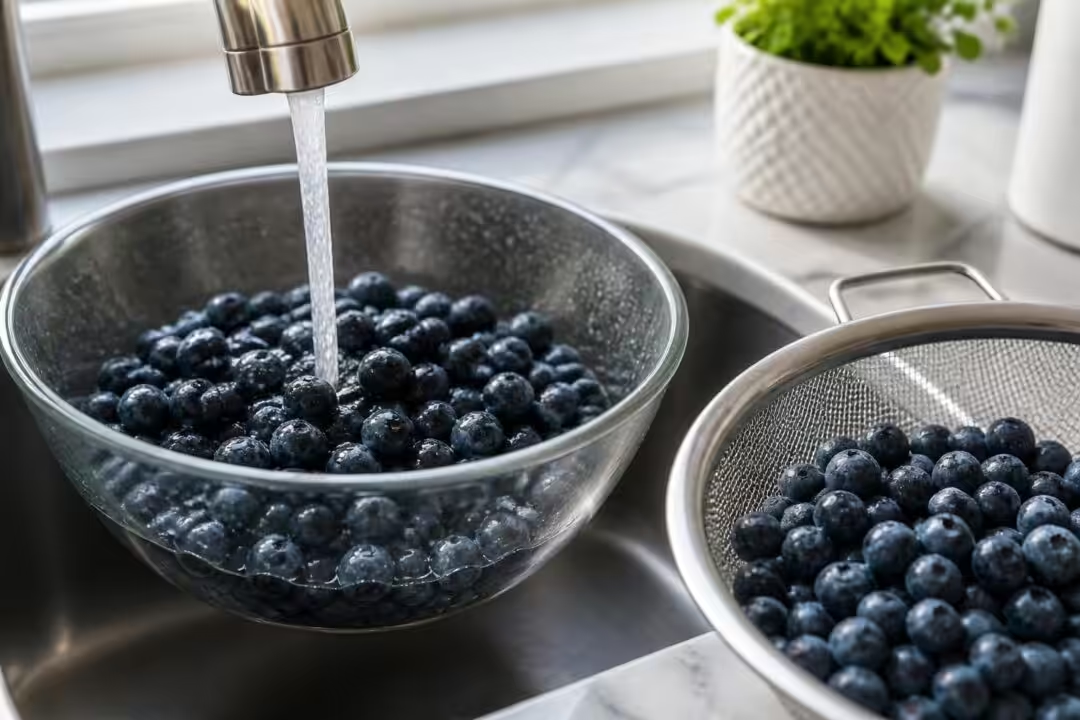
How to Perfectly Wash Blueberries: Why Experts Insist It Matters for Flavor, Safety, and Texture
Blueberries arrive in the kitchen with a deceptively clean look: a dusty bloom on the skin, a deep blue sheen, and that “just-picked” smell that suggests they’re ready to eat. Yet culinary educators and registered dietitians keep repeating the same message: blueberries should be washed before eating or cooking 🫐. That advice isn’t about paranoia; it’s about the reality of how berries move from field to clamshell to countertop.
Even berries that look pristine can carry fine soil particles, pollen, and invisible microbes. On top of that, blueberries often appear on “high-residue” produce discussions, and while modern farming practices vary widely, the thin, permeable nature of berry skins means residue removal is never 100% guaranteed. That’s why many chefs prioritize organic when possible—less as a purity badge and more as a practical way to reduce what needs to be washed off.
To keep the guidance grounded, imagine a small 2026 pop-up bakery concept called Blue Hour Bakes, known for lemon-blueberry loaf cakes and a signature blueberry galette. During peak summer weekends, the kitchen runs through multiple flats of berries, sometimes farm-picked, sometimes store-bought. The team learned quickly that a “quick splash” approach leads to two recurring problems: grit in fresh salads and accelerated mold when washed berries are stored damp. Customers notice both. The solution wasn’t a fancy gadget; it was a consistent method and better timing.
Do blueberries always need washing—even organic?
Yes. Organic blueberries still pick up field dust, handling residue from packing lines, and the occasional tiny leaf fragment. Washing is the simplest step to reduce what doesn’t belong on the plate. The more strategic question is when to wash. Experts recommend washing right before use ⚠️, because moisture clinging to skins is the fast track to spoilage.
There are exceptions. If berries must be washed ahead—say, for a catering job where fruit needs to be portioned—then drying becomes the make-or-break factor. When dryness is treated as a “nice extra,” the fridge becomes a mold incubator. When dryness is treated as a standard, berries can stay vibrant and usable for days.
What “perfectly washed” actually means in a professional kitchen
“Perfect” doesn’t mean sterilized or scrubbed. Blueberries are delicate; aggressive handling turns them into purple smears. In practice, perfectly washed means three things: (1) visible debris is removed, (2) surface residues are reduced through gentle rinsing or a short soak, and (3) berries are dried thoroughly so they remain plump instead of mushy.
At Blue Hour Bakes, the pastry station uses washed berries for compotes and fillings, but keeps a separate batch for garnishing tarts. The garnish berries get the gentlest treatment: a careful rinse and an even gentler dry. The insight that changed their output: clean berries are not automatically ready berries—dry berries are ready ✅.
Next comes technique: the rinse, the optional soak, and the handling details that keep skins intact while still doing a serious clean.
How to Wash Blueberries the Right Way: Cold Rinse Method vs Vinegar or Baking Soda Soak
Most kitchens already have what’s needed to wash blueberries correctly: a colander, cold running water, and a light touch. Experts consistently recommend a gentle rinse as the baseline method because it removes surface dust and reduces microbes without saturating the fruit. The trick is to treat berries like small, fragile balloons—tough enough to roll, not tough enough to scrub.
The expert-approved cold rinse (the everyday gold standard) 🚿
Place blueberries in a colander and run cold water over them. Use hands to lightly toss and rotate the berries so water reaches all sides. Cold water helps keep skins taut and reduces the chance of softening during the wash.
In a bakery setting, the colander method is preferred for speed and consistency. At Blue Hour Bakes, staff members rinse in smaller batches rather than dumping an entire pint at once. Smaller volume means less crushing at the bottom and fewer split berries leaking juice—important when the final goal is a clean garnish or a neat fold into batter.
When a deeper clean makes sense (and when it doesn’t)
If berries come from a pick-your-own farm—where dust, rain splash, and field debris are more common—some experts suggest a short soak in either baking soda or vinegar solution to lift more residue. This can also be helpful when berries will be served raw to a crowd, like on a brunch board or in fruit cups.
However, deeper cleaning should never become longer cleaning. Soaking too long invites berries to absorb water and lose structure. The goal is to reduce surface issues while preserving that signature pop.
Recommended ratios and timing (simple, not fussy) ⏱️
For a baking soda bath, use approximately 1 teaspoon baking soda per 2 cups of water. For a vinegar bath, use 1 part white vinegar to 3 parts water. These ratios are popular because they’re practical, repeatable, and strong enough to be useful without leaving a noticeable taste after rinsing.
Soak berries for about 15–20 minutes max. After soaking, rinse under cold water to remove any remaining solution, then move immediately to drying. Vinegar is often favored because it can help slow bacterial and mold activity on surfaces, but it’s not a license to store wet fruit. Moisture management still wins.
A practical decision guide (useful in real kitchens)
- 🫐 Quick snack, same-day baking: cold rinse in a colander is usually enough.
- 🌿 Farm-picked with visible dust: short soak (vinegar or baking soda), then rinse.
- 🍰 Delicate garnish for tarts: cold rinse only, minimal handling, meticulous drying.
- 🥗 Raw serving for guests: consider vinegar soak, but keep the time tight.
The through-line is gentleness. Rough washing creates micro-tears in skin, which leads to faster leaking, faster softening, and less clean flavor in the finished dish. Done right, washing becomes invisible—no one talks about it, but everyone tastes the difference.
With washing nailed down, the next skill is the one many home cooks skip: a drying routine that prevents mold without bruising the fruit.
How to Dry Blueberries Properly: The Step That Prevents Mold and Keeps Berries Firm
Drying is where good intentions often fail. A careful rinse followed by a sloppy dry turns berries into a damp cluster that spoils early. Professionals treat drying as essential because excess moisture accelerates mold growth ⚠️ and makes blueberries collapse faster in the fridge.
In pastry work, moisture is also a texture issue. Wet berries can bleed into batters, leaving gray streaks in muffins. They can waterlog whipped cream toppings. They can even make flaky dough gummy where berry juice meets flour. In other words: dry berries behave; wet berries sabotage.
The bakery-style drying station method (fast, gentle, repeatable)
Set a clean kitchen towel on a sheet pan. Spread rinsed berries in a single layer. Then pat lightly with paper towels to wick away surface water. This combines softness (towel cushion) with absorption (paper towel), reducing bruising compared with rubbing berries directly.
At Blue Hour Bakes, the team uses this exact setup during weekend prep. The sheet pan matters: it creates a portable “drying tray” that can be moved away from the sink to free up space. Spacing berries out matters too—piled berries trap moisture between them, even if the top looks dry.
Why air-drying alone is not always enough
Air-drying can work if the room is dry and berries are spread thin. But many kitchens are humid—dishwashers running, stock simmering, windows open in summer. In that environment, air-drying becomes slow, and slow drying means berries sit wet longer. A quick pat speeds up the process without crushing the fruit.
Common drying mistakes (and what to do instead) ✅
- 💦 Mistake: storing “mostly dry” berries. Fix: dry until no sheen remains and the towel under them stays mostly dry.
- 🌀 Mistake: spinning blueberries like salad greens. Fix: skip aggressive spinning; it can split skins and bruise edges.
- 🧻 Mistake: rubbing berries to speed up drying. Fix: gentle patting and rolling with minimal pressure.
- 🫙 Mistake: drying in a deep bowl. Fix: use a flat surface so water doesn’t pool underneath.
A quick texture test used by pastry instructors
Pick up three berries after drying. They should feel dry, not tacky. Drop them onto a plate: they should roll cleanly rather than stick in place. Then taste one. The flavor should be pure and bright—no diluted finish, no faint vinegar note. If taste seems muted, the berries likely absorbed water from soaking too long, a sign to shorten the soak next time.
Once berries are washed and dried, storage decisions determine whether that freshness lasts. The next section focuses on the containers, paper towel strategy, and the difference between breathable and airtight setups.
How to Store Blueberries After Washing: Fridge Setup, Paper Towels, and Breathable Containers
Storage is a quiet science: it’s mostly about moisture control and airflow. Blueberries deteriorate when trapped in a damp environment, which is why experts often prefer keeping unwashed berries in their original breathable clamshell. Those tiny vents help moisture escape instead of condensing onto fruit.
When berries are washed ahead of time, the strategy shifts. The goal becomes absorbing any remaining moisture and preventing juice from one soft berry from spreading spoilage to the rest. This is where a paper towel lining, replaced as needed, makes a measurable difference in shelf life.
Washed vs unwashed storage: what changes and why
Unwashed berries generally keep best when left dry and refrigerated as purchased. Washing adds moisture, and moisture invites mold. So if berries are destined for tomorrow’s smoothie or next weekend’s pancakes, it’s smarter to hold off on rinsing until the moment they’re needed.
Washed berries, on the other hand, should only go into the fridge after thorough drying. Even then, they deserve a container setup that manages humidity. Think of it as creating a tiny, clean microclimate—cool, not wet.
The paper towel method that professionals rely on 🧻
Use a container and place a few layers of paper towel at the bottom. Add blueberries in a shallow layer. If storing a larger amount, add another layer of towel between layers of fruit. The towels act like a buffer, absorbing condensation and any juice from a berry that breaks down early.
In the Blue Hour Bakes fridge, this method supports two workflows: a “ready-to-garnish” box that gets opened repeatedly during service, and a “baking prep” box used for fillings. The garnish box gets the most scrutiny; any soft or wrinkled berries are removed immediately because one compromised berry can speed the decline of its neighbors.
A simple storage comparison table (what works, what fails)
| Storage setup | Moisture control | Best for | Risk to watch |
|---|---|---|---|
| 🫐 Original ventilated clamshell (unwashed) | 🌬️ Good airflow | Holding berries a few days before use | ⚠️ Hidden soft berries can spread mold if not sorted |
| 🧻 Container + paper towels (washed & dried) | 💧 Excellent absorption | Meal prep, catering, ready-to-eat fruit | ⚠️ If berries aren’t fully dry, towels get saturated fast |
| 🫙 Airtight container (unwashed or damp) | 💦 Poor; traps condensation | Almost never ideal for fresh berries | 🚫 Fast mold and off odors |
| ❄️ Freezer on a sheet pan, then bagged | ✅ Stable once frozen | Smoothies, baking, sauces | ⚠️ Freezing wet berries creates ice clumps |
Freezing blueberries without turning them into an icy brick ❄️
Freezing is the best backup plan for peak-season abundance. The key is to freeze berries completely dry, spread on a tray so they harden individually. Once frozen, transfer to a bag or container. This keeps berries pourable for smoothies and easy to measure for muffins.
Frozen berries also shine in cooked applications—compotes, sauces, and pie fillings—where their softened texture becomes an advantage. The important move is preventing freezer clumps, which usually happen because berries were bagged while still damp.
With storage under control, the final layer is using the right washing choice for the right recipe—because washing for muffins isn’t the same as washing for a fruit tart. That’s where a chef’s mindset really pays off.
How to Wash Blueberries for Specific Recipes: Baking, Salads, Kids’ Snacks, and Showpiece Desserts
Blueberries aren’t a one-job ingredient. the way they’re washed should match the way they’ll be used, because the end goal changes: sometimes the priority is firm skins for a glossy garnish; other times it’s clean fruit for a raw snack; and sometimes it’s simply minimizing streaks in batter.
Professional kitchens quietly adapt technique to purpose. That flexibility is what separates “clean enough” from “perfect for the dish.” It’s also how Blue Hour Bakes maintains consistency across a menu that uses blueberries in at least four different ways each week.
For baking: reduce breakage, control bleeding 🧁
For muffins, quick breads, and pancakes, a gentle rinse is typically enough, followed by thorough drying. The reason is structural: wet berries add extra water to the batter, and overly soaked berries soften. Soft berries burst more easily, which creates dramatic purple swirls—sometimes beautiful, sometimes muddy.
A practical bakery trick is to dry berries fully, then toss them lightly with a spoonful of flour before folding into batter. This doesn’t “seal” them, but it helps distribute them more evenly and reduces sinking. If berries were soaked and became slightly waterlogged, the flour step can turn gummy; that’s another reason to keep soaking short for baking applications.
For salads and raw bowls: prioritize clean surfaces and crisp bite 🥗
When blueberries are eaten raw alongside greens, grains, and cheeses, their skin texture matters. a short vinegar soak can be helpful for a deeper clean, especially for berries with more field exposure. The critical move is the final cold rinse and meticulous drying so the salad doesn’t become watery.
Consider a summer salad with arugula, toasted walnuts, goat cheese, and blueberries. If berries are damp, they dilute vinaigrette and make cheese smear. If they’re dry and firm, they behave like little flavor bursts, balancing peppery greens and tangy dairy.
For kids’ snacks and lunchboxes: safe, dry, and non-soggy 🍱
For packed snacks, washing in advance is convenient, but it must be paired with drying and smart storage. A paper-towel-lined container keeps berries from turning the lunchbox into a sticky purple mess. It also makes the fruit more appealing; kids reject mushy textures quickly, even if the flavor is fine.
A helpful routine is to wash a small batch, dry it on a towel-lined sheet pan, then store it with fresh paper towels. Swap the towels the next day if they show moisture spots. This tiny habit often doubles the “snack quality” window.
For showpiece desserts: washing without dulling the bloom 🍰
Blueberries have a natural waxy bloom that looks matte and beautiful on tarts. Heavy washing can remove it, which isn’t harmful but can change appearance. For plated desserts where berries are meant to look jewel-like, the gentlest rinse and the lightest pat-dry protect both the shape and the look.
At Blue Hour Bakes, tart garnishes are washed in small quantities right before service, dried carefully, and used immediately. The insight: the best-looking berries are handled the least ✨.
Chef-level checklist for “perfectly washed” blueberries (fast to apply)
- 🧺 Sort first: remove any soft, wrinkled, or leaking berries to protect the rest.
- 🚿 Rinse gently under cold running water in a colander.
- 🧪 For deeper cleaning, soak briefly: 1 tsp baking soda/2 cups water or 1 part vinegar/3 parts water.
- ⏱️ Keep soak time tight: 15–20 minutes, not longer.
- 🧻 Dry thoroughly on a towel-lined tray, patting—never rubbing.
- 🧊 Store smart: breathable for unwashed; paper-towel-lined container for washed & dried.
To keep the process consistent, many cooks tape these ratios inside a cabinet door or save them as a phone note. That small systems-thinking move is what makes berry season feel effortless instead of chaotic—an expert habit hiding in plain sight.

Hi, I’m Landon Brooks. I am the editor-in-chief of Cook and Design, but for the first decade of my working life I was actually a product designer in New York.