At a glance — the political table is set for a decisive Rhode Island primary, and this time the ingredients feel different. From a food hub in Providence to the national stakes of Medicaid and SNAP, here’s what to remember from Nancy Pelosi’s endorsement of Helena Foulkes.
| Sections | Key Notes |
|---|---|
| Why Farm Fresh Rhode Island? | The rally venue signals a campaign built on local, systemic food work — not just photo ops. |
| The Pelosi-Foulkes bond | More than a political alliance — a 60-year family friendship that shapes the trust behind the endorsement. |
| McKee vs. Foulkes | Polling shows a 20-point lead for Foulkes after the bridge controversy, but no one is calling it early. |
| National pressure, local tables | Pelosi warns of Medicaid and SNAP cuts — a direct hit to the food systems we cover. |
| “We are Rhode Island” | A grassroots chant that turns a campaign slogan into a culinary principle: shared table, shared power. |
From the Cook and Design news desk, this week’s most important story isn’t about a recipe — it’s about who gets to decide what’s on the table. On Sunday, Aug. 30, former Speaker Nancy Pelosi landed in Providence to endorse Helena Foulkes in Rhode Island’s Democratic gubernatorial primary. The chosen venue, Farm Fresh Rhode Island, is where thousands of families get fresh produce and pantry staples; a warehouse that has become a community kitchen, a distribution hub, and a symbol of food equity. That choice wasn’t accidental. For a campaign that needs to stand for something beyond the usual political menu, it said: we understand what a table actually means.
Why a Food Hub Hosted a Governor’s Race Rally
Farm Fresh Rhode Island isn’t a convention center or a hotel ballroom. It’s a working food bank with high ceilings, pallets of squash, and the faint smell of ripe tomatoes. That setting is deliberate. When a campaign chooses a food hub over a standard rally site, it’s making a statement — not just about hunger, but about the daily realities of Rhode Island families. For those of us who have spent years writing about food systems, the symbolism was impossible to miss: the people who feed the state were literally in the same room as the people who want to govern it.
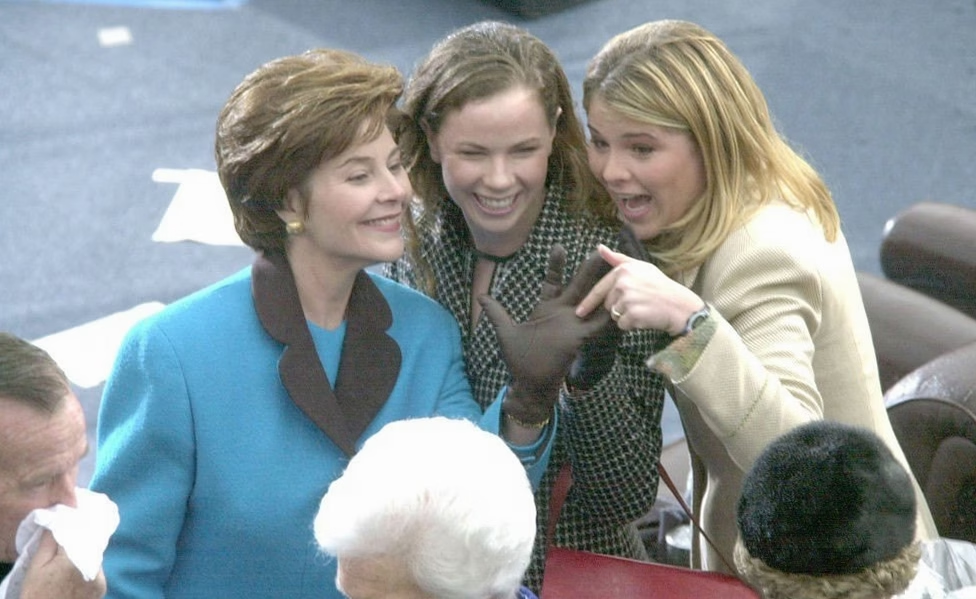
Pelosi walked through the crowd with the ease of someone who has attended a thousand community meals, stopping to shake hands, nodding at volunteers. Foulkes, standing beside her, looked less like a politician and more like the host of a very serious dinner party — calm, organized, and aware that the main course hadn’t been served yet. The rally was billed as a “get-out-the-vote” event, but it felt more like a slow-cooked argument for why this election matters beyond the usual partisan heat.
The personal endorsement: a 60-year friendship comes to the surface
What made this endorsement feel different was the relationship behind it. Pelosi didn’t just list Foulkes’ credentials; she reached back half a century to a time when she and her future husband, Paul, double-dated with Foulkes’ parents, Bernie and the late Martha Dodd Buonanno. She called the candidate “Helena Grace” — a name that sounded less like a campaign talking point and more like a family nickname passed through decades of holiday dinners and college reunions.
In a political age where endorsements can feel transactional, Pelosi’s speech was a reminder that trust is built over time, like a well-tested recipe. She spoke of a woman who had run both CVS Pharmacy’s marketing engine and Hudson’s Bay Company, but the most persuasive part was the memory of a young “Helena Grace” growing up in a household where public service wasn’t a job but a way of life. That personal texture carried an emotional weight that no policy paper could match. It said: I have known this person since she was a child, and I have seen her character under pressure.
Helena Foulkes: from boardroom to state house
Foulkes, 62, has a resume that reads like a business school case study. She was the chief executive officer of Hudson’s Bay Company, a marketing executive at CVS, and has spent years navigating corporate complexity. But her second run for governor is about translating that operational fluency into public policy. In 2022, she challenged incumbent Dan McKee and lost a narrow primary; in this cycle, the calculus appears to have shifted dramatically.
What changed? The bridge, for one. In 2023, the closure of a crucial Rhode Island bridge for safety reasons turned everyday commutes into hour-long traffic nightmares, and the resulting chaos dogged McKee’s administration. The issue became a proxy for a larger question: can a governor manage the basics of infrastructure, or is the state being run on hope and patchwork? Foulkes seized on that narrative, positioning herself as the candidate who could actually fix what was broken. According to a 12 News/Emerson College poll from last month, she now leads McKee by 20 points. But Pelosi, ever the strategist, warned the crowd: “I know things look great, but we cannot assume anything.”
The race is being framed as a clash between the old guard and a new approach, but the numbers tell a more layered story. McKee has the power of incumbency, a network of local mayors, and a base that has supported him through previous elections. Foulkes has momentum, a compelling biography, and now the endorsement of one of the most recognizable figures in the Democratic Party. When the state’s attorney general, Peter Neronha, and Providence Mayor Jorge Elorza also showed up to support her, the message was clear: the establishment, at least in its more reform-minded wing, is backing a change in leadership.
National politics, local tables: Medicaid, SNAP, and the price of food
Pelosi’s speech took a sharp turn from the personal to the policy-driven when she addressed the federal budget. “They take a trillion dollars out of Medicaid. Shocking. They take half a trillion dollars out of Medicare, hundreds of billions of dollars out of SNAP,” she said, her voice rising above the hum of the produce coolers. “Food out of the mouths of babies to give tax cuts to the wealthiest people in our country — and the pressure falls to the states.”
For anyone who covers food systems, those figures are not abstract. SNAP benefits directly feed millions of Americans, and cuts to the program mean longer lines at food banks like Farm Fresh. Medicaid reductions affect the health and well-being of the same families who rely on those food assistance programs. In a state like Rhode Island, where the cost of living has climbed steadily, the intersection of federal policy and local hunger is personal. Foulkes, who spent her career understanding how complex systems work, turned to the crowd and said: “We’re going to send a message that the state needs to work for everyone, not the powerful few.”
“We are Rhode Island”: a chant that became a platform
One of the most striking moments came from Foulkes’ director of volunteers, Elisabeth Wales, who led the room in a chant that felt both defiant and inviting. McKee had said during a WPRI debate, “I am the state of Rhode Island.” Wales turned that phrase on its head, leading the crowd to shout three times: “We are Rhode Island.” The difference between “I” and “we” is not grammatical; it’s philosophical. A governor who sees themselves as the embodiment of the state will never ask the hard questions about who gets left behind.
For us, the chant also sounded like a principle of home cooking: no single ingredient makes the meal. The stock needs the mirepoix; the broth needs the bones; the table needs the hands that set it. Foulkes’ campaign has leaned into that collective spirit, emphasizing that a state is not a corporation to be managed from the top down but a community to be cultivated from the ground up. The turnout in the primary will test whether that rhetoric translates into voting, but the energy in the room suggested that the message is landing.
What a chef looks for in a candidate: a list
If we were shopping for a governor the way we shop for a weeknight dinner, we’d check for structure, restraint, and intention. Here’s the standard we apply to any candidate who earns our attention:
- 🍅 Provenance matters — Where did this person come from, and do their values match their biography? Foulkes’ corporate background is a double-edged sword, but it also means she understands budgets and accountability.
- 🧂 Seasoning, not salt bombs — A good leader knows how to add structure without overpowering the dish. The bridge crisis demanded just that: measured, decisive action rather than dramatics.
- 🥣 Respect for the bowl — You can’t care about the people if you don’t care about the systems that feed them. Pelosi’s warning on SNAP and Medicaid is a reminder that who governs affects what lands on our tables.
- 🔥 Heat control — Passion is necessary, but so is the ability to turn down the flame when the situation requires. Foulkes has promised to “crush this” election, but her demeanor suggests she can also cool the temperature when negotiations get tense.
- 🧑🌾 Who’s at the table? — The chant “We are Rhode Island” has to be more than a slogan. A candidate must translate that into appointments that actually look like the community they serve.
The endorsement from Pelosi — one of the most experienced political minds in the Democratic Party — elevates Foulkes’ campaign from a primary fight to a national signal. If a candidate with Pelosi’s backing wins in Rhode Island, it will suggest that the party’s center of gravity is shifting toward a more operational, systems-focused approach to governance.
The Sunday supper analysis: trust, timing, and turnout
In the weeks ahead, the only ingredient that matters will be voter turnout. Pelosi left the rally after making clear that the election is not a foregone conclusion, despite the favorable polls. She mentioned her own plans to head to Martha’s Vineyard for a meeting on “protecting the election,” and she offered a pragmatic checklist: litigation where needed, public communication, and a simple message to voters — “Do not be afraid to vote.”
We’ve spent years observing how food brings people together, and this campaign is using that gravitational pull with unusual skill. Helena Foulkes isn’t just borrowing Pelosi’s star power; she’s borrowing a tradition of hospitality that turns political allegiance into a shared meal. The vote in September will show whether that approach was enough to change the landscape. But listening to the room at Farm Fresh, watching the energy in the crowd, it felt like a recipe that had been tested four times and was finally ready for the dinner party.

Hi, I’m Landon Brooks. I am the editor-in-chief of Cook and Design, but for the first decade of my working life I was actually a product designer in New York.