Is Pepper a Vegetable? The Botanical Truth Explained — Are peppers vegetables: Facts explained
The botanical classification of peppers often surprises cooks and diners alike. At the heart of the matter lies a simple botanical rule: a structure that develops from a flower and contains seeds qualifies as a fruit. Peppers, whether bell or chili, grow from the ovary of a flower and house seeds inside, which places them squarely in the botanical category of fruit 🌱.
To clarify the mechanism, consider pollination and plant reproduction. When pollen fertilizes the ovule inside the pepper flower, the ovary wall thickens and develops into the pepper tissue people eat. The ovules mature into seeds. This developmental pathway is the same in tomatoes, cucumbers, and many other edibles that are commonly treated as vegetables. Botanists therefore record peppers in the same category as other seed-bearing plant products.
Botanical definitions and practical implications
Botany classifies parts of a plant by origin and function. Roots, stems, leaves, bulbs, and tubers are typically labeled as “vegetative” structures. Fruits, by contrast, are the mature ovaries that protect and disperse seeds. Since peppers meet both defining criteria — arising from the flower and containing seeds — they are botanical fruits. This is more than a semantic distinction: it informs plant breeding, seed saving, and horticultural practices.
For example, a horticulturist saving seed from a favorite pepper variety will harvest the seeds from fully ripened pods. The knowledge that peppers are fruits gives a clear rationale for techniques such as controlled pollination, isolation of varieties to prevent cross-pollination, and the timing of harvest to maximize seed viability. A practical vignette: at the small urban farm that supplies the bistro “Ember & Vine,” Chef Amara collaborates with a seed savant to isolate a rare sweet pepper line by growing it downwind from other Solanaceae to reduce hybridization risks. That decision stems directly from the understanding that peppers reproduce via seeds inside fruit structures.
Common misconceptions trace back to culinary use rather than biology. Daily experience places peppers with carrots and cabbage in the vegetable section of grocery stores because the peppers are prepared in savory dishes. Yet culinary placement does not change botanical identity. In educational settings or when communicating with suppliers, it helps to label peppers as botanical fruits to avoid confusion. The term “pepper fruit” is often used in horticulture texts and seed catalogs for this reason.
Peppers illustrate how language and context shape classification. In a classroom, the pepper is an example of an accessory fruit in some species; in a kitchen, it is treated like a vegetable. Recognizing both views allows better decisions in gardening, culinary technique, and nutrition counseling. The botanical label does not strip peppers of their savory personality; it simply clarifies reproductive origin and seed-bearing function.
Key takeaway: Botanically, peppers are fruits because they develop from flowers and contain seeds — a botanical truth that underpins seed-saving, breeding, and horticultural practice. 🧑🌾
Culinary Classification: Why Peppers Act as Vegetables in the Kitchen — Are peppers vegetables: Facts explained
Chefs, home cooks, and grocery managers almost always treat peppers as vegetables. This culinary classification arises from how peppers taste, how they are used, and how they behave in recipes. Savory applications dominate: roasted, sautéed, stuffed, grilled, or sliced raw into salads. The absence of the typical sweetness associated with many fruits nudges culinary culture to place peppers among vegetables.
In kitchens, classification depends on function, texture, and flavor profile. A fruit used in salads as a sweet element might remain a fruit in culinary terms, but peppers excel in savory contexts. Their crispness when raw, their capacity to soften and caramelize under heat, and their role as building blocks for sauces and stews align them with other culinary vegetables.
How chefs and recipe writers decide
Recipe taxonomy is pragmatic. A menu engineer considers whether an ingredient complements savory proteins, acid balances, and mouthfeel. Peppers enhance texture and provide aromatic complexity rather than sweetness. For instance, roasted red bell pepper adds smoky-sweet depth to a romesco sauce; sliced jalapeño adds bright heat to a ceviche-style plate. These functions make peppers behave like vegetables in the culinary repertoire.
Chef Amara at “Ember & Vine” treats peppers as a core vegetable group. In the kitchen brigade, peppers are grouped with onions, garlic, and tomatoes as aromatics and bulk vegetables used to construct flavor foundations. This organizational logic extends to procurement and storage: peppers are ordered from produce vendors, stored in the refrigerated produce area, and prepared at the same station as other vegetables.
There is also a cultural angle: many cuisines developed around peppers use them primarily in savory contexts. Latin American, Southeast Asian, and Mediterranean kitchens lean on peppers for heat, color, and texture. Even when peppers contribute subtle sweetness — as in a slow-roasted red pepper purée — their role remains integrated into savory dishes.
Nutrition messaging follows culinary practice. Dietitians advise including peppers in vegetable servings because they provide vitamins and fiber comparable to leafy greens and root vegetables. Thus, for public health recommendations and meal planning, peppers function in the “vegetable” category even though botanists classify them as fruits.
Practical examples that underscore culinary classification:
- 🌶️ Roasted pepper vinaigrette used to dress greens — peppers act as a vegetable-based sauce.
- 🥗 Raw sliced peppers in a composed salad — peppers contribute texture and a savory note.
- 🍕 Grilled peppers as a pizza topping — peppers perform similarly to sautéed mushrooms and onions.
- 🍲 Pepper-forward sofrito or mirepoix variant in Latin cuisines — foundational savory base.
These applications explain why the label “vegetable” persists in markets, cookbooks, and everyday speech. Even so, culinary use does not override botanical facts; rather it creates a complementary classification system suited to kitchens and diets. The two systems coexist: in the pantry, peppers are vegetables; in the seed packet, they are fruits.
Final culinary insight: In kitchens, peppers function as vegetables because of their savory uses and textural roles — a pragmatic classification that serves cooks, menus, and nutrition guidance. 🍽️
Bell Peppers vs. Chili Peppers: Varieties, Ripening, and Nutrition — Are peppers vegetables: Facts explained
Peppers form a broad family of shapes, colors, and heat levels. Two principal culinary categories are bell (sweet) peppers and chili (hot) peppers. Both are botanically fruits, yet they diverge significantly in chemistry, flavor development, and culinary application. Understanding these differences benefits both kitchens and gardens.
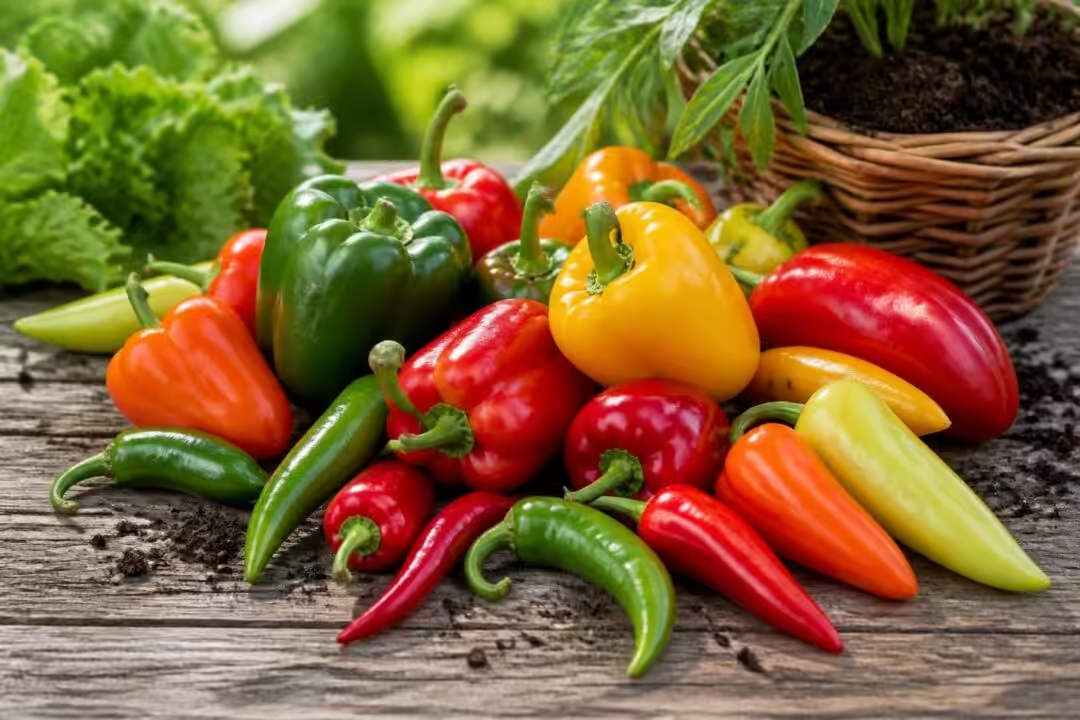
Bell peppers are varieties of Capsicum annuum bred for large, thick-walled pods with minimal capsaicin. They appear in green, red, yellow, orange, and even purple varieties. The color sequence often reflects ripeness: many bell peppers begin green and progress to a warmer hue as they ripen, gaining sweetness and diminishing bitterness. This change occurs because chlorophyll breaks down and sugar compounds accumulate in the ripening tissue.
Chili peppers: capsaicin and heat profiles
Chili peppers contain capsaicin, the compound responsible for perceived heat. Capsaicin binds to TRPV1 receptors in mammalian sensory neurons, producing the sensation of spiciness. Birds lack the same sensitivity, which explains why they can disperse pepper seeds without discomfort. The Scoville scale quantifies heat concentration in Scoville Heat Units (SHU); mild jalapeños register around 2,500–8,000 SHU, while extreme varieties such as Carolina Reaper exceed one million SHU.
Nutritionally, both sweet and hot peppers are excellent sources of vitamins A and C, fiber, and antioxidants such as carotenoids and flavonoids. A single medium red bell pepper often contains more vitamin C than an orange, and chilies provide similar nutrients with the added metabolic effects associated with capsaicin, such as transient increases in metabolic rate and potential appetite modulation.
Practical culinary and gardening notes:
- 🌶️ Ripening and flavor: Green bell peppers are simply unripe; allowing full ripening increases sweetness and nutrient density.
- 🥘 Heat control: Removing membranes and seeds from chilies reduces perceived heat because capsaicin concentrates in the white pith.
- 🌿 Preservation techniques: Roasting, pickling, and fermenting peppers each unlock distinct flavor profiles and extend shelf life.
- 🧪 Scoville awareness: Recipe scaling should account for SHU variances; substituting one chili for another can drastically change spice levels.
Case study from “Ember & Vine”: a roasted pepper relish used on grilled fish originally called for roasted red bell peppers for sweetness. When substituting charred poblano for seasonal availability, the kitchen adjusted by adding a touch of honey and lemon to restore balance. This practical substitution demonstrates how understanding ripeness, flavor concentration, and sugar-acid balance allows chefs to maintain intended flavor outcomes.
Another useful example is seed saving. For seed preservation, leaving peppers on the plant until full ripeness ensures mature seeds. Seed catalogs and breeders rely on this botanical reality to describe germination rates and vigor.
Final insight: Bell and chili peppers differ in capsaicin content, ripening behavior, and culinary roles, yet both provide robust nutritional value and deserve deliberate handling in kitchen and garden. 🌶️🥬
How Markets, Law, and Culture Label Peppers: From Grocery Aisles to USDA Rules — Are peppers vegetables: Facts explained
Classification extends beyond science and kitchens into markets, law, and tradition. The label affixed to a pepper can change depending on legal definitions, trade rules, and cultural habits. Historical and regulatory precedents help explain why peppers often wear the vegetable label in everyday commerce.
One famous legal precedent illustrates this clash: an 1893 U.S. Supreme Court decision (Nix v. Hedden) ruled that tomatoes should be classified as vegetables for tariff purposes, a choice rooted in common culinary usage rather than botanical truth. The case highlights how law sometimes prioritizes market practice and consumer expectations. Although peppers were not the subject of that case, the logic applies similarly: courts and customs officials may adopt culinary definitions for regulatory convenience.
Regulatory and market classification today
Grocery stores and food-service procurement teams follow culinary categories to organize inventory. Produce departments place peppers alongside lettuce, onions, and cucumbers. Nutrition guidelines, including USDA dietary messaging, often fold peppers into vegetable servings because of nutrient profiles and typical culinary use. For public messaging and school meal planning, the vegetable classification is functionally useful.
Below is a concise comparison that clarifies the multiple lenses through which peppers are seen. The table contrasts botanical, culinary, and legal/market views and includes clear markers for each category.
| Perspective | Classification | Basis |
|---|---|---|
| Botanical 🌿 | Fruit 🍎 | Develops from flower; contains seeds |
| Culinary 🍽️ | Vegetable 🥦 | Used in savory dishes; texture and flavor align with vegetables |
| Market / Legal 🏛️ | Vegetable 🧾 | Customs, tariffs, and retail practice favor culinary usage |
Note the presence of emojis in the table to draw attention to each perspective and make the differences visually accessible. Markets and labels are pragmatic: they communicate how items are used in daily life, not how they evolved biologically.
Cultural practices further anchor the vegetable label. In many regional food traditions, peppers appear in contexts usually reserved for vegetables: sofrito, salsas, stir-fries, and stews. These time-honored uses establish pepper identity in the culinary imagination.
For procurement and menu planners, the implication is straightforward: count peppers among vegetables for inventory, plate costs, and nutrition labeling. For botanists and seed savers, peppers remain fruits for taxonomy and propagation. Understanding both perspectives reduces miscommunication among growers, chefs, dietitians, and regulators.
Legal and commercial insight: Markets and law often treat peppers as vegetables because practical use and consumer expectations dictate categorization in commerce. 🏬
Practical Tips: Choosing, Preparing, and Storing Peppers for Flavor and Health — Are peppers vegetables: Facts explained
Whether labeled a fruit or a vegetable, peppers offer tremendous culinary flexibility and nutritional value. This section collects practical tips for selecting, preparing, and storing peppers to maximize taste and longevity. The guidance stems from practical kitchen experience and horticultural knowledge, illustrated through the ongoing work of Chef Amara and the small farm supplying “Ember & Vine.”
Choosing peppers at market
Look for taut, glossy skin and firm texture. Wrinkling or soft spots indicate age. For sweet bell peppers, color signals ripeness: red and orange peppers are usually sweeter than green. For chilies, choose pods with intact stems to prolong shelf life. If selecting for heat, ask the vendor about variety origin — terroir and growing conditions influence capsaicin concentration.
Chef Amara’s tip: smell the stem end; a fresh pepper emits a subtle vegetal fragrance that promises bright flavor when roasted or grilled.
Preparing peppers for recipes
Key techniques depend on desired outcome. For raw crunch, slice into even strips and keep seeds to the side. For softer, sweeter flavors, roast under a broiler or over an open flame, then steam in a covered bowl to loosen skins before peeling. To reduce heat, remove the pith and membranes where capsaicin concentrates.
- 🔥 Roasting method: char until blackened, steam, peel, and purée for sauces. 🍅
- ❄️ Freezing: slice and freeze on a tray before bagging to preserve shape. 🧊
- 🥒 Pickling: quick-pickled chilies preserve crunch and add acidity to dishes. 🥒
- 🍽️ Balancing heat: pair hot peppers with dairy or acid to temper capsaicin. 🧈🍋
Storage guidelines: refrigerate whole peppers in the crisper for up to two weeks. For longer preservation, roast and freeze or ferment into hot sauces and relishes. Proper handling reduces waste and stretches seasonal abundance into off-season utility.
Flavor pairing and recipe ideas
Peppers pair exceptionally well with proteins, grains, and cheeses. A roasted red pepper sauce complements grilled fish; pickled jalapeños brighten grain bowls; diced raw peppers add crunch to spring salads. In one kitchen experiment, the restaurant balanced a smoky poblano purée with a citrusy gremolata and seared scallop, proving how peppers bridge smoky, acidic, and sweet notes.
Nutrition and health: peppers provide vitamin C, vitamin A precursors (beta-carotene), B vitamins, and fiber. Chilies’ capsaicin has been studied for effects on metabolism and pain modulation; while not a cure-all, capsaicin contributes to the peppers’ functional profile.
Quick checklist for home cooks:
| Action | Benefit | Emoji |
|---|---|---|
| Store whole in fridge | Keeps crispness for days | 🥶 |
| Roast and freeze | Preserves flavor and easy use | 🔥 |
| De-seed chilies | Reduces heat for milder dishes | ✂️ |
To close the practical loop, Chef Amara’s seasonal menu cycle demonstrates adaptability: peppers harvested at peak ripeness are roasted and squirrelled away into jars of relish, frozen purées, and fermented hot sauces. These preserved forms feature in winter menus, showcasing how botanical knowledge and culinary practice pair to extend flavor beyond a single harvest.
Practical closing insight: Treat peppers with intention — choose ripe pods, apply suitable preparation, and preserve wisely to maximize both flavor and nutrition. 🧑🍳

Hi, I’m Landon Brooks. I am the editor-in-chief of Cook and Design, but for the first decade of my working life I was actually a product designer in New York.