
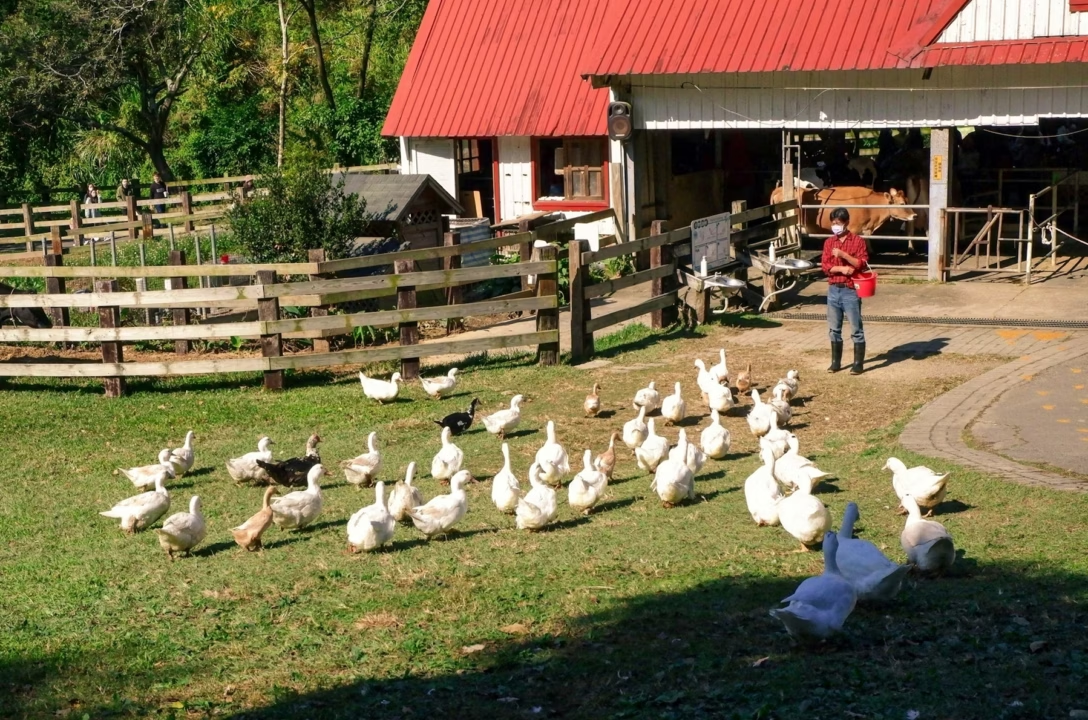
From the sun-baked fields of the Rio Grande Valley to the piney woods of East Texas, a quiet revolution is taking root in the state’s cafeterias. It’s not a new diet trend or a viral TikTok recipe. It’s the Texas Department of Agriculture’s Farm Fresh Network — a program that has spent over a decade rewriting the relationship between the farmers who grow our food and the children who eat it. In 2026, with supply chains still finding their footing and a renewed national focus on Healthy Eating, this network has become more than a database. It’s becoming the backbone of a localized food economy that starts with a seed and ends with a smile in a Classroom.
| At a Glance | Key Notes |
| :— | :— |
| What is the Farm Fresh Network? | A digital database connecting Texas producers to schools, childcare centers, and summer meal programs. |
| Who is it for? | Farmers, ranchers, distributors, and any food producer interested in institutional sales. |
| Why it matters now | Offers a direct answer to supply chain fragility while boosting local economies and student nutrition. |
| The bigger picture | A move toward Sustainability that turns lunch money into a community investment. |
The vision is as classic as it is radical: make it simple for a school nutrition director in Amarillo to source green chile from a co-op in Hatch, or for a childcare center in Waco to get fresh citrus from a grower in Mission. Governor-appointed Commissioner Sid Miller has championed this initiative since its inception in 2010, but the story of the Farm Fresh Network is not a static government mandate. It’s a living, breathing community of nearly 300 producers and thousands of students, all connected through the simple act of a shared meal. As the executive editor of a food magazine deeply entrenched in how America actually cooks and eats, I find the mechanics of this program fascinating — not because it’s another “farm to table” buzzword, but because it operates with the precision of a well-executed recipe. It requires structure, timing, and respect for the ingredients.
Why Texas Classrooms Are the New Frontline for Local Agriculture
Walk into a Texas school cafeteria today and you might be surprised. The cliché of limp green beans and mystery meat is being replaced by vibrant salads featuring Local Produce, freshly grilled chicken from Texas farms, and even specialty items like jicama slaw or peach salsa. This transformation doesn’t happen by accident. It’s the result of a strategic effort to engage young minds early, creating a generation that understands the connection between the soil and their plate.
The genius of the program lies in its dual approach: it works on both the supply and demand sides of the equation. For producers, the network offers a new, stable market — a school district can be as reliable a customer as a grocery store, albeit with different logistic needs. For schools, it provides access to fresh, seasonal ingredients that gross margins rarely allow in traditional wholesale markets. One Dallas-area nutrition director I spoke with explained how she sliced locally grown cucumbers 80 different ways to make them appealing to elementary students. That kind of creativity is echoed across the state, turning the cafeteria into an unassuming Education space where math (budgeting), science (where food comes from), and health intersect.
The Ripple Effect of the Texas Farm Fresh Challenge
One of the network’s most effective catalysts has been the annual Texas Farm Fresh Challenge — a statewide initiative that encourages schools to serve more local products. The results have been staggering, not just in terms of volume, but in market growth. During the 2024 challenge alone, participants helped add 41 new agricultural producers to the network, a significant bump that pushed the total past well over 250. By 2026, that number has swelled closer to 300, reflecting a logistical landscape that is increasingly receptive to institutional local purchasing.
But the Challenge is more than a numbers game. It fosters a sense of institutional momentum. Schools that participate often report higher average daily participation rates — kids actually want to eat in the cafeteria when the menu looks and tastes good. This is the Health connection that often gets lost in policy debates. When a student eats a fresh Texas grapefruit, they experience a sensory moment that a processed fruit cup simply can’t replicate. The Challenge, now in its sixth year, has become the platform where school districts showcase their culinary talent using Texas products — a true fusion of Agriculture and Education. It proves that school lunch is not a fallback; it can be a destination.
How the Farm Fresh Network Bridges the Gap Between Ranchers and Nutritionists
Structuring a state-wide network is an exercise in intentional design. The TDA designed the Farm Fresh Network as a searchable, interactive map — a digital hub where a cafeteria manager in El Paso can filter for “broccoli” in “winter” and find a list of nearby farmers ready to supply it. This digital architecture is the backbone of the entire operation. Without it, the concept would be nothing more than a niche farmers market.
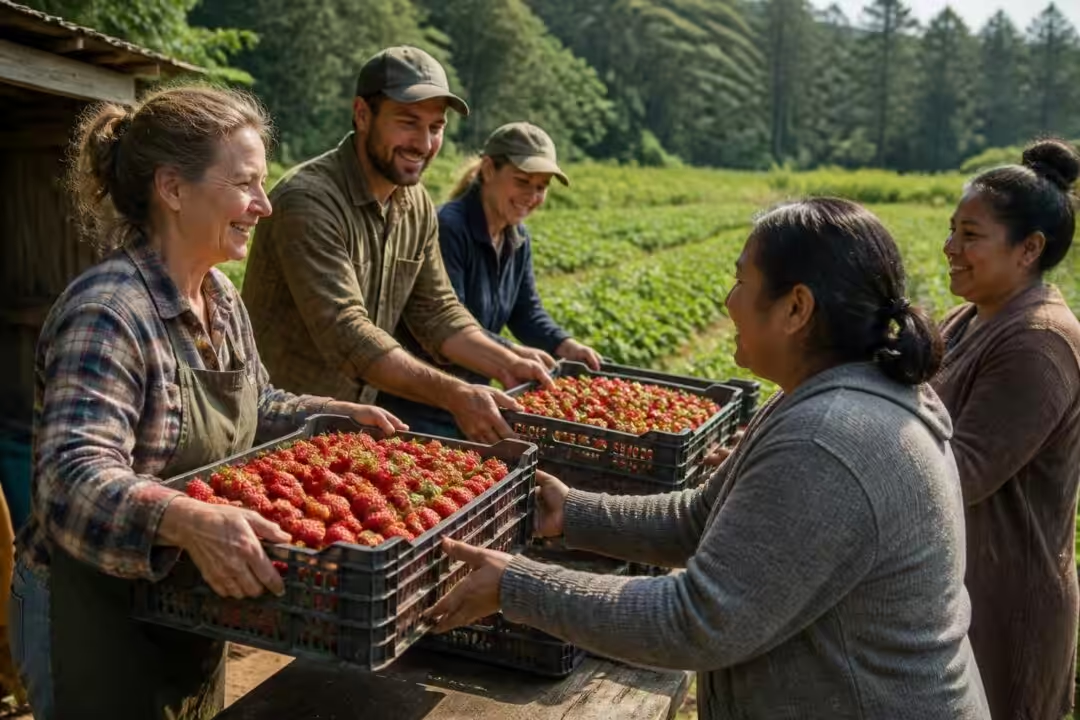
The database eliminates the cold call. It allows Texas producers of all sizes — from a family-owned orchard in East Texas to a large-scale hothouse tomato operation in West Texas — to list their products with seasonal availability. Nutrition staff can then plan menus around what is actually being grown, rather than relying on catalogues of imported goods. However, the network is not just a passive database. It’acts as a matchmaker, hosting exclusive networking events where producers can meet procurement managers face-to-face. This is where trust is built, volume agreements are negotiated, and long-term partnerships are forged.
Overcoming Logistical Hurdles: From Farm Gate to Cafeteria Tray
Transportation remains the classic challenge in the local food movement. A farmer with 200 cases of leafy greens needs a distributor with cold chain capabilities to get them to a school 100 miles away. The Farm Fresh Network solves this by including not just farmers, but also food hubs and distributors who are certified by the TDA to participate. These middlemen are often the unsung heroes of the program, aggregating produce from multiple small farms to fill a school district’s order — a critical service when a district needs 1,000 pounds of tomatoes, but the farm only has 200.
By incorporating this entire chain of custody, the network offers a resilience that big-ag supply chains can’t always provide. If a major distributor has a trucking breakdown in one state, a Texas hub can pivot to a local farm, shortening the supply line and eliminating the risk of a food desert in the school lunchroom. Furthermore, federal reimbursement programs often cover the cost of local items, making it financially viable for districts to prioritize Texas growers. It creates a cycle of Sustainability where the money stays in the local economy, and the local economy, in turn, reinvests in the health of its children.
The Undeniable Impact on Student Health and Academic Performance
We don’t often link lunch menus to report cards, but the data suggests we should. While a direct causal link is hard to pin down, every nutritionist will tell you that a child who eats a balanced meal with fresh vegetables is more likely to focus in the afternoon. The school setting is the only place where we can guarantee a certain nutritional standard for over 5.4 million Texas students who receive free or reduced-price meals. The Farm Fresh Network elevates this standard.
The emphasis here is on “variety.” The seasonal rotation of the network’s offerings introduces students to foods they may not see at home. During the winter, that might mean hearty turnips and broccoli from the plains. In the summer months of the feeding programs, it could be juicy melons shipped from the Gulf Coast. This variety is a form of nutritional hedging — spreading out the nutrient base across the seasons.
Community and Culture: More Than Just a Meal
This network does something else that’s powerful: it rebuilds cultural connections. Texas has a rich culinary heritage, and the Farm Fresh Network helps schools honor that by sourcing ingredients that reflect the state’s diversity. Consider a school in San Antonio that uses locally grown peppers and beans to make a vegan chili; or a district in the Panhandle serving local beef sliders with cheddar from a nearby creamery. These meals reinforce local identity and pride. They’re teaching tools that make the abstract concept of “the Community” tangible.
Beyond the plate, the TDA’s Farm Fresh materials engage students in farm-to-school activities like planting school gardens, visiting producers, and learning about different agricultural regions in Texas curriculum. These are the “aha” moments that inform a child’s future eating habits. It’s a long-term play that treats children not as consumers, but as citizens.
Joining the Movement: A Guide for Families and Producers
The beauty of the Farm Fresh Network is that participation is not restricted to school administrators. Anyone who eats in Texas can get involved. There are simple, actionable ways to contribute to this mission.
For Families:
– Ask your local school district if they participate in the Farm Fresh Challenge.
– Volunteer to help with a school garden or a local food tasting event.
– Talk to the cafeteria manager (yes, they exist and they are usually passionate). Ask them what local items they serve.
– Use the TDA’s public map to find the producers selling to your child’s school and support them at the grocery store.
For Producers:
– The barrier to entry is lower than you might think. The application process is straightforward, detailing your product and volume capabilities.
– Don’t worry if you are small; the network is built on aggregation.
– Consider attending the TDA’s quarterly webinars. They often break down the specific invoicing requirements for school districts.
– Even if school lunch is intimidating, start with a summer feeding program, which are often more flexible.
By supporting these initiatives, parents send a clear signal that the health of our children and the vitality of our Texas Agriculture industry are non-negotiable priorities. It is a proactive way of voting with our forks, and more importantly, with our advocacy.
What the Future Looks Like for Farm to School in Texas
Looking ahead to the rest of 2026 and beyond, the trajectory is clear. The Farm Fresh Network is no longer a pilot program; it is a fundamental pillar of the Texas food system. The integration of technology will likely deepen, perhaps with more granular data on crop yields to help districts forecast menu items months in advance. We may also see more emphasis on “local processing,” where Texas-grown grains are milled into flour used for tortillas or bread made in-state.
The success of this program offers a blueprint for other states struggling to connect their rural and urban economies. It demonstrates that with the right structural support, schools can be the anchor tenants of a resilient local food system. More importantly, it creates a lasting memory for a third grader in Fort Worth who finally understands that hummus tastes better with local carrots. That’s a lesson more valuable than any standardized test score, because it builds a foundation of responsible living and healthy appetites that will last a lifetime.

Hi, I’m Landon Brooks. I am the editor-in-chief of Cook and Design, but for the first decade of my working life I was actually a product designer in New York.




2 Comments
Love how this connects the dots between local farms and school lunch trays. Efficiency at its best, and the kids eat better too.
Love the data-driven approach to connecting local farms and schools. Efficiency meets community impact—this is what smart policy looks like.
Les commentaires sont fermes.