| Sections 🧭 | What to remember ✅ |
|---|---|
|
|
Leafy greens are one of those grocery items that look simple—stacked under cool mist, crisp edges catching the light—yet they carry one of the most complex supply stories in the store. Walmart’s lettuce assortment spans whole heads, clamshell-grown baby greens, and bagged salad mixes, and each format tends to come from a different set of growers and processors. For cooks who care about flavor, texture, and safety, origin is not trivia; it’s a practical detail that can change how a salad is washed, how long it holds, and what to do when a recall hits. 🥬
Walmart Lettuce Sourcing Explained: Why One Store Shelf Holds Many Origins
Walmart’s produce section is a living calendar. Even when the signage looks consistent week to week, the supply behind it shifts with weather, regional harvest windows, and processing capacity. That’s why the most honest answer to “Where does Walmart source its lettuce?” is: from multiple suppliers across North America, depending on type and season. 🗺️
Start with the product format, because it’s the clearest clue to the supply chain. Whole heads—think iceberg, sometimes romaine—often move through a more straightforward grower-to-distribution path. Bagged salads and chopped kits, by contrast, usually run through large fresh-cut processors that wash, chop, blend, and package greens at scale. Those processors may source raw lettuce from several regions and then consolidate it into a single brand line.
Bagged salads and the “processor layer” (including Marketside)
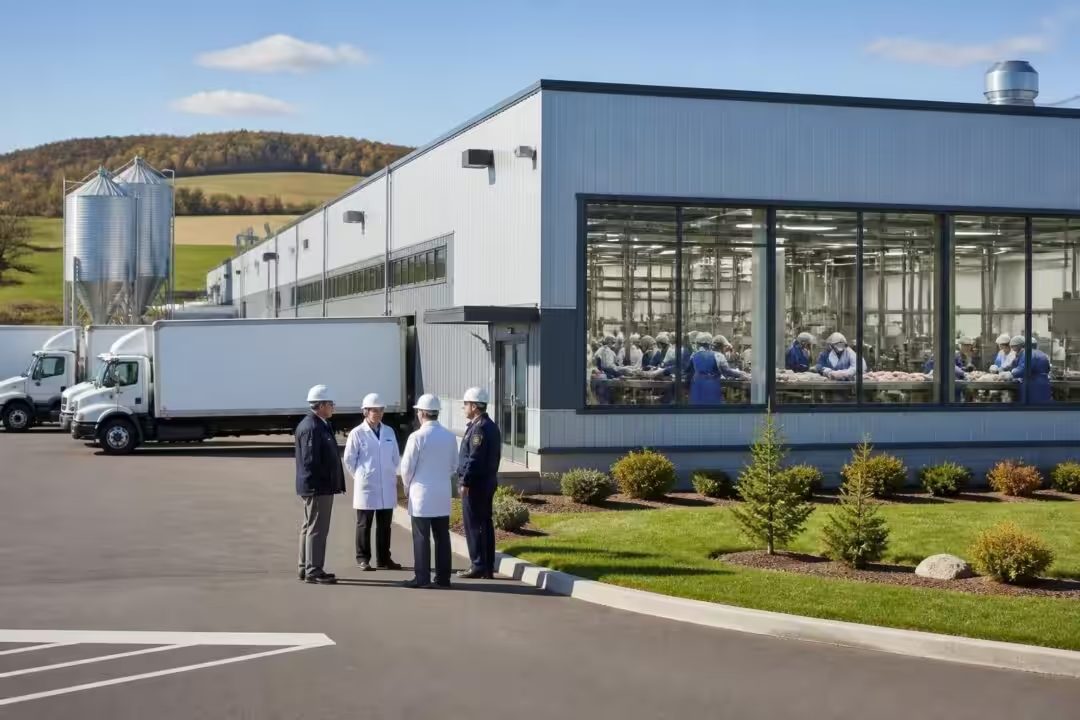
Some of Walmart’s bagged salads, including items sold under its Marketside line, are connected to Taylor Farms, widely known as one of the largest fresh-cut produce processors. For a home cook, that matters because a bagged blend can represent more than one farm even when it feels like a single product. The processor layer is where washing, cutting, and packaging happen—steps that can improve convenience but also create a single point where a lot of volume converges.
Taylor Farms has historically sourced lettuce from the United States, Canada, and central Mexico. However, as of August 2026, the company has temporarily paused production in central Mexico. That kind of operational shift is exactly why “origin” can change without a dramatic change on shelf: retailers and suppliers reroute to maintain availability.
Clamshell-grown greens: the controlled-environment lane (Little Leaf Farms)
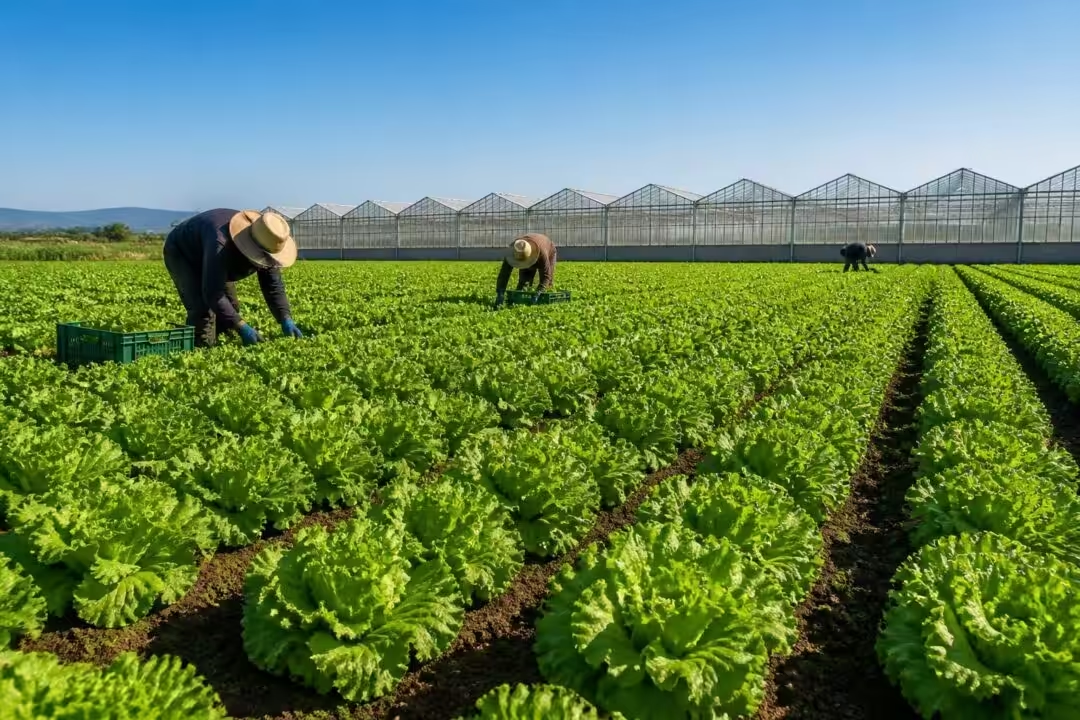
Walmart also carries lettuce from Little Leaf Farms, a brand associated with greens grown in Massachusetts and Pennsylvania. This is a different lane entirely: typically controlled-environment or greenhouse-style growing, often packed in clamshells to protect delicate leaves. The practical upside is consistency—tender texture, clean flavor, and a shelf life that can be steadier than field-grown greens when the supply chain gets stressed by storms or heat waves.
For the cook assembling a weeknight salad, that consistency changes planning. A clamshell of baby greens might hold for several days with minimal decline, while chopped bagged lettuce can oxidize faster once opened. The origin story isn’t just interesting; it helps set expectations.
Whole iceberg heads: a simpler claim, still a real story
According to Walmart’s own site, whole iceberg lettuce heads sold at Walmart are grown in the United States. Iceberg is built for travel: dense structure, high water content, and a protective outer layer. It’s the lettuce that survives the road trip—crunch intact—making it a workhorse for tacos, chopped salads, and griddled burgers.
Still, “U.S.-grown” covers a wide geography, and that range becomes important when safety alerts target a specific region. The more precisely the package or bin points to the source, the easier it is to act quickly when needed. That leads directly to the next piece: how supplier names show up in the romaine aisle.
Next, the supply chain gets more legible when brand names and grower names are matched—because romaine has a reputation for being both beloved and frequently scrutinized. 🥗
Key Suppliers Behind Walmart Lettuce: Taylor Farms, Tanimura & Antle, and Little Leaf Farms
To understand Walmart’s lettuce sourcing without getting lost in corporate org charts, it helps to focus on a few supplier names that recur in public product information and packaging. The goal isn’t to “rank” suppliers; it’s to recognize the patterns that shape what ends up in your cart: processor-based blends, region-rotating field crops, and controlled-environment greens. 🌿
Taylor Farms: the engine behind many fresh-cut greens
Taylor Farms is often discussed as a backbone of the fresh-cut salad category, supplying or processing greens that appear under many labels across American grocery. Some Costco lettuce has also been associated with Taylor Farms, which is a reminder that large processors commonly service multiple retailers at once. For shoppers, this can explain why a chopped romaine bag might feel familiar across stores even when branding changes.
In practice, Taylor Farms’ role can be thought of as “assembly plus safety systems.” Raw lettuce comes from different growing regions, then the processor handles washing, cutting, blending, and sealing. When everything goes right, you get convenience and consistency. When something goes wrong, the scale makes traceability extremely important, because a single facility can touch a lot of bags.
Tanimura & Antle: a grower with multiple active regions (Farm Fresh)
Another name that surfaces in Walmart lettuce sourcing is Tanimura & Antle, which sells romaine and other items under the Farm Fresh brand. Their lettuce is grown in California, Arizona, and Tennessee, and the company has even offered a real-time-style view of which regions are active. That detail matters because it signals a modern produce reality: the “same” romaine can be coming from different states depending on the month.
For a home cook, that regional rotation can subtly influence texture. Romaine from a cooler window can be tighter and sweeter; romaine harvested in hotter stretches can skew more bitter and wilt-prone if it sits too long in transit. The store experience rarely highlights those nuances, but they show up on the cutting board.
Little Leaf Farms: Northeast-grown greens in a different supply model
Little Leaf Farms’ Massachusetts and Pennsylvania sourcing points to a system designed for proximity to dense population centers. fewer travel miles can mean a fresher snap, especially for baby greens that don’t have iceberg’s built-in armor. If a salad looks vibrant on day four rather than day two, that’s not luck—it’s often supply chain design.
There’s also a cook’s advantage here: baby greens from controlled environments tend to have fewer tough ribs and less gritty soil clinging to them, which can reduce the urge to over-wash and bruise tender leaves. That doesn’t eliminate the need for safe handling, but it changes the workflow.
A quick comparison table for shoppers who want the “who + where” snapshot
| Supplier / Brand 🏷️ | Common Walmart lettuce formats 🥬 | Noted sourcing regions 📍 | What it means in the kitchen 🍴 |
|---|---|---|---|
| Taylor Farms | Bagged salads; processed blends (incl. some Marketside items) 🛒 | U.S.; Canada; historically central Mexico (paused as of Aug 2026) ⏸️ | Convenience, but save the bag for lot codes; use quickly once opened |
| Tanimura & Antle (Farm Fresh) | Romaine and other leafy products 🥗 | California; Arizona; Tennessee 🧭 | Region rotates; expect seasonal shifts in bitterness/crunch |
| Little Leaf Farms | Clamshell baby greens 🌱 | Massachusetts; Pennsylvania 🏡 | Tender leaves; often longer-lasting; gentler washing helps prevent bruising |
| Whole iceberg (Walmart listing) | Whole heads 🧊 | United States 🇺🇸 | Best for shredding and holding crunch; outer leaves protect quality in transit |
Supplier names help decode the shelf, but they become truly useful when something goes wrong—because safety actions are rarely “all lettuce everywhere.” They’re targeted, specific, and time-sensitive. 🧪
The next section stays practical: how recalls work for leafy greens, and exactly what details help a household decide what to toss, what to keep, and what to document for refunds.
Food Safety and Lettuce Recalls at Walmart: Why Origin Details Matter
Lettuce recalls are unsettling because the product feels so innocent—just leaves, just water, just crunch. Yet leafy greens are also uniquely exposed: they grow close to soil, are handled at harvest, and often travel through multiple steps before landing in a refrigerator drawer. That chain of touchpoints is why produce recalls happen with some regularity, and why knowing where lettuce was grown or processed can be the difference between guessing and acting. ⚠️
Why leafy greens are vulnerable (and why it’s not about “blame”)
Fresh produce is rarely cooked, so there’s no heat step to erase contamination. Growing, harvesting, washing, and transport each present opportunities for pathogens to spread—especially when many batches converge at a processing facility. One major vegetable recall in U.S. history sent hundreds of people to hospitals, and the lesson that stuck wasn’t “avoid vegetables.” It was: traceability saves time, and time matters when people are deciding what’s safe for dinner.
This is where origin becomes practical. Food safety investigations often narrow to a specific growing region, a particular facility, or a defined production window. When that happens, the question isn’t “Did Walmart sell lettuce?” It’s “Did this lot from this plant shipped on these dates reach consumers?” The tighter the match, the clearer the next step.
What to do when a recall hits: a clean, calm workflow
When a recall alert shows up in a news feed, the instinct is to throw everything away. Sometimes that’s appropriate, but it can also lead to unnecessary waste. A better approach is to check details in a consistent order: packaging, lot codes, and official notices.
- 🧾 Keep the package (even if it’s empty). Lot codes and “best by” dates are often the only identifiers.
- 🔍 Check the FDA website for the exact recall notice and affected batch information.
- 📦 Match the product name + size + lot/date. Recalls are typically batch-specific, not category-wide.
- 🧤 If it matches, dispose safely: seal it before trashing to reduce cross-contact in the kitchen bin.
- 💳 Contact Walmart customer service for a refund path when the recall applies to your purchase.
That list may look strict, but it’s designed to reduce panic. It’s also designed for real homes—where someone might have half a bag of chopped romaine and a clamshell of baby greens sitting side by side. Different items, different supply chains, different risk profiles.
A small case study: “Which salad did the family actually eat?”
Picture a typical weeknight: rotisserie chicken, quick vinaigrette, greens dumped into a bowl. The family opens two items—one bagged kit and one clamshell of baby greens—to stretch volume. Two days later, a recall notice appears for a specific set of lots from a processing facility tied to chopped romaine.
If the household kept the bag, the lot code can be compared quickly. If it matches, they can toss leftovers and wipe down the drawer. If it doesn’t match, they avoid binning perfectly good food. In both cases, the answer comes from documentation, not anxiety. That’s the real reason to care where Walmart lettuce comes from.
Once safety is covered, the next question is the one cooks ask quietly: “How can origin clues be found while standing in the aisle?” The good news is that the shelf offers more signals than it seems. 🏷️
The next section zooms into the label-reading and in-store detective work that helps shoppers connect a bag of greens to a region, a processor, or at least a traceable paper trail.
How to Identify Where Walmart Lettuce Was Grown: Labels, Lot Codes, and In-Store Clues
Most shoppers want transparency, but they also want dinner on the table. The trick is building a lightweight habit—something that takes ten seconds in the aisle and pays off later if quality drops or a recall appears. With lettuce, the most useful mindset is: look for traceability, not perfection. 🏷️
Start with the format: whole head vs. bag vs. clamshell
Format determines how much information you’re likely to get. Whole lettuce may have minimal labeling, especially if it’s sold loose; bagged greens and clamshells tend to carry more production data because they’re packaged goods. If a household buys lettuce weekly, shifting even one purchase to a packaged format during high-recall news cycles can make traceability easier.
That doesn’t mean packaged is “safer” by default. It means packaged is often more documentable. And documentation is what you need when recall notices list specific lots.
What to look for on packaging (and what each clue actually tells you)
On many salad bags, the printed block of tiny text can feel like noise. It’s not. It’s the breadcrumb trail. The most common elements include a “best by” date, a lot code, and sometimes a facility identifier. These may be printed with ink that smudges easily, so it’s worth snapping a quick photo before the bag gets damp in the fridge. 📸
When a supplier is involved—such as Taylor Farms or a grower brand like Farm Fresh—there may be additional hints on the back panel. Even when a label doesn’t spell out the farm, it may reveal the processor, and that’s often what recall notices reference.
Use the store’s own information channels when you’re unsure
If a product is already in your fridge and the packaging is gone, there are still options. Walmart’s customer service desk can help with refund procedures when an FDA recall applies, and purchase history (especially via digital receipts) can narrow down what was bought. The most reliable external source for safety announcements is the U.S. Food and Drug Administration, which lists recall details and affected product identifiers.
For design-minded shoppers, there’s a small but meaningful practice here: treat the receipt and the package like a tag on a new kitchen tool. Keep it until you’re done with the item. It’s a tiny constraint that buys a lot of clarity.
A shopper’s checklist that actually fits real life
- 🛒 Buy the lettuce you’ll use within 3–5 days, not the lettuce you imagine you’ll use.
- 🔤 Check for a lot code on bagged greens; if it’s missing or unreadable, choose another bag.
- 📍 When brand names are visible, note whether it’s a processor-style item (often blended) or a grower brand (often more region-specific).
- 🧊 For iceberg, pick heads with tight structure and unbruised outer leaves; that’s freshness you can see.
- 📸 Snap a photo of the code block before storing—especially if feeding kids or older relatives. ❤️
Once origin is more legible, it becomes possible to cook more intentionally with lettuce—choosing the right type for the right dish, and handling each one in a way that respects how it traveled to you. That’s where sourcing meets the cutting board.

Hi, I’m Landon Brooks. I am the editor-in-chief of Cook and Design, but for the first decade of my working life I was actually a product designer in New York.