
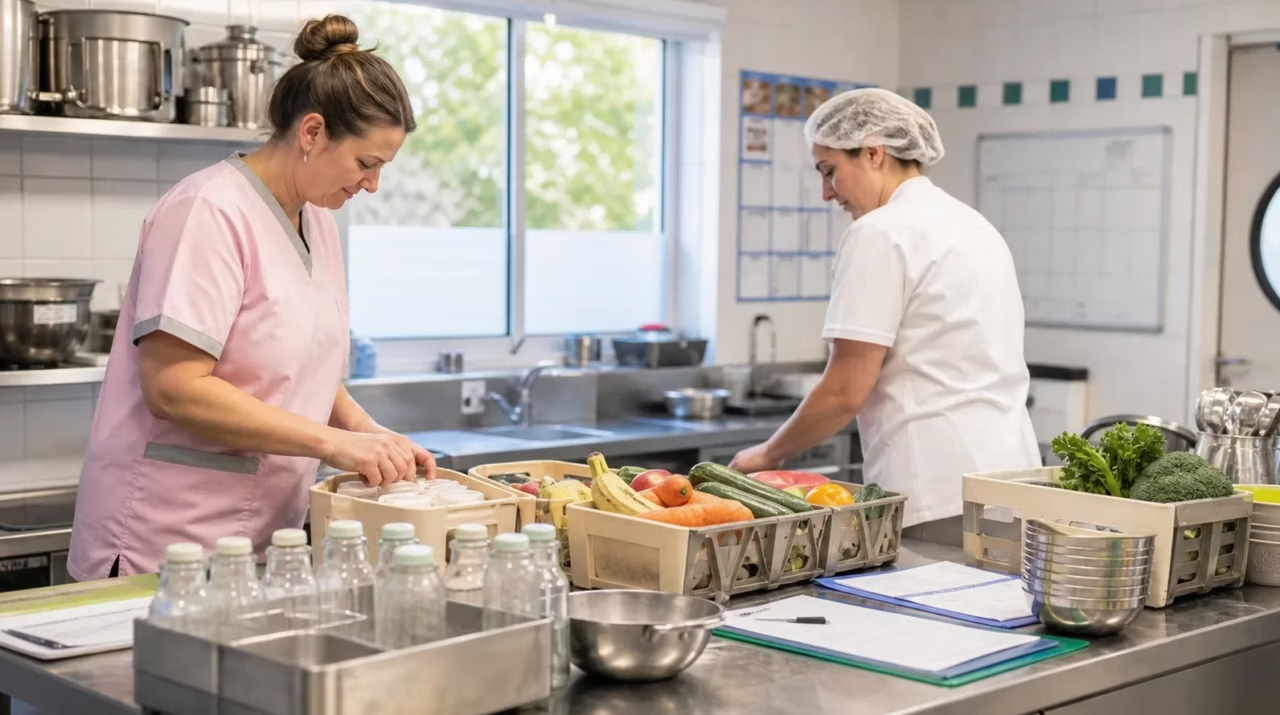
Across Texas, a quiet transformation is happening behind cafeteria doors. The Texas Initiative known as the Farm Fresh Network is redirecting institutional buying power toward homegrown ingredients — a move that swaps part of the long-haul supply chain for something far more regional. With 198 local farms and producers now listed in the database, the program is proof that school cafeterias and sustainable farming can work in the same sentence.
For students, the change can mean fresh produce that actually tastes like the season. For the farmers and ranchers on the other end of that transaction, it means a reliable buyer with serious volume. And for anyone tracking how American food gets from soil to table, it’s a living example of farm to school policy operating at scale.
The Farm Fresh Network, Explained Simply
Here’s how it works. The Texas Department of Agriculture maintains a searchable online database — the Farm Fresh Network — where growers, ranchers, distributors, and food producers list what they sell and when. School nutrition teams log in, browse by product or region, and build direct purchasing relationships with the people who actually grew the food.
Kelli Wise, program advancement director in the department’s Food and Nutrition Division, told Community Impact that the network stretches from the Panhandle to the Gulf Coast. That geographic breadth matters: a district in the Hill Country can source beef from the High Plains, a coastal city can order beans from the Rio Grande Valley. Regional agriculture gets a genuinely statewide stage.
Launched in 2010 under Texas Agriculture Commissioner Sid Miller, the network was built to answer a simple question: how do school kitchens actually find the farms closest to them? Before it existed, most districts leaned on broad distributors, many shipping from out of state. Now the database lists everything from grass-fed beef to pecans, black beans, berries, and honey — a range wide enough to cover a full lunch cycle.
From 5,000 Texas Hives to a School Tray
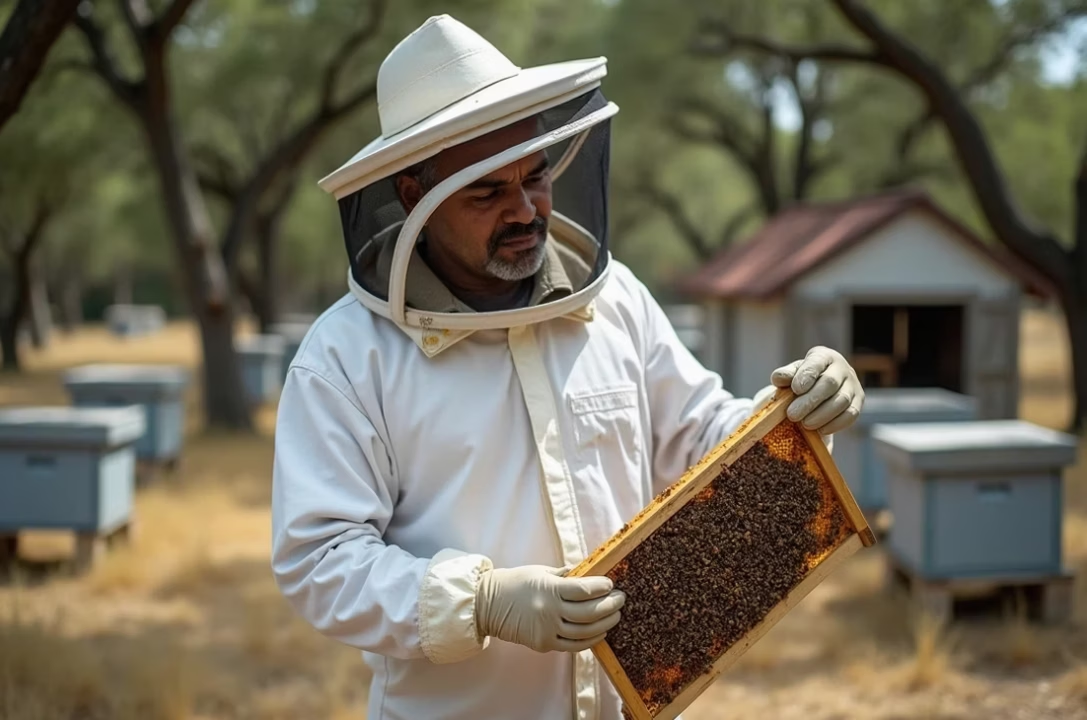
Round Rock Honey Company is one of the Austin-area producers on the network. Founder Konrad Bouffard works with roughly 5,000 hives scattered across the state, harvesting honey that tastes distinctly Texan — never blended, never stretched with syrup. That honey lands in school kitchens as a breakfast drizzle, a salad dressing base, or a quiet touch of sweetness in baked goods.
It’s a small example, but it’s exactly the connection the Texas Initiative was created to make. The database handles the introduction; the people handle the rest. Neighboring producers such as Hill Country Dairies, Hudson Meats, and Oatmeal and Company join it in the 24 businesses listed in the greater Austin region. That’s the quiet genius: local farms aren’t just leafy greens and heirloom tomatoes. They’re dairies, ranches, and millers, too.
For families unfamiliar with institutional food sourcing, the scale can be hard to picture. But consider what a single district orders in a week: milk for breakfast, protein for lunch, fruit on every tray. When those orders flow to Texas producers, the volume becomes meaningful very quickly. 🍽️
Austin ISD: Farm to School in Action
Austin ISD has become one of the network’s most visible champions. Lindsey Bradley, the district’s Food Service marketing manager, frames it as buying power used with intention. Each spring, the Nacho Average Food Truck visits high school campuses, serving dishes built from Texas-raised ingredients — most recently pork from Houston’s Taylor Stevenson Ranch Meat Co. A Farm Fresh Student Engagement Grant helped fund the project.
The truck does double duty: it introduces students to flavors they may never meet at home, and it opens a conversation about where cafeteria food actually comes from. Bradley told Community Impact that some students simply haven’t had the chance to taste the difference between a Texas-grown tomato and one shipped across the country. The program hands them that experience on a tray.
That’s the heart of the farm to school movement. It’s not just about nutrition, though nutrition matters deeply. It’s about exposure — teaching a generation that produce has a season, a terroir, and a face.
The Numbers Tell the Real Story
During the 2022–2023 school year, Texas schools spent $257.8 million on local foods, according to the USDA Food and Nutrition Service — a jump of more than 70 percent from the 2019 Farm to School Census. 📈 Even more telling, 59 percent of Texas schools reported that students were eating more fruits and vegetables as a direct result of these efforts.
Those figures don’t exist in a vacuum. They reflect a deliberate strategy that treats school lunch as an economic development tool as much as a nutrition program. When a district buys Texas beef, it supports Texas ranchers. When it orders local sweet potatoes, it supports local soil. The cafeteria becomes a lever for something much larger.
And the momentum hasn’t stalled. In October 2025 alone, schools participating in the Farm Fresh Network Challenge spent $23.5 million on Texas-grown products. That’s one month, one harvest season, one coordinated effort across hundreds of districts.
The October Challenge That Turns Lunch into a Lesson
The Farm Fresh Network Challenge has been running since 2013, and it has quietly become a statewide harvest festival. Throughout October, schools are encouraged to serve multiple local foods, host educational activities, and share their progress on social media. It’s low pressure, high spirit, and remarkably effective at building momentum.
Austin ISD participates every year. The district has highlighted seasonal standouts like apples and sweet potatoes, and — the part that turns heads — asked high school culinary students to build original dishes around local ingredients. The district’s executive chef plans to work with those same classes again, this time making cheese with local milk.
Picture that: teenagers in a school kitchen, learning to make cheese from Texas milk, then watching their classmates eat it in the lunch line. That’s not just nutrition. That’s food literacy, and it’s the essence of a community partnership done right.
What Farm Fresh Makes Possible
- 🍯 Honey from Round Rock Honey Company, pulled from about 5,000 Texas hives
- 🥛 Milk and dairy products from Hill Country Dairies
- 🥩 Beef and pork from ranches like Hudson Meats and Taylor Stevenson Ranch
- 🍓 Seasonal berries, lettuce, and tomatoes, rotating with the harvest
- 🥜 Texas pecans, beans, and pantry staples that anchor a full menu
Each item represents a relationship. Behind every delivery truck backing into a school loading dock is a farmer who decided the effort was worth it, a nutrition director who decided quality mattered, and a student who might just recognize a flavor next time.
What Families Can Take from the Farm Fresh Model
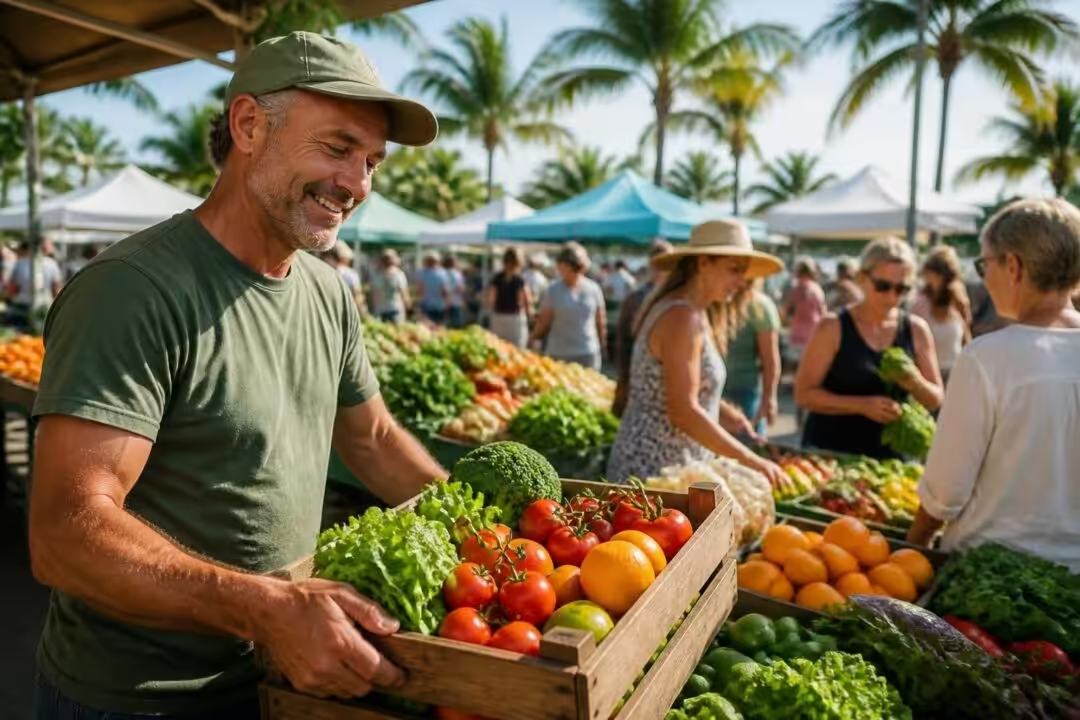
For home cooks, the lesson is refreshingly practical: buying local isn't a luxury habit — it’s a smart one. Seasonal produce tends to cost less, travel shorter distances, and taste sharper. A plant-forward dinner built around regional ingredients stretches a grocery budget further than a meal planned around imported everything. And when you know the farmer’s name — or at least the region — cooking starts to feel like participation rather than consumption.
Who wouldn’t want a little more of that in their kitchen? 🌱
Sustainable farming in institutional settings works the same way. It normalizes the idea that food has a source, that seasons matter, and that a school lunch can be both efficient and excellent. The more districts participate, the more normal it becomes — and the more the infrastructure around it strengthens.
Wise, the program director, sums up the long game: “We want Texans to know that we are trying to grow a Farm Fresh generation by serving local food in the cafeteria and child care centers and make sure those kids are healthy.”
The kids, after all, are the point — and the proof. Every tray that leaves the line with something grown in Texas soil is a small vote for a shorter supply chain, a stronger rural economy, and a more connected food culture. That’s an initiative worth naming, and a lunch worth savoring.
Hi, I’m Landon Brooks. I am the editor-in-chief of Cook and Design, but for the first decade of my working life I was actually a product designer in New York.
8 Comments
Finally, a scalable farm-to-school API. 198 producers and direct purchasing? The data pipeline is solid.
Landon, this is a clean circuit — farm to school without the voltage drop.
There’s quiet virtue in a lunch that tastes like soil and sun. Fresh peas in April—a small pedagogy of place.
Interesting model. With 198 farms, the potential for localized resilience is real. Would love to see data on cost savings vs. conventional sourcing.
This is a real-world supply chain API. Low latency from soil to tray. Nice integration.
Geographic diversity across Texas could strengthen supply chains. Landon, this program models how regional procurement can reshape infrastructure.
198 farms, direct state-scaled flow — this is resilient infrastructure with measurable impact.
The seasonality is the strongest material here. Beautiful piece Landon.
Les commentaires sont fermes.