
There is a particular energy at the Javits Center when thousands of specialty food makers bring their best work to one vast hall. The 2026 Summer Fancy Food Show delivered that energy in spades — and the Specialty Food Association’s Trendspotter Panel walked more than 345,000 square feet of exhibits to decode what comes next for the specialty food world.
The short version: farm-fresh flavors, bite-sized delights, and inside-out innovations are steering the conversation, with a strong current of cultural heritage underneath.
What to remember:
- 🌍 Global comfort food is the new frontier — familiar formats, unexpected flavors
- 🍯 Inside-out innovations put transparent, accessible ingredients like dates and honey at center stage
- 🥟 Bite-sized snacks are reshaping how America eats as GLP-1 medications change appetites
- 🕰️ Ancient recipes — from Navajo tea to Peruvian chicha morada — are finding entirely new audiences
- 🎨 Craft-forward, restrained packaging is beating loud branding as a signal of authenticity
Global Comfort Food: When the “Promiscuous Palate” Comes Home
The panel’s earlier “Promiscuous Palate” trend tracked adventurous eaters chasing bold international flavors. This year, that curiosity has moved straight into the comfort zone. Butter chicken frozen pizza, Korean-inspired savory oatmeal, beef shawarma pizza, and Bombay-spiced potato chips all appeared on the show floor — proof that global flavors are no longer a niche thrill for early adopters.
“Global flavors aren’t the story anymore. They’re the expectation in specialty food,” observed Carol Ortenberg of The End Cap. “A butter chicken pizza isn’t just a novelty; it’s a way to differentiate in a mature category.”
Familiar Formats as a Gateway to New Flavors
The quiet genius of this wave is the entry point. Consumers aren’t being asked to learn a new cuisine from scratch — they’re handed a format they already love, filled with flavors that intrigue. Gamsa Foods’ sesame garlic savory oatmeal and Mazala Pizza’s butter chicken pie both turn the quotidian into a culinary passport. 🍕
Matt Leeds of Forward Consumer Partners pointed to the premiumization of the frozen aisle in particular: “It’s a clear shift from the mass-frozen convenience default and a great way to stand out.” Retailers who make room for these hybrids in the freezer case are positioning themselves ahead of a curve that keeps accelerating. For the home cook, these products deliver gourmet depth without demanding a twelve-step recipe.
Inside-Out Innovations: Simplicity Beats Superlatives
For years, “free-from” claims dominated packaging — gluten-free, sugar-free, nothing artificial. The Trendspotter Panel’s Honest Processing trend has now turned inside out: brands are spotlighting what is in their products, not what isn’t. It’s a subtle but powerful reframe, and it reflects a maturing consumer who has heard one too many “better-for-you” pitches.
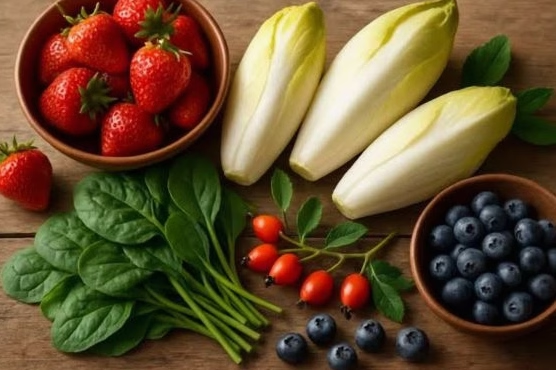
Dates appeared everywhere at the show — in caramel sauces, sparkling drinks, and protein bars. Honey showed up in dressings, thick spreadable jars, and tea infusions. Bone broth steeped into tea bags. Avocado oil replaced more exotic fats. These are not obscure functional ingredients; they’re accessible, familiar, and quietly luxurious.
“Indulgence is making a return. Dates are having a serious moment and were all over the Fancy Food Show,” noted Fred Hart of Hart Brands. The shift toward recognizable staples marks a broader desire for food that feels both special and trustworthy.
Transparency as a Competitive Edge in 2026
Singing Pastures’ pineapple pork sticks, Daramel’s date caramel sauce, and Noodoo’s smooth tomato sauce all bet on the same instinct: consumers want to understand what they’re eating. John Lane of The Raley’s Companies calls it a response to “function fatigue” — shoppers are simply tired of obscure benefit claims. Simple, recognizable ingredients let a product stand out through clarity alone. 🍯
Amid supply challenges like the whey shortage, brands that lean into abundant, honest ingredients gain a structural advantage. The design lesson here mirrors the culinary one: restraint reads as confidence.
Bite-Sized Delights: Appetite Reset Reshapes the Snack Aisle
As GLP-1 medications change how millions of Americans approach food, portion logic is transforming with them. The panel’s Appetite Reset trend tracks a surge in bite-sized delights — smaller packages, bigger flavor, denser nutrition. This is not about dieting; it’s about recalibrating what a satisfying bite looks like.
The show floor was a parade of poppable pleasures: Chenzi pork potato balls, Benihani chili chicken gyoza bites, Nada’s Colombian-style black bean empanadas, Bagelverse pizzabagels, and BARIS chocolate-dipped raspberries. Even Croots snacking croutons are betting on the small-format wave.
“The opportunity with bite-sized products isn’t simply smaller portions, it’s more occasions,” Ortenberg explained. “By delivering big flavor and quality in offerings that are easier to try, share, and enjoy, brands can unlock new ways to engage.”
For the home kitchen, the translation is immediate: a grazing board of small, high-quality bites reads as hospitality and intention, whether it’s a casual Tuesday dinner or a holiday spread. Portion-controlled doesn’t mean flavor-controlled. 🥟
Ancient Reimagined: Rooted Rituals Gain Ground
The panel’s earlier Rooted Rituals prediction identified a growing appetite for recipes anchored in something real. At the Summer Show, that appetite expanded into a full movement: Ayurvedic drinks, Arabic coffee, Persian sekanjabin, Navajo tea, Peruvian chicha morada, and tepache all found a place on the floor.
Labels like Dééh Navajo Tea and Goldholly Organic Yaupon Tea — the latter made from North America’s only native caffeinated plant — demonstrated that heritage is not a marketing angle but an anchor of trust in an increasingly crowded market. The same logic that drove yerba mate and açaí into the American mainstream is now reaching deeper into cultural wells.
From Nixtamal to Chai: Craft in Every Bite
La Milpa tortillas deploy centuries-old nixtamalization techniques for modern palates, honoring both the final flavor and the culture behind it. Kolkata Signature Chai Concentrate brings the chai wallah’s craft to the American pantry, while The Matzo Project’s shmura matzo connects a practice stretching back millennia to a contemporary table.
The emotional register here is striking: founders are looking backward to move forward, and consumers are responding to stories grounded in practice rather than pitch decks. Ritual, it turns out, is the ultimate seasoning.
Craft Aesthetic as a Signal: Packaging That Whispers
The loud, neon-saturated branding that once chased Gen Z’s attention is receding. In its place: hand-drawn packaging art, muted organic palettes, and a visual restraint that signals quiet confidence. The panel calls it “Shelf-Stable Chic” — a curated pantry that mirrors the shopper’s identity and evolving values.
Roaring Fork Mill flours, Painterland Sisters organic skyr, and From the Farm ice cream all draw from a farmers'-market visual language. The design doesn’t scream for attention; it earns a slower glance. And in 2026’s crowded grocery landscape, that slower glance converts to trust.
“We’re seeing more restraint: hand-drawn packaging art and muted organic colors, thoughtfully designed,” observed Becky Nelson Dahl of Bex Brands. “When done right, the trend helps consumers feel a closer connection to the food.” This is where food and design converge — the packaging becomes part of the meal. 🎨
Playful, Purposeful Packaging: When the Container Is the Innovation
“Sometimes innovation isn’t the product — it’s the package,” said Fred Hart. The show’s standout Emerging Trend was playful, purposeful packaging, and it is exactly the kind of lateral thinking that lives at the intersection of design and food.
Think applesauce in yogurt tubes, honey in toothpaste-style bottles, chocolate in cigarette-style packs, and balsamic in squeeze bottles. Rooted Broth’s bone broth tea bags and Small Town Cultures’ single-use kimchi sachets prove that rethinking the container can unlock entirely new usage occasions.
For the home cook, this reads as a series of small delights: a squeeze of balsamic drizzle that settles a salad in seconds, a popcorn cob that turns movie night into a ceremony, instant coffee that needs no machine. None of these require new skills — just a willingness to play.
What’s Next: Winter FancyFaire 2027 and the Road to $510 Billion
Specialty food and beverage products reached $295 billion in 2025 and are projected to grow to $510 billion by 2030. The segment now commands more revenue, retail space, and foodservice applications than at any point in its history — which means the directions spotted at the Summer Show carry real weight for everyone from product developers to dinner-table decision-makers.
For those eager to see where these food trends move next, Winter FancyFaire 2027 runs from January 17–19 in San Francisco, where the Specialty Food Association will offer a first look at its 2027 Trend of the Year. If this summer’s exhibit floor is any indication, the conversation will only get richer.
Until then, the 2026 Summer Show offers a clear lens for the months ahead: seek out transparent ingredient stories, embrace small formats for big occasions, and trust the ancient techniques that have been quietly waiting for their moment at the table.
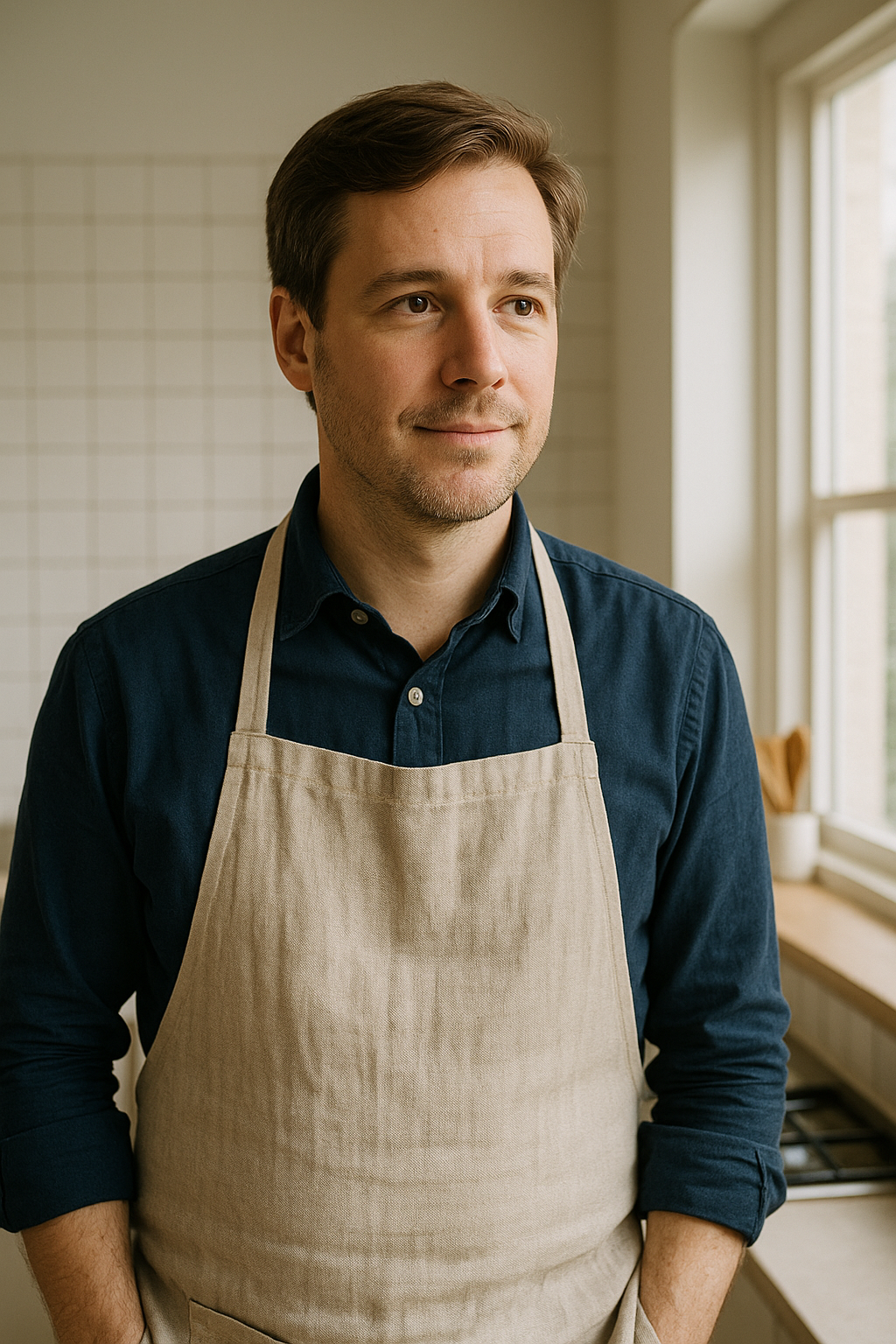
Hi, I’m Landon Brooks. I am the editor-in-chief of Cook and Design, but for the first decade of my working life I was actually a product designer in New York.

6 Comments
GLP-1 meds reshaping portions—could this shift urban food infrastructure? Need the data on snack density vs. public health.
The shift to restrained packaging feels like a photographer’s dream — less noise, more texture. Wonder what bio-based materials they’re using for those date wraps, Landon?
Chicha morada and Navajo tea root us in place, much like native plantings anchor a garden.
Ah, bite-sized snacks. Finally, a trend I can swallow.
Observed pattern: restraint in packaging correlates with ingredient transparency. Clean architecture, clean foods.
Thanks, Landon, for spotlighting the quiet packaging trend. A win for typographic elegance.
Les commentaires sont fermes.