
| In this story 🧭 | Quick wins ✅ |
|---|---|
|
|
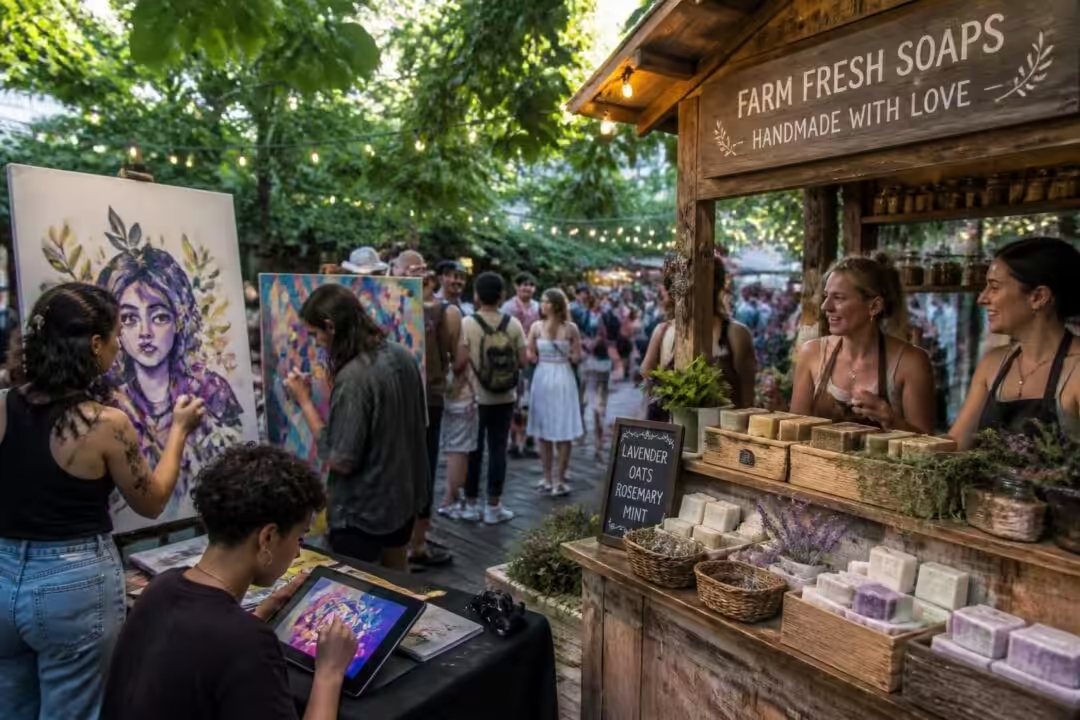
Musikfest has always been described in big numbers—hundreds of performances, packed streets, a city temporarily re-tuned to live sound. Yet the detail that changes how a day actually feels often sits between stages: a row of vendor tents where a handmade card, a pop-culture print, or a bar of goat-milk soap slows the pace down. That slowdown matters this week, especially with a regional heat advisory in effect across parts of eastern Pennsylvania and nearby New Jersey, when the smartest festival day is the one designed with intention.
Musikfest 2026 vendor culture: discovering fresh faces beyond the music stages
Musikfest in Bethlehem, Pennsylvania is often introduced as “America’s largest free music festival,” but that phrase doesn’t explain the most useful truth: the festival behaves like a small city for ten days, and the artisan marketplace is one of its neighborhoods. A first-time attendee might plan around headline sets—country-pop on a big stage one night, local openers earlier—then realize the day’s most memorable moment is a five-minute conversation at a booth where the maker explains why a certain ink, scent, or material choice exists. That exchange is the opposite of generic shopping. It’s a design critique you can take home.
On the North Side, festivalgoers flow through historic Main Street, then peel off toward clusters like Handwerkplatz, where the stall layout rewards browsing. The best vendor areas aren’t random; they’re curated for pace. The tents form a kind of visual rhythm—color, pattern, negative space—broken up by foot traffic and food lines. It’s the same logic used in a well-edited cookbook: variety keeps the eye from tiring, but repetition (a consistent tent cadence, a clear path) keeps people moving without stress.
For returning visitors, the “fresh faces” matter because they change the festival’s texture. A veteran might already know where to find a favorite funnel cake or which stage sightlines are forgiving. New vendors shift the map: suddenly there’s a reason to wander in the midday lull, when the sun is high and the schedule between sets stretches. That’s not just commerce; it’s programming. When Musikfest organizers add vendors with distinctive identities—pop-culture art on one side, farm-based body care on the other—they’re adding micro-destinations that redistribute crowds.
There’s also a practical layer. In weather like this—humid, hot, and lingering into the night—vendor zones can become the most manageable place to spend time because they offer partial shade, slower movement, and natural “pause points” that encourage hydration breaks. The regional advisory expects heat index values around 100°F in multiple nearby counties, with the added challenge that nighttime stays warm and sticky. That means the body’s cooling system doesn’t reset well after sundown, making an all-day festival pace harder. Vendor browsing, done early or in late afternoon, becomes a smart strategy: it’s engaging, but less physically demanding than sprinting between far stages.
A simple way to think about Musikfest’s artisan scene is to treat it like a pantry rather than a department store. A pantry holds essentials, but also personality—spices, oils, vinegars, the little things that quietly level up daily life. A festival vendor row can work the same way. A single illustrated print can change the feel of a kitchen nook. A well-made balm can live next to hand cream by the sink and become part of a nightly routine. The point is not to “score deals.” The point is to find materials with a story and a use.
One small habit that improves the vendor experience: take photos of booths (when permitted) the way a designer takes references—capture color palettes, packaging choices, textures—then decide later. Heat and music can push impulse buying, but the best purchases tend to be the ones chosen with a cool head. A festival day rewards restraint, and the artisan neighborhood is where restraint looks like taste.
Insight to keep: When the temperature climbs, the vendor areas aren’t a side quest—they’re one of the most comfortable, human-paced ways to experience Musikfest.
That human pace becomes even clearer when zooming in on a booth built around pop culture as a material.
Pop culture artistry at Handwerkplatz: how Alex N Crafts turns nostalgia into modern design
Pop culture references can be lazy—an easy quote, a familiar face slapped on a product—yet the best makers treat nostalgia like a real ingredient: measured, balanced, and paired with something unexpected. That’s what stands out about Alex N Crafts, a first-time Musikfest vendor based out of Flemington, New Jersey. The work draws from the bright orbit of the ’80s and ’90s, with specific muses like Pee-wee Herman or Paul Newman. Those names aren’t just trivia; they’re a vocabulary. They signal color, silhouette, and attitude.
At a festival, the booth has seconds to communicate what it is. Alex N Crafts does it by leaning into vibrant handmade pieces—greeting cards, illustrated prints, and playful accessories that read clearly from a distance. There’s a designer’s lesson here: legibility is kindness. In the same way a well-written recipe uses bolded timing cues, a booth benefits from a clean hierarchy—hero items at eye level, smaller impulse pieces lower, and a palette that holds together even when crowds blur the view.
Why ’80s and ’90s references still sell in 2026 (and what that says about the home)
In 2026, nostalgia isn’t only about age. It’s about visual relief. Many American homes are saturated with screens and sleek interfaces; a handmade print with a wink to old-school pop culture introduces texture and humor without requiring a tech update. It’s the same reason people still buy analog kitchen timers or a chunky ceramic mug: objects that have a point of view become anchors.
There’s also a cross-generational effect. Someone who grew up with late-night reruns might recognize a reference immediately, while someone younger might simply read it as “bold character energy.” When a maker selects references with strong shapes—distinctive faces, recognizable props—the work holds even if the viewer doesn’t catch the exact origin. That’s smart design: meaning for insiders, aesthetics for everyone else.
Case study: a festivalgoer’s “small art” decision-making
Consider a fictional but familiar visitor: Maya, a 34-year-old home cook from the suburbs outside Philly, at Musikfest with friends. The day is humid; everyone is moving slower. Maya stops at Alex N Crafts because the color blocks pop from ten feet away, and the cards feel tactile—paper stock with enough heft to be satisfying. She laughs at a reference she half-remembers, then notices the illustration technique is clean enough to frame.
Here’s where “small art” shopping becomes a kitchen story. Maya doesn’t need another decorative object. But she does need a way to make her apartment’s eating area feel less like a pass-through. A single framed print, hung near the dining table, is a design intervention. It changes the mood of weeknight dinners more than a new gadget would. A cook understands that: the best upgrades are often environmental, not mechanical.
Alex Francis has described applying after attending the festival as a music fan first—coming for the lineup, then imagining herself on the other side of the tent. That arc matters because it’s the festival at its best: the audience becomes the maker community. Musikfest is huge, long, and logistically intense; choosing to debut there is a confidence move. For shoppers, that means encountering work that’s hungry, energized, and not yet flattened by repetition. The freshness is real.
A practical shopping tip that keeps the day calm: if paper goods are on the list, bring a rigid mailer or a thin cutting board in a tote to protect prints from bending. It’s the same logic as packing cookies so they don’t crumble—structure prevents heartbreak.
Insight to keep: The strongest pop-culture art doesn’t borrow relevance—it designs relevance by making nostalgia feel like a new color in the room.
From visual nostalgia, the path naturally shifts to scent and skin—another kind of craftsmanship that plays differently in heat.
Handmade farm-fresh soaps at Musikfest: KB White Farm’s goat milk, beeswax, and ingredient integrity
Handmade soap is easy to romanticize, but the best versions succeed for the same reason great pantry staples succeed: the ingredients are traceable, the technique is consistent, and the end product behaves predictably in real life. KB White Farm Soap, based in Conesus, New York, brings that kind of grounded credibility to the festival circuit. The operation is described as award-winning—seven times over—and the key detail is not the trophy count. It’s the supply chain: goat milk from their own goats, beeswax and honey from their own work, and products made from scratch on the farm.
For a design- and food-minded audience, that’s instantly legible. It mirrors how a cook trusts a farmers market egg vendor more when they can explain the flock, the feed, the seasonality. It’s not about purity theater; it’s about accountability. When a maker controls primary inputs, they can also control consistency—how a bar lathers, how it cures, how it holds scent, how it lasts at a sink that sees constant use.
Reading a soap label like a cook reads an ingredient list
Festival shoppers often pick soap by smell first. Smell is powerful, but it’s also volatile—especially in heat and humidity. A better method is a two-step tasting-menu approach: aroma, then structure. Ask what fats are used. Ask how goat milk changes the feel. Ask whether the scent is essential oils, fragrance blends, or a mix. Not because one is “good” and the other “bad,” but because each behaves differently on skin and in storage.
Goat milk is prized for its creamy feel in finished soap, while beeswax can contribute to firmness and a more durable bar—useful in a household where the soap sits near a steamy shower. Honey can add character and color, and it often reads as warmth rather than sugar. These are tactile decisions. They’re also packaging decisions: a firm bar ships and travels better, which matters when a farm brand drives to shows and festivals and needs the product to arrive intact.
Heat-aware buying: what to purchase at an outdoor festival
With a heat advisory calling for a heat index near 100°F in parts of the region—and some areas pushing higher into the weekend—body-care buying becomes surprisingly practical. A balm that lives in a pocket can melt. A soap wrapped tightly in plastic can sweat. A smart vendor anticipates this with breathable wrapping and storage guidance, but shoppers can help themselves too.
- 🧼 Choose firmer bars for travel days; they tolerate warm cars better than softer formats.
- 👜 🧊 Pack soaps away from ice or condensation in a tote to avoid soggy wrapping.
- 🌿 Pick one “clean” scent and one “comfort” scent to cover kitchen + shower without overload.
- 🚿 Ask about cure time and how to store at home (a draining dish is the difference between a week and a month).
There’s also something quietly compelling about a farm brand thriving at a music festival. It suggests the crowd is hungry for objects that are usable, not just decorative. Kevin White has described arriving with modest expectations and being surprised by how well the festival audience responded—an experience many first-time vendors share when the match is right. Musikfest is massive, but it can still reward makers who keep the story clear: this comes from our hands, from our place.
For home cooks, soaps and dish soaps intersect with kitchen life more than people admit. Hands get washed dozens of times a day. Fragrance lingering on fingers can either elevate prep (a clean herbal note) or clash (an overly sweet perfume next to garlic). A good bar near the sink is like a good olive oil: it disappears into routine, then one day it’s gone and the replacement feels wrong. That’s how daily standards are built.
Insight to keep: Ingredient integrity isn’t a slogan; it’s a form of repeatability—the same reason tested recipes matter.
And because the body is part of the festival equipment, the next piece is designing a heat-safe day that still feels joyful.
Heat advisory festival strategy at Musikfest: hydration, timing, and food choices that actually help
When a regional heat advisory lands over the Lehigh Valley and nearby counties, it changes what “a fun day out” requires. The advisory language is plain for a reason: heat index values around 100°F, humidity that stays high, and warm nights that don’t offer much relief. That combination taxes the body. It also shifts how food and drink should be handled, especially at an event where walking, standing in lines, and sun exposure stack up fast.
The simplest framing is to treat the day like a menu with courses. There’s a time for heavy, crispy, fried festival classics—and a time for lighter, salt-forward snacks that support hydration. There’s a time for an iced drink—and a time for water that’s actually doing the work. Without that structure, people eat randomly, drink too late, and end up tired before the best sets even start.
Build a “hydration recipe” (and follow it)
Hydration advice gets repeated so often that it becomes background noise, but in high humidity, thirst is a lagging indicator. A practical approach is to plan fluids the way a cook plans mise en place. Before arriving, drink water and eat something with salt. At the festival, alternate water with an electrolyte drink. Keep caffeine and alcohol from becoming the main event.
OSHA-style guidance for outdoor work translates cleanly to festival life: schedule frequent breaks in shaded or air-conditioned spaces, and reduce strenuous movement to early morning or evening if possible. Musikfest’s layout encourages wandering; in heat, wandering needs guardrails. A shaded vendor aisle can be a rest break. A sit-down meal can be a reset if it’s timed before the hottest hours, not after.
What to eat in heat: smart choices without killing the festival mood
Heat changes appetite and digestion. The goal isn’t to “eat healthy”; it’s to eat in a way that keeps energy steady. Foods that help tend to be high in water, moderate in fat, and seasoned enough to make water retention easier. Acid also helps—citrus, vinegar, pickled items—because it brightens flavor when taste buds feel dulled by heat.
Festival food is famously tempting, and it should be. The trick is sequencing. A fried item becomes more enjoyable when it’s not competing with dehydration. A sweet dessert lands better when it follows water and something savory. Think like plating: contrast makes each element taste more like itself.
| Festival moment ⏱️ | Better choice in high heat 🥵 | Why it helps 🧠 |
|---|---|---|
| Arrive + first walk | 💧 Water + salty snack (pretzel, popcorn) | Salt supports hydration and reduces the “bonk” from sweating. |
| Midday browsing (vendor rows) | 🍉 Fruit cup or something with acid (lemonade cut with water) | Higher water content + brightness keeps appetite steady. |
| Pre-headliner meal | 🍗 Share one heavier item + add something light | Portion control prevents the post-meal slump during the set. |
| Late evening cooldown | 🧊 Cold water + sit-down break | Warm nights mean the body needs intentional recovery time. |
It’s also worth naming the warning signs plainly, because they get ignored in crowds: dizziness, nausea, headache, cramps, confusion. Heat exhaustion needs immediate cooling and fluids; heat stroke is an emergency and calls for 911. That’s not alarmist—it’s basic event literacy, like knowing where the exits are.
Finally, design matters. Lightweight, loose clothing is a performance tool. Sunscreen is not optional. A small folding fan is a surprisingly effective piece of kit. The more the day is treated as a system, the more room there is for spontaneity where it counts: the music, the art, the conversations.
Insight to keep: In high heat, a great festival day is not the busiest one—it’s the best-paced one.
With the heat plan in place, the final layer is how to shop and taste the festival like a cook: with senses, editing, and a little restraint.
A cook-and-designer way to experience Musikfest: building a sensory “menu” from art, aroma, and local craft
American home cooks often assume their sensibilities only apply in the kitchen. But the same skills that make someone good at seasoning—attention, restraint, willingness to adjust—also make them excellent festival-goers. Musikfest rewards people who can edit in real time: deciding which stage is worth the walk, which line is worth the wait, which purchase is worth carrying for the rest of the day. The artisan tents are where that editing becomes pleasurable rather than stressful.
A helpful frame is to treat the day as a sensory menu with distinct courses: sight (prints, cards, handmade goods), smell (soap, balms, food smoke drifting from grills), sound (live sets), and texture (paper stock, ceramic, fabric, the cold cup sweating in a hand). When each “course” has a moment, the day feels designed rather than chaotic.
Designing a vendor route that respects energy
Start with the vendor areas earlier in the day when the sun is less aggressive and the crowds are slightly looser. This is where new makers—like Alex N Crafts with pop-culture driven prints and cards—are easiest to engage with. Questions get better answers when the booth isn’t slammed. A short conversation can reveal whether a print was created with archival inks, whether cards are hand-finished, or whether jewelry uses polymer clay with sealed surfaces that hold up to summer sweat.
Then, pivot to tactile necessities: bath and body items like KB White Farm Soap. In heat, fragrance can be overwhelming, so it helps to smell two options, step back, drink water, then smell again. The nose fatigues quickly in humid air. A cook knows that, too—the palate needs resets. Coffee beans aren’t magic; time and distance are.
Small purchases, big impact: what to bring home (and why)
Festival shopping works best when items can slot into daily life. A great greeting card is not just stationery; it’s future social grace in a drawer. A bar of dish soap is not just soap; it’s a better hand-washing experience after chopping onions. A small illustrated print can become the visual anchor near a breakfast table. These are minor objects that reshape routine.
- 🎨 One framed print for the kitchen or dining nook (instant mood shift).
- 🧼 Two soaps: one for the shower, one for the sink (separate scent “zones” at home).
- ✉️ A set of cards that feel like the buyer’s voice (design is communication).
- 🧃 A reusable bottle kept in rotation after the festival (habit design that lasts).
There’s a reason this kind of shopping feels satisfying: it’s not about novelty, it’s about materials with intention. Musikfest, at its best, is a place where a crowd can hear a headliner at night and still spend the afternoon talking to a maker who knows every ingredient on their label and every reason behind their palette.
For anyone building a day around music, it’s worth leaving a little blank space in the schedule. Blank space is where the unexpected lives—a new vendor discovery, a conversation about beeswax from a farm in New York, a print that makes a home cook rethink their kitchen wall. That is the festival’s quiet power: it turns a packed summer calendar into something personal.
Insight to keep: The most memorable Musikfest souvenirs are the ones that keep working on an ordinary Tuesday—long after the stages go dark.
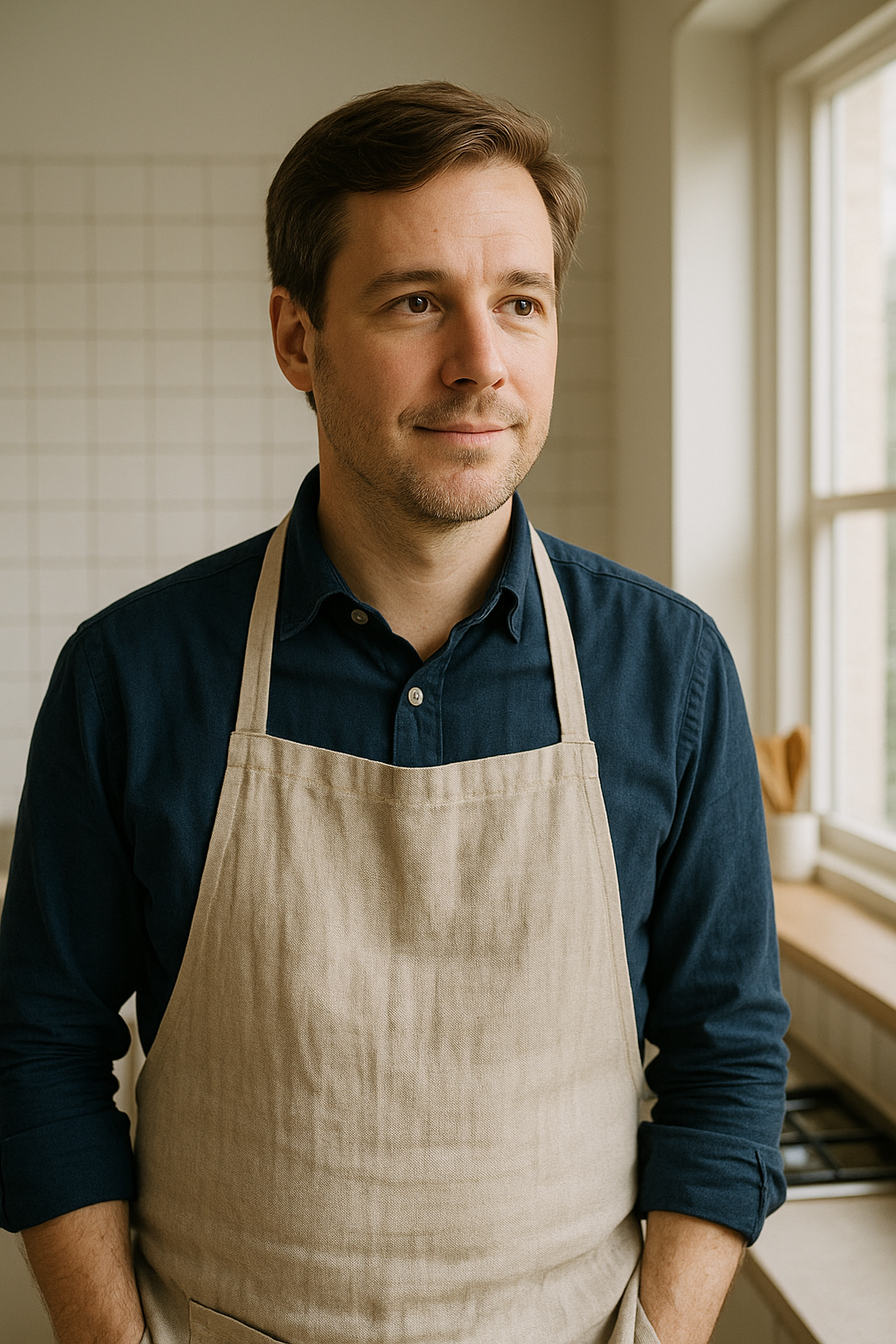
Hi, I’m Landon Brooks. I am the editor-in-chief of Cook and Design, but for the first decade of my working life I was actually a product designer in New York.


6 Comments
Love the intentional approach—treating the day like a well-structured system. Hydration as a recipe? That’s my kind of optimization.
Optimizing festival time with data-driven decisions: hydration intervals, shade breaks, and curated purchases. Great perspective.
Smart angle—treating vendor tents as thermal mass and sensory palette; the soap’s ingredient story is pure material science.
The heat-advisory focus on shade breaks and hydration is key; urban design should apply this logic to all public spaces.
Nice breakdown, Landon. The heat-advisory survival part reads like a good error-handling strategy. I’d add: always have a try-except for shade.
The vendor layout creates natural cooling breaks between stages — good urban planning for a heat advisory.
Les commentaires sont fermes.