Taylor Farms Response to the Cyclosporiasis Outbreak: What the Voluntary Iceberg Lettuce Pull Actually Means
The latest wave of cyclosporiasis cases has forced an uncomfortable reality onto the American plate: even the simplest topping—shredded iceberg lettuce—can become a nationwide risk when supply chains move at lightning speed. In response to information shared by federal regulators, Taylor Farms de Mexico voluntarily removed all iceberg lettuce sourced from central Mexico from the U.S. market. That move matters because it is not a vague promise to “look into it”; it is a concrete action that immediately changes what can and cannot be shipped, prepped, and served.
The company’s wording has been precise: the decision followed details provided by the FDA during the traceback process. Traceback is the painstaking work of matching illness interviews and restaurant purchase records to distribution routes, down to the lot and farm-source level. In practical terms, it means investigators are trying to reconstruct where the lettuce traveled, who handled it, and when it entered kitchens. The key point is that the pull focuses on a specific sourcing channel—central Mexico iceberg—rather than sweeping in all products under a corporate umbrella.
A clear line has also been drawn between implicated items and what is not implicated. Taylor Farms communicated publicly that no Taylor Farms branded salads or kits are linked to this outbreak and emphasized that no Taylor Farms branded salad kits contain iceberg lettuce. That detail matters for shoppers scanning shelves in stores that carry Taylor Farms items, because fear often spreads faster than pathogens. When a brand appears in headlines, consumers often assume every SKU is suspect, even if the outbreak signal points to a different distribution pathway.
To make the chain reaction easier to picture, consider a fictional but realistic setting: a high-volume Taco Bell off a Michigan highway, where the lunch rush hits like a wave. Lettuce arrives pre-shredded, stored cold, portioned fast, and sprinkled on tacos and bowls in seconds. When a suspected ingredient is pulled “indefinitely,” a store’s workflow changes overnight—menus are adjusted, prep charts rewritten, and managers spend hours explaining to frustrated customers why something as basic as lettuce is suddenly missing. That operational whiplash is the real-world footprint of a supplier’s voluntary withdrawal.
It is also a reminder that corporate response is not only about optics. The moment a supplier advises major partners to remove product, it triggers logistics steps: halting shipments, isolating inventory, updating distributor systems, and confirming compliance in the field. Reports indicate Taylor Farms alerted both Yum Brands (Taco Bell’s parent company) and Sysco, the giant distributor, to pull lettuce from distribution. A pull at that level isn’t a single phone call; it becomes a chain of documentation, signed verifications, and warehouse holds that ripple across states.
Ultimately, the significance of Taylor Farms’ action is this: it moves the situation from suspicion to prevention, limiting potential exposure while investigators sharpen the outbreak picture. The next logical question—how investigators connect illnesses to a specific ingredient—sets the stage for the deeper mechanics behind the outbreak’s numbers and geography.
CDC and FDA Investigation Updates: How Shredded Iceberg Lettuce Became the Focus of the Cyclospora Traceback
Federal outbreak investigations are built like careful recipes: start with the raw ingredients (patient reports), test and refine (lab confirmation), then identify the shared element across multiple meals (epidemiology and traceback). In this multistate cyclosporiasis event, the CDC reported nearly 7,000 people affected across 34 states, with 94 hospitalizations and no deaths. Those numbers carry two messages at once: the illness burden is huge, yet the absence of fatalities suggests treatment and supportive care have been effective when patients access help promptly.
Cyclosporiasis is caused by Cyclospora, a parasite that can trigger prolonged, sometimes severe diarrhea—often described by patients in intensely vivid terms. The challenge is that symptoms may start days after exposure, making it difficult for people to remember everything they ate. That’s where the CDC’s structured interviews shine: investigators ask standardized questions about restaurant visits, grocery purchases, travel, and specific ingredients like leafy greens. When enough unrelated people point to the same kind of meal, the signal becomes harder to ignore.
In this outbreak, the CDC stated that the FDA’s traceback work identified a single supplier of iceberg lettuce from Mexico used by the Taco Bell locations under investigation. While agencies have not consistently named the supplier in their own updates, major outlets have reported Taylor Farms as the company under scrutiny. This split—agencies describing the supplier without naming it, while media reports fill in the blank—can feel confusing. Still, it reflects the legal and procedural caution agencies use while verifying records and ensuring that public statements align with confirmed evidence.
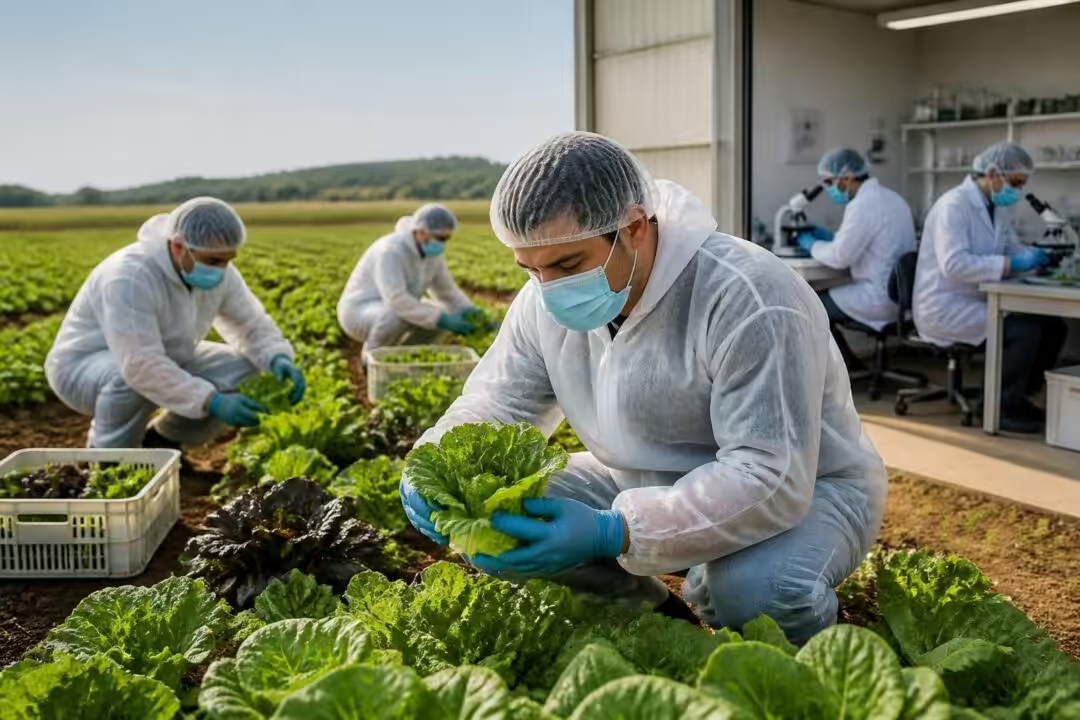
Why did shredded iceberg lettuce become such a focal point? Because shredded product has a particular risk profile. Once a head of lettuce becomes thin strips, the surface area expands dramatically. If contamination occurs at any step—field, wash water, processing equipment, or handling—more of the product can carry it, and it can be distributed widely. Add the reality of fast-food prep, where speed is king, and the ingredient can reach thousands of plates quickly. Even with food safety controls, volume magnifies the consequences of any lapse.
One operational detail that often goes unnoticed is how investigators connect the dots between a restaurant and a supplier. It’s not guesswork; it’s paper trails and digital logs. Purchase orders show what was delivered, invoices show when, and distributor records show from where. If Taco Bell restaurants in multiple states received shredded iceberg from the same supply channel, and patients across those states report eating there during relevant dates, the pattern strengthens. The resulting public guidance—avoid specific items in specific contexts—may look narrow, but it’s designed to be precise rather than panic-inducing.
That precision shows up in the advice circulating around this event: do not eat food items containing shredded iceberg lettuce sourced through the implicated channel at the affected Taco Bell locations. Importantly, the CDC has also indicated it is investigating other Cyclospora outbreaks nationally that are not related to this particular cluster. That nuance matters, because it means “Cyclospora is in the news” does not automatically imply one single source nationwide. Multiple outbreaks can occur simultaneously, each with its own origin and control steps.
As the investigation narrows, the story shifts from detective work to crisis management—especially for brands that must protect diners while keeping kitchens functional. That tension is most visible in how Taco Bell and its supplier network adjusted in real time.
How Taco Bell and Taylor Farms Managed the Shared Crisis: Removal, Messaging, and Restaurant-Level Realities
When a major chain is told a popular ingredient may be involved in an outbreak, the response must be fast enough to protect guests and orderly enough to avoid chaos in thousands of locations. Taco Bell’s public position has been direct: the chain removed the affected lettuce from restaurants and did so indefinitely, signaling that the ingredient would not return until the risk is clarified and controls are reinforced. That single word—indefinitely—matters because it resets expectations. It tells customers that this isn’t a brief shortage; it’s a safety-driven pause.
A shared crisis also means a shared operational puzzle. Taco Bell kitchens are designed for rhythm: line builds, cold station, portioning, and tight time targets. Pulling shredded iceberg affects more than tacos; it changes the mouthfeel of menu items, the balance of flavors, and the perception of freshness that crunchy lettuce provides. Some locations pivot toward other textures—extra cabbage blends where available, or emphasizing tomatoes and sauces—but substitutions must be vetted for supply consistency and allergen controls. Fast food is not simply “swap it out”; it’s “swap it out at scale with documentation.”
On the supplier side, Taylor Farms sits in a powerful position within the food ecosystem. The company provides produce to large chains—including Taco Bell, McDonald’s, Burger King, and Chipotle—and also sells packaged greens broadly. In crises like this, the most responsible supplier behavior is swift containment: communicate clearly with partners, pull product from distribution, and coordinate with regulators. Reports indicate Taylor Farms instructed both Yum Brands and Sysco to remove the implicated lettuce from circulation. That is the kind of move that triggers warehouse holds, stop-ship notices, and extra verification checks at receiving docks.
Customer perception, however, has its own logic. Since the outbreak began in early July, customer counts at major fast-food chains—including Taco Bell and other brands frequently mentioned in the same breath, such as Jersey Mike’s, Chipotle, and Panera—have reportedly dropped sharply. Not every dip is a direct measure of confirmed exposure; often it is a measure of anxiety. One headline can change a family’s dinner plan, even if the family never ate at the affected location or in the relevant window.
To illustrate how this plays out, imagine a busy suburban franchise where a manager is fielding questions at the counter: “Is your salad safe?” “Is the lettuce the one from the news?” “Should we be worried?” The best answers are calm and specific—what item was removed, when it was removed, and what guests should do if they feel unwell. In a crisis, vagueness reads like avoidance. Specificity reads like care.
Clear communication also helps separate what’s implicated from what’s merely adjacent. Taylor Farms’ social messaging emphasized that branded salad kits are not tied to the outbreak. Taco Bell’s messaging highlighted that it had completed removal of the affected lettuce and encouraged other operators to take precautionary steps. Together, those statements aim to do two things: cut exposure pathways and reduce runaway rumors.
The practical question for diners is not only “Is lettuce on the menu?” but “what should someone do if they ate the suspected ingredient and now feels sick?” That moves the conversation from brand crisis to personal health decisions, including symptoms, timing, and when medical care is warranted.
Recognizing Cyclospora Symptoms and Protecting Diners: What Severe Diarrhea Cases Mean in Daily Life
Cyclosporiasis can be more than an inconvenient stomach bug; it can become a draining, relentless illness that disrupts work, childcare, and hydration status in a matter of days. The hallmark symptom is watery diarrhea, sometimes severe, often accompanied by cramping, fatigue, nausea, and appetite loss. For some people, symptoms come in waves—improving briefly, then returning. That stop-start pattern can trick diners into thinking the problem has passed, only for it to roar back after a normal meal.
Severe diarrhea has consequences that are easy to underestimate. Dehydration can creep up quickly, especially in hot summer months when people are already losing fluids. Someone working outdoors or standing on a busy kitchen line all day can get into trouble fast if they can’t keep liquids down. The fact that the CDC reported 94 hospitalizations underscores that a subset of patients needed IV fluids, monitoring, or targeted treatment. Hospitalization doesn’t automatically mean life-threatening illness, but it does mean home care wasn’t enough.
Because the outbreak has been associated with shredded iceberg lettuce served at certain Taco Bell locations, many diners are asking a practical question: “If someone ate there, what now?” The best approach is structured observation. Symptoms may begin days after exposure, so people should pay attention to how their body feels over the following week or more. If diarrhea becomes persistent, severe, or accompanied by signs of dehydration—dizziness, dry mouth, reduced urination—it’s time to seek medical advice promptly. 🚑
Foodborne parasite events also carry a social layer. People may feel embarrassed discussing explosive diarrhea, delay care, or avoid telling a clinician about restaurant meals. Yet those details matter for diagnosis and public health tracking. When patients share where they ate, they help investigators confirm patterns and prevent additional illness. A short conversation can protect many strangers, which is a rare form of community service performed from a doctor’s office.
In a chef-driven kitchen culture, there’s another angle: staff health policies. Sick food workers should not be pressured to “push through,” especially when diarrhea is involved. Even though Cyclospora is not spread in the same way as every other pathogen, any outbreak moment is a reminder to treat gastrointestinal illness as a stop-work signal. Restaurants that encourage rest, provide coverage, and reinforce handwashing protocols protect both guests and staff morale. 🧼
At home, diners can focus on gentle recovery foods and hydration. Think of bland starches, broths, and electrolyte drinks, and avoid heavy fats or high-sugar items that can worsen diarrhea. But home care should not replace professional guidance if symptoms are intense or prolonged. A clinician may decide on testing and treatment based on symptom pattern and outbreak context.
The emotional toll deserves mention too. When an outbreak is in the headlines, people can start treating all fresh produce as suspicious, which can backfire by reducing intake of fruits and vegetables that support overall health. The goal is not to fear greens; it’s to demand strong controls, respond quickly when issues arise, and rebuild trust with transparency. That trust is shaped not only by health advice but also by how retail and supply-chain messaging clarifies what products are and are not involved.
Those distinctions—implicated shredded iceberg in certain foodservice channels versus non-implicated branded salad kits—lead directly to the next crucial topic: how consumers and operators can make smart decisions at the store, in the drive-thru, and in distribution hubs without throwing away safe food.
Critical Consumer and Industry Updates: What’s Recalled, What’s Not, and How to Navigate Produce Safety Now
During a high-profile outbreak, misinformation often spreads in a way that resembles cross-contamination: a little confusion touches everything. The most useful updates are the ones that separate what is linked, what is being investigated, and what has not been implicated. In this case, public reporting and agency statements point toward shredded iceberg lettuce served at specific Taco Bell locations as the central concern. Meanwhile, Taylor Farms has stated clearly that Taylor Farms branded salads and kits are not associated and that their branded salad kits do not include iceberg lettuce.
Another essential nuance is distribution channel. Taylor Farms products are available through large retailers—Target, Whole Foods, Walmart, and Amazon Fresh among them—yet there has been no indication that the shredded iceberg tied to the outbreak reached those shelves. That does not mean shoppers should ignore food safety basics; it means the current signal is concentrated in foodservice distribution connected to the implicated ingredient and locations.
For restaurants and institutional kitchens, the decision tree is different from the consumer one. Operators must verify sourcing, lot codes, and distributor notices, then document actions taken. A single mislabeled bin or overlooked case can undermine a whole facility’s controls. That’s why supplier guidance to major distributors like Sysco is so important: it helps remove questionable inventory before it ever hits a prep table.
To help readers track the situation without drowning in headlines, the following table lays out practical distinctions and actions. It’s designed as a working tool rather than a scare piece.
| Area ✅ | What’s Being Discussed 🔎 | What It Means in Practice 🍽️ | Smart Next Step 🧭 |
|---|---|---|---|
| Foodservice (Taco Bell) | Shredded iceberg lettuce tied to illness cluster 🥬 | Ingredient removed from restaurants “indefinitely” ⛔ | Follow store notices; choose items without shredded iceberg if concerned 🧾 |
| Supplier action | Taylor Farms de Mexico pull of central Mexico iceberg 🧊 | Stops that source from entering U.S. distribution 🚚 | Operators confirm distributor holds and record disposal/returns 🗂️ |
| Retail grocery | Taylor Farms branded kits and salads 🛒 | Company states not associated; kits don’t contain iceberg lettuce ✅ | Check product type; keep normal produce handling habits 🧼 |
| Public health numbers | Nearly 7,000 cases, 34 states, 94 hospitalizations 📈 | Large outbreak footprint; serious symptoms in some patients 🏥 | Seek care if persistent diarrhea or dehydration signs occur 🚑 |
Consumers can also take a calm, concrete approach when deciding what to eat while investigations continue. The following checklist favors clarity over panic, and it works whether dining out or shopping.
- 🥬 Ask what lettuce is being used when ordering salads or lettuce-heavy items; staff can often confirm whether shredded iceberg is currently served.
- 🧾 Keep receipts or order histories for a short period after dining out; they can help if symptoms develop and a clinician asks about exposure timing.
- 🚰 Prioritize hydration at the first sign of significant gastrointestinal illness; dehydration is the fastest route to complications.
- 📞 Contact a healthcare provider if diarrhea is severe or persistent, especially for older adults, immunocompromised people, or anyone who can’t keep fluids down.
- 🧼 Maintain normal produce hygiene at home—clean hands, clean surfaces, proper refrigeration—without assuming every leafy green is unsafe.
From an industry perspective, outbreaks like this often become turning points. Companies revisit wash steps, sampling plans, cold-chain monitoring, and supplier audits. The broader produce world has learned hard lessons from previous leafy-green crises, and the pressure in 2026 is to pair speed with verification—because consumers still want convenient salads and quick tacos, but not at the cost of illness. The most valuable insight moving forward is that transparency and traceability are no longer “nice to have”; they are the price of staying on the menu.

Hi, I’m Landon Brooks. I am the editor-in-chief of Cook and Design, but for the first decade of my working life I was actually a product designer in New York.