Midcoast Group Delivers Freshly Harvested Strawberries: How a One-Day Harvest Became Next-Day Dignity
On a bright July morning in Bowdoinham, the strawberry rows at Fairwinds Farm carried a familiar summer fragrance—warm leaves, sunlit soil, and fruit that stains fingertips red. Yet the day’s purpose wasn’t a farm stand rush or a jam-making marathon. It was a coordinated harvest led by Mid Coast Hunger Prevention Program’s Merrymeeting Gleaners, timed to move berries from field to families with minimal delay. Within roughly 24 hours, those strawberries shifted from a rural patch of Maine to a food pantry line in Brunswick, where fresh fruit can feel like a luxury rather than a given. 🍓
This is the heart of gleaning: gathering what would otherwise be left behind, then delivering it quickly and respectfully. Farms often have produce that is delicious but imperfect for retail—berries that are slightly small, a little soft, or simply too plentiful to justify labor costs for commercial packing. Gleaning steps in at the exact moment when a crop remains beautiful to eat but no longer fits market channels. The result is not “leftovers” in the emotional sense; it is peak-season food redirected to neighbors who rarely get to taste the season at its best.
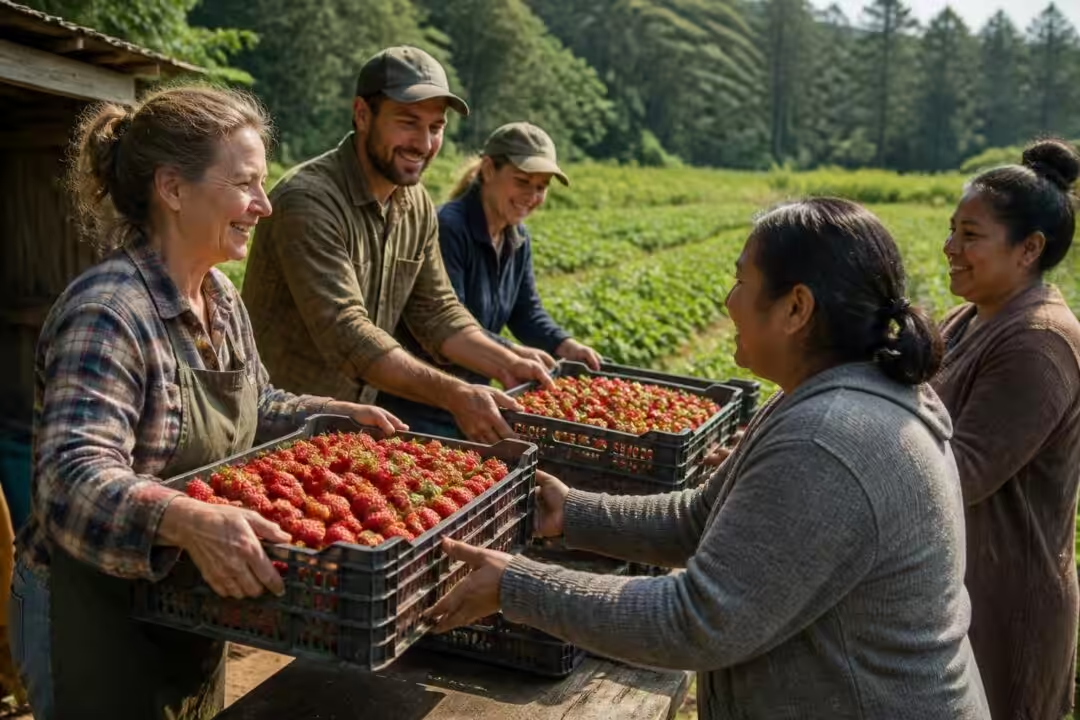
The July 9 harvest at Fairwinds Farm was also a demonstration of logistics. Volunteers of different ages moved in careful lines, scanning leaves for ripe fruit and handling each berry gently to avoid bruising. Quarts were filled with a rhythm that felt both methodical and celebratory—because the goal was not only volume, but quality. The next day, those berries were distributed through MCHPP’s food pantry, giving households a chance to pack lunches, top yogurt, or simply enjoy a bowl of fruit that didn’t come from a can. For food-insecure families, this kind of immediacy matters: fresh fruit has a short window, and the best part of summer should not expire before it reaches the people who need it most.
One detail makes this particular gleaning day stand out: it was backed by a reimbursement model through a new grant partnership involving University of Maine Cooperative Extension. Instead of asking a farm to donate at a loss, the program reimbursed the farm for the value of the gleaned berries—reported as over $500 for this harvest. That design quietly changes the relationship between farms and hunger-relief groups. When growers are compensated, gleaning becomes easier to schedule earlier—when fruit is still firm, fragrant, and truly irresistible—rather than later when the only option is produce that has begun to decline. 💡
A simple thread can help illustrate why this matters. Consider a fictional pantry guest named Rosa, a parent working unpredictable hours whose grocery budget often leans toward shelf-stable items. Fresh berries, in her world, show up rarely: they spoil quickly, they cost more per calorie, and kids tend to devour them fast. When Rosa receives a quart of strawberries that were picked the day before, something shifts. The fruit becomes a snack that doesn’t feel like rationing. It becomes a topping that makes oatmeal feel like dessert. It becomes a moment of normalcy—quiet, sweet, and real. The insight that lingers is straightforward: speed plus respect turns produce into dignity.
Freshly Harvested Strawberries for Food-Insecure Communities: Why Gleaning Works When Supply Chains Don’t
Food insecurity is often misunderstood as a simple shortage, but it is more accurately a mismatch between availability, affordability, and access. In many communities, processed food travels efficiently and stores well, while fresh produce is fragile, time-sensitive, and easily priced out of reach. Strawberries are the perfect example: they bruise, they mold, and they require careful cold handling. That fragility is precisely why a gleaning partnership can outperform conventional donation models. Instead of relying on distant distribution, gleaning harvests locally and moves quickly, reducing waste while increasing nutrition. ✅
At its core, gleaning is a practice with deep historical roots. Across agricultural societies, fields were traditionally revisited after a main harvest so that those with fewer resources could gather remaining food. Modern gleaning is more organized and safety-focused, but the moral logic remains recognizable: edible food should not be discarded when neighbors are hungry. In the Midcoast model, farms invite a volunteer group after commercial picking is finished or when an overabundant flush makes full retail harvest impractical. The gleaners collect what’s left, then redistribute it to organizations serving families and individuals who face difficult trade-offs.
The July strawberry harvest also highlighted a critical barrier: fresh fruit and vegetables are harder to access for food-insecure households than shelf-stable items. Pantry shelves can be stocked with boxed meals, canned goods, and dry staples, but fruit requires refrigeration, careful timing, and rapid turnover. When a pantry receives strawberries within a day of picking, the fruit is still inviting—bright, aromatic, and easy to use without extra equipment. That means a higher likelihood of consumption, less waste at the pantry level, and a more satisfying experience for recipients.
From a culinary perspective, strawberries do more than add vitamins; they provide “menu possibility.” A single quart can stretch across meals: sliced into cereal, blended into smoothies, spooned over pancakes, folded into a quick salad with greens and a sharp vinaigrette. Even when a household’s pantry is mostly basic staples, fresh fruit can transform the week’s flavor landscape. Is it any wonder that children often remember the fresh items most vividly? 🍓
How reimbursement strengthens gleaning while produce is still prime
The reimbursement approach coordinated by UMaine Cooperative Extension—supported by a pilot effort underwritten by a generous gift from Hannaford Brothers—does something quietly radical: it treats gleaning as a legitimate channel, not an afterthought. When farms are paid at market value for gleaned produce, the farm’s labor and land stewardship are honored. That makes it more feasible for growers to open fields earlier, when fruit remains in top condition and more of it is usable. The incentive aligns everyone’s interests: growers reduce waste without financial penalty, volunteers harvest meaningful quantities, and pantry guests receive food that looks and tastes like it belongs on any table.
In the reported Bowdoinham harvest, the volunteer team gathered 121 quarts of strawberries. That number matters for more than optics. Quarts translate into servings, and servings translate into moments when people can choose fruit instead of going without. If each quart provides several snack portions, the ripple effect touches many households in a single day. The lasting takeaway is practical: when funding supports the farm, gleaning can scale without sacrificing quality.
That same logic invites a broader question: if one crop can be reimbursed and redirected efficiently, what happens when the model expands across the growing season—beans, squash, apples, and greens? The next section follows the journey from field to pantry and the small operational decisions that protect freshness.
Mid Coast Hunger Prevention Program Strawberry Distribution: From Fairwinds Farm to the Pantry Line
The distance between a farm field and a pantry table is measured in more than miles; it is measured in temperature control, timing, and trust. In the Midcoast strawberry delivery, the key achievement was not merely harvesting fruit—it was delivering it while it still felt like a gift of summer rather than an item rescued from decline. That requires coordination among volunteers, farm staff, and pantry teams, with attention to details that rarely show up in headlines: which containers are used, how quickly berries are cooled, and how distribution is handled to preserve dignity.
On gleaning day, volunteers pick carefully to avoid crushing berries at the bottom of buckets. Quarts help because they limit stacking pressure, keep portions manageable, and make it simpler for a pantry to distribute equitably. The next-day distribution through MCHPP’s food pantry also suggests an operational rhythm: glean, pack, transport, and share quickly. Strawberries are unforgiving; if they sit too long, the cost of waste rises and the experience for recipients declines. Fast turnaround keeps the fruit appealing and reduces the likelihood of mold.
What “dignity” looks like in a pantry setting
Access to fresh produce is not only about nutrients; it is also about the emotional tone of receiving help. A pantry that offers vibrant fruit communicates something powerful: people are worth the best, not just what lasts longest. That message is consistent with MCHPP’s stated mission of providing healthy food with inclusion and dignity. In practical terms, dignity can look like clear signage, polite choice-based distribution, and staff or volunteers who share simple storage tips (“keep berries dry,” “rinse just before eating”) without judgment.
A small, vivid scenario shows how this plays out. Imagine a fictional volunteer coordinator named Sam setting up a produce station. Instead of sliding strawberries into generic bags, Sam places quarts where families can see the color and choose how many they can realistically use. One household might take one quart because refrigeration space is limited; another might take two because multiple children will finish them quickly. That flexibility reduces waste and increases satisfaction—two outcomes that matter both ethically and operationally. 🌿
Key steps that protect freshness from harvest to handoff
Even without a full cold-chain infrastructure, gleaning teams can protect quality through common-sense practices. The following actions are frequently used in produce rescue and are especially important for berries:
- 🧺 Use shallow containers to prevent crushing and bruising during transport.
- ⏱️ Shorten the time to distribution by scheduling pantry delivery within a day whenever possible.
- 🌬️ Keep berries cool and dry to slow spoilage and preserve texture.
- 🧼 Rinse only right before eating, since moisture accelerates mold growth.
- 📝 Label clearly so recipients know what they’re receiving and how to store it.
These steps may sound modest, but they can be the difference between berries that inspire a child to snack on fruit and berries that end up discarded. The insight at the end of the day is operational and human: freshness is a form of respect, and respect is built through systems.
| Element 🔎 | What happened in the strawberry effort 🍓 | Why it matters for food security ✅ |
|---|---|---|
| Harvest timing ⏱️ | Picked July 9 and distributed the next day | Protects flavor and reduces spoilage, increasing usable food |
| Volume 📦 | 121 quarts gathered by volunteers | Creates meaningful reach across multiple households and organizations |
| Farm support 🤝 | Reimbursement of over $500 at market value | Makes participation sustainable and encourages earlier, higher-quality gleaning |
| Partnership 🧑🌾 | MCHPP + UMaine Cooperative Extension + Fairwinds Farm | Combines local knowledge, coordination capacity, and agricultural access |
| Funding model 💡 | Pilot project supported through a gift underwritten by Hannaford Brothers | Aligns incentives to reduce waste while improving nutritional access |
With the mechanics of distribution clear, the next angle is the partnership itself: why this blend of nonprofit coordination, university extension expertise, and farm stewardship can become a repeatable template beyond strawberries.
UMaine Grant and Gleaning Partnership in Midcoast Maine: A Practical Template for Farm Support
When a hunger-relief effort works well, it’s tempting to credit goodwill alone. Goodwill matters, but it rarely solves the hardest parts: funding, scheduling, and the economic reality of farming. The Midcoast strawberry partnership shows a model that respects all three. University of Maine Cooperative Extension brought structure and credibility, Fairwinds Farm brought the crop and land stewardship, and Mid Coast Hunger Prevention Program brought the volunteer power and distribution network. Each partner filled a role the others could not easily replace.
In practical terms, Cooperative Extension staff are skilled at turning ideas into pilots: setting guidelines, ensuring reimbursement flows correctly, and helping measure impact. When an extension professional describes the project as a “win-win,” it is not marketing fluff; it’s an economic diagnosis. Farms operate on thin margins, and donating market-quality produce can feel like a luxury even for generous growers. A reimbursement grant changes the calculation: the farm is not asked to choose between community support and staying afloat. That keeps the relationship healthy and repeatable.
The pilot was underwritten by a philanthropic gift associated with Hannaford Brothers, a detail that matters because it shows how regional businesses can fund food-system infrastructure rather than one-off donations. Instead of purchasing finished products, funding can support the “middle steps” that make distribution possible: reimbursements, containers, volunteer coordination, and transport. The result is less waste in fields and more nutritious food in pantries—an efficiency gain that feels both moral and practical. 🌱
Why reimbursing farmers changes the quality of donated produce
Traditional gleaning often happens after fields have been picked and the remaining produce is truly surplus. That approach rescues food, but it can skew toward items that are already past their best. By reimbursing farmers for gleaned crops, the program creates an incentive to allow gleaning while produce is still in peak condition. This matters enormously for berries, where a day or two can separate “bright and firm” from “soft and leaking.” In other words, reimbursement doesn’t just increase quantity; it increases the likelihood that recipients will want to eat what they receive.
Consider a fictional grower, Elena, who runs a small farm with limited labor. Without reimbursement, Elena might hesitate to invite gleaners early because it could disrupt harvest routines or reduce potential sales. With reimbursement, inviting gleaners becomes a supported decision rather than a sacrifice. Elena still benefits from reduced waste and a stronger community reputation, but the farm’s economic stability is protected. That balance is the foundation of any model that hopes to last beyond a single season.
How the remaining grant funds can extend the season’s impact
The strawberry reimbursement accounted for a portion of the available funds, with the remainder designed to support gleaning at another local farm later in the season. That flexibility is important: Maine’s growing calendar shifts from berries to greens to squash to apples, and each crop has different handling needs. A non-crop-specific remainder allows coordinators to respond to real-time conditions—unexpected abundance, weather-driven timing changes, or a farm that suddenly has surplus to share.
For pantry guests, this can translate into a more varied produce experience across months rather than a single standout day. For volunteers, it sustains engagement; people are more likely to keep showing up when they know the work will continue and the food will keep flowing. The closing insight is strategic: funding that adapts to the season turns a good event into a reliable supply pathway.
With partnerships and funding aligned, the final piece is people—how volunteers are recruited, trained, and retained so gleaning remains safe, joyful, and effective at scale.
Volunteer Gleaning Opportunities with MCHPP: Building a Community Network That Keeps Fruit Flowing
Gleaning is often described as a feel-good volunteer activity, but the reality is closer to a disciplined community service. Someone has to monitor farm invitations, match them with volunteer availability, confirm food safety handling, and ensure the pantry can distribute quickly. In the Midcoast effort, that coordination is linked to MCHPP’s gleaning operations, with a food bank manager role overseeing timing, communication, and the practical goal of getting produce to more than one place where it can help. The Merrymeeting Gleaners are also described as redistributing food to over 30 organizations in the region, which underscores that this is a network, not a single drop-off point. 🧩
A volunteer day in a strawberry field can be deceptively simple: show up, pick, and go home. Yet the strongest programs add small layers of structure that protect both the farm and the volunteers. New volunteers might learn how to pick without damaging plants, how to spot overripe fruit, and how to keep containers shaded. Returning volunteers often become informal mentors, showing kids and first-timers how to move gently down rows and keep hands clean. The shared labor builds community in a way that feels tangible—hands in the same soil, working toward a shared outcome.
What makes gleaning attractive to volunteers of all ages
Unlike some volunteer roles that require specialized training, gleaning offers immediate usefulness. People can see results in real time as quarts fill. Families can volunteer together, and teenagers can gain service hours while doing something physical and outdoors. Retirees often bring patience and steadiness, while younger volunteers bring speed and stamina. When all ages work side by side, the day becomes a living example of mutual support—something that food-insecure communities often provide among themselves, now mirrored by the broader region. 🤝
To keep volunteers engaged beyond a single event, programs often highlight the “why” without guilt. Strawberries are not just fruit; they are a chance for someone to taste summer. They are a chance for a pantry to offer choice. They are also a chance for a farm to be paid fairly while reducing waste. When volunteers understand that their work supports multiple goals at once, participation tends to deepen.
Practical ways to join and sustain the work
People curious about participating can explore local opportunities through MCHPP’s volunteer portal at https://mchpp.org/volunteer. A strong volunteer pipeline typically includes clear sign-ups, reminders, and guidance on what to wear and bring. Comfort and safety matter: sun protection, hydration, and closed-toe shoes can determine whether a volunteer returns.
The following checklist highlights concrete actions that make volunteer gleaning smoother and more impactful:
- 📅 Sign up for alerts so last-minute harvest opportunities can be filled quickly.
- 🧢 Dress for field conditions with sun protection and sturdy shoes.
- 🧴 Bring water and plan breaks to keep energy steady during peak heat.
- 🧺 Learn gentle picking techniques so fruit arrives pantry-ready.
- 🚗 Offer transport support if schedules allow, especially for quick next-day distribution.
Beyond logistics, volunteers often bring something equally valuable: ideas. A chef-minded volunteer might suggest simple recipe cards for pantry recipients—strawberry oatmeal, strawberry cucumber salad, or freezer-friendly smoothie packs—so the fruit feels easy to use even for households short on time and equipment. That kind of creativity turns gleaning into more than harvesting; it becomes culinary empowerment. The insight that closes this section is human and durable: when volunteers treat produce like something precious, recipients feel precious too.
Hi, I’m Landon Brooks. I am the editor-in-chief of Cook and Design, but for the first decade of my working life I was actually a product designer in New York.