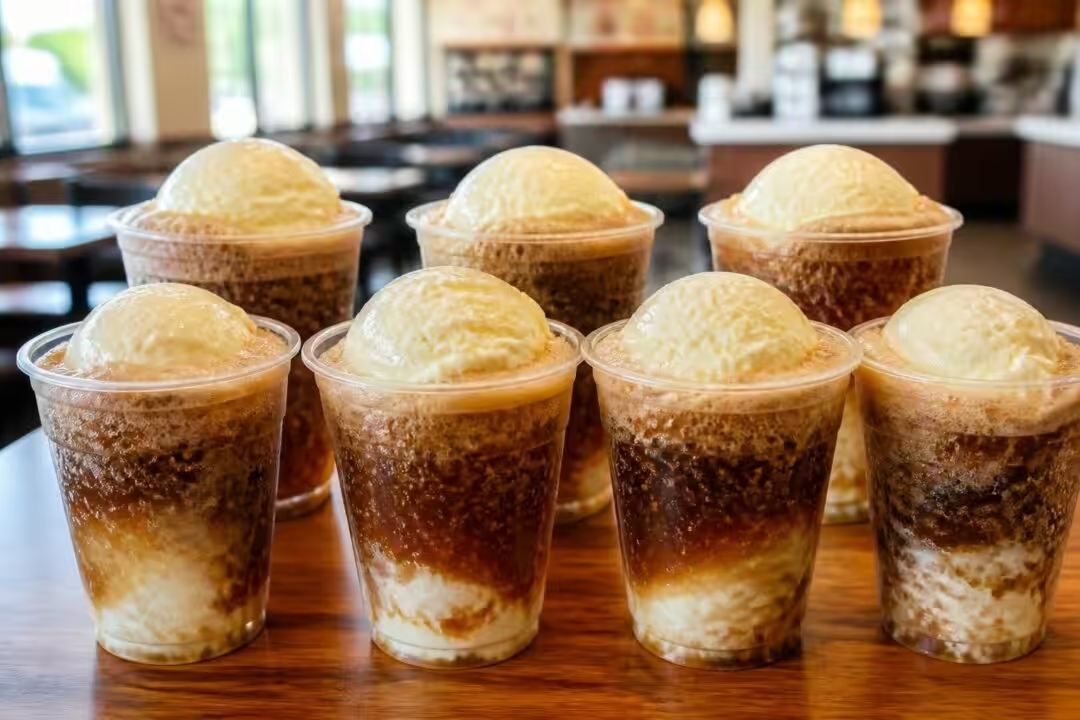
We Sampled 6 Fast Food Root Beer Floats — Discover Which One Took the Crown: How the Taste Test Was Judged
Root beer floats look simple on paper: soda, vanilla, ice cream. In practice, the best ones behave like a well-written recipe, where temperature, texture, and timing decide whether the first sip tastes like a nostalgic postcard or a sticky shortcut. To keep the comparison fair across six fast-food and chain-restaurant options, the tasting followed a chef-minded rubric that rewarded balance over sugar shock, and craft over gimmicks.
The first judging pillar was foam architecture 🫧. A float should bloom into a cap that’s airy, not dish-soapy, with bubbles fine enough to feel creamy rather than sharp. Some chains pour aggressively, which creates dramatic head that collapses into a flat puddle. Others under-pour, leaving the drink tasting like root beer next to ice cream rather than a unified dessert beverage.
The second pillar was vanilla clarity 🍦. The best vanilla tastes like dairy and warm spice, not just sweetness. When the ice cream or custard is too cold or too “clean,” it can mute the root beer’s herbal edge. When it’s too soft-serve-light, it disappears into the soda and leaves a thin finish. That middle zone—where vanilla stays present and plush—separates a good float from an unforgettable one.
Third came root beer character 🌿. Some chains rely on widely familiar brand profiles; others use proprietary formulas. The most satisfying examples tend to include a gentle “bite”—a slightly spicy, sarsaparilla-and-wintergreen spark that cuts through the dairy. Without that counterpoint, the drink can read like melted ice cream with carbonation.
Finally, there was value and portion logic 💵. A float is an indulgence, but fast-food indulgence still plays by budget rules. A strong showing meant a portion that felt generous without becoming cloying, and a price that matched the quality of the dairy component. The ranking favored floats that felt thoughtful, not merely large.
To make the process feel less clinical, a small storyline ran through the tasting: a fictional road-trip stop called The ButterBurger Detour, where a hungry passenger insists on ordering a float at every exit. The goal wasn’t to turn dessert into homework—it was to track how each chain’s version performs when someone actually wants comfort, refreshment, and a little theater in a cup. The next stop is where the most important variable takes over: the root beer itself.
Fast Food Root Beer Float Root Beer Types: Proprietary vs. Brand-Name Flavor
The root beer in a float does more than add fizz; it acts like a spice blend in a dessert. In fast food, that “spice rack” comes from either proprietary root beer or a commonly distributed brand profile. Chains that invest in their own formula typically aim for consistency across regions, while brand-adjacent pours may taste familiar but less tailored to dairy.
Proprietary root beer often leans into a slightly spicy edge 🔥—not heat, but a lively sparkle of botanicals that keeps the drink from reading as one-dimensional sugar. This is where some chains quietly win: a float needs contrast. Think of it like salting caramel. Without contrast, sweetness becomes loud; with contrast, sweetness becomes layered.
There’s also the matter of carbonation strategy. Root beer dispensed through different systems (fountain, tap, or pre-mix) can change how bubbles behave when they hit ice cream. More aggressive carbonation creates dramatic foam but can turn prickly; lower carbonation makes a smoother sip but risks feeling flat once the dairy melts. The best floats hit the sweet spot where the soda stays lively even as the ice cream softens the edges.
A&W is a classic example of a chain associated with its own signature root beer tradition, made with a closely guarded mix of spices and herbs. That kind of identity matters because it signals intentionality: the soda wasn’t chosen as an afterthought. When a chain’s root beer is part of its DNA, the float tends to feel like a house specialty rather than a menu add-on.
To keep the tasting grounded in real-world ordering, several chains frequently mentioned by float fans—Red Robin, Freddy’s, and Sonic—were treated as reference points for what many diners already know and love. Each has a recognizable approach: some emphasize a creamy soft-serve style, others rely on nostalgic drive-in vibes, and some land closer to a soda-fountain dessert served alongside burgers and fries. The question, though, isn’t “Is it good?” It’s “Does it harmonize?”
One of the most useful ways to compare root beers is to look at how they behave after five minutes. A strong formula keeps flavor definition even when dilution begins; a weaker one turns watery and loses the herbal snap. That five-minute mark is the moment a real customer experiences while chatting, unwrapping food, or driving away. A float that stays coherent at minute five is built to win.
With root beer understood as the backbone, the next angle is the dairy: ice cream versus custard, and why that choice changes everything in the cup.
Because soda fountain culture is as visual as it is tasty, it helps to see how enthusiasts describe and rank chain floats in the wild.
Culver’s Root Beer Float Won the Crown: Custard Craft, Spice, and Price
The float that took top honors came from Culver’s 👑, and the win made sense on two levels: it delivered the most precise balance, and it did so without being the most expensive option. In a category where sugar can blur into sameness, that combination of discipline and value is rare.
Culver’s has a built-in advantage: the chain is known for frozen custard rather than standard ice cream. Custard’s richer texture—supported by eggs and higher butterfat—creates a mouthfeel that doesn’t vanish when it meets carbonation. Instead of dissolving immediately, it forms creamy ribbons through the soda, giving each sip a layered consistency. That structure matters because it keeps the float feeling like dessert rather than soda with melted ice cream.
The root beer itself is a signature piece of the story. Culver’s developed a house formula connected to its early leadership, making the soda part of the brand’s identity rather than a generic fountain choice. In the tasting, that soda read as slightly spicy 🌿—the kind of gentle bite that brightens vanilla and keeps the finish from becoming syrupy. That “bite” is the sensory equivalent of adding citrus zest to a custard: subtle, but it wakes everything up.
Quality isn’t only about ingredients; it’s also about repetition done well. Culver’s custard is typically slow-churned in small batches throughout the day, and the result is a consistency that feels plush instead of icy. When the dairy is cold but not brittle, it integrates with the soda in a controlled melt, producing foam that’s creamy rather than chaotic.
There’s also a notable real-world proof point: the chain moves a substantial amount of its root beer annually—reported in the hundreds of thousands of gallons—suggesting repeat demand, not just novelty orders. That matters in 2026, when restaurant menus change quickly and only the most beloved items maintain momentum across years and regions.
Diner commentary reinforces the sensory verdict. Fans often describe the float as sweet but not overdone, with a clear vanilla note and a root beer snap that keeps it playful. Those reactions align with what chefs look for: contrast, clarity, and a finish that invites a second sip. A float that feels “too much” is rarely finished; a float that feels tuned gets reordered.
For anyone new to Culver’s, the float doubles as a gateway into the menu’s comfort-food logic: savory burger, salty fries, then a cold, aromatic dessert-drink that resets the palate. That pairing is not an accident—it’s the same reason diners historically loved soda fountain treats alongside salty lunches.
Next comes the fun part: the swaps and upgrades that can turn a winning float into a custom signature, without turning ordering into a fussy project.
Root Beer Float Upgrades at Fast Food Chains: Smart Substitutions and Flavor Twists
A great float is already a complete dessert, but the smartest chains make it easy to customize without losing the point of the drink. Culver’s is a standout here because the menu naturally supports swaps: different custard flavors and different sodas can create entirely new experiences while keeping the same comforting structure.
Custard choices are where the easiest transformation happens. Vanilla is the classic because it allows the root beer’s herbal profile to stay legible. Chocolate, however, creates a malt-shop vibe—deeper, rounder, and slightly bittersweet if the cocoa is pronounced. Then there’s the rotating Flavor of the Day concept, which often includes mix-ins, ribbons, or crunchy elements. In float form, those add-ins can behave like “dessert garnish” without needing extra toppings.
Swapping the soda changes the drink’s aromatic top notes. A cola-based float tends to feel caramel-forward and toasty. Cherry cola adds a fruity accent that reads almost like a sundae with maraschino energy. Dr Pepper-style profiles push into spiced cherry and vanilla, turning the float into something closer to a holiday dessert in a cup. The key is to choose pairings that keep contrast: a very sweet soda with a very sweet custard can become heavy quickly.
To keep ordering simple, here are practical upgrades that stay within normal fast-food workflows and still feel chef-approved:
- 🍦 Switch vanilla custard to chocolate for a deeper, maltier float that still cuts through fizz.
- 🥤 Try a cola swap when craving caramel notes rather than herbal spice.
- 🍒 Choose Cherry Coke-style soda for a fruit-lifted finish that plays well with creamy dairy.
- 🌶️ Stick with root beer when wanting “bite”—that gentle spice is what keeps the drink from tasting flat.
- 🧁 Use a Flavor of the Day custard when it includes a simple ribbon (caramel, fudge) rather than too many crunchy mix-ins that can clog the sip.
A useful case study comes from that fictional road trip: at one stop, a passenger orders a float with a candy-heavy custard flavor and a sweet soda. The first sips are exciting, but halfway through, the drink feels thick and tiring. At the next stop, they choose vanilla custard with a spicier soda profile, and suddenly the drink feels lighter and more finishable. That’s the lesson: the best customization respects balance ⚖️.
Customization also solves a common fast-food issue: varying ice cream temperatures. If a float arrives with very firm custard, a soda with a little more spice and carbonation can help it open up faster. If it arrives too soft, choosing a soda that’s less sweet helps keep the drink from turning syrupy.
With upgrades mapped, the final angle is how all six contenders compare side by side—taste, texture, value, and that elusive “nostalgia factor” that makes a float feel like a treat worth chasing.
For viewers who love seeing dessert-drink hacks in action, soda-float customization videos offer quick visual cues on foam, melt, and mix-ins.
Ranking 6 Fast Food Root Beer Floats: Flavor Balance, Texture, Nostalgia, and Value
When six chain floats land on the table, the differences become obvious fast. Some aim for maximum sweetness, others lean on brand recognition, and a few chase that old-school fountain feeling where soda and dairy meet in the middle. The “crown” ultimately goes to the float that checks the most boxes at once: defined root beer flavor, creamy body, stable foam, and a price that feels fair.
In the broader field of chain floats—often including familiar names like Red Robin, Freddy’s, and Sonic—the common pitfalls are predictable. A drive-in style float might win on nostalgia and portion size but lose points if the soda goes flat quickly. A sit-down chain may deliver a prettier presentation but miss on integration if the ice cream is too icy or the root beer is overly sweet. And some options taste perfectly pleasant but lack that little spark that makes someone say, “That’s the one.”
Culver’s rises because it behaves like a composed dessert: the custard provides body, the soda provides lift, and the spice provides definition. The value angle matters too. A float that’s delicious but priced like a specialty shake can feel harder to justify as a regular add-on to a meal. Culver’s advantage, as reported by tasters who compared multiple chains, is that it hits a sweet spot where quality doesn’t require a premium penalty 💰.
The table below captures the practical lens diners use when deciding where to spend their float craving. It’s not a lab report; it’s the kind of at-a-glance guide someone might want while pulling into a parking lot.
| Chain Float Snapshot | Flavor Profile | Texture & Foam | Value Feel | Nostalgia Factor |
|---|---|---|---|---|
| 👑 Culver’s | 🌿 Slightly spicy root beer, clear vanilla-custard harmony | 🍦 Rich, ribboning custard; foam stays creamy longer | 💵 Strong: praised for quality-to-price balance | 🛣️ Classic Midwestern comfort vibe |
| 🍔 Red Robin | 🥤 Familiar root beer sweetness; dessert-forward | 🫧 Often thick and satisfying; depends on ice cream temp | 💳 Medium: can feel like an add-on treat | 🎶 Diner-style throwback energy |
| 🍟 Freddy’s | 🍨 Sweet-and-creamy emphasis; comfort-first | 🍦 Smooth, shake-adjacent sip; foam can fade quicker | 💵 Medium-to-strong depending on portion | 🧾 Old-school custard stand vibes |
| 🚗 Sonic | 🥤 Bright, fountain-style sweetness | 🫧 Fun foam burst up front; can dilute fast on the road | 💵 Medium: deals can boost it | 📻 Peak drive-in nostalgia |
| 🧊 Other chain contender A | 🍬 Very sweet; less herbal definition | 🫧 Airy start; can turn watery | 💳 Medium: depends on local pricing | 🕰️ Mild throwback feel |
| 🥤 Other chain contender B | 🌱 Softer spice; leans cola-like | 🍦 Thinner body; reads more like soda + ice cream | 💵 Medium: fine for cravings, not a destination | 🎡 Casual treat energy |
One more practical note helps explain why the winner stays memorable: Culver’s root beer is sourced through a local supplier relationship and refined until it fit the brand’s custard-forward menu. That kind of behind-the-scenes tinkering is what separates “available” from “signature.” A float is not just a mix; it’s a designed experience.
The lasting insight from sampling across chains is simple: a root beer float earns loyalty when it tastes intentional—when the soda has personality, the dairy has richness, and the sweetness never drowns out the spice. That is how a crown gets claimed and kept.

Hi, I’m Landon Brooks. I am the editor-in-chief of Cook and Design, but for the first decade of my working life I was actually a product designer in New York.