
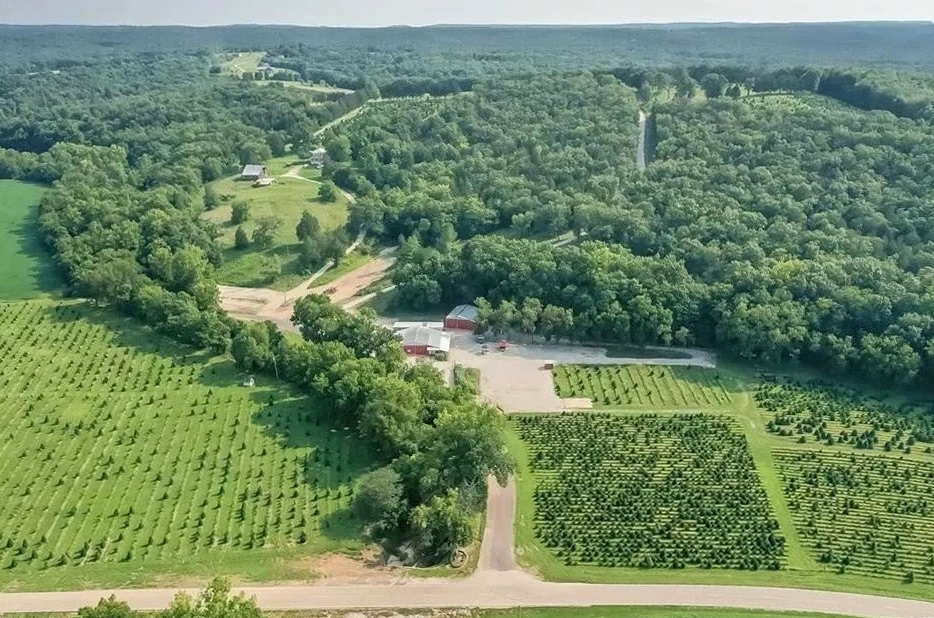
It starts with a single ear of corn still carrying the heat of the morning field. Somewhere in Sussex County, a farmer is testing the silk with a thumbnail before sunrise, making the call that today is the day. By late morning, that same corn sits in stacked pyramids at a roadside stand, waiting for the first customer of the season.
Summer in Bountiful Delaware doesn’t begin on the calendar. It begins with the first strawberry haul, the first fuzzy peach, the first clean snap of a green bean between two fingers. The farm stands scattered across the First State are where that season becomes tangible — where fresh produce still has soil on it and the person selling it can tell you exactly which field it came from.
This year, the route from Wilmington to the beaches is lined with stands worth the detour. Some have grown from folding tables into full-scale markets. Others remain deliberately small, tucked behind hedgerows and unmarked driveways. All of them reward a slowdown.
What to remember this season:
- 🌽 Seven family-run stands anchor Delaware’s roadside produce scene — plus one just across the Pennsylvania line in mushroom country.
- 🍑 Timing is everything: cherries arrive in June, the famous peaches follow in early July, apples take over by September.
- 🥩 It’s not only vegetables. Expect Wagyu beef, local ice cream, fresh-baked bread, and proper breakfast sandwiches between the tomato crates.
- 🐐 Bring the kids. Several farms double as miniature animal parks, with goats, Highland cows, and — at one stop — an actual jungle gym for the herd.
Why Delaware’s Farm Stands Deserve a Place in Your Summer Rotation
For a state you can cross in under two hours, Delaware supports a startlingly dense agriculture network. Roughly 2,300 farms work about 375,000 acres across the First State, and much of that output never enters the wholesale system. Instead, it lands at roadside stands and u-pick fields where the grower is often the one handing you your change.
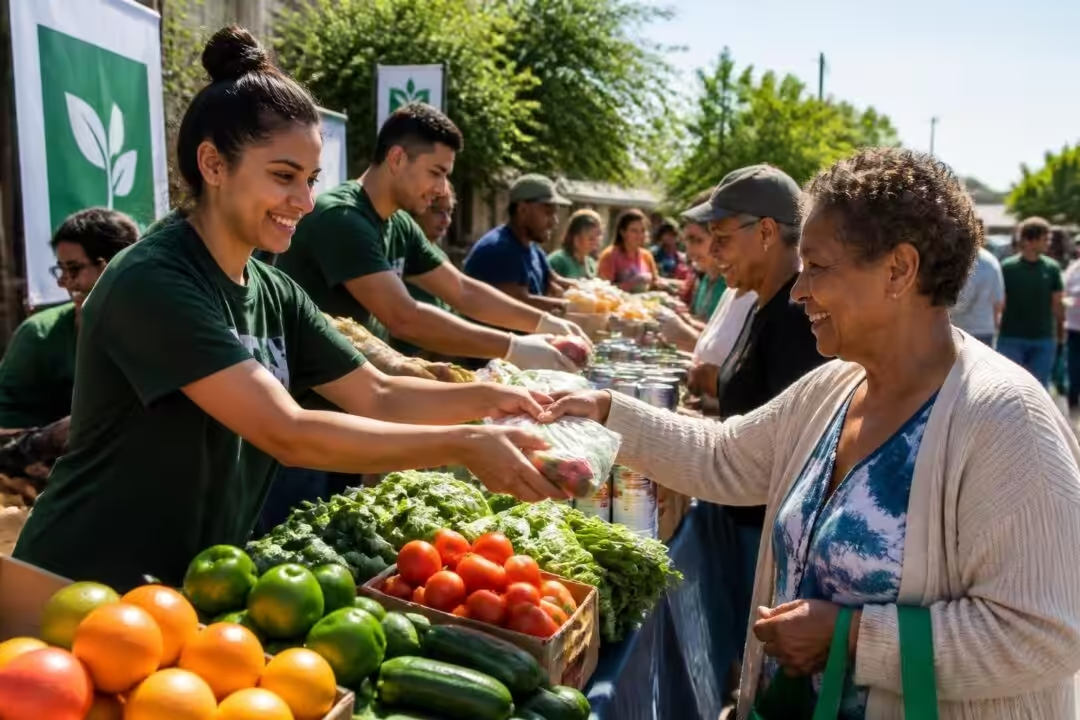
That direct line matters. When you buy at a farmers market or stand, the money travels a shorter distance — and so does the food. Fresh food that goes from field to stand in hours rather than days simply tastes different. The sugars in sweet corn begin converting to starch the moment the ear is picked. A peach harvested yesterday and one harvested three days ago are, in practice, two different fruits.
The old farmer’s saying “knee-high by the Fourth of July” no longer holds the way it once did. Modern growing practices and improved varieties mean local sweet corn shows up well before the holiday — sometimes as early as mid-June. That is the kind of good news worth planning a drive around.
Seven Farm Stands to Know This Summer
After a decade of driving these roads, a handful of names come up every single year — for good reason. Here they are, in no particular order but with every intention of earning a stop.
- Arrive by crop calendar
Cherries come in June, peaches in early July, and apples take over by September. You'll always find something at its peak.
- Look past the produce
Expect Wagyu beef, local ice cream, fresh-baked bread, and breakfast sandwiches sitting between the tomato crates.
- Bring the kids
Several farms double as animal parks. Goats, Highland cows, and at one stop, a jungle gym for the herd.
- Slow down
Marini Produce can turn a quick tomato run into a 45-minute visit. Plan for browsing time.
- Ask where the food came from
The seller can often point to the exact field. The food travels hours, not days, from field to stand.
Marini Produce: From Folding Table to Community Cornerstone
Marini Produce, perched across from St. Edmund’s Academy on Veale Road in Brandywine Hundred, has been feeding northern Delaware since the early 1950s. What began as a fold-out roadside table offering tomatoes, peppers, and beans has become a proper store with shelves that reward slow browsing. A mid-June visit turned up seasonal fruits like strawberries, blueberries, and peaches, plus the unexpected — fresh garlic scapes and purple-hued cauliflower.
Sweet corn, some ears already shucked, was stacked by the register. Rows of canned fruits and jams share shelf space with bags of pasta, local breads from Elsmer’s Serpe’s Bakery, and bins of peanut butter-stuffed pretzels that will absolutely find their way into your cart. Freezers hold Kreider Farms ice cream from Manheim, Pennsylvania, and Kennett Square’s Hangry Bear.
The prepared foods case is where Marini flexes: blue cheese potato salad, smoked Gouda pasta, Asian noodle salad, Buffalo-style chicken, and classic shrimp. Open daily from 9 a.m. to 6 p.m., it is the kind of place that turns “I’ll just run in for tomatoes” into a forty-five-minute experience.
What makes a stand like this endure? Consistency, yes — but also the willingness to evolve without losing the original impulse. The folding table is gone, but the spirit of it remains in every handwritten sign.
Ramsey’s Farm Stand: A 19th-Century Root System
Drive up Ramsey Road in Brandywine Hundred and you’ll find a small, shed-like structure at the end of a long gravel driveway. That modest building is attached to a farm whose roots reach back to 1860. The Ramsey family has worked this land for more than 160 years, and the stand reflects that depth: fresh produce, native plants, and, if you time it right, Wagyu beef from their own herd.
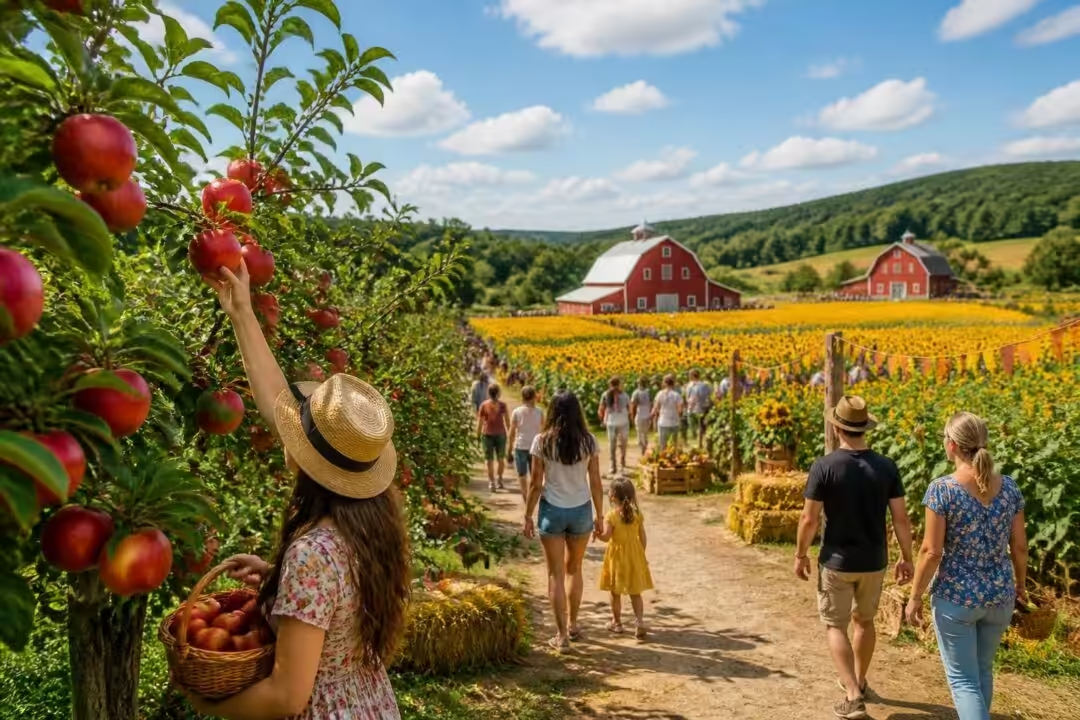
The u-pick program runs through strawberries, blueberries, blackberries, annual flowers, and sunflowers. Children can visit the pet goats — a sign warns, with some authority, not to offer fingers through the fence; they bite. On-site games include banging on a “musical wall” and floating rubber duckies in a trough, which is exactly the kind of low-tech charm that screens can’t replicate. Ice cream comes from Hockessin’s Woodside Farm.
Open Thursday through Sunday, 9 a.m. to 6 p.m., with a phone call required for beef purchases when the stand is closed. In June 2025, the family also took over the former SIW Vegetables stand in Chadds Ford, Pennsylvania, now operating as New Roots by Ramsey’s Farm, open daily from 9 to 6. That is how you know a farm is thriving: it grows.
Highland Orchards: The Hidden Gem That’s Become an Institution
Highland Orchards has been a Brandywine Hundred fixture since 1832 and ranks among the oldest year-round operating farms in the area. Sixth-generation farmer Ruth Linton was named one of Delaware Online/The News Journal’s 2026 Most Influential & Inspiring Delawareans. The designation fits — this farm has balanced heritage with forward motion better than almost anyone.
The market lives inside a big red barn, and the shelves tell a story of intention: pesticide-free fruits, vegetables, herbs, and flowers. On a June visit, the offerings included blueberries, cherries, raspberries, leafy lettuces, rhubarb, snappy green beans, fava beans, Brussels sprouts, zucchini, and squash. Jars line the shelves — sweet baby beets, honeycrisp applesauce, homestyle salsa, Vidalia onion relish, and local honey — alongside a bakery case with apple cider doughnuts and breads rotating through zucchini walnut, peach raspberry, banana nut, and blueberry.
Highland Orchards also delivers Community Supported Agriculture boxes across northern Delaware and Philadelphia. A farm founded before the Civil War, running a modern CSA network, is proof that the model isn’t nostalgia. It’s adaptation. Open Monday through Friday 9 to 6, Saturday 9 to 5, closed Sunday.
Parsons Farms Produce: Card Table Beginnings and Goat Mountain
In 1989, the Parsons family set up a card table and a beach umbrella along Route 20 in Dagsboro, selling tomatoes and corn. More than three decades later, that table has grown into a market fed by over 200 acres of surrounding farmland. It is a testament to what consistency and good soil can build.
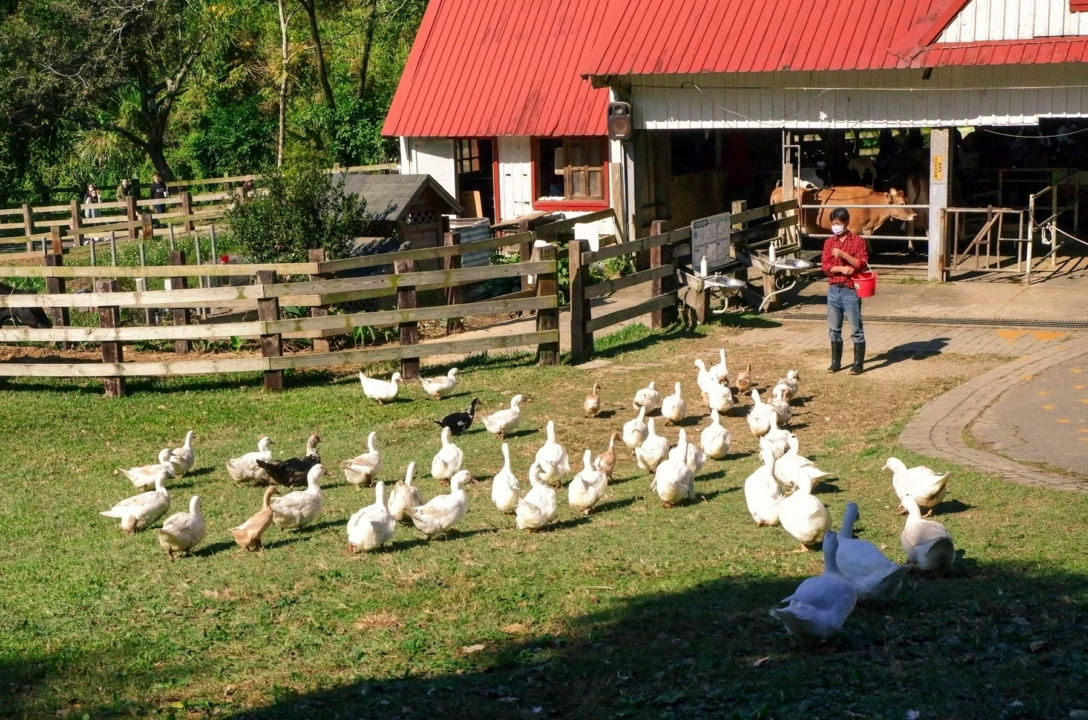
The market still centers on what the family grows: sweet corn, tomatoes, and seasonal produce at its peak. But the real draw for many visitors is the livestock. A structure affectionately called “Goat Mountain” gives the resident goats a full jungle gym to climb, and the pasture is home to Scottish Highland cows and Zebu cows. It is equal parts working farm and accidental petting zoo, and that is precisely the charm.
Open daily from 9 a.m. to 6 p.m., Parsons is the kind of place where you come for corn and stay for the animals — and leave with a quart of berries you didn’t plan on buying.
Fifer’s Farm Market: Two Blocks From the Atlantic
Fifer’s has deep roots in Camden-Wyoming, but its seasonal Dewey Beach location makes it the most beach-adjacent farm stand in the state. Two blocks from the ocean, the market offers fresh produce alongside breakfast sandwiches, acai bowls, lunch sandwiches, and salads built from local ingredients. It is that rare stand that works as both a grocery stop and a quick-eats destination.
You can grab eggs, local meats, honey, jams, and baked goods, then sit outside with a sandwich and decide whether the beach or the beach house wins the afternoon. Open Monday through Saturday, 8 a.m. to 4 p.m., with the kitchen running until 2 p.m. Lloyd’s Market in Lewes also carries Fifer’s produce and baked goods for those staying farther south.
T.S. Smith Orchard Point Market: Peaches Worth Setting an Alarm For
At the corner of Route 13 and Redden Road in Bridgeville, T.S. Smith Orchard Point Market runs on a strict seasonal calendar. The summer season opens with farm-grown cherries and locally grown berries, then hits its stride in early July when the famous T.S. Smith peaches arrive — a window that runs through August.
Autumn brings apples and pears from September to October, and by late October the brassicas roll in: cauliflower, broccoli, kale, and spinach. The market bakes goods fresh daily, stocks jarred items, and runs the OPM Cafe & Grill for made-to-order sandwiches. Hours are 7 a.m. to 5 p.m. Sunday through Thursday, and 7 a.m. to 5:30 p.m. Friday and Saturday.
Put a note in your calendar. When those peaches start landing, they move fast — and the ones that don’t make it into your bag will be gone by the weekend.
Glen Willow Orchards: Mushroom Country’s Quiet Outlier
Technically it sits in Avondale, Pennsylvania, but Glen Willow Orchards is just off Route 41, barely over the Delaware line — close enough that the drive feels local. Steve and Ronnie Rosazza run a market with a broad selection of vegetables, including seasonal sweet corn. The specialty, though, is unmistakable: you’re in the heart of mushroom country, and the fresh ‘shrooms are non-negotiable.
The approach to the stand cuts through the orchards whose peaches and apples end up inside, which gives the visit a satisfying transparency. You can see exactly where the food grows, then turn around and buy it minutes later. The market also stocks baked goods, jams, salad dressings, everything needed for homemade tacos, and — for the gardener — bedding plants, vegetable seedlings, hanging baskets, potting mix, and planters. Open Monday through Saturday, 8:30 a.m. to 5:30 p.m., closed Sunday.
How to Shop a Farm Stand Like a Designer Approaches a Palette
A few practical notes, informed by a decade of unplanned stops and overfilled trunks:
- 🌅 Go early. The best selection is there at opening, especially for corn and peaches. Stands restock through the day, but the first pull of the morning is the pick of it.
- 🗣️ Ask what was picked today. Growers will tell you directly, and the answer determines what you should actually buy.
- 👃 Trust your senses over perfect color grading. A slightly misshapen tomato that smells like a tomato is the one you want. The uniform, glossy ones look great on a magazine cover and often taste like nothing.
- 💵 Bring cash. Many small stands are still cash-first, and the ones with card readers often have a minimum.
- 👜 Pack your own bags. You’ll be glad you did when you’re walking back to the car holding a dozen peaches and no handles.
There’s a design principle at work here, too: restraint. Buy what is at its absolute peak this week, not what you wish were in season. The stand will tell you what’s ready — and the best way to honor the work that went into growing it is to eat it within a day or two. That’s the whole point of seasonal fruits and vegetables in the first place.
In a food culture increasingly built on speed and sameness, Delaware’s farm stands are the counterweight. They are slow, specific, and unapologetically local — places where the grower’s name is on the sign and the field is within eyesight. The fresh food on those tables is more than produce. It is the story of a place, told in a language you can taste.
What nobody tells you about Delaware farm stands
When do Delaware peaches actually show up at the stands?
Early July is the usual window. Cherries come first in June, then peaches, and apples take over by September.
Is it all vegetables, or is there more to grab?
A lot of stands now carry local ice cream, fresh-baked bread, and even Wagyu beef. Marini has a whole prepared foods case.
I've got kids. Are these places worth the stop?
Several farms double as animal parks with goats, Highland cows, and even a jungle gym for the herd. Kids will have a blast.
How early should I show up for the best selection?
Morning is a safe bet. Stands open around 9 a.m., and the sweet corn is often still warm from the field.
Who else went through the same thing? Raise your hand
Leave a comment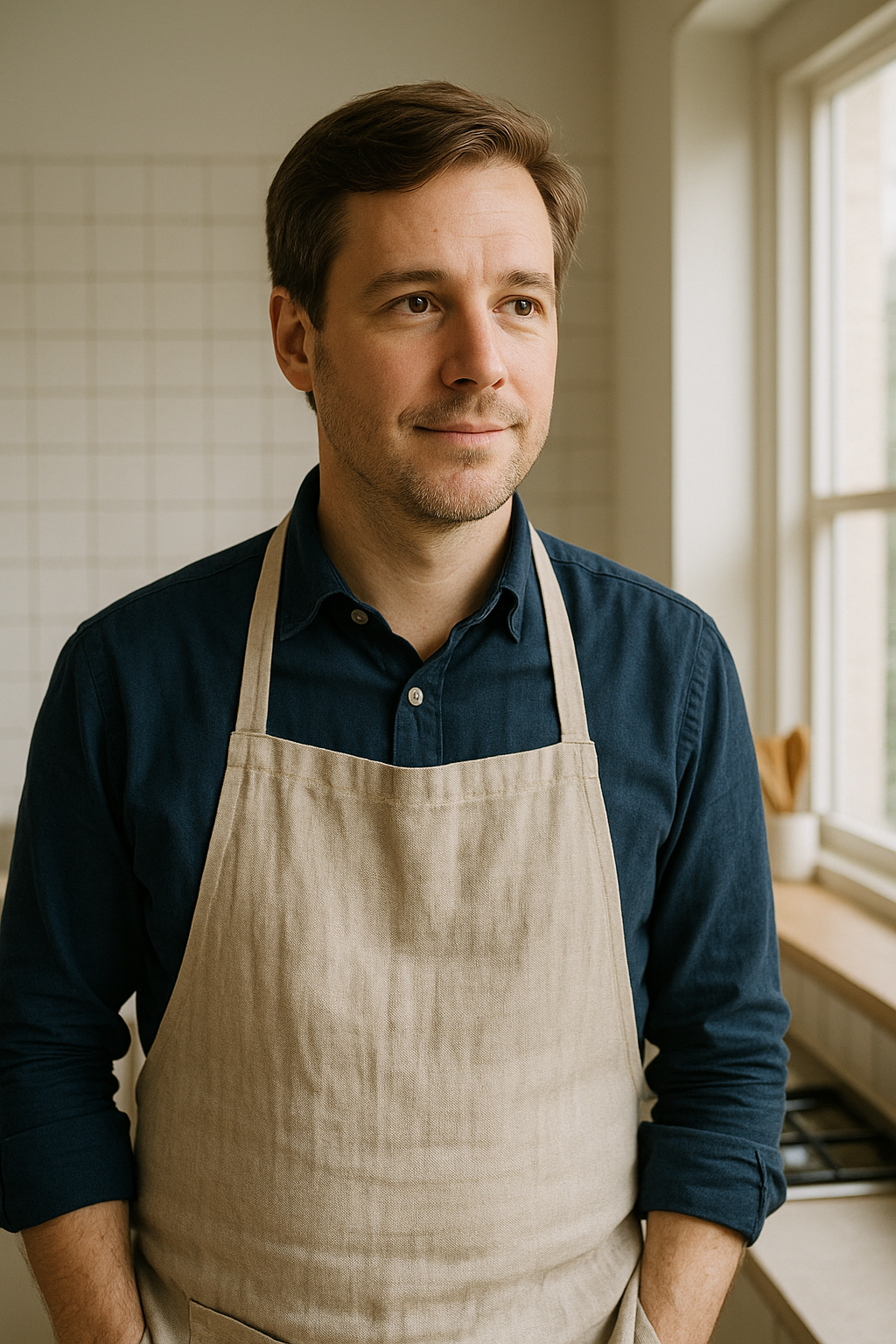
Hi, I’m Landon Brooks. I am the editor-in-chief of Cook and Design, but for the first decade of my working life I was actually a product designer in New York.

3 Comments
Local food systems cut transport emissions significantly. Encouraging to see Delaware’s roadside stands championing this.
Precise sequencing of harvests—cherries then peaches then apples. A well-designed vernacular landscape, Landon.
Landon, your piece captures the sensory timeline perfectly — from thumbnail test to roadside pyramid. Reminds me that data, like corn, needs the right harvest moment.