
| Sections 🌻 | Key notes ✅ |
|---|---|
| Festival weekends + timing | Two August weekends with a consistent daily rhythm (10 a.m.–6 p.m.) ⏰ |
| Pick-your-own + fields | Sunflowers headline the day, with blueberries and raspberries nearby 🫐 |
| Food + drink | Farm treats, hard cider, and pizza energy that reads like summer 🍕🍎 |
| Music + crafts | All-day live music across the Brew Barn + Cidery stages 🎶 |
| Small new detail | A Little Free Library moment built for shade, pages, and a slower pace 📚 |
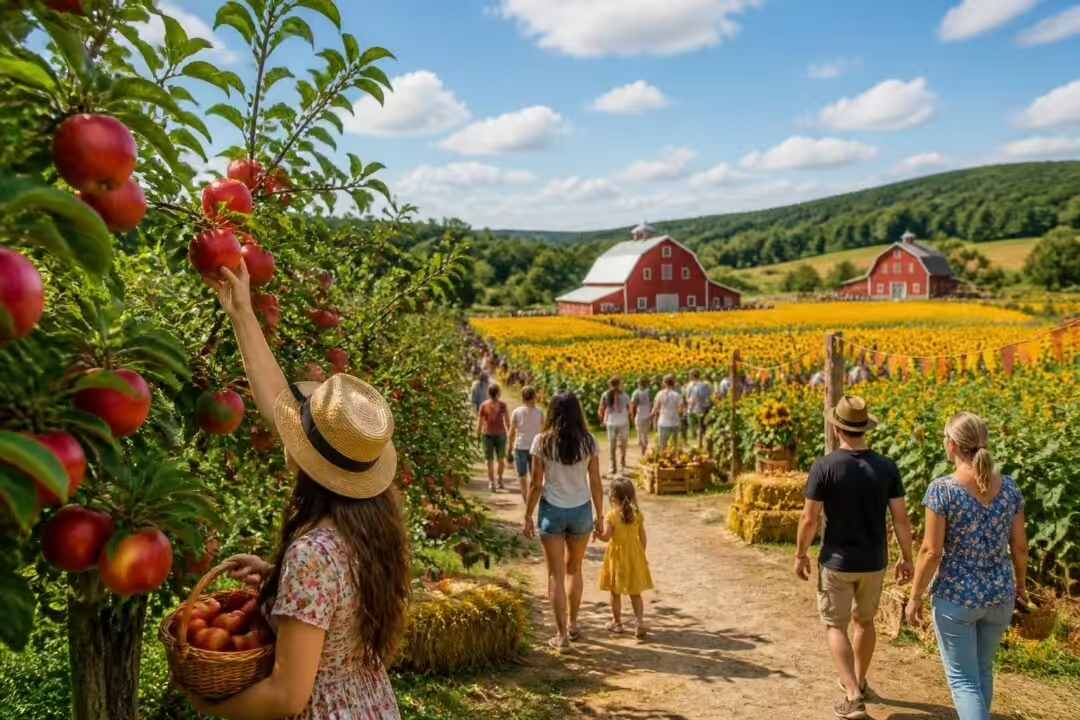
New England has plenty of summer rituals, but few photograph as cleanly—or eat as well—as sunflower season. This weekend, Red Apple Farm in Phillipston, Massachusetts returns to the thing it does best: turning peak bloom into a day-long set of small, intentional experiences. Think golden rows you can walk through, a bouquet you build with your own hands, music that floats from two stages, and the kind of farm food that makes sense in the moment (cider, something warm and bready, something sweet you didn’t plan on buying). The Sunflower Festival runs across two weekend windows—Aug. 8–9 and Aug. 15–16—with a schedule that’s simple on paper and surprisingly layered in real life.
Red Apple Farm Sunflower Festival weekends: dates, hours, and the rhythm of the day
The easiest way to plan the Red Apple Farm Sunflower Festival is to treat it like a well-designed menu: start with the fixed structure, then choose the moments that matter most. The festival is set for two August weekends—Aug. 8–9 and Aug. 15–16—with a consistent daily frame of 10 a.m. to 6 p.m. ⏰ That predictability is the point. It gives families, couples, and friend groups permission to arrive without anxiety and still feel like the day has shape.
In practice, the festival runs like an all-day open house. There are anchor moments—like the midday bouquet demonstration—and then a long stretch of “wander time” where the best plan is no plan. This is especially useful for visitors coming from Worcester, the Boston suburbs, or anywhere in between: arrival traffic becomes less stressful when the farm experience doesn’t depend on catching a single, narrow window.
A simple schedule that supports a full experience
Red Apple Farm’s posted timing reads almost minimal, but it’s the kind of minimalism designers appreciate: it leaves room for living. A typical day looks like this:
- ⏰ 10:00 a.m. — Festival grounds open and the day begins.
- 🌻 12:00 p.m. — Sunflower bouquet demonstration with MacMannis Florist & Greenhouses in the Cider Garden.
- 🎶 All day — Live music across the Brew Barn and Cidery stages.
- 👨👩👧👦 All day — Family activities plus the new Little Free Library reading nook.
That noon bouquet demo is a smart centerpiece. It’s late enough that most people can arrive comfortably, early enough that it influences what happens next. After watching a florist build a balanced arrangement—stem length, leaf removal, focal blooms versus supporting blooms—visitors head back into the field seeing the flowers differently. The day becomes less “take a photo, go home” and more “compose, edit, and bring something back that lasts.”
How to time the visit for light, crowds, and energy
Festival weekends naturally pull crowds, but the day still has predictable breathing spaces. Earlier hours often feel brisk: families settle in, the air is cooler, and the farm reads like a fresh canvas. Midday is peak movement—music is fully on, the Cider Garden demo draws a cluster, and food lines can thicken.
Late afternoon tends to soften. The light warms, the field glows, and photos get easier without any tricks. It’s also when a lot of visitors start to drift out, which can make the last hour feel surprisingly calm. If the goal is a bouquet that makes it home intact, later is also practical: less time sitting in a hot car afterward.
One helpful mental model is to plan like a three-course meal: arrive for “appetizers” (a quick walk, first photos), anchor at noon for the demo, then build your “main” around picking and food. That structure is light but effective, and it sets up the next decision: what, exactly, to pick and bring home.
Insight: A festival day feels longer—in the best way—when it’s paced around one intentional moment (the noon demo) rather than rushed from activity to activity.
Pick-your-own sunflowers, blueberries, and raspberries: designing a bouquet that survives the ride home
The headliner is obvious: pick-your-own sunflowers 🌻. But the festival’s most satisfying detail is that the “picking” mindset can extend beyond blooms. Red Apple Farm highlights summer fruit alongside the flowers—blueberries and raspberries—which turns the visit into a more complete kind of harvest. It’s not just a pretty field; it’s a place where hands do something real.
For design-minded cooks, the best souvenir is often a bouquet that behaves like an ingredient: it has a prime window, it needs care, and it rewards attention. Sunflowers are famously sturdy, but they still benefit from the same logic used in the kitchen—temperature control, clean tools, and the right container.
How to pick like a florist (even if the only vase at home is a pitcher)
MacMannis Florist & Greenhouses’ daily demonstration is the farm’s built-in crash course, but visitors can also use a few simple rules while picking. Look for blooms that feel open but not spent: petals strong, centers not overly dark or shedding. Choose a mix of sizes so the bouquet has rhythm rather than one loud note.
Stem length matters more than most people think. Longer stems can always be trimmed; short stems limit options. If a bouquet is headed for a standard American countertop vase, a working stem length of roughly 12–18 inches is versatile. For a wide-mouthed ceramic vessel, slightly shorter can look more modern and intentional.
Keeping flowers fresh: a kitchen-minded approach
A bouquet wilts for the same reasons herbs do: dehydration, dirty water, and heat. Once home, treat the stems like produce prep. Trim the ends with a sharp knife, strip leaves that would sit below the waterline, and place them into a clean container with cool water.
If the plan includes fruit picking too, it helps to think in temperature zones. Berries want shade and airflow; blooms want water and a stable interior temperature. A simple trick is to bring a small cooler for fruit and keep flowers upright in the car—protected from direct sun—so both arrive in good shape.
A practical “field-to-table” pairing idea
Sunflowers and berries make an unexpectedly coherent day because they’re both about color and immediacy. A smart after-festival move is a quick no-recipe dessert that respects the ingredients: berries tossed with a spoon of sugar and a pinch of salt, served over yogurt or a simple sponge cake. The bouquet sits nearby as the table’s centerpiece, and the day doesn’t end when the car door closes.
For readers who like to build a seasonal menu around outings, this is the kind of weekend that can anchor a whole Saturday: farm visit, minimal cooking at home, and a table that looks like it came with a stylist—without actually trying too hard.
Insight: Pick-your-own works best when it’s treated as sourcing—flowers for the room, fruit for the bowl—so the festival keeps paying you back all week.
The next layer of the festival is what happens away from the rows: music, activity stations, and the gentle chaos of a farm day with kids in tow. That’s where the event moves from “pretty” to genuinely sticky-memory good.
Live music at the Brew Barn and Cidery stages: building a soundtrack for wandering
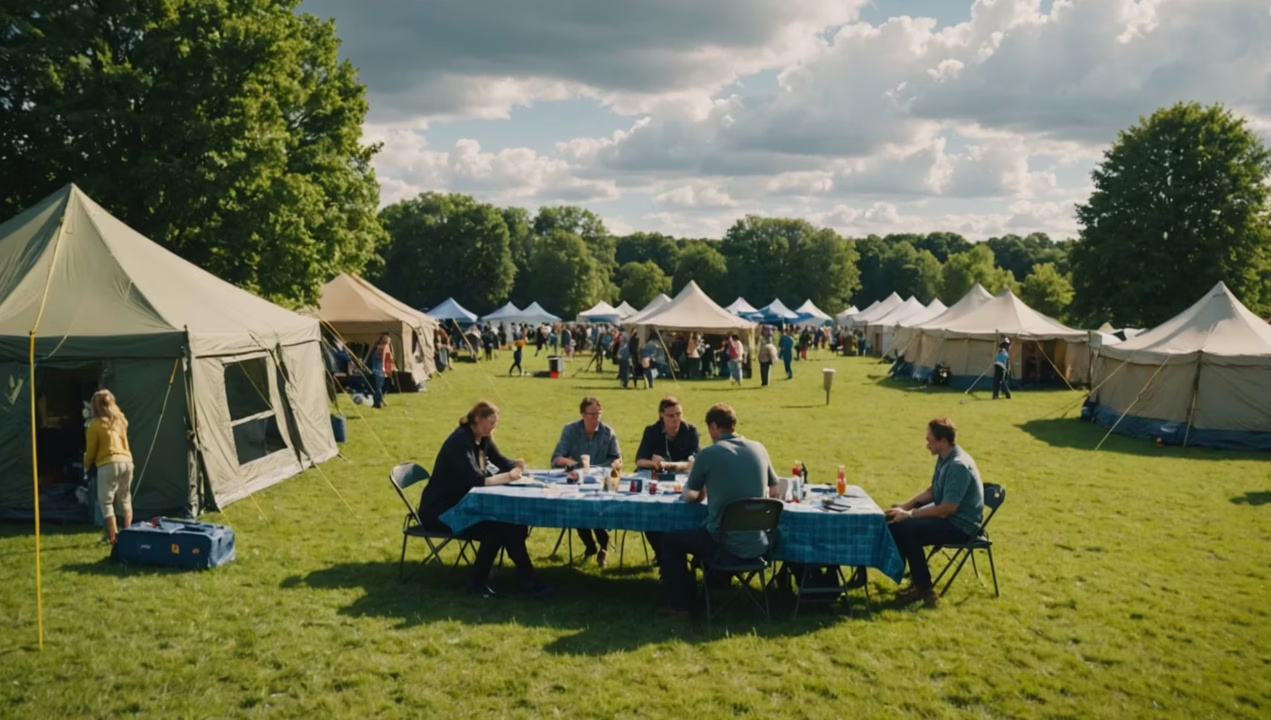
Live music can be an afterthought at many summer events—an amp, a corner stage, a playlist vibe. Red Apple Farm treats it more like a second backbone. During Sunflower Festival weekends, there’s live music all day 🎶 split across two named spaces: the Brew Barn and the Cidery. That two-stage setup does something subtle but important: it disperses crowds and changes the emotional texture of different parts of the farm.
For anyone who has tried to navigate a festival with a stroller, a camera, and one person who gets hungry every 90 minutes, the value of distributed sound is real. It prevents the “everyone gathers in one spot” crush and keeps the experience porous. You can listen while moving, not just while sitting.
Why two stages changes the design of the day
Think of the Brew Barn and Cidery stages as two moods rather than two schedules. One area often reads as higher energy: more movement, more people circulating, a place where you can stand with a drink and feel the day pulse a little. The other can feel more like a lounge: shaded seating, slower pacing, and the kind of background music that makes conversation easier.
This matters because sunflowers already deliver visual intensity. If everything else is intense too—noise, lines, heat—the day can feel like a lot. A second stage and multiple pockets of activity let visitors self-regulate. Want the festival to feel lively? Stay near the music. Want it to feel meditative? Walk the edges of the field, then loop back when you’re ready.
How to make music part of the food plan
Food tastes different when there’s a soundtrack. That’s not poetry; it’s context. A slice of pizza eaten at a picnic table while a band plays nearby feels like a complete meal, not just calories. A glass of hard cider in the shade feels like a designed break—one you’ll remember later when the bouquet is gone.
For home cooks, this is also a reminder worth stealing: when hosting, background music is a form of seasoning. A thoughtfully chosen playlist can do for a dinner what good salt does for tomatoes—pull the whole thing into focus.
A small guide to “listen while you roam” etiquette
Because music is all-day, there’s no need to camp out early and guard a table. The better move is to treat seating like shared infrastructure. Take the break, eat, hydrate, then keep moving. The farm’s best moments happen on the walk between places, when a kid stops to look at a butterfly craft or someone finds a vendor stall they didn’t expect.
That roaming also sets up the next festival layer: hands-on activities that are more than filler, plus a quietly charming new feature that feels very Red Apple Farm—community-forward and low pressure.
Insight: When music is spread across the grounds, the festival becomes a series of scenes rather than one crowded stage, and that’s what makes it feel breathable.
With the soundtrack established, the event’s craft and family stations become the tactile counterpoint—something to do with hands besides holding a phone. That’s where the festival’s best “take-home” items show up.
Family-friendly crafts and activities at the Sunflower Festival: keepsakes, games, and the “What Makes You Bloom” wall
Red Apple Farm’s Sunflower Festival isn’t built like a carnival. The activities lean analog—paper, paint, wood, simple races—and that’s exactly why they work. In 2026, when most families are managing some level of screen fatigue, stations that invite a slower kind of attention feel quietly radical. The farm’s programming reads like a set of small creative prompts, each one offering a different kind of souvenir.
Several highlights are designed to be low-barrier: no special skill required, minimal waiting, easy to join for five minutes or fifty. That flexibility is key when the day includes picking, eating, listening to music, and moving through crowds. It also makes it easier for adults to participate instead of spectating.
The hands-on lineup: what to look for as you wander
The festival’s activity list is broad enough to suit different ages and temperaments. Some visitors want to make something; others want to compete; plenty just need a shaded reset between field walks. Here’s what stands out:
- 🪧 “What Makes You Bloom” affirmation wall — part photo moment, part community note board.
- 🐝 Wooden bumblebee and butterfly coloring — tactile, paint-or-crayon friendly, easy for younger kids.
- 🪨 Sunflower rock painting — a classic for a reason; it travels well and lives on a windowsill.
- 🏁 Burlap sack races — old-school farm energy, quick laughs, surprisingly photogenic.
- 🎨 Sunflower coloring pages — calm station for kids who need a quieter reset.
The “What Makes You Bloom” wall is particularly smart because it scales emotionally. A child might write “my dog,” a teenager might write “music,” and an adult might write “quiet mornings” or “Sunday dinner.” The result is a living snapshot of what a community feels like in late summer—simple, real, and oddly moving.
Designing keepsakes that don’t become clutter
There’s a difference between a keepsake and a future junk-drawer item. The best craft stations produce objects that have a home: a painted rock for a garden bed, a colored wooden ornament that can hang near a window, a page that becomes the cover of a notebook. A helpful approach is to pick one craft per person, done with intention, rather than collecting five rushed items.
That restraint mirrors how good home cooks shop a farmers market: buy fewer things, choose carefully, use everything. The festival’s craft menu is rich enough that it rewards that kind of editing.
Old-fashioned games as social glue
Burlap sack races sound simple because they are. That’s their power. They cut across ages, they don’t require equipment literacy, and they create a moment of collective attention—people cheer for strangers, kids feel brave, adults laugh at themselves. Those are the moments that make a day feel like it mattered.
And when the energy spikes, the farm also offers a built-in counterbalance: a new reading nook that slows everything down without making it feel like “quiet time.”
Insight: The best festival activities don’t compete with the sunflowers—they translate the day into small objects and shared moments you can actually keep.
The Little Free Library at Red Apple Farm: a quiet corner for readers, shade, and community exchange
Every festival needs one element that isn’t loud—something that signals the event understands different kinds of guests. Red Apple Farm’s newest detail does exactly that: a Little Free Library 📚, stocked through local donations and curated in spirit rather than with strict rules. Visitors are encouraged to bring a book, leave a book, and take a book, then settle under the trees in the Cider Garden with a small pocket of shade and time.
It’s a small addition, but it changes the shape of the day. Festivals can pressure people into constant motion—buy, do, post, repeat. A book exchange creates permission to pause without feeling like you’re “missing” something. It also gives families a practical tool: kids can reset with a story, adults can sit for ten minutes and recover their energy, and everyone benefits.
What’s in the library: variety that matches the crowd
The library is described as a mix that reflects real reading habits: thrillers, fantasy, gardening guides, and children’s books. That range matters. A gardening book in a sunflower festival context isn’t random—it’s the next step for a visitor who goes home thinking, “Could this grow in a backyard?” A thriller is perfect for someone who just wants a beach-read vibe with a cider in hand.
There’s also a charming tactile detail: visitors can pick up a Red Apple Farm sunflower bookmark 🔖. That’s exactly the kind of small branded item that feels good rather than cheesy because it’s useful. It’s not a plastic trinket; it’s a tool for an experience the farm is actively supporting.
Why a reading nook belongs at a sunflower festival
Sunflowers are maximalist by nature—big faces, loud color, endless repetition. Pairing that with reading is surprisingly harmonious. In design terms, the library is negative space. It gives the day contrast. And contrast is what makes anything feel intentional: a bright field looks brighter when there’s a quiet corner nearby.
From a community standpoint, the exchange model also builds a subtle kind of trust. You’re leaving something behind that mattered to you, and you’re taking something that will matter to someone else later. That’s a different kind of transaction than buying food or crafts, and it’s part of why farm festivals remain culturally sticky in New England: they’re commerce, yes, but also belonging.
A practical way to fold the library into the day
For visitors arriving with kids, the library can function like a planned intermission. Walk the rows first, do one activity station, then read under the trees before lunch. For adults, it’s a smart late-day move: after picking and photos, grab a book, sip something cold, and let the sun drop a little before heading back to the car.
That slower pacing sets up the final piece of the festival’s appeal: food and drink that’s rooted in place—farm treats, hard cider, and the kind of casual meal that tastes better because you earned it by walking through a field.
Insight: The Little Free Library turns a festival into a community space, not just an event—proof that the most memorable features are often the quietest ones.
Hi, I’m Landon Brooks. I am the editor-in-chief of Cook and Design, but for the first decade of my working life I was actually a product designer in New York.
3 Comments
The two-stage layout and shaded seating create a smart flow. Wish more festivals designed for heat and crowd movement this way.
Debugging my calendar: these bloom windows are the only race condition I’ll optimize for.
Solid setup. Two weekends, but I’d default to the first one for peak bloom and fewer crowds.
Les commentaires sont fermes.