| At a glance / Sections 📌 | What to remember / Key notes ✅ |
|---|---|
|
|
Boycott Coca Cola: A concise history of boycotts and recurring patterns
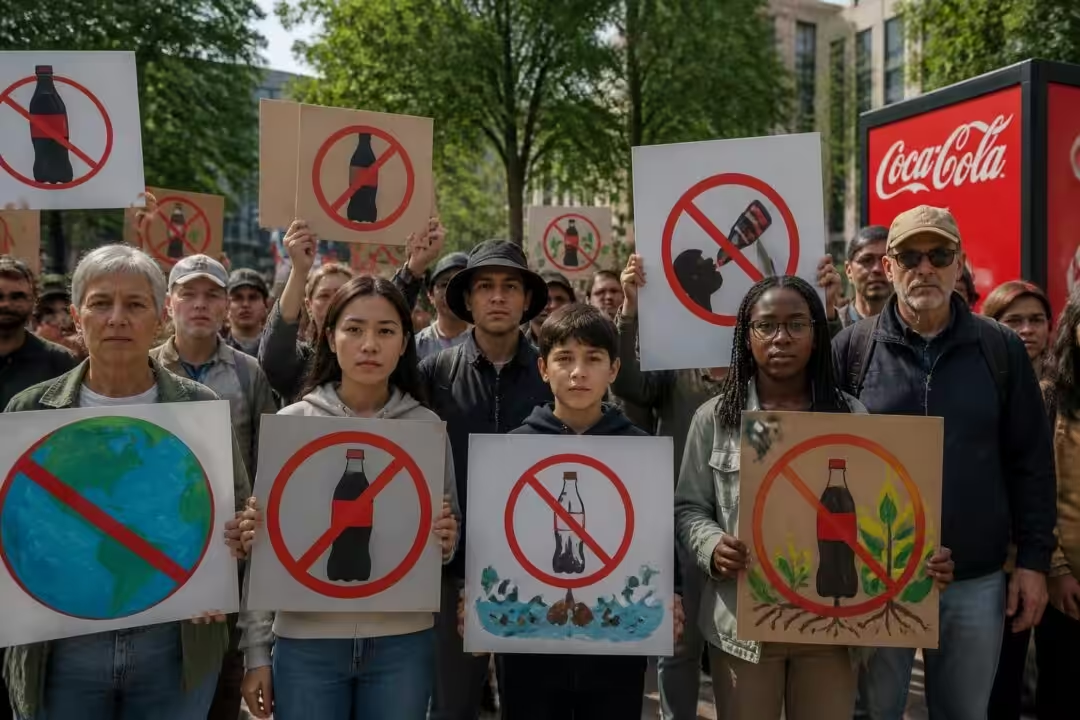
The Coca‑Cola Company has been at the center of public ire more than once across the last half century. These moments form a pattern: a political or commercial choice ignites local outrage, activists organize, sales dip in pockets, and Coca‑Cola responds in ways that reshape brand narratives. The throughline is not just the spark, but how citizens, retailers and local leaders translate grievance into sustained pressure.
In Dublin in 1971, a production move to Belfast prompted a shopkeeper-led refusal to carry the product. That localized protest removed Coca‑Cola from many shelves for two years, demonstrating that even global brands are vulnerable to precise, community-rooted actions.
During the 1980 Cold War chapter, conservative figures in the U.S. urged a boycott over the company’s decision to sell products in the Soviet Union. The argument at the time was strategic: U.S. commercial presence could be read as cultural penetration. CEO-level resistance to pulling out—on the grounds of market engagement—shows how corporate strategy can clash with political sentiment.
The 1985 “New Coke” episode is often framed as cultural rejection rather than a boycott, but its lessons remain relevant. When long‑standing customer expectations were disregarded, the backlash manifested quickly and loudly: a product reformulation led to a consumer revolt and the restoration of the original formula within 79 days. This episode is an early example of brand vulnerability when emotional connection and perceived authenticity are broken.
More recent flashpoints followed similar arcs. In 2010 the company faced pressure tied to Russia’s anti‑LGBT laws; activists sought sponsor withdrawals around the Sochi Olympics. In 2021, Georgia’s voting law controversy generated social media campaigns asking major Georgia-based firms, including Coca‑Cola, to take a stand. Surveys at that time recorded roughly 52% of Georgia respondents expressing support for boycotting companies perceived as insufficiently critical of the law—showing how public opinion can be rapidly mobilized against perceived corporate silence.
These episodes share a few stable features: a concrete trigger, rapid dissemination via available media channels, and a visible demand for a corporate position. The result is rarely binary success or failure; instead, each incident produces reputational wear, tactical corporate responses, and long‑term brand learning. The key insight: brand scale does not immunize a company from targeted community action. That dynamic still shapes the landscape in 2026, and the next section turns to why modern boycotts now accumulate multiple grievances—health, environment and geopolitics—simultaneously.
Why are people calling to boycott Coca‑Cola? Health, environment, labor and geopolitics
Multiple motivations now overlap in contemporary boycott calls. The ecosystem of critiques divides roughly into four clusters: public health, plastic and environmental damage, labor and diversity controversies, and geopolitical or human‑rights accusations. These are not mutually exclusive; they stack, and that stacking creates pressure that is harder for a single PR statement to defuse.
Health concerns are longstanding. Sugary beverages have been scrutinized for their role in dietary patterns linked to chronic illness. While responsible public-health policy relies on peer-reviewed evidence and measured messaging, consumers often translate general health debates into straightforward marketplace choices: if a product is seen as contributing to a problem, some shoppers remove it from their carts.
Environmental critique has ascended quickly. Coca‑Cola is repeatedly cited in reports about single‑use plastic pollution. Activists emphasize packaging waste and the lifecycle of plastic bottles—arguments that resonate with designers and home cooks who favor reusable containers and zero‑waste practices. For a magazine readership that buys ceramics at midnight, packaging is a visible, solvable problem. The environmental argument is also amplified by local activists who document pollution and demand producer responsibility.
Labor and DEI tensions add another layer. In the mid‑2020s, rumors and viral posts about terminations and alleged cooperation with immigration enforcement ignited the “Latino Freeze” energy in some communities. Investigations and corporate statements later contradicted parts of the rumor narrative: the specific Texas plant cited in social videos could not be verified, and the company denied mass terminations or reporting workers to federal agencies. Nevertheless, the episode shows how quickly a contested labor story can cascade into a purchasing boycott—especially when tied to broader political shifts.
Geopolitical claims are the most volatile. Accusations about corporate ties to contested regions can generate international campaigns. In several global instances, activists have accused brands, including Coca‑Cola, of indirect complicity by continuing operations or distribution in disputed territories. These claims often escalate into sustained calls to avoid the brand until changes in behavior are observed. The company faces questions about where profits go and which communities benefit.
Two statistics are helpful context: Latinos constituted nearly 20% of the U.S. population in 2023, a demographic with significant purchasing power; and Coca‑Cola’s reach in Latin America was estimated at roughly 530 million consumers—a retail footprint frequently cited in corporate disclosures. The economic ties between communities and the company mean boycotts can have immediate local consequences, especially where alternate brands are available.
These overlapping critiques create a compound effect. A single issue might be resolved through a policy tweak or statement, but when grassroots movements link health, environment, labor and geopolitical concerns, they create a more durable mobilization. The insight: modern boycotts succeed when they connect to everyday choices—what people buy for dinner, what is served at community events, what parents put in lunchboxes—and when they offer credible alternatives.
How modern consumer boycotts work: tactics, virality and measurable impact
Contemporary boycotts are less about mass picketing and more about targeted, trackable disruptions. Social media affords rapid spreading of narratives, but the operational power stems from coordinated shifts in purchasing, retail shelf decisions, and supplier pressure. Activists use a mix of tactics: #Buycott alternatives, localized retail campaigns, public petitions, and outreach to institutional buyers like schools and hospitals.
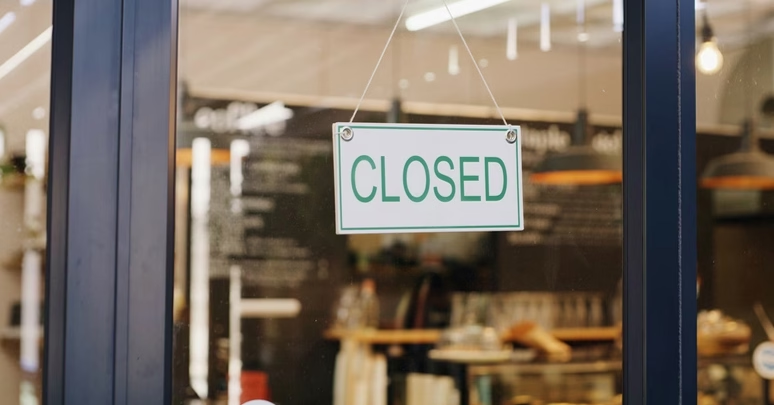
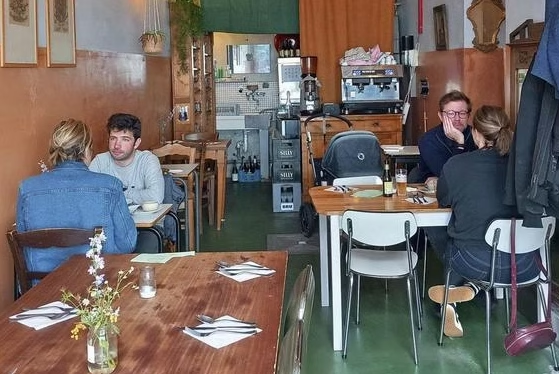
A practical example: an organized group in a mid‑sized city persuades three independent cafes to remove Coca‑Cola products from their beverage lists for a month. That action is small in absolute sales volume but strategic in symbolism. It communicates values to a design‑minded customer base and prompts conversations among suppliers and neighboring businesses. In many historical cases, these symbolic removals catalyze larger retailer decisions.
Measurement matters. Campaigners today watch for short‑term retail declines, social media engagement metrics, and supplier-level conversations. Corporations monitor share prices and, crucially, institutional clients. A single university system removing a brand from vending contracts can be worth far more, financially and reputationally, than thousands of individual consumers holding back purchases.
Not every viral claim endures. The 2020s showed that rumor-driven campaigns without verification can produce heat but little lasting change if the facts do not support the allegation. That said, rumors can still accelerate policy review within companies because even the threat of reputational harm forces internal audits and new communications strategies.
List: Common modern boycott tactics (with friendly emojis)
- 📢 Public hashtag campaigns to focus attention
- 🏪 Targeted retail talks: persuading local shops to delist products
- 🧾 Institutional campaigns: universities, hospitals, municipalities negotiating contracts
- ♻️ Buycott and alternatives: directing spending to local or sustainable brands
- 📊 Data-sharing: tracking sales dips and publicizing verified impacts
These actions are strategic and cumulative. The insight: modern campaigns are designed to be legible to a corporation’s procurement and PR functions—this legibility is what makes a boycott effective beyond mere online noise.
Corporate responses: how Coca‑Cola has reacted and what that signals to consumers
Coca‑Cola’s responses over decades show a pragmatic pattern: corporate leaders frequently opt for a mix of public statements, targeted policy changes, and occasionally symbolic gestures. Responses have ranged from defending market positions (as during Cold War controversies) to reversing product decisions (as with New Coke), and to reaffirming internal values (diversity statements during international controversies).
When confronted with political boycotts, executives often weigh stakeholder groups: consumers, institutional buyers, employees, and investors. A public denunciation of local legislation can win favor with one group and provoke backlash from another. The 2021 Georgia episode demonstrated this tension clearly; a public critique won support from voting-rights advocates while prompting threats of counter-boycotts. That duality illustrates a central reality: corporate statements rarely resolve controversies cleanly.
Operationally, companies also pursue quieter measures: revising supplier checks, enhancing sustainability commitments, or increasing community-level investment. These changes are designed to rebuild trust incrementally. For people watching from kitchens and studios, a meaningful corporate change is one that produces visible shifts—less single‑use packaging on retail shelves, transparent supply chain auditing, and demonstrable local hiring policies.
Two embedded strategies are especially common. First, reputation management through sustained, measurable commitments—multi‑year sustainability targets rather than one-off press releases. Second, targeted engagement with critics: third‑party audits, NGO partnerships, or locally tailored programs intended to address the specific grievance. These tactics seek to convert reputational risk into institutional projects that are harder for activists to dismiss.
That said, the pace of corporate change is slow relative to viral outrage. The practical lesson for consumers: demands that tie to procurement (contracts and retail decisions) and offer alternatives pressure corporations more effectively than rhetorical condemnation alone. The key insight: corporate responses signal priorities—if the company focuses resources on packaging innovation, the environmental argument gained traction; if it averts to workforce policies, labor concerns are driving the agenda.
Practical choices for consumers and kitchens: alternatives, procurement and the design-minded pivot
For a readership that cares about aesthetics and stewardship—ceramic bowls, slow Sundays, and intentional shopping—the boycott conversation becomes a set of daily choices. The question is not whether to pledge absolute purity, but how to align procurement with values without creating waste or unnecessary food-cost pressure.
First, consider alternatives that preserve ritual. For soda drinkers, craft sodas, herbal tonics, and kombucha offer a visually pleasing, locally sourced replacement. A simple swap: frozen citrus and carbonated water poured into a matte glass can produce the same effervescent ritual without plastic bottles. Small changes at dinner parties—serving chilled mineral water in a ceramic pitcher—signal intent as powerfully as a boycott sign.
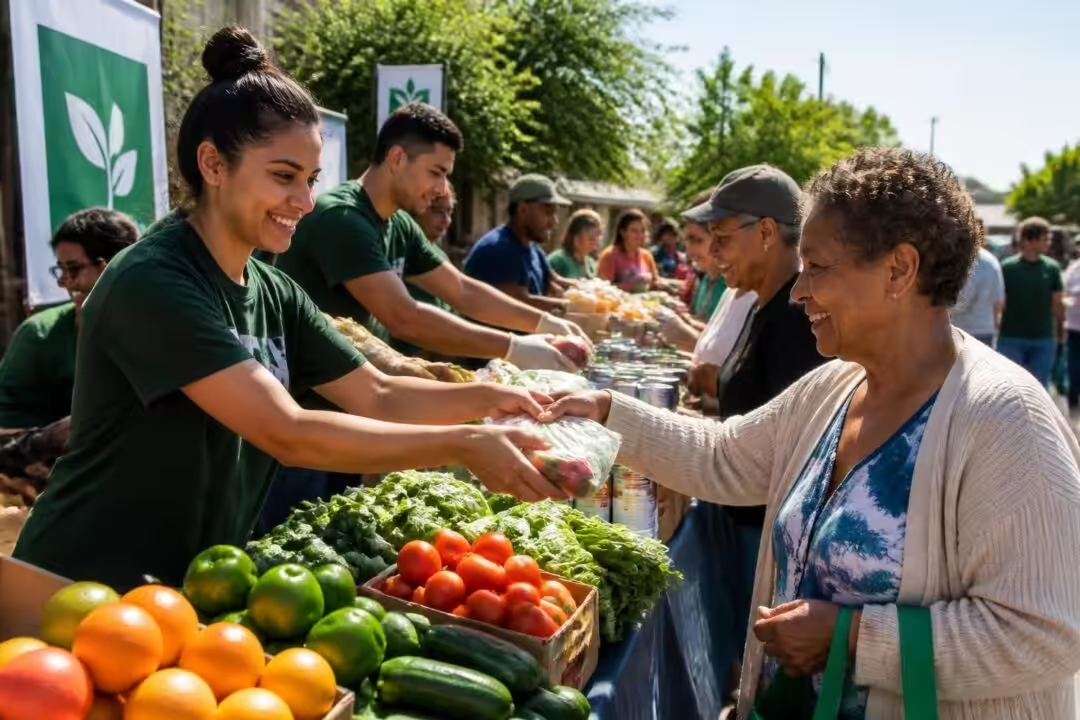
Second, think institutionally. Volunteer-run community kitchens and small caterers can use contracts to specify packaging types and suppliers. For designers and cooks who host private dinners, sourcing from local bottlers or making house syrups reduces reliance on major conglomerates and creates a clearer local supply chain.
Third, use purchasing power as a conversation tool. Shoppers can compile lists of local brands to recommend to friends and procurement officers. A structured approach—tracking a month of purchases and noting plastic reduction or dollars redirected—translates abstract values into measurable outcomes.
Table: Practical comparison of beverage choices (visual and impact cues)
| Choice 🍶 | Visual / Design Signal 🎨 | Impact / Notes 🌱 |
|---|---|---|
| Craft soda | Artisanal glass bottles, muted labels | Smaller producers, higher per-unit cost, often recyclable bottles |
| Home carbonated water | Matte glass, minimal branding | Low waste, high control over flavor |
| Kombucha / fermented tonics | Textured bottles, warm color palette | Local producers, probiotic narratives (respect medical claims), variable sugar |
Finally, for those navigating the emotional terrain of boycotts, the recommended approach is pragmatic: verify claims, align purchases with values, and favor durable changes (like reusable containers and choosing local producers) over reactive purges. The fictional thread of Min Soo Park—an imagined Brooklyn ceramicist and home cook—illustrates this approach. Min Soo switched the dinner party beverage from branded cans to a curated set of local tonics presented in handmade carafes. The move prompted conversations, supported local makers, reduced single‑use waste, and kept the host’s aesthetic intact.
Key insight: consumer decisions are design choices as much as political ones. Choosing alternatives that look and feel intentional makes sustained change more likely than a temporary social-media hot streak. 🍋

Hi, I’m Landon Brooks. I am the editor-in-chief of Cook and Design, but for the first decade of my working life I was actually a product designer in New York.