How Long Are Eggs Safe to Leave Out at Room Temperature? Clear Counter-Time Rules
In many American kitchens, eggs travel a familiar route: supermarket refrigerator case → grocery bag → home refrigerator shelf. That pattern can feel so “normal” that it’s surprising to learn that, across parts of Europe, eggs are often sold and stored unrefrigerated. The difference isn’t about one continent being careless and the other being overly cautious; it’s about how eggs are processed before they reach the shopper.
To understand how long eggs are safe at room temperature, it helps to picture the shell as more than a hard wrapper. An eggshell is porous—it contains tiny openings that allow gas exchange. Nature adds a protective finish: a thin protein coating called the bloom (cuticle) that helps seal those pores. When that protective layer is intact, the shell has a better barrier against bacteria and moisture changes.
In the United States, commercial eggs are typically washed soon after collection as part of a system designed to reduce the risk from pathogens such as Salmonella. That wash can remove the bloom, leaving the shell more exposed. Once the cuticle is gone, temperature control becomes the key defense—because bacteria, if present, can multiply faster when the egg warms up.
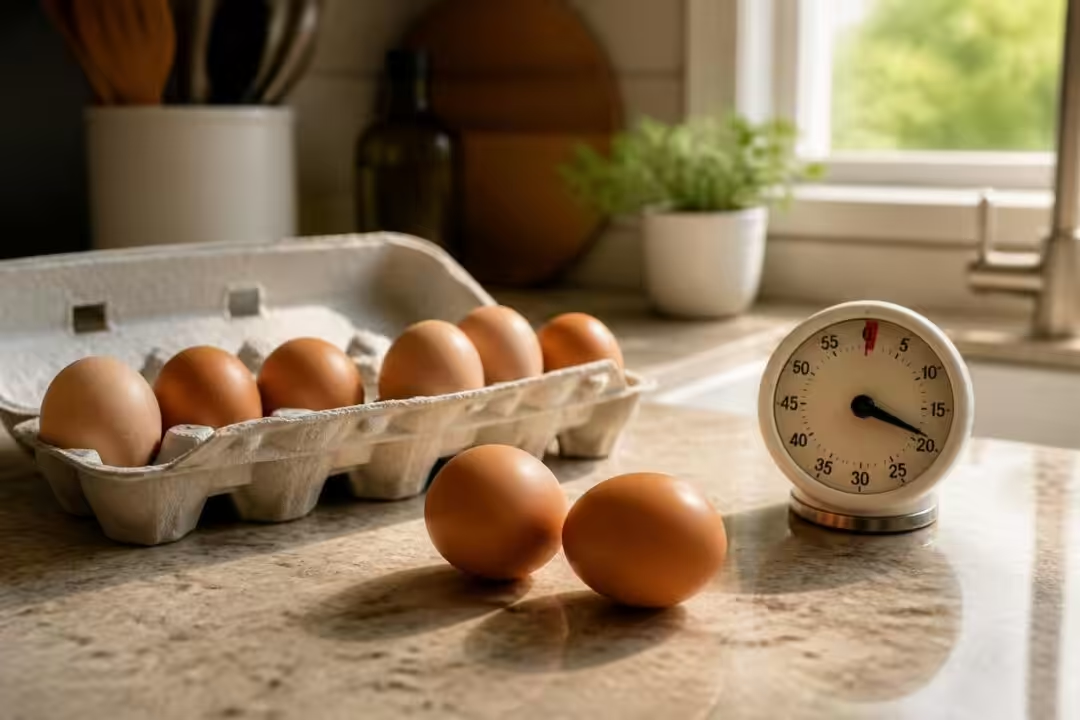
That’s why standard food-safety guidance treats store-bought eggs like other perishable foods. The simplest “no drama” rule is this: eggs can sit out for up to 2 hours at normal room temperatures, and only 1 hour if the environment is above 90°F (32°C). ⚠️ Those same time limits apply to many cooked egg foods too, such as scrambled eggs on a buffet or quiche left on the counter after brunch.
To make the rule feel real, imagine a Saturday baking session. A carton gets set near the mixer to “take the chill off,” then the phone rings, deliveries arrive, and suddenly half the afternoon has passed. At the 2-hour mark, the safe move is to refrigerate them again only if they were never warmed significantly—yet the larger concern is that repeated warming increases condensation, which can create a slick pathway for bacteria. When in doubt, prioritize safety; eggs are cheaper than a ruined weekend.
A creative way to think about counter time is to treat it like a countdown timer for quality as well as safety. Eggs left out too long don’t just become riskier; they also change in performance. Whites can loosen, foams whip less reliably, and delicate custards can lose their clean structure. Kitchen success and safety often point in the same direction: short counter time, cold storage. ✅
Next comes the practical question most cooks actually face: if room-temperature eggs help baking, how can they be warmed quickly without “living” on the counter for hours?
Room Temperature Eggs for Baking: Safe Ways to Warm Eggs Fast
Many baking recipes call for room-temperature eggs because warmer eggs emulsify more smoothly into butter and sugar, and they help batters trap air more effectively. That matters for cakes with a tight crumb, chiffon sponges, and cookies that need consistent spread. The problem is that the phrase “leave at room temperature” can tempt people to set eggs out and forget them. The smarter approach is to use controlled warming that stays inside the safety window. ⏱️
One dependable method is a short warm-water bath. Place the eggs (still in their shells) in a bowl and cover with warm—not hot—tap water. In about 5 to 10 minutes, the eggs lose their refrigerator chill without spending long enough in the temperature “danger zone” to create a meaningful risk. This works particularly well when a baker needs eggs at a workable temperature for creaming butter or building a stable emulsion for mayonnaise-style sauces.
Another method is strategic mise en place. Instead of putting the whole carton out early, pull only what is needed for the recipe. When a cook measures flour, lines pans, and preheats the oven, those minutes count toward gentle warming while staying well under the 2-hour limit. This is also a good habit for anyone sharing a kitchen: fewer eggs exposed, fewer chances for cross-contact.
There’s also a “chef’s trick” for busy weeknights: separate the eggs. Egg whites and yolks warm faster once removed from the shell, but that also means they become more vulnerable. If separating eggs for meringue, custard, or carbonara, do it right before use, keep bowls clean and dry, and avoid leaving the mixture sitting out while other tasks pile up.
Practical Do’s and Don’ts for Quick Egg Warming
Safety and performance improve when simple boundaries are respected. A helpful approach is to follow a mini-checklist that fits real kitchens—especially during holidays, bake sales, or dinner parties when distractions are guaranteed.
- ✅ Do warm eggs in a bowl of warm tap water for 5–10 minutes for baking efficiency.
- ⛔ Don’t place eggs near a sunny window; heat spikes and humidity changes shorten safe time.
- ✅ Do pull only the number of eggs needed, rather than parking the full carton on the counter.
- ⚠️ Don’t crack eggs into a bowl “for later” and leave them at room temperature while cooking other dishes.
- ✅ Do wash hands and sanitize surfaces; cross-contamination is a bigger villain than most people think.
A small narrative makes these guidelines stick. Picture “Nina,” the friend who hosts weekend brunch like it’s a pop-up café. She sets out ingredients early to look organized, then guests arrive and the kitchen becomes a conversation hub. Nina’s best upgrade isn’t a new skillet; it’s a habit: eggs stay cold until the exact moment they’re needed, then they’re warmed quickly and safely. The result is better hollandaise and fewer food-safety worries.
With warming methods handled, the next step is learning why storage rules differ between store-bought and farm-fresh eggs—and what “bloom intact” really changes.
That technique-oriented approach sets the stage for a bigger storage question: when eggs are unwashed and still protected by the bloom, does the counter become a reasonable option?
Farm Fresh Eggs vs Store-Bought: The Bloom, Washing, and Counter Storage Reality
Egg storage advice can sound contradictory because the egg itself isn’t the only variable; processing practices matter. In the U.S., many commercial eggs are washed, which removes the protective bloom. In several European systems, eggs may be sold unwashed, retaining that natural seal—so unrefrigerated storage becomes more plausible when other controls are in place.
For store-bought eggs in the United States, refrigeration is the safest default. Once the bloom is removed, the shell’s pores are more exposed, and refrigeration slows bacterial growth. This is not just theory; it matches the way eggs are handled from distribution to retail. When eggs have been kept cold through the supply chain, keeping them cold at home preserves the protective logic of that chain.
Farm-fresh eggs, especially those collected and kept unwashed, may retain the bloom and can sometimes sit at room temperature for several days under careful conditions. However, “can” is not the same as “should.” Pathogens such as Salmonella can still be present, and the consequences of a mistake can be severe—particularly for children, older adults, pregnant people, or anyone immunocompromised.
Where farm eggs shine is that they offer a choice. If refrigeration space is limited or eggs are being used quickly, counter storage may be considered with strong safeguards: avoid sun, avoid humidity, and avoid moisture on the shell. Moisture is a quiet troublemaker because it can help bacteria travel across the shell surface and potentially through pores.
How to Store Unwashed Farm Eggs Safely at Room Temperature
Room storage only works when the environment is stable and dry. Eggs should be kept away from the stove, dishwasher steam, or a window ledge. A shaded pantry shelf is far better than a countertop that warms and cools all day.
Using an absorbent surface is a smart extra layer. Cardboard cartons or a paper towel help reduce moisture buildup. If condensation or dampness appears, that’s a sign the eggs are living in a risky climate. 🌧️
Some cooks lightly coat unwashed eggs with food-grade mineral oil if they suspect the bloom has been compromised by overenthusiastic scrubbing. The idea is to restore a barrier-like effect. Still, this is not a substitute for proper refrigeration for commercially washed eggs; industrial washing changes the shell’s protective dynamics in ways a home workaround can’t truly reverse.
Even with careful room storage, there’s a critical rule that prevents a common mistake: once eggs have been refrigerated, they must stay refrigerated. Moving eggs from cold storage to a warm counter encourages condensation on the shell, which can create a bacteria-friendly film and a pathway through pores. That “sweating egg” effect is why half-and-half storage strategies often backfire.
To keep the guidance easy to act on, a cook can decide based on egg origin: store-bought eggs stay refrigerated; farm eggs can be refrigerated for maximum safety, or kept out briefly if conditions are dry and use is fast. The next logical question is where inside the fridge eggs belong and how long they actually keep when stored correctly.
Best Way to Refrigerate Eggs: Fridge Placement, Cartons, and Shelf Life
Refrigeration isn’t just about having a cold appliance; it’s about maintaining a stable cold temperature. Many refrigerators include an egg tray in the door, which seems convenient—until the door gets opened and closed all day. That spot experiences more temperature fluctuation than the back of a main shelf, and it’s also where eggs can bump and crack more easily.
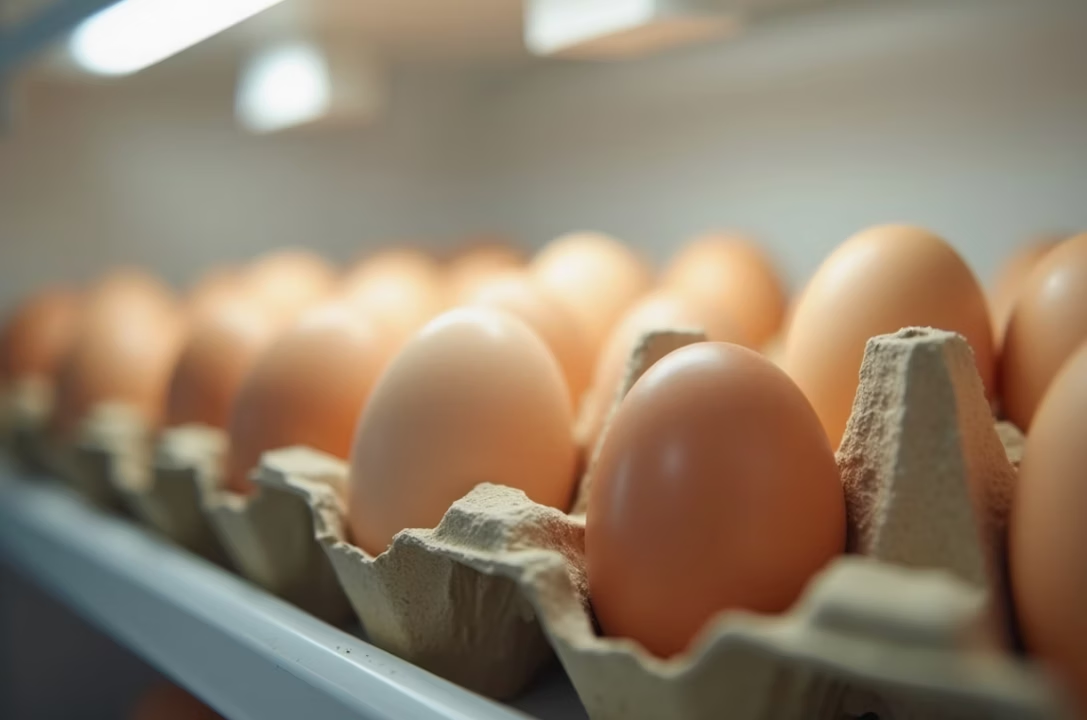
The most protective placement is a shelf toward the back of the refrigerator, where cold air is steadier. Keeping eggs at 40°F (4°C) or below aligns with widely used food-safety guidance and supports longer storage life. In a busy household, this is the difference between eggs that stay dependable for weeks and eggs that age unpredictably because they’re repeatedly warmed.
Cartons matter too. Storing eggs in their original carton isn’t just tidy; it’s functional. Shells can absorb odors because they’re porous. A carton reduces exposure to strong-smelling foods like onions, citrus, or leftovers in spicy sauces. It also helps prevent moisture loss and keeps eggs from knocking into items on the shelf.
When refrigerated properly, eggs commonly keep for three to five weeks. That doesn’t mean every egg is perfect until the last day; freshness slowly declines, and performance changes. For example, very fresh eggs peel poorly for hard-boiling, while slightly older eggs often peel more cleanly. A savvy cook uses that to their advantage: older-but-safe eggs for boiling, freshest for poaching or for recipes that depend on lofty whites.
Egg Safety and Quality at a Glance (Room Temp vs Fridge)
The table below turns the key rules into quick decisions. The goal is to reduce “kitchen guessing” during hectic moments like meal prep Sundays or holiday baking. 📌
| Situation | Best Practice | Safety Time Limit | Why It Matters |
|---|---|---|---|
| 🥚 Store-bought eggs (U.S.) | Refrigerate immediately in original carton | ⏱️ 2 hours max on counter (1 hour if >90°F) | 🧊 Washing removes bloom; cold slows bacterial growth |
| 🌿 Unwashed farm eggs (bloom intact) | Refrigerate for safest results; if room-stored, keep cool/dry | 📅 Often several days possible in dry conditions | 🛡️ Bloom offers extra protection, but doesn’t eliminate risk |
| 💧 Previously refrigerated eggs warmed on counter | Avoid warming for long; keep cold until needed | ⚠️ Follow 2-hour/1-hour rule strictly | Condensation can help bacteria move across/through shell |
| 🍳 Cooked egg dishes at room temp | Serve small batches; refrigerate leftovers promptly | ⏱️ 2 hours (1 hour if >90°F) | Cooked eggs can support rapid growth once cooling begins |
A useful kitchen habit is to treat egg storage like dairy storage: the fridge door is for items that can tolerate swings, while eggs benefit from the calmer cold zone. That small choice protects both safety and the delicate textures cooks work hard to achieve.
With storage locked in, the final risk zone is often social: buffets, picnics, and meal prep. That’s where egg dishes sit out longer than anyone plans—and where smart timing keeps everyone happy.
Those party scenarios bring the rules into real life, where the challenge isn’t knowing the guideline—it’s designing the serving plan so the guideline is easy to follow.
Cooked Eggs and Egg Dishes Left Out: Buffet, Picnic, and Meal Prep Timing
Cooked eggs can feel less risky than raw eggs because heat kills many bacteria. The catch is that once cooked eggs cool into the temperature range bacteria like best, they can become a strong growth medium—especially when mixed with other ingredients. Think of egg salad with mayonnaise, deviled eggs on a platter, or a breakfast casserole that sits on the counter while guests graze.
The same key timer applies: 2 hours at room temperature, or 1 hour above 90°F. In real hosting situations, that time passes quickly. A platter of deviled eggs might come out for photos, get moved to the patio, then drift between shade and sun. That’s why experienced hosts plan for rotation: smaller portions replenished from the refrigerator rather than one big display that slowly warms.
Consider a summer picnic where the ambient temperature climbs. Eggs don’t need to be “hot” to become unsafe; they just need enough time in warmth. A cooler with ice packs isn’t an optional extra—it’s the difference between a relaxed afternoon and a foodborne illness story nobody wants to tell. 🧊
Serving Strategies That Keep Egg Dishes Safe (and Still Beautiful)
Keeping egg dishes safe doesn’t require joyless rules. It’s more like staging a performance: keep the star dish in the right conditions, bring it out for a short appearance, then return it to safety.
- 🍽️ Use small platters for deviled eggs and refill from the fridge every 30–45 minutes.
- 🧊 Nest serving bowls over ice for egg salad, especially outdoors.
- 🔥 Keep frittatas or casseroles on a hot-holding setting when possible, not “warming by hope.”
- ⏳ Set a phone timer for the 2-hour mark so time doesn’t disappear during conversation.
- 🧼 Provide clean utensils and swap them if they fall onto the table—cross-contact is a sneaky risk.
Meal prep adds another layer: cooked egg components should be cooled and refrigerated efficiently. Large batches left in deep containers cool slowly, spending longer in the danger zone. Dividing food into shallower containers helps it chill faster, protecting both flavor and safety. For dishes like egg muffins or breakfast burritos, rapid cooling also preserves texture—rubbery eggs are often a sign of rough reheating, but they can also reflect poor cooling habits that allowed moisture to separate.
A final nuance is leftover judgment. If a cooked egg dish sat out past the recommended limit, reheating doesn’t reliably “fix” it. Some toxins produced by bacteria aren’t destroyed by heat, and relying on a reheat can create a false sense of security. The more confident approach is to respect the clock, design serving plans that fit it, and enjoy egg dishes at their best—tender, clean-tasting, and safely handled. ✅

Hi, I’m Landon Brooks. I am the editor-in-chief of Cook and Design, but for the first decade of my working life I was actually a product designer in New York.