| Sections / What to remember ✅ | Key takeaways 🌿 |
|---|---|
| Why grow spinach indoors; Nutritional & spatial benefits | Spinach thrives in typical indoor temperatures; harvest in weeks ✂️ |
| Best varieties for containers and bolt resistance | Pick compact, bolt-resistant varieties like Bloomsdale 🌱 |
| Containers, soil, lighting — practical setup | 6″ depth minimum; full-spectrum LED recommended 💡 |
| Daily care: water, temperature, pests, fertilizer | Keep soil like a wrung-out sponge; avoid overwatering 💧 |
| Harvesting and hydroponic options for year-round supply | Cut-and-come-again keeps production steady; hydroponics speeds growth 🚀 |
Why Grow Spinach Indoors: Practical Benefits and Nutritional Upside
Growing spinach indoors removes the calendar from the equation. Whereas outdoor crops are subject to seasonal swings—spring green-up, summer bolt, winter frost—indoor spinach responds to controlled temperatures and steady light, making year-round harvests entirely feasible. For urban households without a backyard, this translates into reliable access to fresh greens on a weekday evening, not just on market days.
Spinach adapts particularly well to indoor conditions because it is a cool-season crop. Typical home thermostats that hover between 60°F and 70°F (15°C–21°C) are within the plant’s preferred range. That alignment removes many barriers for urban growers: no special climate equipment, just a bright spot and sensible watering.
Nutrition is another compelling reason. Commercial spinach frequently travels long distances; nutritional degradation begins immediately after harvest. When eaten within hours of picking, leaves retain more of their vitamin C and folate compared with supermarket greens. A practical urban example: a cook harvesting five big leaves at dinner adds immediate vibrancy and a measurable nutrient advantage to a salad or stir-fry.
Space efficiency matters in design-conscious kitchens. Spinach plants remain compact—roughly 6–12 inches tall and 6–12 inches wide—so multiple plants fit into a single window box or a narrow shelf. The visual reward is also significant: a strip of deep green leaves along a windowsill reads as an intentional design element, matching the magazine’s aesthetic preference for calm, curated surfaces. Urban resident Mina Park (a fictional character used throughout these sections) keeps two narrow window boxes in her Brooklyn apartment; they double as a functional garnish station and a green accent against a clean, cream tile backsplash.
Cost and convenience are meaningful too. A small initial investment—pots, soil, seeds or seedlings, and optionally a modest LED panel—pays back quickly in fresh produce and avoided supermarket trips. For households that prioritize ingredient integrity and visual plating, the convenience of snipping bright leaves minutes before plating is an underrated design decision.
Finally, the psychological benefit is subtle but real. Caring for a small indoor garden encourages a slower rhythm in an otherwise fast kitchen: a daily glance, a tiny snip, a small ritual that aligns with the tactile pleasures of cooking. That rhythm is precisely why bringing spinach indoors is a smart move for anyone who eats with their eyes and cooks with intent.
Insight: Indoor spinach converts a small footprint into a continuous culinary resource—functional, beautiful, and nutritionally superior when harvested on demand.
Best Spinach Varieties for Indoor Growing: Choices That Make a Difference
Not every spinach variety behaves the same indoors. Choosing the right cultivar is as consequential as choosing a pot. For container-grown greens, prioritize compact stature, bolt resistance, and predictable leaf texture. These traits influence harvest rhythm, flavor stability, and overall success—particularly in modest indoor environments.
Four varieties consistently outperform others in indoor and container settings. Each brings a distinct advantage depending on the grower’s priorities: flavor, speed, disease tolerance, or low-light performance.
- 🌱 Bloomsdale Long Standing — A savoy (crinkled) classic known for rich flavor and notable tolerance to bolt triggers. This makes it a forgiving first choice for design-aware cooks seeking deep, textured leaves for both raw and cooked applications.
- 🥗 Baby Leaf — Engineered for quick, tender leaves; ideal for continuous harvesting and high-volume salad use. The trade-off is less dramatic texture but a faster turnaround from seed to plate.
- 🛡️ Renegade — A hybrid bred for consistency and disease resistance. It handles indoor temperature variability better, showing fewer yellowing or patchy leaves when conditions wobble.
- 🧈 Butterlay — Smooth-leafed with a soft mouthfeel and mild flavor; performs well under lower light, making it a strong option for north-facing windows or rooms with subdued exposure.
Place these choices into a small comparative table for clarity—the visual approach mirrors the editorial aesthetic of Cook and Design: precise, restrained, and useful.
| Variety 🌿 | Strengths ✨ | Best for 🏷️ |
|---|---|---|
| Bloomsdale Long Standing 🌱 | Rich flavor, slow to bolt | Flavor-first kitchens |
| Baby Leaf 🥗 | Fast maturity, tender leaves | Continuous salad supply |
| Renegade 🛡️ | Disease resistant, consistent | Variable indoor conditions |
| Butterlay 🧈 | Mild flavor, tolerant of low light | Shaded or low-light windows |
Practical planting strategy: combine two varieties in adjacent containers to stagger harvests and flavor profiles. Mina Park, for instance, pairs Bloomsdale with Baby Leaf—the former supplies hearty leaves for sautéing while the latter provides frequent salad-ready picks. This combination ensures both culinary range and continuous yield.
When buying seeds, prioritize fresh, recently-packaged seed lots. Seed packet dates indicate viability; older seed germinates less reliably. For first-time indoor growers, starting with more forgiving seed lots—those labeled bolt-resistant or indoor-friendly—reduces early frustration.
Insight: Variety selection determines not just taste, but the rhythm of harvests and the setup’s tolerance for indoor variability—choose accordingly.
Containers, Soil, and Lighting: Designing the Ideal Indoor Spinach Setup
Getting the physical setup right is a designer problem: balance form, function, and constraints. Spinach needs shallow but roomy containers, a loose, well-draining potting mix, and dependable light. Each decision affects plant health and the visual harmony of the kitchen space.
Containers: aim for at least 6 inches of depth and enough surface area to allow spacing of 3–4 inches per plant. Window boxes are elegant because they maximize surface area without clutter. Drainage is non-negotiable; pots without holes create chronic root issues. Materials—plastic, ceramic, or fabric—are all acceptable. Choose a finish that complements the kitchen palette: matte cream or deep navy ceramic pairs well with raw wood shelving.
- Choose a bolt-resistant variety
Bloomsdale Long Standing is a forgiving pick for indoor growing.
- Use a container at least 6 inches deep
Deeper soil keeps roots cool and prevents rapid bolting.
- Fill with well-draining potting mix
Avoid garden soil, it compacts and holds too much water.
- Give it 12 to 16 hours of light per day
A sunny south window works, but a full-spectrum LED is more reliable.
- Water like a wrung-out sponge
Check the top inch of soil before watering; don't let it sit in water.
- Fertilize every couple of weeks
Use a balanced liquid fertilizer at half strength.
- Harvest outer leaves first
This cut-and-come-again method keeps the plant productive for months.
- Watch for bolting signs
If leaves turn bitter and a flower stalk appears, snip it off and raise humidity.
Potting mix: structure over ingredients
Indoor growers must avoid garden soil. It compacts, harbors pests, and drains poorly. Instead, use a loose potting mix composed of organic compost and perlite at roughly a 70/30 ratio. Coco coir can be added in small amounts to improve moisture retention in dry homes. Pre-mixed vegetable potting soil is acceptable if it lists perlite or similar drainage components—add perlite if it doesn’t.
Practical tip: moisten the mix before planting. Planting seeds into dry mix and then watering often shifts seeds and buries them too deep; damp mix ensures even germination depth and reduces disturbance.
Light: windowsill vs. LED
Spinach requires approximately 6 hours of quality light daily. South- or west-facing windows can work well in spring and summer, but winter often demands supplementation. For reliable year-round growth, a full-spectrum LED grow light is recommended. Position the panel roughly 6 inches above the canopy and run it on a timer for 12 hours on and 12 hours off. This mimics a stable photoperiod without overextending plants toward reproductive cues.
A focused light provides two benefits: predictable growth and cleaner aesthetics. A slim LED bar tucked under a shelf looks deliberate and fits the Korean-modern sensibility of quiet utility.
- 🪴 Container specs: ≥6″ depth, 3–4″ spacing per plant
- 🧱 Soil mix: 70% compost + 30% perlite (add coco coir if air is dry)
- 💡 Light: Full-spectrum LED, 6–12 hours daily, ~6″ above plants
- 🧾 Labeling: mark variety and date to manage succession plantings
Design-oriented kitchens demand solutions that are both functional and intentional. A shallow window box with a slim LED bar reads as a curated object while delivering the horticultural basics. That balance is the point: equipment should recede into the background and let the leaves—fresh, green, immediately usable—take center stage.
Insight: Thoughtful container and light choices turn a functional garden into a composed kitchen element that supports reliable harvests.
Daily Care, Troubleshooting, and Pests: Keeping Indoor Spinach Healthy
Spinach care indoors is steady maintenance rather than heroic interventions. The essential practices—consistent watering, cool temperatures, measured fertilizing, and light airflow—prevent most problems. Observational skill is the best tool: plants will signal stress long before failure.
Watering: the fundamental goal is soil that feels like a wrung-out sponge. Push a finger an inch into the soil; if it’s moist, wait. For most setups, watering every 2–3 days is a reasonable baseline, but container size and ambient temperature matter. Smaller pots dry faster; terracotta breathes more than plastic.
Technique matters. Water at the base to keep leaves dry, which reduces fungal risk. Bottom-watering—letting a pot sit in a shallow tray of water for 20–30 minutes—works well but never leave standing water after the soil has absorbed moisture. A narrow-spouted watering can provides precise control and reduces splashing.
Temperature, humidity and bolting
Spinach favors coolness. Sustained temperatures above 75°F (24°C) trigger bolting: a rapid transition to flowering that produces small, bitter leaves and ends productive harvests. Prevent bolting by avoiding heat sources like radiators and direct afternoon sun during hot months. If an apartment becomes warm in summer, moving containers to a cooler room or shaded spot extends productive life.
Humidity between 40% and 60% is ideal. Indoor air that is too still promotes fungal problems; a small oscillating fan on low introduces gentle circulation without creating a wind tunnel. This simple step prevents stagnant pockets of humid air that encourage downy mildew.
Common problems and fixes
Yellowing leaves often indicate overwatering or nitrogen deficiency. Check drainage first; if roots are sitting in water, correct drainage and ease watering. If moisture is appropriate, a dilute nitrogen-rich feed (or fish emulsion) usually restores deep green within a week or two.
Fungal pests and insects have tidy remedies. Aphids respond to a focused spray of water and, if persistent, diluted neem oil. Fungus gnats thrive in constantly wet topsoil; allow the top inch to dry and use yellow sticky traps for adults. Downy mildew shows as pale upper leaf patches with grey fuzz underneath—remove affected leaves, increase airflow, and avoid wet foliage.
Fertilizer: apply a balanced liquid fertilizer at half strength every two to three weeks once plants are established. Organic fish emulsion is a gentle, effective option that favors leaf growth without spikes that can scorch roots. Avoid over-fertilizing; leaf-tip burn is a clear sign of excess and requires a flush of clean water to reset the medium.
Observation remains the most reliable practice: daily glances and small interventions beat dramatic rescues. Mina Park checks her pots each morning, snipping one or two outer leaves and inspecting for pests; that routine prevents most issues and keeps harvests steady.
Insight: Consistent, restrained care—right watering, stable cool temperatures, and modest feeding—keeps indoor spinach productive with minimal fuss.
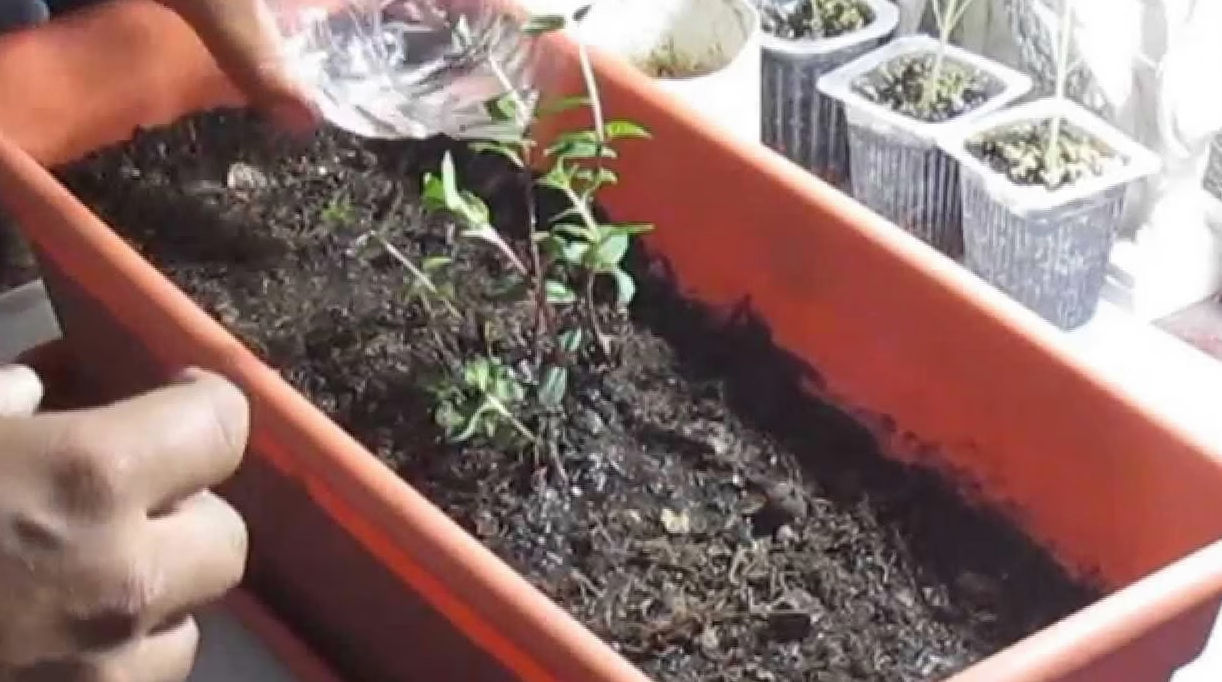
Short demonstration video above provides a visual companion to watering, thinning, and light placement techniques; watch for how seedlings are handled and light distance is managed.
Harvesting, Succession Planting, and Hydroponic Options for Year-Round Supply
Harvesting is where the design and care pay off. The preferred method indoors is cut-and-come-again: snip outer leaves at the base and leave the central crown intact. This approach yields multiple harvests from a single planting and maintains plant vigor for 6–8 weeks under good conditions.
When to harvest depends on use. Baby leaves are ready in 3–4 weeks, while full-sized leaves take 5–6 weeks. Harvesting in the morning yields leaves with the best texture and flavor because plants are fully hydrated. Never remove more than a third of the plant at once; over-harvest stresses the root system and slows recovery.
Succession planting for continuous supply
To keep a steady supply, stagger plantings every 2–3 weeks. This creates overlapping harvest windows so that when one container winds down, another is ready to take over. For households that prioritize plating and presentation, succession planting preserves both a steady supply and consistent leaf size for visual coherence on the plate.
Hydroponics: speed and efficiency
Hydroponic systems accelerate growth by delivering nutrients directly to roots. Spinach responds well, often growing 30–50% faster than soil counterparts and yielding more in the same footprint. Beginner-friendly methods like the Kratky technique require no pumps or electricity: plants are suspended over a nutrient solution, and the roots grow into oxygenated water as levels drop.
Key hydroponic considerations are pH and nutrient balance. Spinach prefers a pH between 5.8 and 6.5. A digital pH meter and hydroponic nutrient formulations make management straightforward. Change the nutrient solution every one to two weeks to prevent salt buildup and maintain oxygenation.
Hydroponics can be integrated visually into a kitchen with sleek reservoirs and suspended planters, preserving the editorial aesthetic while delivering high-efficiency growth. For design-conscious cooks curious about sustainable systems, a small Kratky setup is an elegant entry point.
- ✂️ Harvest rule: cut outer leaves, leave center; max 1/3 removed at once
- 🔁 Succession: sow every 2–3 weeks to maintain continuous supply
- 💧 Hydroponics: pH 5.8–6.5; change solution every 1–2 weeks
With disciplined succession planning and either soil or hydroponic setups, spinach becomes a reliable, year-round kitchen ingredient—one that reads both practical and composed on the counter. That balance is the final design lesson: systems should be quiet in operation and generous in result.
Insight: Combine cut-and-come-again harvests with staggered sowing or hydroponics to convert a small indoor footprint into a continuous, design-friendly greens source.
Video above demonstrates a simple Kratky hydroponics setup and nutrient management; useful for visual learners building a compact system.
The indoor spinach questions nobody asks
Can I really grow spinach in my apartment with no garden?
Sure can. As long as they get a bright window or a grow light, spinach is perfectly happy inside.
Which spinach variety should I pick for containers?
Bloomsdale Long Standing is a great bet because it bolts less and has that rich, crinkly texture cooks love.
Do I need fancy LED lights or will a windowsill do?
A sunny windowsill can work in a pinch, but a full-spectrum LED makes a real difference when winter days are short.
Is hydroponics the only way to get year-round spinach?
Regular pots with good drainage are enough. They keep producing month after month if you harvest cut-and-come-again.
Did we miss an important point? Flag it
Leave a comment
Hi, I’m Landon Brooks. I am the editor-in-chief of Cook and Design, but for the first decade of my working life I was actually a product designer in New York.