
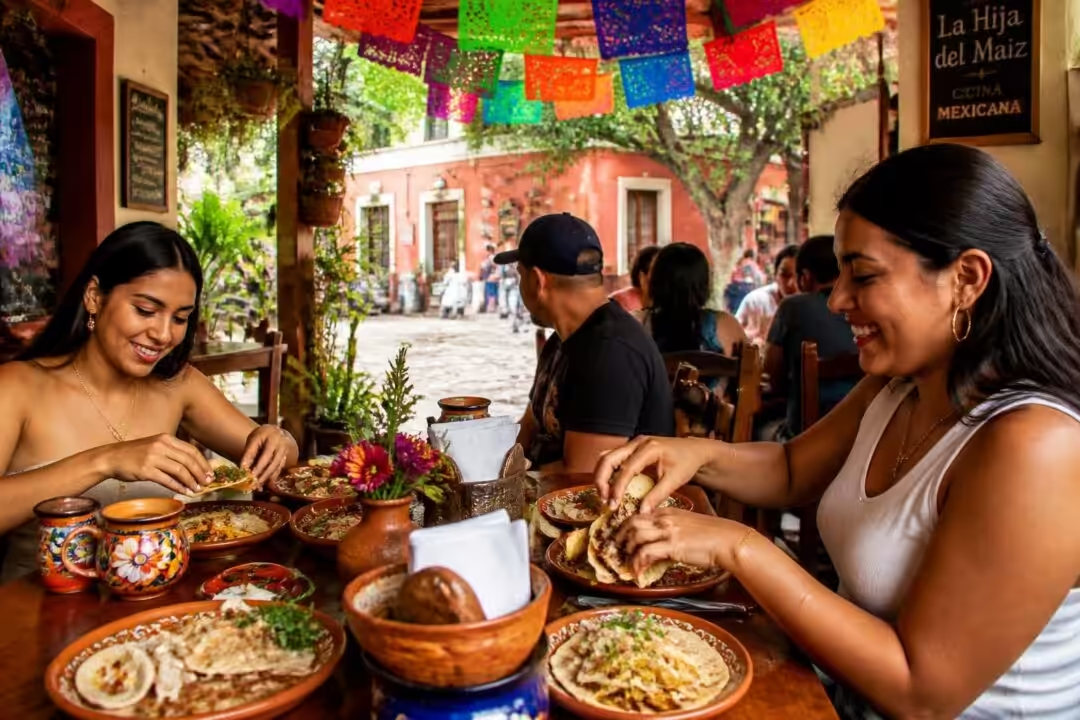
| In this story / Sections to explore 🍽️ | Key notes / What to remember 🔑 |
|---|---|
| Top neighborhoods to eat in Mexico City and beyond | Seek local markets and family-run fondas for true flavour |
| Signature restaurants to book (fine dining to taquerías) | Balance a tasting menu splurge with a street-food crawl |
| Street food, mercados and classic dishes to try | Order the regional special and share plates for variety |
| Regional specialties and where to find them | Look for provenance: chilango, Oaxacan, Yucatecan, Jalisco |
| Practical tips for dining locally | Carry small bills, learn a few phrases, and keep an open palate |
Best neighborhoods to eat in Mexico City and other Mexican culinary hubs
Mexico’s dining map is as much urban fabric as it is flavor geography. Neighborhoods define how people eat, which food cultures are visible, and where new chefs incubate ideas. For a design-minded diner, the interplay of architecture, light and plate composition matters: plazas and patios will shape the meal just as much as the menu.
In Mexico City, Roma and Condesa remain useful starting points for contemporary kitchens and late-night taquerías. Polanco hosts polished tasting menus and high-end wine lists, while Coyoacán and San Ángel preserve a slower, market-forward rhythm. South of the city, in Pedregal and the environs of Luis Barragán houses, restaurants lean into dramatic sites — Tetetlán, for example, sits above jagged volcanic rock and stages Oaxacan-focused plates in a cinematic setting.
How neighborhoods guide the meal choice
Walkable districts bring together complimentary options: a morning coffee and pan dulce from a market stall, a midday fonda-style comida, and an evening mezcal bar. Colonia Juárez is notable for its emerging Korean-Mexican crossovers and lively barbecue joints, while Del Valle and Narvarte host a concentration of Lebanese bakeries and meze houses like Al Andalus. When planning, pair a neighborhood’s visual mood with the kind of meal desired.
Examples matter: a brunch in the open-hearted patios of La Corte will feel different from a business lunch under the vaulted ceilings of El Cardenal. For visitors aiming for a cohesive experience, book a table in the afternoon at a beloved neighborhood institution and then wander toward a nearby market stall for an aftertaste.
Key insight: choose a neighborhood like a mood board — the architecture, market presence, and local residents will shape the meal more than any single review.
Where to splurge and where to stand in line: top local restaurants to reserve
Mexico’s culinary landscape in 2026 balances star-studded tasting menus with time-honored family kitchens. Reservations are essential for flagship fine-dining spots, while some of the city’s best flavors arrive at buzzy counters and modest market puestos.
For a refined tasting menu that still reads as Mexican at its core, Pujol remains a cultural touchstone: inventive presentations such as smoked baby carrots and the famed mole madre create an arc of history and technique. Nearby, Quintonil channels native ingredients with a scholarly yet playful approach, often integrating insects and regional bees’ honey into small plates. Both demand planning — book early and expect a sustained tasting experience.
Contrast those experiences with lunch institutions: El Cardenal is breakfast ritual and convivial dining hall; El Huequito represents the quick, precise art of al pastor from a trompo, while El Califa and its namesake chain provide consistent late-night tacos and the iconoclastic chicharrón de queso. For seafood that captures Mexico City’s obsession with mariscos, Gabriela Cámara’s restaurants offer different vibes: Contramar’s impossible-to-book energy is matched by Entremar in Polanco for a calmer terrace seat.
Smaller, character-driven restaurants complete the picture. Máximo Bistrot is modern comfort with agricultural storytelling, and Rosetta continues to marry refined pasta work with Mexican vegetal flavors. For a dimly lit mezcal bar with impeccable selection and a small menu of snacks, Ticuchi remains a late-night favorite.
Key insight: balance a fine-dining reservation with a walk-in street-food stop the same day to see technique and tradition at complementary scales.
Street food, mercado stalls and classic dishes every visitor should try
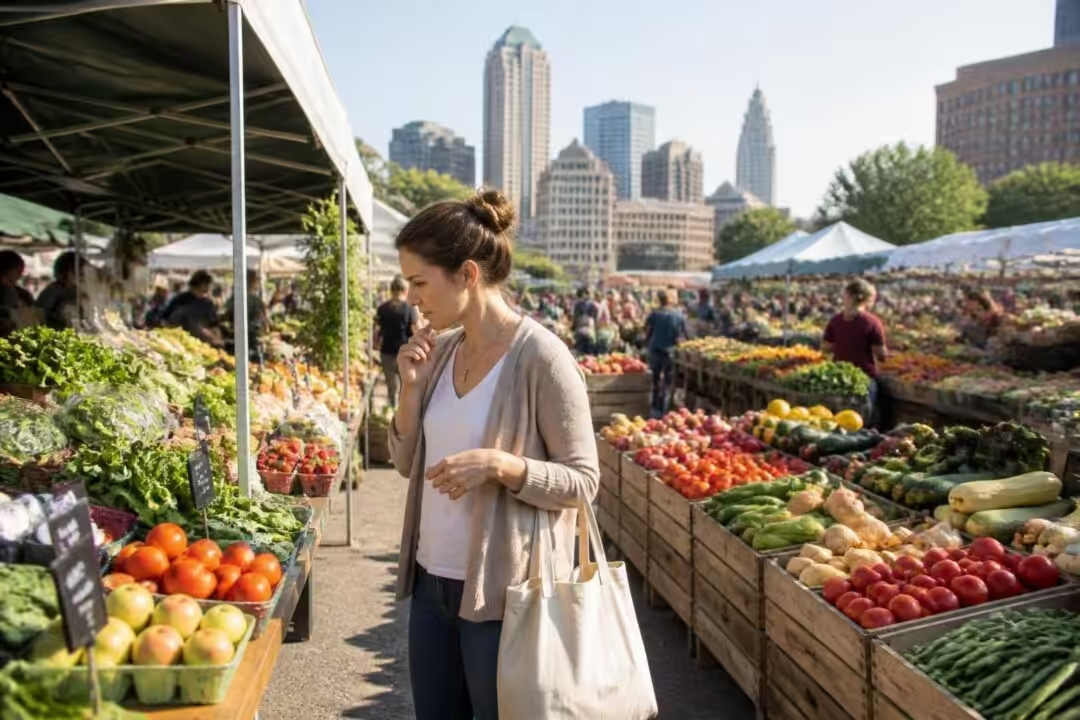
The most instructive meals often come from the least ornate counters. Markets and fondas teach the fundamentals of Mexican cooking: corn, chiles, crema, and time-tested sauces. a market meal is sensory education — the clack of a tortilla press, the sheen on a salsa, the steam from a bowl of pozole.
Start with pozole: small, family-run venues (sometimes hidden behind an apartment buzzer) pour generous bowls of Guerrero-style pozole with crema, avocado and chicharrón. A local custom in some places is to add a spoonful of mezcal on Thursdays — an odd, convivial habit that illustrates how ritual and flavor mingle.
Quesadillas in Mexico City are not Instagram props alone. Traditional stands like Las Dietéticas de Coyoacán craft blue-corn quesadillas fried in a huge cazuela of oil over fire; the cook forms and fries each tortilla with practiced speed. A huitlacoche quesadilla here is a study in texture and smoke.
Other essentials: churros and thick hot chocolate at El Moro, the intensely meaty torta ahogada from Jalisco at kiosks like El Pialadero, and the pure al pastor experience at El Huequito. For ambitious ceviche, Contramar or Entremar serve bright, citrus-forward seafood that feels like a coastal afternoon in the plate’s acidity and salt.
- 🌮 Tacos to try: al pastor, suadero, cabeza, and the minimalist gaonera style.
- 🥣 Soups and stews: pozole (red, green, white), caldo de pollo, and sopa de lima.
- 🍦 Sweet stops: Nevería Roxy for helado; El Moro for churros and chocolate.
- 🥨 Market rituals: order from the busiest stall; watch the prep to see authenticity.
Key insight: prioritize stalls with steady lines; the queue often signals clarity of technique and local approval.
Regional specialties across Mexico and local places that exemplify them
Mexico’s regions are culinary provinces with distinct ingredient vocabularies. From Oaxacan mole to Yucatecan relleno negro, seeking out the regional original sharpens appreciation of diversity.
Oaxaca’s complexity shows in dishes like mole and pulque-curados. Restaurants and mezcalerías with Oaxaca-centric menus will often serve tetelas, pulque curados and mole oaxaqueño executed with respect. Tetetlán is one example where architecture and an Oaxacan lens converge, offering tetela and a surprisingly fresh glass of pulque curado.
Yucatán brings citrus-laced broths and achiote marinades. A cantina tucked into Condesa can transport a diner with lime soup (sopa de lima), cochinita pibil and the rare relleno negro — a dark, charred sofrito that demands attention for its layered heat and smoke.
Jalisco’s torta ahogada offers another lesson: here, bread and sauce combine to define a region. A specialist stand prepares the birote salado roll and a drowning red salsa that will rearrange expectations about sandwiches. Toluca contributes artisanal embutidos — green chorizo and longaniza — that sing when paired with charred onions and hot tortillas.
Mexico City itself is an urban crucible where regional dishes migrate and settle. Nicos proudly calls itself Cocina Mexicana Chilanga, celebrating the chaotic, improvisational spirit of the city while serving homestyle plates like huevos Azcapotzalco and frijoles de la olla. That same urban energy is visible in fusion kitchens that blend Korean barbecue techniques with Mexican flavors in neighborhoods such as Colonia Juárez.
Key insight: travel regionally within cities; look for restaurants whose chefs explicitly cite their local roots — provenance is the best guarantee of an authentic regional plate.
Practical tips for dining local in Mexico: logistics, etiquette and a compact cheat-sheet
Dining well in Mexico requires a mix of planning and curiosity. Small gestures improve the experience: carry cash for mercados, ask politely before photographing a cook, and accept that some of the best seats are at communal counters.
Reservations are essential for high-demand tasting menus but unnecessary for most market stalls and cantinas. Tipping generally follows a 10–15% norm in sit-down restaurants; street stalls rarely expect it, though rounding up is always appreciated. Safety-wise, stick to well-lit areas and keep valuables discretely stored.
Language matters. A few phrases smooth transactions and signal respect. Simple Spanish—please (por favor), thank you (gracias), and a polite “¿qué me recomienda?”—goes a long way. When ordering, request the regional specialty; cooks often have a proud signature they will prepare best.
| 🍽️ Type | 📍 Example neighborhood | 💸 Price range | 🔥 Must-order |
|---|---|---|---|
| Fonda / Comida corrida | Centro / La Corte | $$ | Daily set, flaky ice cream with pound cake 🍰 |
| Fine dining / Tasting | Polanco / Pujol, Quintonil | $$$$ | Mole madre, tasting omakase 🌿 |
| Taquería / Street counter | Condesa / El Huequito | $ | Al pastor, gaonera taco 🌮 |
| Market stall | Coyoacán / Las Dietéticas | $ | Huitlacoche quesadilla, churro stop 🍩 |
- 🧾 Bring small bills and coins — many stalls cannot break large notes.
- 📱 Use offline maps and set meeting points — signals can be flaky around markets.
- 🗣️ Learn three phrases: greeting, recommendation request, and thank you — they open doors.
- 👥 Share plates to sample more — ordering family-style yields a broader palate tour.
Key insight: practical preparation multiplies culinary returns — plan the splurges, then fill the rest of the trip with markets and street counters for the truest lessons in Mexican cooking.
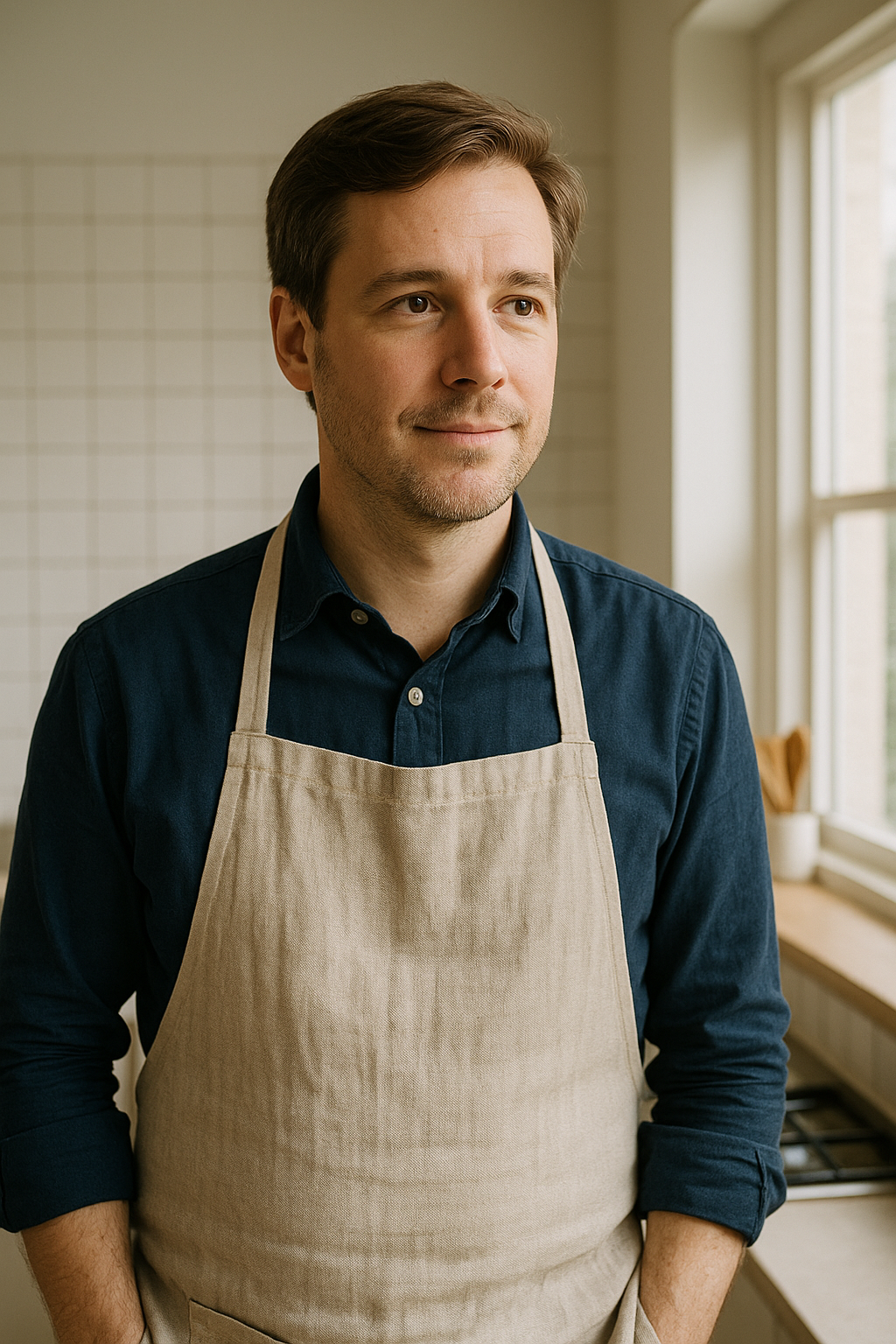
Hi, I’m Landon Brooks. I am the editor-in-chief of Cook and Design, but for the first decade of my working life I was actually a product designer in New York.
7 Comments
Love how the article ties architecture to food. Tetetlán sounds like a must-see for design nerds.
Thank you Landon for framing neighborhoods through design – the interplay of light and texture truly shapes the dining experience.
Designing a food itinerary around plazas and patios? That’s the kind of UX I can taste.
Neighborhood foodscapes are like ecosystems—each with its own flavors and access gaps. Would love a health-equity lens on these culinary maps.
Thanks Landon for connecting urban design with dining—light and architecture truly shape how a meal feels.
Skip the fancy spots, hit the markets. Small bills and an open mind go a long way.
Neighborhood infrastructure clearly shapes dining culture—walkable districts seem to optimize both access and variety. Great read.
Les commentaires sont fermes.