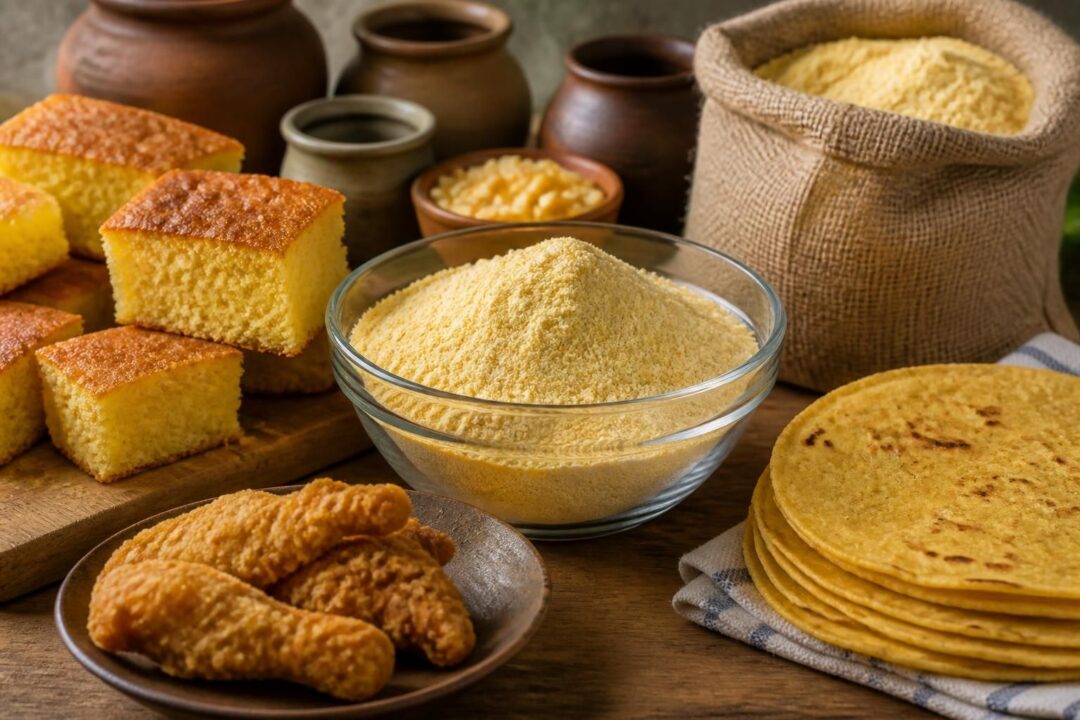
Corn Flour’s Benefits: What Corn Flour Does in Baking
Corn flour, a finely ground product made from whole dried corn kernels, plays multiple roles in the modern kitchen. As a culinary tool, it functions as a tenderizer, moisture retainer, and gluten-free alternative that reshapes the texture and flavor of many baked goods. Chefs and home bakers alike appreciate how it subtly reduces gluten development when blended with wheat flour, creating softer crumbs in cakes, muffins, and cookies.
To understand why corn flour behaves this way requires a quick look at composition. Unlike wheat, corn contains no gluten-forming proteins. The presence of starches, fibers, and non-gluten proteins in corn flour interrupts gluten network formation when mixed with wheat, resulting in batters that rise into lighter, more delicate finishes. This property makes corn flour particularly valuable when a tender crumb is desired or when formulating gluten-free recipes that still need structure.
| Type | Flavor | Best Used For |
|---|---|---|
| Yellow corn flour | Warm, sweet corn | Cornbread, rustic cakes, savory biscuits |
| White corn flour | Mild, neutral | Light cakes, pastries, white sauces |
| Blue corn flour | Nutty, earthy | Creative pastries, muffins, visual impact |
| Masa harina | Toasty, alkaline | Tortillas, tamales, arepas, breads |
Practical effects on texture and moisture
When incorporated up to about 25% of a wheat-based flour blend, corn flour improves nutritional value by adding fiber and antioxidants while enhancing tenderness. Studies have demonstrated that modest substitution rates can increase the whole-grain content without collapsing structure, and many artisan bakeries now use these blend strategies to boost flavor and shelf life. The starches in corn flour gelatinize during baking, trapping water and slowing staling. This gelatinization is part of why cakes and muffins remain moist longer when corn flour is present.
Consider the case of a small neighborhood bakery run by Maya, a fictional pastry entrepreneur. Maya noticed that her lemon-ricotta cake stayed fresher for an extra day when a portion of the wheat flour was replaced with corn flour. Customers commented on the softer mouthfeel and subtle sweet note that complemented citrus. That observation mirrors controlled trials that show improved crumb tenderness and extended freshness with corn flour inclusion.
Flavor contribution and pairing
Beyond texture, corn flour introduces a faint, naturally sweet corniness. This can become a design element in recipes: pairing corn flour with ingredients like honey, brown butter, or warm spices amplifies the overall depth without overwhelming delicate flavors. In contrast, white corn flour offers a subtler profile suited to lighter cakes and pastries where appearance and mild flavor are priorities.
Those developing recipes should note that corn flour absorbs moisture differently than wheat. Adjustments to liquid or fat may be necessary. For instance, increasing buttermilk slightly in quick breads or reducing oven temperature for fine crumb development can yield superior results. Chefs with a pastry background often approach corn flour as a textural modifier—one that both improves mouthfeel and expands dietary accessibility.
In short, the principal advantages of corn flour in baking are its ability to tenderize, to hold moisture, and to enable gluten-free alternatives. These are practical levers for bakers seeking texture nuance, extended shelf life, or inclusive menus that cater to gluten-sensitive customers. The takeaway: corn flour is a subtle but powerful tool that redefines tenderness and resilience in baked goods.
Types of Corn Flour and How to Choose the Right One for Baking
Choosing the correct corn flour matters as much as choosing any other flour. Varieties range from finely milled yellow and white corn flour to more specialized options like blue corn flour, masa harina, and stone-ground cornmeal that straddles the line between flour and meal. Each type carries distinct flavor, color, and functional traits that influence final baked products.
Quick overview of common types
Yellow corn flour often brings a warm hue and pronounced sweet-corn aroma that suits rustic cakes, cornbreads, and savory biscuits. White corn flour is milder and preferred when a neutral palate or light color is desired. Blue corn flour lends a nutty, earthier character and dramatic color, attractive for creative pastry work. Masa harina, produced by nixtamalizing corn, is chemically altered to yield a distinctive flavor profile favored in tortillas and tamales but also as a creative ingredient in tarts and crusts. Lastly, stone-ground corn flour retains more of the grain’s fiber and often yields robust flavor and slightly coarser texture.
Below is a compact comparison to guide selection. It includes practical notes on best usage and a visual cue to match recipes and expectations.
| Type 🍽️ | Flavor/Color 🎨 | Best Uses 🧁 |
|---|---|---|
| Yellow corn flour 🌽 | Sweet, golden | Cornbread, muffins, rustic cakes |
| White corn flour 🌾 | Mild, pale | Light cakes, pastries where color matters |
| Blue corn flour 🔵 | Nuttier, blue hue | Specialty pastries, cookies, visual accents |
| Masa harina 🫓 | Distinct, slightly alkaline | Tortillas, tamales, adapted pie crusts |
| Stone-ground corn flour 🪨 | Robust, coarse | Artisan breads, textured cakes, savory crusts |
When deciding which to use, imagine the end product’s mouthfeel and visual profile. For delicate gates like chiffon cakes, white corn flour or a light blend is preferable. For pronounced, rustic character, yellow or stone-ground variants provide more presence. Masa harina should not be swapped into recipes blindly: its nixtamalization makes it ideal for specific applications and flavors.
Buying and labeling tips
Look for whole-grain designations if nutrient retention is desired. For gluten-free certification, ensure a labeled seal to avoid cross-contamination in multi-grain mills. Packaging dates and manufacturer notes on grind size are useful—finely milled flours produce smoother batters, while coarser grinds add texture.
In 2026 market trends show growing interest in heirloom and colored corn flours as bakers explore visual variety and local heritage grains. Small-batch producers often highlight milling date and origin—information that pays off in flavor nuance. For those experimenting in a bakery like Maya’s, sampling a few small bags allows precise calibration of hydration and fat adjustments for each corn flour variety.
Understanding the distinct characteristics of each corn flour type allows bakers to match ingredient to intention. Choose deliberately, and the flour will reward with predictable texture, color, and flavor results.
Following the video, consider testing small-scale recipes to see how different grinds perform in your oven and with your leavening agents.
Practical Uses: Corn Flour as Thickener, Egg Replacer, and Texture Enhancer
Corn flour is remarkably versatile beyond its role as a partial flour substitute. It serves as a dependable thickener for custards and fillings, an economical egg alternative in certain recipes, and a texture modifier for batters and coatings. Each function relies on understanding the starch behavior and how it interacts with heat and liquid.
Thickening with a smooth finish
To use corn flour as a thickener, form a slurry by mixing the flour with cold liquid first. This step prevents lumps and ensures a smooth custard or filling. When heated, the starch granules swell and create viscosity. The result is a creamy, less translucent finish than cornstarch alone, because whole-grain corn flour contains fibers and proteins. For a lemon curd, combining corn flour with egg yolks and a tempered hot liquid yields a stable, velvet filling.
Example: a fruit tart filling using a 1:10 corn flour-to-liquid ratio produces sufficient body to hold fruit while preserving a pleasant mouthfeel. Adjustments in sugar and acid will change thickening behavior, so taste and tweak as the filling cools.
Egg replacement and binding
Research shows corn flour can act as an effective binding agent. For many baked goods where eggs function mainly to bind and add moisture (cookies, brownies, quick breads), a simple mixture—typically 1 tablespoon corn flour + 3 tablespoons water per egg—can provide similar functionality. While this substitution won’t match eggs’ leavening power, it stabilizes the crumb and supports moisture retention.
Maya tested this in her gluten-free cookie line and found that corn flour-based egg replacements produced a slightly more tender cookie with a subtle corn aroma that became a signature characteristic. Where leavening is critical, add a small amount of baking powder or whipped aquafaba to compensate.
Breading and battering
Corn flour shines in batters for frying and in breading mixes. Its fine granulation and starch content create a crisp, dry exterior that browns attractively. Combining corn flour with rice flour or a touch of semolina produces a golden, textural crunch—ideal for fried fish or vegetable tempura. In gluten-free fry batters, corn flour helps deliver a lighter crust than heavier flours like chickpea.
Practical tip: mix corn flour with sparkling water and a pinch of salt for a tempura batter. Fry immediately, as resting can reduce the effervescence that creates lightness.

After watching demonstrations, try small-scale tests to dial in the right slurry thickness and fry temperature for your ingredients.
With these techniques—slurry for fillings, measured replacements for eggs, and batter formulations for frying—corn flour becomes a multifaceted utility ingredient in both sweet and savory kitchens. The insight: corn flour’s starch and protein interplay offers predictable, useful properties for binding and textural control.
Gluten-Free Baking: Blends, Ratios and Recipes Using Corn Flour
In gluten-free baking, corn flour is often part of a composite approach. No single gluten-free flour replicates wheat’s full functionality, so thoughtful blends create the structure, moisture, and mouthfeel consumers expect. The typical strategy pairs corn flour with finer starches and proteins to balance absorbency and binding.
Common blend frameworks
A reliable mix might look like this: 40% corn flour, 30% rice flour, 30% tapioca starch. This combination leverages corn’s tenderness and flavor, rice flour’s body, and tapioca’s chew and binding qualities. For recipes that require more elasticity—like gluten-free pizza crusts or yeast breads—add 1% to 2% xanthan gum by weight to mimic gluten’s stretch.
For a quick gluten-free muffin: use the 40/30/30 blend, add 1 teaspoon baking powder per cup of blend, and account for corn flour’s moisture retention by slightly reducing added liquid. Bake at a moderate temperature to allow starch gelatinization before over-browning.
Recipes and adjustments
Shortbread made with half all-purpose flour and half corn flour (for a gluten-friendly variant) produces a melt-in-the-mouth texture. For fully gluten-free shortbread, combine corn flour with almond meal and a small percentage of potato starch to prevent crumbliness. In Maya’s bakery, swapping 25–30% of wheat with corn flour in select bakes yielded improved tenderness while retaining the structural backbone customers appreciate.
When converting conventional recipes, begin with a partial substitution strategy. Replace up to 25% of wheat flour with corn flour in cakes to preserve rise and crumb. For fully gluten-free conversions, the recipe design must revisit leavening, liquid ratios, and binding agents.
Practical checklist for gluten-free success
- 🔧 Test blends: Start small and keep notes on hydration and baking times.
- ⚖️ Measure by weight: Precision avoids dryness or gumminess.
- 🌡️ Adjust oven temps: Lower temps help proper starch gelatinization.
- 🧴 Use fats wisely: Fats improve tenderness and mouthfeel in corn-rich blends.
- 🧪 Include binders when needed: Xanthan or guar gum can be essential for structure.
These practices help translate the unique qualities of corn flour into consistent gluten-free products. The key insight for bakers: treat corn flour as both flavor and functional partner in blends rather than a direct one-to-one wheat swap. Success comes from iteration and small-scale trials.
Storage, Substitutions and Creative Culinary Ideas with Corn Flour
Maintaining corn flour quality begins with storage. As a whole-grain product containing the germ and oils, it benefits from airtight containers kept in a cool, dry place. Properly stored, corn flour can remain usable for up to a year, though peak flavor often occurs within six months. In humid climates or for long-term storage, refrigeration or freezing in sealed bags preserves freshness and prevents rancidity.
Substitutions and common mistakes
Corn flour is sometimes confused with cornstarch. Remember that corn flour is whole-grain and contains protein and fiber, while cornstarch is nearly pure starch. Substituting one for the other without recipe adaptation can yield overly gelatinous textures or insufficient structure. For situations requiring glossy clarity (e.g., clear pie glazes), cornstarch remains the first choice.
Common errors include over-substituting without adjusting liquids, and confusing grind sizes. Too much corn flour can produce overly tender or crumbly results; too little will fail to impart the desired moisture retention. Always scale back the substitution approach and test before large-scale production.
Creative uses and seasonal ideas
Corn flour fuels broad culinary experimentation. Beyond classic cornbread and cakes, it makes an elegant shortbread with a browned butter twist, a robust crumble topping for pears, or a seasoned coating for roasted root vegetables. For savory experimentation, incorporate blue corn flour into crackers for a dramatic visual and textural effect. Masa harina can be used to craft a flaky tart shell with subtle nixtamalized complexity.
In 2026, as consumers continue to favor ingredient provenance and diverse textures, using heirloom corn flours and highlighting their origin can be a differentiator for artisan bakers like Maya. Her limited-release blue corn cookies tied to a local grain cooperative became a seasonal bestseller, illustrating how provenance plus inventive technique resonates with customers.
Practical storage and usage checklist
| Action ✅ | Tip 💡 |
|---|---|
| Store airtight 🛑 | Use sealed jars or vacuum bags to block moisture and pests |
| Refrigerate/Freeze ❄️ | Extend life beyond 6 months; thaw to room temp before use |
| Label & rotate 🔁 | Write milling date and use older stock first |
Creative deployment of corn flour—from binding to visual drama—expands the baker’s palette. With correct storage and thoughtful substitutions, corn flour can reliably enhance both everyday bakes and showpiece items. The decisive insight: treat corn flour as a multi-role ingredient and experiment responsibly to unlock its full culinary potential.
What everyone wonders but won't ask
What's the difference between corn flour and cornmeal?
Corn flour is ground much finer than cornmeal, so it gives a smoother texture. Cornmeal has a coarser, gritter feel, good for things like polenta or crunchy toppings.
Can I substitute corn flour for all-purpose flour completely?
You can in gluten-free recipes, but you'll need a binder like xanthan gum or eggs. Corn flour alone doesn't hold structure well, so blends work better.
How much corn flour should I use in a recipe?
Start with replacing 20-25% of the wheat flour. That's enough to improve tenderness and moisture without compromising structure or taste.
Does corn flour affect the taste of baked goods?
It adds a subtle, sweet corn flavor. Yellow corn flour is more noticeable, white is milder. Pair it with honey or brown butter for a cozy twist.
Anything to add or push back on? Head to the comments
Leave a comment
Hi, I’m Landon Brooks. I am the editor-in-chief of Cook and Design, but for the first decade of my working life I was actually a product designer in New York.