
| Sections 📚 | What to remember ✅ |
|---|---|
| Slow Cooker Silverside Beef: Recipe & Ingredients | Use a well-marbled silverside (bottom round), low-sodium stock, and a splash of red wine for depth. 🥩🍷 |
| How to Cook Slow Cooker Silverside Beef | Always sear first, cook low for 8–10 hours, rest before slicing. ⏳🔥 |
| Flavor Building & Substitutions | Tomato paste, Dijon, and optional juniper berries create layered savory notes; vinegar or extra stock can replace wine. 🌿🔁 |
| Serving & Plating for Crockpot Silverside | Serve over mashed potatoes, polenta, or in sandwiches. Reserve braising liquid for gravy. 🥔🍞 |
| Storage, Nutrition & Troubleshooting | Store in cooking liquid up to 5 days; freeze without veg for 3 months. Gentle reheating preserves texture. ❄️♨️ |
Slow Cooker Silverside Beef Recipe and Ingredients — Crockpot Silverside Beef: Easy recipe
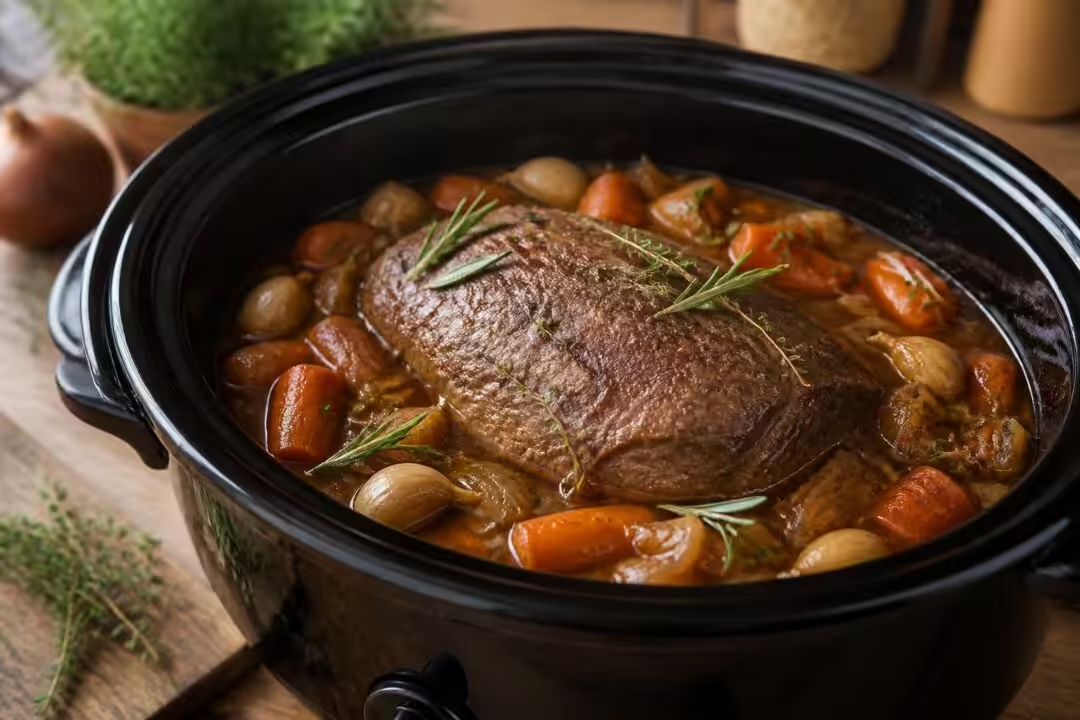
This section details the ingredients and rationale behind every selection for a crockpot silverside beef that becomes fall-apart tender. A fictional thread follows a character named Mina, a Brooklyn ceramicist who cooks weekly to test how a single braise performs across plates, textures, and light. Mina’s practice of cooking for form and function mirrors the Cook and Design approach: restraint, intention, and respect for materials.
Start with a 2 lb (about 900g) silverside or bottom round with visible marbling. That intramuscular fat is the engine for richness during a long, low braise; it renders into gelatin and keeps the meat succulent. For the braising liquid, choose 2 cups of low-sodium beef stock and 1 cup of dry red wine. If wine is not desirable, substitute an extra cup of stock plus 1 tbsp balsamic vinegar to recreate the same acidity and depth.
The aromatics are simple and purposeful: one large quartered onion, three carrots cut into large chunks, two celery stalks, and six lightly smashed garlic cloves. Add two bay leaves, one tablespoon lightly crushed black peppercorns, and an optional teaspoon of juniper berries for a faint piney lift. Juniper is not mandatory, but when used sparingly it provides an elegant counterpoint to the meat’s sweetness.
For binding and body, whisk together two tablespoons of tomato paste, two tablespoons of whole-grain Dijon mustard, and one tablespoon of Worcestershire sauce into the stock and wine. The tomato paste adds umami and a subtle sweetness; Dijon provides an edge and helps the sauce emulsify. Season with 1½ tsp sea salt and tie four thyme sprigs with kitchen twine so they are easy to remove after cooking.
Notes on sourcing: buy silverside from a high-turnover butcher or reputable grocery counter for freshness. If budget or availability is a concern, chuck roast or brisket are acceptable substitutes; avoid lean cuts like top sirloin which dry out during prolonged cooking. For stock, a concentrated paste like Better Than Bouillon or a lightly seasoned homemade stock will provide control over sodium and flavour profile.
Quick ingredient table for clarity:
| Ingredient 🧾 | Amount ⚖️ | Notes ✨ |
|---|---|---|
| Silverside beef | 2 lb (900g) | Well-marbled, trimmed of excess fat 🥩 |
| Beef stock | 2 cups | Low-sodium preferred 🥣 |
| Red wine | 1 cup | Dry variety for depth 🍷 |
| Onion, carrots, celery, garlic | As listed | Chunked to infuse, not to puree 🥕 |
| Tomato paste, Dijon, Worcestershire | 2 tbsp, 2 tbsp, 1 tbsp | For body and umami 🧂 |
Final note for this section: each ingredient exists to solve a structural problem—fat for mouthfeel, acid for balance, umami for depth—and when combined in the crockpot they produce complexity greater than the sum of their parts. Insight: the right ingredients in modest amounts create a braise that reads as sophisticated without fuss.
How to Cook Slow Cooker Silverside Beef: Step-by-Step Technique for Crockpot Success
This section focuses on technique—why searing matters, how to build the braising liquid, and how to time the crockpot for consistent results. Mina tests every stage across two crockpots and a stovetop Dutch oven to isolate texture differences. Results show searing and low-and-slow time are the largest determinants of final mouthfeel.
Sear, then nestle: Maillard first
Pat the silverside dry and season with 1½ tsp sea salt. Searing in a heavy skillet for about 8–10 minutes total—2–3 minutes per side until deeply browned—creates the Maillard crust that anchors flavour. Transfer the beef to the slow cooker; the browned fond in the pan can be deglazed with a splash of wine if desired, then added to the crockpot for extra depth.
Build the aromatic base
Arrange the quartered onion, carrot chunks, celery, smashed garlic, bay leaves, crushed peppercorns, and optional juniper berries around the seared roast. These elements act as a flavorful raft so the meat braises rather than boils. Unpeeled garlic softens into buttery sweetness during the long cook, while the peppercorns and juniper slowly release essential oils.
Mix the braising sauce
Whisk together the stock, wine, tomato paste, Dijon, and Worcestershire until homogeneous, then pour it gently over the roast and aromatics. Tie thyme sprigs and drop them in. Cover and set the slow cooker to low for 8–10 hours or high for 5–6 hours; check doneness when the internal temperature hits 195–200°F and the meat pulls apart with minimal resistance.
Avoid peeking during the cook—each lid lift costs 20–30 minutes of lost heat. Once done, remove the roast and let it rest on a board for 10–15 minutes before slicing or shredding. Skim excess fat from the cooking liquid if a leaner gravy is preferred. The resting period is crucial: it allows collagen-based juices to redistribute, preserving succulence when the meat is sliced.
Technical troubleshooting: if the sauce is too thin, remove solids and simmer the liquid on the stove until reduced; if too salty, dilute with stock or add peeled potato chunks during reheating to absorb excess salt. If the meat is firm after the recommended time, continue cooking in 30–60 minute increments—temperature variation among slow cookers means adjustments are normal.
Step-by-step checklist (quick):
- 🔪 Pat meat dry and season
- 🔥 Sear all sides until dark brown
- 🥕 Nestle aromatics around the roast
- 🍷 Pour combined braising liquid over
- ⏱ Cook low 8–10 hours, rest 10–15 minutes
Key takeaway: searing + patient low cooking converts a humble silverside into a texture that feels almost luxurious. Insight: the slow cooker is a controlled environment—use it to coax, not to rush.
Flavor Building, Substitutions and Advanced Tips for Slow Cooker Silverside Beef
This section explores how to layer flavour, appropriate substitutions, and advanced tips for visual and textural success. Mina experiments with small adjustments—adding mustard late vs. early, switching wine varietals, or introducing juniper—to understand how each variable reads on the plate under warm natural light.
Layering flavour: timing and texture
Tomato paste and Dijon should be whisked into the liquid to distribute evenly; adding them early integrates their flavor into the braising matrix rather than leaving sharp pockets. Whole-grain Dijon can be used for texture and visual specks in the final sauce. Worcestershire amplifies savory notes without overt sweetness.
Wine and vinegar choices
Full-bodied reds like Cabernet Sauvignon hold up well over long cooks and remain perceptible after hours of braising. If a white must be used, a dry white adds brightness but yields a lighter sauce color. For a non-alcohol option, increase beef stock and add 1 tbsp balsamic vinegar for acidity and complexity.
Herbs and aromatics: subtleties that matter
Fresh thyme tied together keeps small leaves from scattering, making the sauce clearer and cleaner visually. Juniper berries are regional in flavor—use sparingly and only if the intention is to introduce a faint pine note. Bay leaves and black peppercorns are foundational; omit neither unless necessary.
Advanced tips for texture and plating
For a silky gravy, strain the cooking liquid, skim fat, then whisk a small knob of cold butter into the warm sauce off heat (monter au beurre). For a glossy finish on slices, coat them lightly in hot reduced sauce; for shredded beef use two forks to tease and then toss with sauce to keep moist.
Substitutions list with emojis for quick scanning:
- 🔁 Chuck roast or brisket — similar collagen content, great substitute
- 🍷 White wine + lemon — lighter alternative
- 🧂 Extra stock + balsamic — non-alcohol braise depth
- 🌿 Rosemary instead of thyme — stronger piney note, use sparingly
Example case: Mina tested the recipe with and without juniper berries and found that a single teaspoon subtly improved braise complexity but overwhelmed some diners; the lesson: when adding an assertive botanical, err on the side of restraint.
Final insight: small, deliberate changes yield predictable shifts in flavour—this is design thinking applied to cooking. Treat each variable as a controlled element rather than a free-for-all.
Serving, Plating, and Weeknight Menus for Crockpot Silverside Beef
Presentation and pairing choices reflect both flavor and visual composition. Mina often plates silverside with mashed potatoes in a deep navy bowl, a swipe of reduced gravy, and a single sprig of thyme for contrast—this is Cook and Design’s approach to home-plate aesthetics: simple, composed, and photographable at breakfast light.
Serves and portioning
A 2 lb silverside generally serves 4 hearty portions. For a family gathering, increase proportionally; remember that slow cooking concentrates flavors so a little goes a long way. Thin slicing across the grain yields clean slices that look composed; shredding offers rustic charm for sandwiches or stews.
Suggested pairings
Classic: mashed potatoes and steamed green vegetables. Textural contrast: creamy polenta and roasted root vegetables. Casual: sliced cold silverside for sandwiches with pickles and grainy mustard. Leftovers shine when reheated slowly in their braising liquid and served over buttered noodles or in a toastie.
Plating notes for the design-aware cook
Choose matte ceramics in soft neutrals; the sauce looks richer against cream or sand. Use negative space—leave room around the meat so the eye rests. A small spoon of reduced braising liquid should be placed beside or over the meat, not drowned. Garnish sparingly: a single thyme sprig or a scatter of coarse salt adds polish.
Menu example for a weeknight rotation:
- 🍽️ Monday: Sliced silverside over creamy mashed potatoes with pan-reduced gravy
- 🍽️ Wednesday: Silverside sandwiches with grainy mustard, pickles, and a green salad
- 🍽️ Saturday: Leftover shredded silverside tossed into a quick pasta with sautéed mushrooms
Serving insight: the braising liquid is the visual and flavor glue for the plate—reserve and reduce it to finish the dish. Final insight: plating is a discipline; restraint and intentional contrast elevate a humble crockpot roast to an editorial dish.
Storage, Nutrition, Troubleshooting, and FAQs for Slow Cooker Silverside Beef
This section consolidates preservation practices, nutrition highlights, and solutions to common problems. Mina keeps a labelled set of glass jars with braising liquid in the fridge and freezes sliced meat separately to preserve texture. The approach shows that design-led storage extends the life and usability of leftovers.
Storage and reheating
Store the cooked silverside submerged in its cooking liquid in an airtight container for up to 5 days in the refrigerator. For freezing, remove vegetables (they become mushy) and freeze sliced or shredded beef in a shallow tray on baking paper for an hour before transferring to airtight bags—this avoids clumps and enables single-portion retrieval for up to 3 months.
Reheat gently: simmer the reserved liquid and nestle slices into the warm sauce until heated through, or thaw overnight in the fridge and finish in a 300°F oven covered with foil for 15–20 minutes. A splash of stock or water prevents drying during reheating.
Nutrition highlights
Silverside is a leaner roast with about ~48g protein per larger serving and moderate calories (~480 kcal per serving in the provided template). It offers iron, zinc, and B vitamins including B12—nutrients important for energy and maintenance. Slow cooking converts collagen into gelatin, which enriches both texture and nutrient density.
Troubleshooting common issues
If the meat is tough: continue cooking on low and verify internal temperature; sometimes another hour or two is all that’s needed. If the sauce is bland: reduce the liquid and concentrate flavor, then finish with a splash of acid (vinegar or lemon) and a small pat of butter. If overly salty: dilute with unsalted stock or add peeled potatoes during reheating to absorb excess sodium.
Quick practical checklist with emojis:
- 🧊 Fridge: up to 5 days, keep in liquid
- ❄️ Freeze: up to 3 months, without vegetables
- ♨️ Reheat: gently in sauce or low oven
- ⚠️ Fixes: reduce sauce to concentrate; add acid to brighten; dilute to lessen salt
Design note and cultural reference: in 2026 the slow-braised roast remains a quiet counterpoint to instant meals; the ritual of searing, waiting, and finishing is a form of slow design, mirroring how small-batch ceramics and carefully curated dinnerware have become part of contemporary home cooking rituals.
Final insight for storage and troubleshooting: plan ahead—reserve liquid, separate vegetables before freezing, and reheat gently to retain the meat’s designed succulence.

Hi, I’m Landon Brooks. I am the editor-in-chief of Cook and Design, but for the first decade of my working life I was actually a product designer in New York.


6 Comments
Love how a slow braise can turn a tough cut into something communal—perfect for neighborhood potlucks. Any tips for scaling up?
Love the marbling emphasis—like good energy efficiency, it’s all about smart heat management. Trying juniper berries soon!
Slow cooking silverside is a lot like transit planning—patience upfront pays off in tender results.
Bonjour Landon, the long braise is like good urban planning—layers that hold together. Thanks for the blueprint.
Precision in braising mirrors lab rigor—intramuscular fat as the controlled variable for tenderness. Nice protocol.
Solid recipe. I’d add a bay leaf for extra depth—like a config flag for flavor. The low-and-slow timing is spot on.
Les commentaires sont fermes.